
Finding winning products is often less about creativity and more about research. Successful dropshippers typically look for products that show consistent demand across multiple advertising channels before investing significant budget into testing. Multi-platform ad spy tools help streamline that research process by bringing ad data from several networks into one place.
You spend $50–$500 a day. You can’t waste a week on memes and hunches. You need proof that people click, comment, share, and buy. You also need signal that an offer scales outside one feed. That signal shows up when the same product runs on Facebook, Instagram, TikTok, Google, and even native placements for weeks.
Here’s the method I use after burning my own budget: spot ads that keep running, confirm the geo and demo, inspect the lander and checkout, then build a creative brief that fits your brand and policy rules. Finally, launch a lean test, not a lottery. This guide is education-first, tool-second, and aimed at one goal: fewer dead tests, more proven shots on goal.
If you’re new to the model, review the basics of dropshipping. Then use the steps below to stop chasing noise and start copying what works, with your twist.

##How I Evaluate Winning Product Opportunities
Not every product running ads is profitable.
For this guide, product opportunities are evaluated using several indicators:
Ad longevity and consistency
Cross-platform presence
Engagement quality and audience feedback
Landing page quality
Geographic expansion patterns
Funnel and checkout experience
No single metric guarantees success. Instead, the strongest opportunities typically show positive signals across multiple categories.
What Is Multi-Platform Ad Spying and Why Does It Matter for Dropshippers?
Single-platform research lies to you. It shows “what’s hot” in one feed, not what sells at scale. Multi-platform ad spying tracks the same product as it jumps from Facebook to Instagram, shows up on TikTok, and then follows you around on Google Display or native. That trail tells you two things: buyers care, and the seller can afford to buy reach.
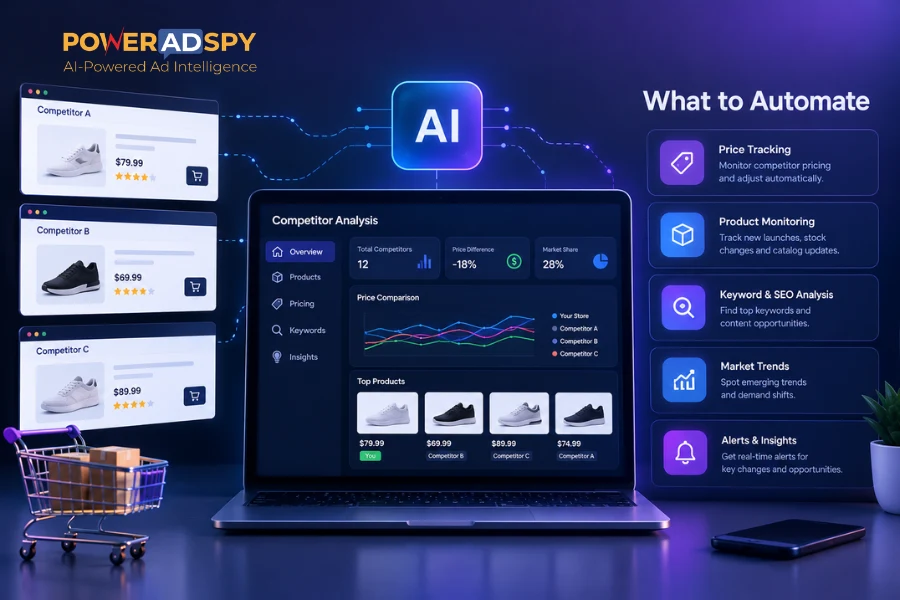
In practice, AI-powered ad intelligence pulls creatives and metadata from Facebook, Instagram, TikTok, Google, Reddit, Pinterest, and more. The better tools surface engagement, run dates, CTAs, lander tech, and placements in one view. When you see a product push across three or more networks with steady reactions, you’ve likely found a tested offer, not a fad. This is where a multi-platform ad spy earns its keep.
Scale shows up in the data. Data that includes millions of ads from over 100 countries lets you track trends by geo and season. For example, a dog grooming kit that works in Canada in Q1 may take off in Germany in Q2. With geo data, you can enter later markets early, or angle your hook for a specific country and language before the pack catches up.
Moreover, cross-network context helps you match creative to channel norms. A jump-cut UGC that crushes on TikTok may need a headline-first frame for Facebook Feed. Meanwhile, Google placements might call for a static image with benefit-forward copy. Without the full view, you copy the wrong ad for the wrong feed and blame the product.
- Signs an ad is scaling across platforms:
- Same product or brand appears on 3+ networks in 14–30 days
- “Running longest” is 21+ days on at least one network
- Consistent comments like “Bought this. Works.
- Matching CTAs and landers adapted per platform
Also Read!
Step-by-Step: How to Research Winning Dropshipping Products Using Ad Spy Tools
Here’s the 7-step framework I use weekly. Keep it tight. No rabbit holes.
Find and filter candidates
Step 1: Pick niche keywords
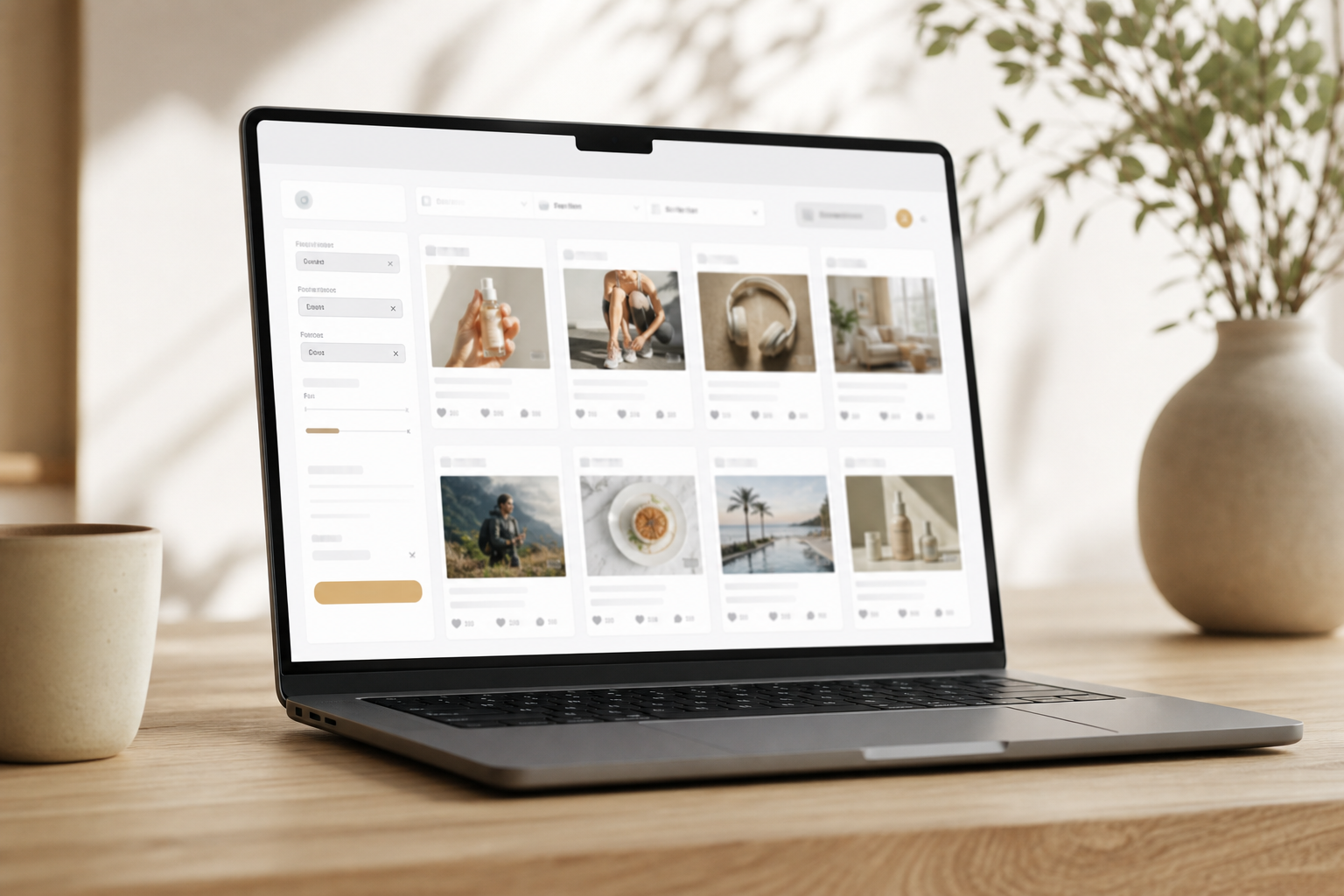
Start broad, then get specific. Use Keyword search and Ad Category Filter to explore “pet grooming,” “back pain relief,” or “kitchen gadget.” Then add variants like “dog deshedder,” “lumbar stretcher,” or “garlic press 2026.” Add Country Filter for your target geo, and set Date Interval to the last 90 days. If you sell on Shopify, use Advertiser Search or Domain Search to find direct-store ads, and bookmark promising creatives.
Step 2: Filter by engagement metrics
Sort by Likes, Comment, Share. Don’t chase raw likes alone. Look for lively comments (“Just bought two”) and replies.
On video, favor saves and shares over views. Toggle Popularity and Impressions Index to spot reach beyond vanity metrics. In tools that support it, use Audience Age Filter and Gender Wise Filter to confirm your target demo reacts.
Step 3: Sort by “running longest” to find proven winners
Now switch to Running Longest or “when last seen” sort. Ads that keep running for 21–60 days are pulling their weight. A good rule: if the average CPM is $12 and a brand stays live for four weeks, they’re not guessing.
They’re printing. Add those ads to a swipe file. In addition, use Bookmark & Subscribe to track updates.
Validate placement and funnel
Step 4: Check geo-targeting and placements
Use GEO-targeted information about competitor ads to map where the ad shows and where it sticks. Filter by Ad Positions to see if the creative lives in Feed, Stories, Reels, or Right Column. An ad that wins in Reels may die in Feed. Match your test to the winning placement. Use Country Filter to isolate buyers in your market.
Step 5: Analyze landing pages like a hawk
Click through to live posts, then visit the lander. Check load speed, offer stack, hero image, social proof, and checkout friction. Use Lander properties search to see affiliate network, funnel, marketing, or eCommerce platform details. If the funnel is Shopify, note the theme and app stack. Also confirm clear returns, shipping times, and trust badges.
Step 6: Cross-reference across platforms
Now search the same product terms on TikTok, Google Display, YouTube, Reddit, and Pinterest. If creatives recur, you’ve found a cross-network push. Save each variant.
For context on TikTok formatting and trends, skim this TikTok ad library. Your goal isn’t to clone. It’s to see the angle and structure that travels.
Step 7: Build a tight swipe file and testing plan
Create a swipe file with 10–20 creatives. For each, log: hook, benefit stack, proof, CTA, run dates, placement, geo, and lander notes. If you run Shopify, focus on “Search and analyze Shopify ads with complete engagement details” to size up buyer intent and comments. Then write your creative brief: 3 hooks, 3 bodies, 2 CTAs, and 2 thumbnails per platform. Ship your first test with the winning placement and geo first.
Pro tip: If you’re new to Facebook creative set-up for this niche, this guide to the Best Facebook Ad Spy Tool for Dropshippers in 2026 shows ad formats and comment patterns worth watching.
5 Costly Mistakes Dropshippers Make With Ad Spy Tools
Copying ads verbatim
If you rip the exact creative, you’ll get flagged, ignored, or both. Algorithms reward fresh signals. Keep the angle (problem + promise + proof), but change the script, talent, footage, and first frame. Also, match your brand voice and claims to platform policy.
Only spying on one platform
A Facebook-only view hides TikTok UGC that does the real heavy lift. A TikTok-only view misses the Google retargeting ad that closes the sale. Cross-check your finds across two or three networks. The multi-platform ad spy view shows true demand, not a fluke.
Ignoring ad longevity and chasing “new”
New doesn’t mean good. Sort by Running Longest or “last seen” to avoid flash-in-the-pan hype. A 21–60 day runner with steady engagement beats a viral week that flatlines. Use Popularity and Impressions Index for extra signal.
Not checking landing page quality
A strong hook dies on a slow lander. Always inspect the page for speed, trust, and proof. If the store hides shipping times or uses shady timers, expect churn. Lander properties search gives you funnel and platform context so you know what you’re up against.
Skipping geo and demographic filters
If you skip GEO-targeted information, you will aim at the wrong buyers. Use Country Filter, and, when available, search ads by age group, gender, and country for tailored targeting. Then filter by Ad Positions so your test matches the winning slot (Feed vs.
Stories vs. Reels). Miss this, and you test the right product in the wrong place, and eat the loss.
“We have reduced A/B testing costs and also have improved revenue!” — Archie Gilbert, Co-Founder
Moreover, test like a scientist. Change one thing at a time per ad set: hook, thumb, or caption. If you change five items, you learn nothing and repeat the same budget burn that got you here.
Best Multi-Platform Ad Spy Tools for Dropshippers Compared
You need breadth, search power, and clear data. Here’s a balanced view in 2026 based on platform strength and ecom fit.
- PowerAdSpy
Tools like PowerAdSpy cover Facebook, Instagram, Google, YouTube, Native, Reddit, Quora, and Pinterest with AI-powered ad intelligence. The database includes data on millions of ads from over 100 countries, plus enhanced search with Keyword, Advertiser, Domain, CTA, and Country filters. You can sort by Likes, Comments, Shares, Newest, and Running Longest, and export reports. It also supports “Search and analyze Shopify ads with complete engagement details,” which helps when you sell on Shopify. Pricing starts at Basic: $69/Month or $29/Month billed annually, with higher tiers for larger teams. - Minea
Minea is strong for TikTok-first research with UGC discovery. It’s great for fast-moving trends and creative angles. It offers tiered plans. If your buyers live on short-form video, it’s a solid add. - Dropispy
Dropispy focuses on Facebook dropship ads. It’s useful for scanning direct-store creatives and catching FB-first offers. It provides tiered pricing. Pair it with a broader tool for Google and native placements. - Anstrex
Anstrex shines on native ads and pre-sell pages. If you run advertorial funnels or push traffic from native to long-form landers, it’s a go-to. It offers plan tiers for different volumes. - AdPlexity
AdPlexity is well-known for mobile and push ad tracking. If you plan to remarket outside social or test push, it fills that gap. It also offers tiered plans.
| Tool | Strength | Platforms Covered (high level) | Shopify Angle | Pricing Note |
|---|---|---|---|---|
| PowerAdSpy | Broad multi-platform | Facebook, Instagram, Google, YouTube, Native, Reddit… | Yes, detailed Shopify insights | Basic: $69/mo or $29/mo annually |
| Minea | TikTok-focused UGC | TikTok plus other socials | Indirect | Tiered plans |
| Dropispy | Facebook dropship ads | Strong FB store focus | Tiered plans | |
| Anstrex | Native + pre-sell pages | Native networks | Works with advertorials | Tiered plans |
| AdPlexity | Mobile/push tracking | Mobile, push | Indirect | Tiered plans |
For a side-by-side of two popular choices for agencies, see this neutral rundown: PowerAdSpy vs Adplexity for Ad Agencies: Which Is Better for Multi-Platform Ad Spying?
Also Read!
How to Search Competitor Ads by Keyword and Domain as a Small Business
What to Do This Week: Your First Ad Spy Research Sprint
Give me five focused days. You’ll come out with a real brief, not a wish.
Day 1.
Choose three you can speak to (e.g., pet care, home fitness, kitchen). Set up saved searches per niche with Country Filter and Date Interval = last 90 days. Per user data, 26% of users save at least one day preparing for an advertising project. Bank that time now.
Day 2.
Pull 30–50 ads per niche using Keyword search, Advertiser Search, and Domain Search. Tag Shopify stores and note lander tech. Save creatives with active comments. If you need ecom context, scan the Shopify and ecommerce ad spy best picks for 2026.
Day 3.
Sort by Running Longest and then by Popularity and Impressions Index. Record placements (Feed, Reels, Stories) and geos. Aim for 10+ ads per niche that ran 21+ days.
Day 4.
Search the same products on TikTok, Google Display/YouTube, Reddit, and Pinterest. Note which creatives travel. Click through to landers and capture offer stacks, proof, and checkout flow.
Day 5.
Draft 3 hooks, 3 bodies, 2 CTAs, and 2 thumbs per platform. Pick 1–2 placements that matched winners.
Cap your first test to protect budget. Expect a 15% reduction in A/B testing volume for users under two months of usage when you start with proven angles. Try a free trial before you commit to a higher tier.

When Ad Spy Tools Can Mislead You
Ad spy data is powerful, but it isn’t a guarantee that a product will work for your store.
A common mistake is assuming that a product with hundreds of ads or high engagement automatically equals profitability. In reality, some advertisers continue spending on campaigns for brand awareness, customer acquisition, or market testing rather than immediate profit.
Engagement can also be deceptive. Comments, likes, and shares show interest, but they do not reveal conversion rates, profit margins, refund rates, or customer lifetime value. A product may attract attention while still losing money.
Seasonality is another factor. A product that performs well during a holiday period, back-to-school season, or special event may struggle once demand fades. Likewise, an offer that works in one country or demographic may fail in another.
For this reason, use ad spy tools as a validation tool rather than a decision-making tool. Look for multiple signals before launching:
Long-running ads instead of short viral spikes
Consistent engagement across several weeks
Presence on multiple advertising platforms
Strong landing pages and clear offers
Market demand that aligns with your target audience
The goal isn’t to copy the most visible product. The goal is to identify patterns that suggest sustainable demand and then validate those patterns with your own testing.
Key Takeaways
- Cross-network proof beats single-feed hype. Use a multi-platform ad spy to confirm demand before you spend.
- Sort by “running longest,” then validate GEO, placement, and comments to spot real winners.
- Reverse-engineer the lander and checkout. Strong ads die on weak pages.
- Build a swipe file and a tight brief. Test the right angle in the right placement first.
Education-first means you move smart, not fast-for-fast’s-sake. If you want more depth on social formats and filters, this primer on an ad spy tool, is a good companion while you work through your sprint.
As you apply this framework, remember the goal is not to copy but to adapt. Keep the angle, change the execution, and claim your slice without tripping policy or trust. That’s how you stop guessing and start scaling in 2026.
Conclusion
Finding winning dropshipping products is rarely about discovering a secret product before everyone else. More often, success comes from identifying products that already show consistent demand, validating them across multiple channels, and creating a better version of the offer.
Multi-platform ad spy tools can make that research faster by helping you compare trends, creative approaches, landing pages, and audience responses across different advertising networks. However, ad data should be combined with market research, product economics, and testing before making investment decisions.
**Sign Up For Instant Access →
“The clarity of the tool makes ad decision-making much easier.” — Steve Decker, SaaS Marketing Manager