**Start free, see live ads today →
PowerAdSpy is the best facebook ad spy tool for agencies in 2026, broad coverage, fresh data, and export-ready insights built for client work. Agencies adopting it report a 15% reduction in A/B testing within two months, backed by millions of ads from 100+ countries.
For senior media buyers, the goal is simple: reduce waste, make faster creative calls, and defend your plan in client rooms. This guide shows you what matters in a spy solution, how the platform maps to your workflow, and how it compares against Adplexity and AdFlex. You’ll see trade-offs and pricing that scale with teams, not just solo buyers. You’ll also find step-by-step onboarding to get your first deck out on day one, with 2026-ready processes and examples.
Why Ad Agencies Struggle With Facebook Competitive Research
Time is your real budget. Managing 5–20+ accounts means you need a steady stream of fresh ideas that match each client’s goals and guardrails. Manual scrapes of Meta’s Ad Library don’t scale. You scroll, screenshot, and paste into decks, only to realize the sample is thin, the dates are stale, and there’s no engagement context to judge a concept.
As a result, you test in the dark. Without post date, last seen, and actual social signals in one place, the “winning” creative you picked may have already fizzled. That leads to false starts, jittery pacing, and more A/Bs than you planned. In fact, cutting test volume by 15% is realistic once you standardize your intel source and stop guessing (Source: internal user outcomes).
Client pressure and proof
Moreover, buyers feel constant pressure to defend creative calls.
Clients ask: Why this hook? Why this CTA? Why this placement?
If your only proof is a handful of screenshots, you’ll struggle to win those calls. You need filters that match how you plan: geo, device, placement, CTA, age, and timing windows.
- The Ad Library lacks engagement sorting and CTA/placement filters.
- Screenshots don’t show geo context or true recency.
- Decks take hours to compile for each client.
- Extra A/Bs inflate cost just to learn obvious lessons you could have inferred.
Therefore, the fix isn’t “browse more.” It’s to systematize research into a repeatable process with a shared data source, clear filters, and exportable outputs your whole team can use. That frees your calendar for higher-impact moves: creative briefs, fast iterations, and budget defense.
What to Look for in a Facebook Ad Spy Tool (Agency Buyer’s Checklist)
Picking a platform is an ROI call, not a feature hunt. You need proof the tool will shorten research time, trim tests, and raise win rates across accounts. These six criteria map to those outcomes and to the way agencies actually work in 2026.
1) Database size and freshness
Start with coverage. You want millions of ads across 100+ countries and thousands added daily so you’re not recycling last quarter’s ideas. Freshness controls like “post date” and “last seen” help you filter out stale creative and focus on what is running now. Without this, you risk copying expired angles and losing two sprints to re-tests.
2) Multi-platform coverage for cross-channel planning
Your plans aren’t channel-siloed. Budgets follow what works across Meta, Google, YouTube, Reddit, Pinterest, Quora, and programmatic (native/display). A single subscription covering 9 platforms keeps workflow tight and cross-learns fast. Compared to alternatives that focus on one network, broad coverage reduces tool-switching and duplicate research.
3) Filtering depth that matches how you buy
You plan by country, placement, device, audience age, and CTA. Your tool should too. Filters for geo, ad position (Feed, Stories, Right Column, Video Feed, Marketplace), mobile/desktop, and CTA let you narrow from thousands of ads to a shortlist in minutes. In addition, component search (text, object, brand) speeds creative teardown and briefs.
4) Engagement and social proof metrics
Sort by likes, shares, comments, and popularity/impressions indexes. While engagement isn’t the same as ROAS, it’s a fast quality screen that signals hooks and formats worth a test. Moreover, direct links to live posts help you read comment sentiment before you mirror an angle that might attract the wrong heat.
5) Export and reporting for fast client decks
You need exports that drop straight into slides: images, copy, landing paths, and dates. Bookmarks and client folders reduce rework. As a result, you can move from research to a well-cited creative board in under an hour. For campaign planning, pair your finds with this ad budget calculator to set a sane test spend.
6) Pricing that scales with teams
Look for plans that don’t penalize you per seat, with higher tiers that raise search limits rather than user fees. Annual pricing should be far lower than stacking multiple single-channel tools. Team workflows also benefit from bookmark systems and shared workspaces so producers, buyers, and strategists can stay in lockstep.
Tip: If you’re building angles, pair your research with vetted Meta ad examples and a short internal creative brief. That keeps tests tight and learning fast.
Also Read!
How to Search Competitor Ads by Keyword and Domain as a Small Business
How PowerAdSpy Solves These Challenges for Agencies
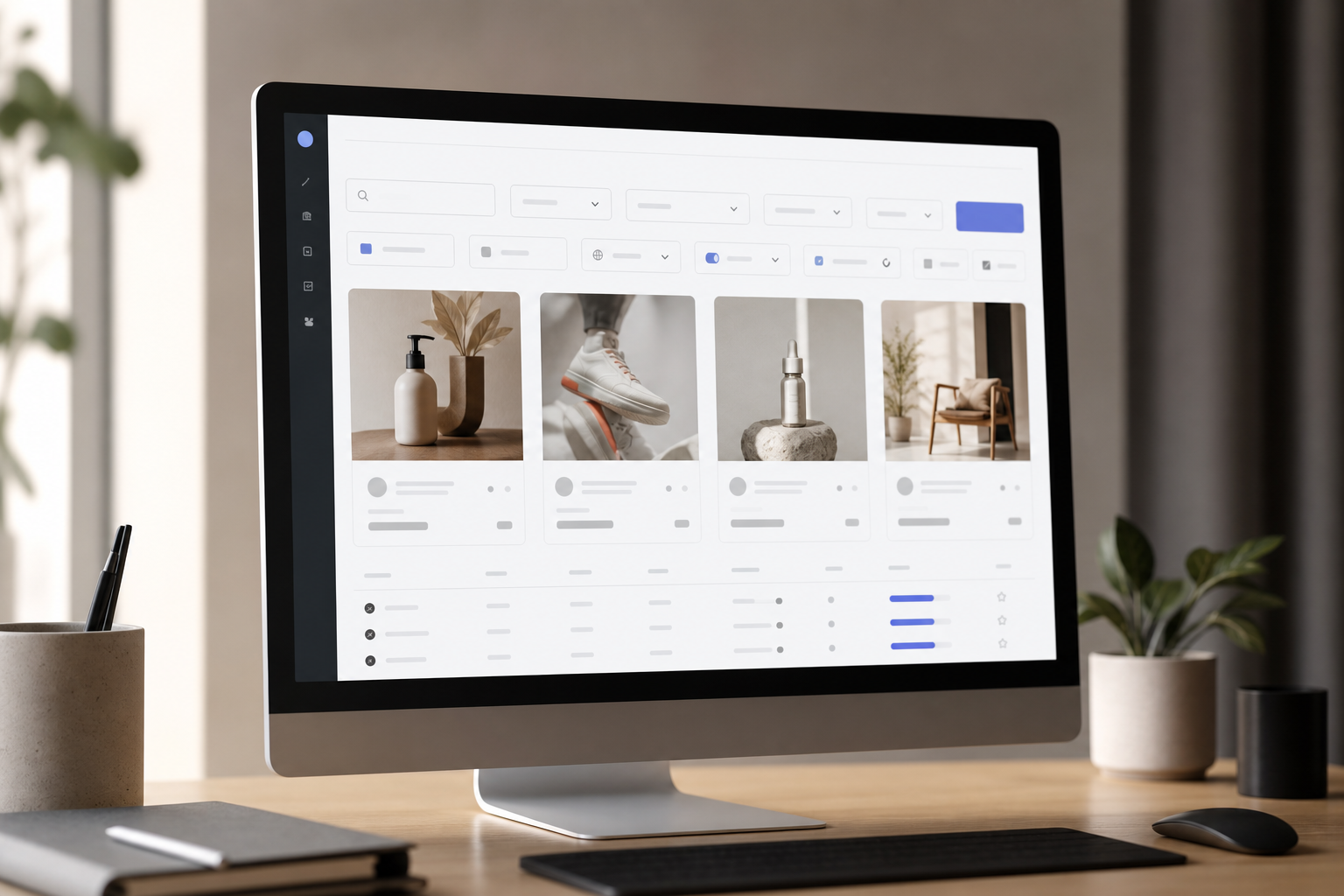
You need a predictable system: search, shortlist, brief, launch. PowerAdSpy’s workflow matches that path. You can search by keyword, advertiser name, or competitor domain to see which hooks, offers, and landers win in your niche. Then, you sort by engagement and recency to pick candidates for your next sprint.
Specifically, the database covers millions of ads from over 100 countries, with thousands added daily. Geo filters let you compare, say, US vs. UK copy changes in the same vertical, while ad position filters isolate Feed, Stories, and other slots. As a result, you build tailored creative sets per market rather than guessing and backfilling later.
Furthermore, engagement sorting and “last seen” help you avoid dead ideas. You can bookmark ads into client folders, keep variants grouped, and export reports with images, copy, and landing paths that drop straight into decks. In practice, teams report a 15% reduction in A/B testing volume under two months, a 19% improvement in user revenue with decreased workforce, and 26% of users save at least one day when preparing for an advertising project.
“Running ads for multiple clients can be stressful, especially when results are slow. This Facebook ad spy tool made life so much easier. We’ve cut back on testing time and launched campaigns that get results. This tool is now our agency’s secret weapon!” — Charlotte Neilson, Digital Marketing Strategist
In addition, you can click through to live posts to read the audience, then refine the brief. CTA sorting helps spot “Shop Now” vs. “Learn More” patterns by funnel stage. Component search flags objects and text motifs that trend in your space, which is handy when you need to pitch three angles for the next sprint.
Compared to alternatives that silo by network, PowerAdSpy’s 9-platform coverage means one research pass fuels Meta, YouTube, and display tests. That saves time and reduces the odds of repeating a weak idea across channels. For creative direction, keep this creative ads guide at hand to pair data with craft.
**Book a live demo, see your niche →
PowerAdSpy vs. Adplexity vs. AdFlex: Head-to-Head for Agency Use
Agencies care about coverage, filtering depth, exports, and price at scale. Here’s how the platforms stack up for real client work in 2026, without hype. PowerAdSpy packages 9 platform spy tools in one subscription, which matters when your plan spans Meta, Google, YouTube, Reddit, Pinterest, Quora, Native, and Display.
| Criteria | PowerAdSpy | Adplexity | AdFlex |
|---|---|---|---|
| Database size | Millions of ads from 100+ countries; thousands added daily | Not publicly disclosed; strong focus on native/mobile | Smaller database focus (per market perception); Facebook/Instagram-centric |
| Platform coverage | 9 platforms (FB/IG/Google/YouTube/Reddit/Pinterest/Quora/Native/Display) | Strong for native/mobile; narrower on social | Focused on Meta; narrower cross-channel |
| Filtering depth | Geo (100+), placements, device, CTA, age, ad type, component search | Strong for native placements; fewer social signals | Core filters; less depth on cross-platform engagement |
| Reporting | Bookmarks, client folders, exportable reports | Reports for native/mobile workflows | Basic exports |
| Pricing (annual) | Basic $29/mo to Palladium $125/mo | Higher price points vs. PowerAdSpy | Lower entry; narrower scope |
“We have reduced A/B testing costs and also have improved revenue!” — Archie Gilbert, Co-Founder
A few fair notes. Adplexity is strong if you live in native/mobile and want deep lander intel there, but it’s pricier and less suited to Meta-first agencies. AdFlex is simple and focused on Facebook/Instagram, which may suit small teams, yet its scope and database are smaller, making it tougher to support cross-channel briefs.
By contrast, PowerAdSpy’s breadth and filtering depth mean one subscription stands in for several single-network tools. That reduces both cost and time-to-deck. If your media plan uses Meta plus search/video/programmatic, consolidation matters more than any single niche feature.
Also Read!
Ad Agency Guide to Choosing a Multi-Platform Ad Spy Tool
PowerAdSpy vs AdSpy for Ad Agencies: Which Is the Better Facebook Ad Spy Tool?
Trust and Track Record: PowerAdSpy by the Numbers
Proof beats claims. The platform indexes millions of ads from 100+ countries with thousands added daily, so you aren’t stuck with stale examples. Agencies report a 15% reduction in A/B testing volume within two months, a 19% improvement in user revenue with decreased workforce, and 26% of users save at least one full day per project.
Moreover, 23% of users find PowerAdSpy affordable, easy, and full. That matters for adoption. If producers and buyers don’t use a tool daily, it won’t change your results. Here, teams actually use it, and the outcomes show in lower test counts and faster decks.
“Using PowerAdSpy has improved my efficiency in handling multiple projects and conversion prospects all at the same time!” — Steve Decker, Marketing Manager
Finally, the system provides AI-powered ad intelligence across 9+ platforms. In 2026, cross-channel read-through is table stakes for plans that blend Meta with YouTube, search, and programmatic. PowerAdSpy clears that bar while keeping pricing straightforward and export/report flows practical for client decks.
Getting Started: Onboarding PowerAdSpy for Your Agency
You can stand this up in one day and ship a first report. For most multi-client teams, the Standard to Platinum range (Standard $42/mo to Platinum $83/mo billed annually) provides enough daily searches and exports. Larger teams can move to Titanium/Palladium as volume grows.
- Step 1: Choose a plan and create your workspace. Add your core verticals and client list. Then enable the bookmark feature to mirror your account roster with client folders.
- Step 2: Configure filters by client. Set countries, key placements, device mix, and CTA types that match each account. For creative calls, review engagement sorts and click through to live posts to read comments before shortlisting.
- Step 3: Build your first deck. Export ads with images, copy, and landers into your slide template. If you need angle prompts, skim this multi-platform guide to see cross-channel patterns worth testing next.
- Step 4: Plan tests and budget. Map one to three angles per client, then use the ad budget calculator to size a 7–10 day test. Keep notes on why each ad made the shortlist to tighten the next sprint.
**Start free, export your first deck →
Frequently Asked Questions
How much does PowerAdSpy cost for an ad agency managing multiple clients?
Plans range from $29/mo (Basic, annual) to $125/mo (Palladium, annual). Most agencies fit Standard ($42/mo) to Platinum ($83/mo). There is no per-seat pricing, one account covers your team, which keeps costs stable as you grow.
How accurate and fresh is the Facebook ad data in PowerAdSpy?
The database includes millions of ads from 100+ countries, with thousands added daily. You can sort by post date and “last seen” to focus on active campaigns. That way, you avoid stale ideas and pick ads still in market. Freshness controls are built into the filters.
How does PowerAdSpy compare to using Facebook Ad Library directly?
Ad Library lacks engagement data and filters for CTA, placement, or demographics. PowerAdSpy adds sorting by likes, shares, comments, geo-targeting, and more. It also covers 9 platforms rather than just Facebook, so one research pass fuels cross-channel planning.
Can I use PowerAdSpy to spy on ads across platforms beyond Facebook?
Yes. One subscription covers Facebook, Instagram, Google, YouTube, Reddit, Pinterest, Quora, Native, and Display ads. Agencies running cross-platform campaigns get consolidated intelligence, which cuts duplication and speeds up creative boards.
Is PowerAdSpy better than Adplexity or AdFlex for agency workflows?
PowerAdSpy covers more platforms at lower price points. Adplexity is strong for native/mobile but is pricier. AdFlex has a smaller database and a narrower scope. Compare based on your clients’ channels and the value of one system across 9 platforms.
How quickly can our agency see results after adopting PowerAdSpy?
Users report a 15% reduction in A/B testing within two months and 26% save at least one day per project on research. Most agencies can produce their first actionable competitive report on day one. That early deck sets a baseline for faster test cycles.
Does PowerAdSpy offer team accounts or agency-specific plans?
Higher-tier plans (Platinum through Palladium) raise search and export limits suited to multi-client agencies. Use the bookmark system to organize work by client and vertical. For unique needs, contact sales to discuss volume and workflow options.
Note: If you need a primer on controlled experiments, this A/B testing overview is a useful refresher from Wikipedia.
Final Takeaways for 2026 Agencies
- Pick a facebook ad spy tool with scale, freshness, and filters that match how you buy. That’s how you cut noise and defend creative calls.
- Consolidate across 9 platforms to stop paying and switching between single-channel tools. Your decks will ship faster, with better odds of cross-channel wins.
- Track outcomes: aim for fewer tests, faster briefs, and clean exports. PowerAdSpy users report a 15% test reduction and time savings that compound across accounts.
See pricing, plan your rollout →