
**Start Your Free Ad Research Trial →
Hard truth: your first $100 in ad spend can either teach you more than ten blog posts or vanish in an hour. If you want to become google ads specialist, the job is to make that $100 work and to know why it worked.
The fastest path in 2026 is simple to say and hard to do: learn the platform’s core, run live tests with small budgets, master conversion tracking, build a tight portfolio, choose a niche, and keep learning every month. You’ll focus on strategy, not just button clicks. And you’ll earn trust by showing clean data and clear results, not hype.
In practice, you’ll move from “what should I click?” to “what should we test next and why?” That shift takes real reps. However, you can shorten the curve with a plan, a few key tools, and habits that help you avoid expensive mistakes. This guide gives you that plan for 2026 and points you to the exact skills that hiring managers and clients pay for.
What Does a Google Ads Specialist Actually Do?
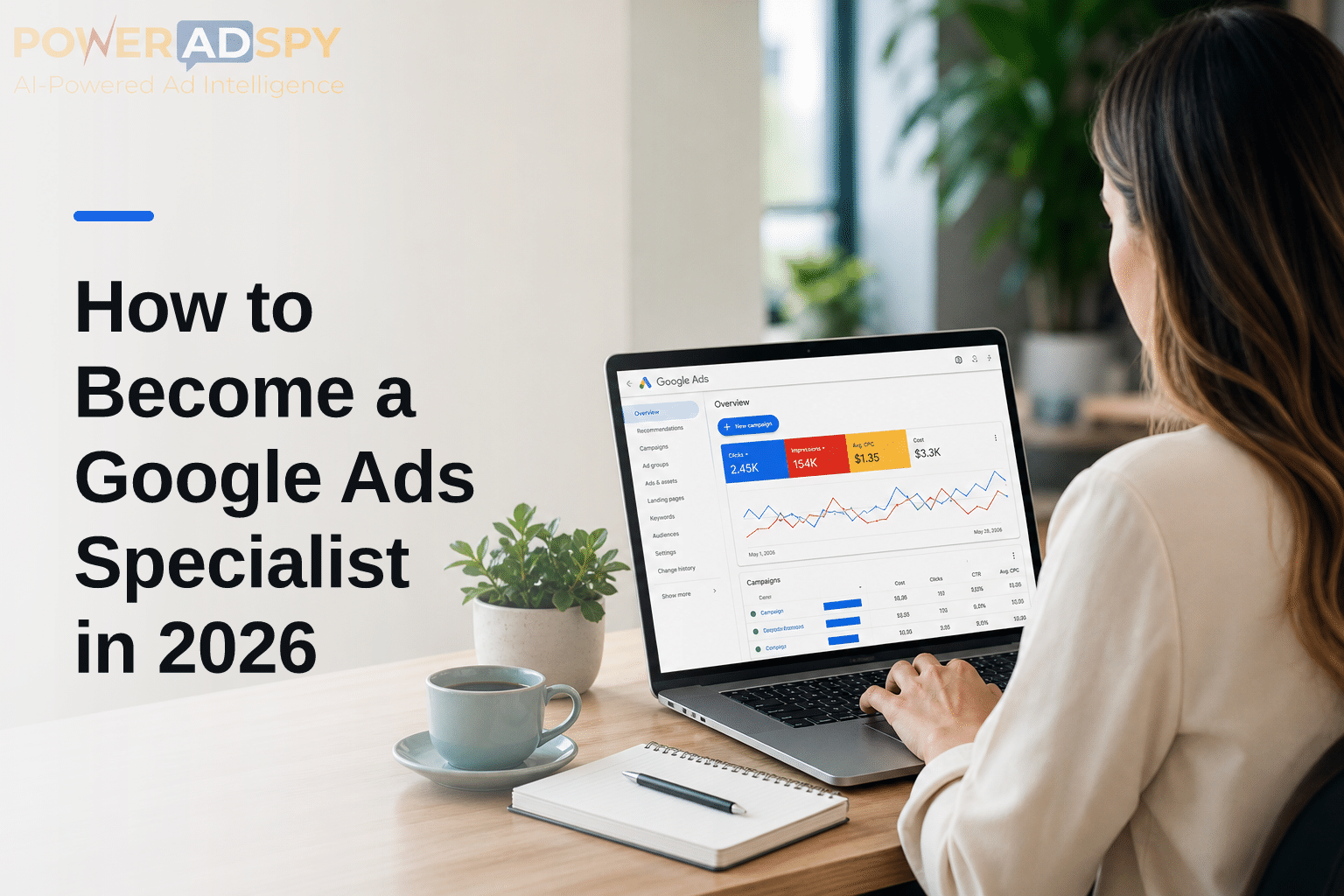
A Google Ads specialist builds and improves paid search and performance campaigns that hit a revenue, lead, or growth goal. You set strategy, then translate that into campaigns, ad groups or asset groups, keywords, audiences, bids, ads, and budgets that can be tracked and improved week by week.
First, you craft campaign strategy. You pick the campaign types (Search, Performance Max, YouTube, Display), set budgets and targets (CPA/ROAS), define locations and devices, and outline how the account should scale. For an eCommerce brand in the US, you might split Search for branded, competitor, and non-brand. Then you add Performance Max to capture dynamic demand with a product feed.
Second, you run keyword research. You group themes, choose match types, and plan negatives. For Search, you’ll map high-intent terms to bottom‑funnel pages and keep research terms broad enough to find new queries, but tight enough to protect spend.
Third, you manage bids and budgets. You set the right bidding strategy for the current data state: Maximize Conversions with a bid limit for a new account, then shift to Target CPA or Target ROAS once you have stable conversion data (about 30–50 conversions in the last 30 days is a common threshold). You reallocate budget based on marginal return, not gut feel.
Fourth, you write ads and build assets. You create responsive search ads (RSAs) with strong “pin” tests, add assets (the newer name for ad extensions) such as sitelinks, callouts, and structured snippets, and tailor headlines to intent. For YouTube, you match hooks and offers to audience signals and placements.
Fifth, you improve landing pages. You align the page with the ad’s promise, speed it up, and remove friction. For page speed and Core Web Vitals guidance, see web.dev’s Vitals overview. Fast pages convert better. Clear value props and proof beat clever copy.
Finally, you report. You track the metric that pays the bills: qualified leads, closed‑won revenue, or orders with profit. You show trends, not just snapshots. And you recommend next tests, not just status updates.
Specialist vs. “general digital marketer”
- The specialist owns the Google Ads profit loop: strategy → launch → measure → improve.
- The generalist dabbles across channels; the specialist lives in queries, assets, and bid strategies.
- The specialist builds negative keyword lists, rules, and experiments; the generalist passes off “paid” to a vendor.
As you become google ads specialist in 2026, think of yourself as a performance partner, not a button pusher. Your value is clear thinking backed by clean data and repeatable tests.
Also Read!
How to Find Competitors’ Keywords in Google Ads (AdWords)
How to Spy on Competitor Ads Using Adsparo and Other Ad Intelligence Tools
Step-by-Step Path to Becoming a Google Ads Specialist
You can learn this work without huge budgets. However, you must touch live accounts early and keep score with real conversions. Use these steps.
Learn Google Ads fundamentals
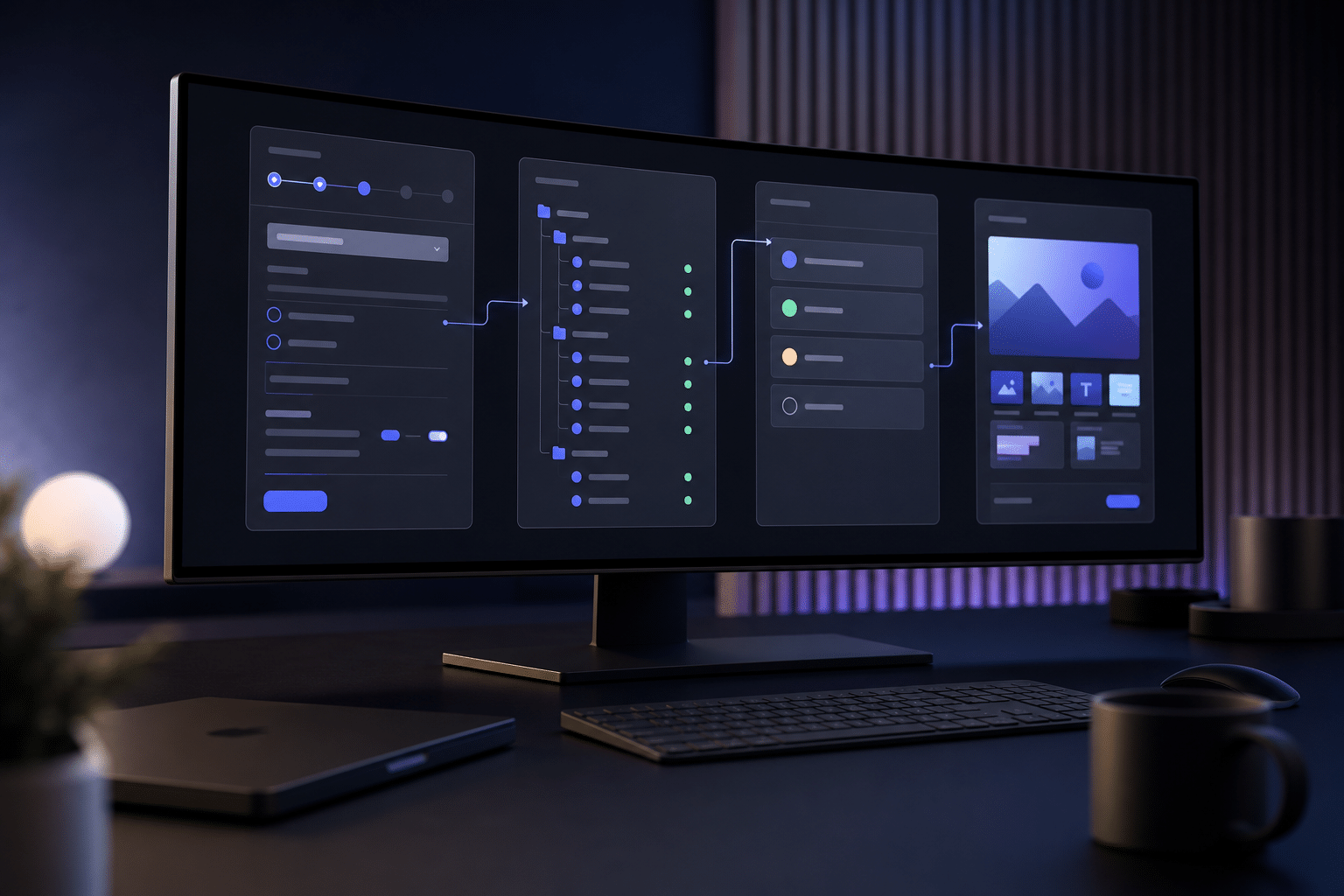
Start with the account structure: account → campaigns → ad groups (or asset groups) → keywords/audiences → ads/assets. Learn match types (exact, phrase, broad), negative keywords, RSAs, Performance Max, and bidding strategies (Max Conversions, Target CPA, Target ROAS). Take notes on how signals feed smart bidding. Read the UI like a dashboard, not a form.Get Google Ads certified
Certification won’t get you hired on its own, but it proves you know basic terms. Treat it as a checkpoint, not the finish line. It also helps you speak the same language as clients and hiring managers.Practice with small budgets
Spin up a $10–$30/day Search campaign for a personal project or a local service (e.g., “espresso cart rental” in one city). Keep one tight theme per ad group, add 10–20 negatives from day one, and run two RSA variants with different hooks. In two weeks, you’ll learn more than by reading for two months.Master analytics and tracking
Set up GA4, Google Ads conversions, and Enhanced Conversions if you can. Tag all forms and key actions. For a hands-on start with GA4 measurement, use Google’s GA4 developer guide. Then verify data with self‑click tests, timestamped test leads, and CRM checks. If tracking is wrong, your bidding will aim at the wrong target.Build a portfolio
Record before/after snapshots, not just “I ran ads.” Show the problem, the test, the change, and the result. For example: “Reduced wasted spend by $420 in 14 days by adding 63 negatives; CPL dropped from $92 to $54.” Include screenshots (with PII hidden), change logs, and a one-page write‑up per project.Specialize in a niche
Pick a lane by month 3–4. Good options: local lead gen (legal, healthcare, trades), B2B SaaS with demo forms, or DTC with Performance Max and YouTube. Each niche has patterns: for SaaS, you’ll guard brand terms and optimize qualification; for DTC, you’ll feed better creative and product data to PMax.Stay current
Set a 90‑minute weekly slot: read release notes, try one new feature, and log a micro-test. As you become google ads specialist, ship at least one change per week per account. Small, steady tests beat big swings.
Mini-sprints that build skill (do these in 30 days)
- Add a shared negative keyword list with 100+ junk terms; measure wasted spend drop in two weeks.
- Test two headlines that set clear expectation vs. clever phrasing; measure CTR and CVR.
- Move one mature campaign from Max Conversions to Target CPA; track CPA stability over 14 days.
- Ship one landing page tweak that speeds LCP by 0.5s; track CVR change.
Common Mistakes That Hold Back Aspiring Google Ads Specialists
You can avoid most rookie errors with a short checklist. Moreover, you’ll save real money.
Ignoring negative keywords
If you don’t add negatives, broad and phrase will match junk queries. Therefore, build a shared negative list on day one, then add to it three times a week. Pull the Search Terms report and remove poor intent, competitor brands (if policy and strategy dictate), and research queries.
Not tracking conversions properly
If your conversions fire on page load, double‑count, or miss, smart bidding learns the wrong target. As a result, your CPA drifts up while you “optimize.” Test every event, check deduping, and confirm that primary conversions in Google Ads match GA4 and your CRM within expected variance.
Skipping competitor research
You don’t copy them, but you should know their hooks and offers. Without this, you test in the dark. Scan SERPs for angles and assets. Then bring a stronger value prop or a clearer guarantee.
Overusing broad match
Broad match works when tracking is clean, budgets are sane, and you feed good signals. However, in a new account with thin data, broad can burn cash. Start with exact/phrase, add negatives, then layer in broad to scale once you can trust conversion data.
Neglecting ad assets (extensions)
Assets like sitelinks, callouts, and structured snippets boost CTR and give users more paths to click. Skipping them leaves money on the table. Add at least four sitelinks, four callouts, and two structured snippets per campaign.
“Set and forget” management
Smart bidding is smart, not magic. Without weekly search term trims, asset refreshes, and bid checks, performance stalls. Therefore, run a weekly 45‑minute cadence: search terms, asset view, top movers, and change history.
A quick pre-launch checklist
- Add 50–100 negatives and a plan to update them every 2–3 days at launch.
- Install GA4 and Google Ads conversion tags; test each event with time-stamped leads.
- Write two RSA variants and pin at least one key headline to test message control.
- Add sitelinks, callouts, and structured snippets; check mobile rendering.
- Set a 2‑week review to decide next bid strategy based on conversion volume.
Also Read!
How to Create High-Performing Real Estate Ads That Generate Leads
How to Analyze Perfume Advertisements and Create Winning Fragrance Campaigns
Essential Tools Every Google Ads Specialist Should Know
You don’t need a giant stack. You need a few tools you’ll use every day.
Google Ads Editor
This desktop app lets you bulk-edit campaigns offline, stage large changes, and push live in one go. For restructures, asset refreshes, and shared list updates, it saves hours. Use it to clone builds across markets and to keep a clean change history.
Google Analytics 4 (GA4)
GA4 is your source of truth for on‑site behavior. It helps you see drop‑offs, event quality, and revenue attribution. Moreover, it keeps your tests honest. Create explorations for pathing and build segments you can mirror in Ads.
Google Keyword Planner
This free tool is your first pass for demand sizing and grouping. Specifically, use it to cluster by intent, not just volume. Then validate with the Search Terms report once traffic flows.
SEMrush or SpyFu
For Search keyword intel and SERP mapping, these tools reveal competitor terms, ad history, and rough budgets. You’ll spot gaps you can win with a clear offer.
PowerAdSpy (ad intelligence)
When you need cross‑platform ad research, tools like PowerAdSpy can speed creative and angle testing. Its Google Ad Spy Tool supports targeted searches by niche keywords, advertisers, and competitor domains, plus GEO‑targeted details about competitor ads and complete ad analytics with social engagement metrics. According to PowerAdSpy user data, new users cut A/B testing volume by 15% under two months of usage, and 19% of users report improved revenue with less manpower and higher work efficiency. If you want to try it without risk, there’s a free trial. Use it to spot proven calls to action, offers, and creative themes before you spend on tests.
Where each tool fits in your week
- Research day: Keyword Planner + SEMrush/SpyFu + PowerAdSpy for angles and hooks.
- Build day: Google Ads Editor for bulk edits and clean structures.
- Measure day: GA4 explorations and Ads reports to plan next tests.
What to Do Next: Building Your Google Ads Career
Here’s how to turn skill into paid work in 2026.
First, pick a certification track
Choose one focus this week: Search, Display/YouTube, or Performance Max. Then earn the matching Google Ads certification. It adds a line to your résumé and a talking point for interviews.
Second, find a practice client or personal project
Offer a 30‑day pilot to a local business with a tiny budget ($300–$900 total). Set a clear scope: one campaign, one location, two ads, and weekly check‑ins. Or build leads for your own micro‑site (e.g., home‑services quote finder in one zip code).
Third, join PPC communities
You’ll learn faster by sharing wins and losses. Try r/PPC and PPC Hero for tactics and benchmarks. Ask for feedback on one chart and one change log, not your “whole account.
Fourth, set 90‑day skill goals
Be specific. For example: “By day 30, move one campaign to Target CPA with stable CPA ≤ $65. By day 60, ship three winning RSA headlines with +1.5 pp CTR lift. By day 90, present a portfolio with three case studies and verified tracking.” As you become google ads specialist, goals you can grade will keep you honest.
Fifth, choose a path: freelance, agency, or in‑house
- Freelance: You control your pipeline but need proof fast. Pilot offers help.
- Agency: You’ll see more accounts and patterns, but less time per client.
- In‑house: You go deep on one model. You’ll learn data, margins, and ops.
If you want to trim test cycles, note that PowerAdSpy reports 26% of users save at least one day when they prepare an advertising project, and 23% say the tool is affordable, easy, and has full features for their needs. Use intel tools to cut dead tests, then put the time into better creative and cleaner pages.

Key Takeaways
- You get hired for a repeatable profit loop: plan, launch, track, and improve with clear tests.
- Clean tracking beats clever tactics; fix data first, then feed signals to smart bidding.
- Start small: $10–$30/day tests, 50–100 negatives, two RSA variants, and weekly trims.
- Tools matter less than habits; use a short weekly cadence to ship wins you can show.
- A niche by month 3–4 helps you price on value, not hours.
What to Do This Week
Block five hours. Pass one certification. Launch one $10–$30/day test with tight intent and tracked forms. Add 50 negatives and three assets per campaign. Then write your first one‑page case study. Repeat next week with one new test and one page fix. That is how you stack wins and become a pro in 2026.
**Get Started Free In Minutes →
For landing page speed and conversion cues, review Core Web Vitals guidance once this month on web.dev. For measurement, keep the GA4 developer guide handy and test every event before you scale spend.