**Start Free Ad Research Today →
Here’s the short answer: study the ad’s context, not just the creative, then test small, fast changes. Marketers who analyze makeup advertisements improve results faster because they see what’s driving action, not just what’s pretty. In 2026, that means pulling data on placement, audience cues, scroll-stopping frames, hooks, and CTAs, then building a repeatable review habit each week.
As a bonus, cutting research guesswork saves real time. For example, 26% of users save at least one day preparing for an advertising project when they systemize ad research (Source: PowerAdSpy user stats). That’s a full day back to plan angles, brief creators, and ship more controlled tests. You’ll feel that in ROAS and in team morale.
What Makes Makeup Advertisements Work (And Why You Should Study Them)
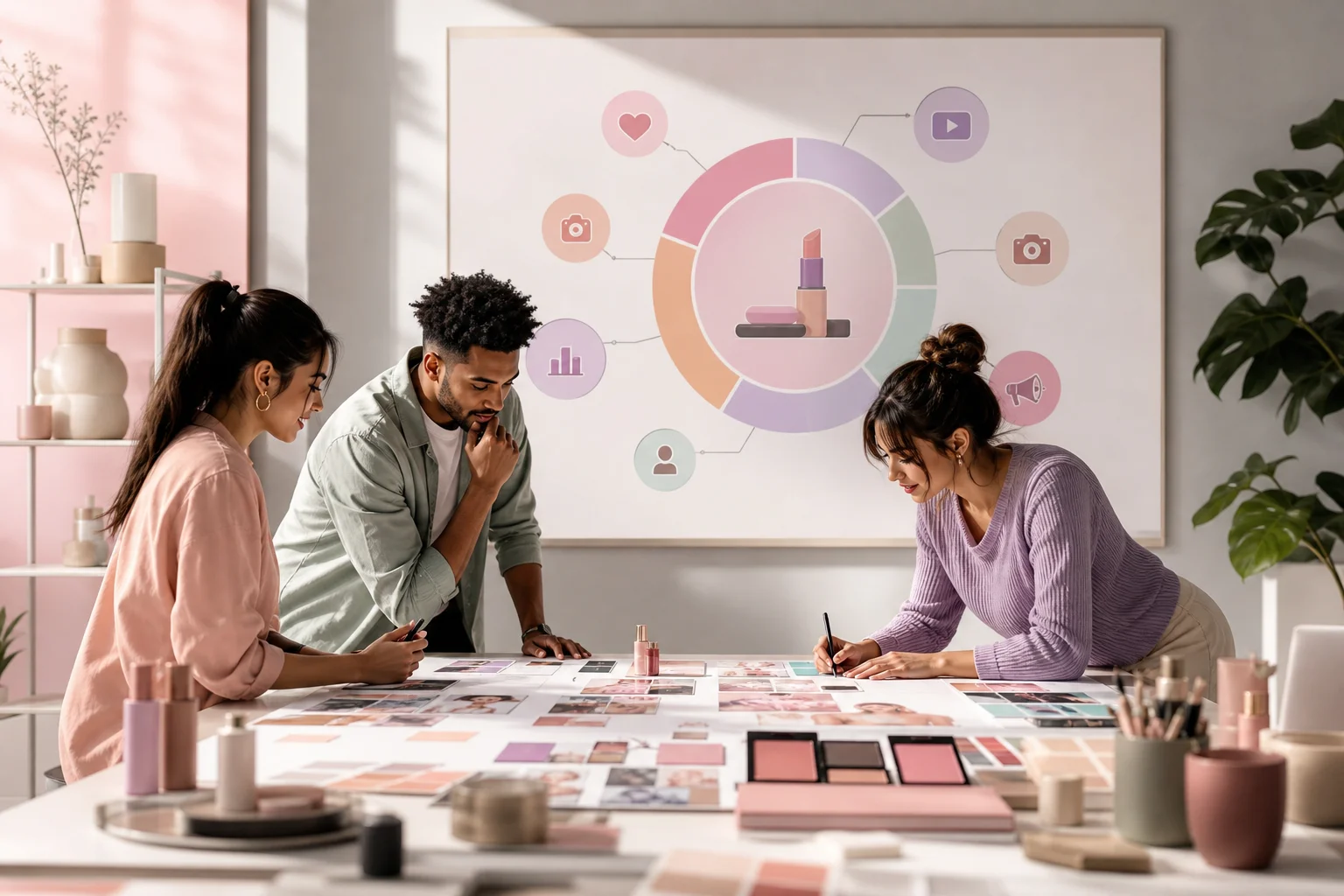
Great beauty ads sell a feeling in one second, then prove it in ten. The best unite a visual promise, a social cue, and a direct path to try. You should study them because each strong ad is a tiny lab report: it shows which claim, scene, and incentive moved a real, paying audience.
Consider common brand archetypes:
- Luxury house (Dior Beauty): slick macro shots, gold accents, slow camera moves, model prestige.
- Pro-artist (MAC Cosmetics): bold color payoffs, quick swipes, studio lighting, technique focus.
- Clean/skin-first (ILIA, Kosas): soft natural light, sheer coverage, real-skin texture, minimal copy.
- Indie disruptor (Glossier, e.l.f. Cosmetics): UGC feel, friends-in-bathroom vibe, witty lines, price hooks.
Visual storytelling
Makeup lives in motion. A tight brush glide, a glide on the waterline, a lip-smack, each cue tells payoff fast. For complexion, start with a “problem” frame (redness, acne scars), then a single-swipe reveal. For color, move from product-in-pan to swatch-to-face in three beats. The viewer should decode “what it does” with the sound off.
Before/after formats
Before/after still works if it looks honest. Keep the angle, light, and crop consistent. For lashes, tilt down to show lash line density first, then open wide on the after. For foundations, tap-test with fingers to stress transfer claims. The test is simple: would a skeptical peer call this fair?
Influencer integration
Use creators for “proof.” Match creator skin type and shade to the claim you sell. A derm-creator reading the INCI isn’t right for a neon liner, a backstage artist is. On the other hand, a sensitive-skin serum needs a credible routine voice and close-ups of texture.
Emotional hooks by platform
- Instagram Reels: glossy but quick. First 0.8 seconds must show payoff or a face. Use on-screen captions to land the claim.
- TikTok: raw and jumpy. Open with a strong hook (“You won’t believe this $9 dupe”) then chaos-cut to application. Social proof and dupe culture drive saves.
- YouTube pre-roll: you have 5 seconds pre-skip. Front-load the result shot and a line the viewer cares about (“Crease-proof liner in 8 hours”) before your logo.
“We used to struggle with Facebook ads for lead generation. PowerAdSpy helped us see what competitors were doing right, and suddenly, things clicked.” — Steve Decker, SaaS Marketing Manager
Studying patterns across these archetypes shows what to test next in your mix. As you analyze makeup advertisements improve your hit rate by copying the structure, not the look.
Step-by-Step: How to Analyze Any Makeup Advertisement
You need a repeatable method you can run in 10–15 minutes per ad. Here’s the playbook I use with teams and clients.
- Identify the platform and format
- Note the exact placement (e.g., Instagram Reels feed, TikTok in-feed, YouTube pre-roll).
- Record video length, aspect ratio, sound design, and if captions appear on screen.
- With ad spy tools, filter by Ad Positions to segment ads by feed, story, marketplace, or video feed. This isolates norms per slot.
- Study the visual hierarchy and color palette
Where do eyes land first? Face, product, text overlay? – Log the first frame and first 3 seconds. Is there a bold color flash, a close-up, or fast motion?
Note palette: luxe blacks/golds vs. pastel “clean” tones. Palette signals price and vibe.
- Decode the copy and CTA
- Pull the exact hook line and any on-screen claims (“Transfer-proof for 12 hours”).
- Classify CTA: “Shop Now,” “Find Your Shade,” “Try Mini,” “Join Waitlist.” Match it to funnel stage.
- Sort what’s benefit vs. feature. Benefit-led lines win in beauty more than specs.
- Note targeting signals (age, gender, geo)
- Read casting, slang, references, and price cues for age and taste tells.
- Spy tools let you search ads by age group, gender, and country so you can pair creative with audience. This context stops you from chasing the wrong look.
- Track engagement metrics
- Save reach proxies: visible likes, comments, shares, views, and when last seen.
- Tools that provide engagement-oriented details reveal if views came with comments like “Shade?” or “Transfer test?” Use this to spot friction points for your PDP.
- Document patterns across multiple ads
- Review 10–20 ads per niche. Tally recurring hooks, first frames, CTAs, and offers.
- Record test ideas: “Swap first frame to payoff,” “Change CTA to Find Your Shade,” “Add dupe hook,” “Shorten to 9–12 seconds.
Simple analysis worksheet (copy this)
- Placement + format:
- First frame + 3-sec beats:
- Hook line + claim:
- Product proof shot:
- CTA type:
- Audience signal (age/geo):
- Engagement notes:
- Next test idea:
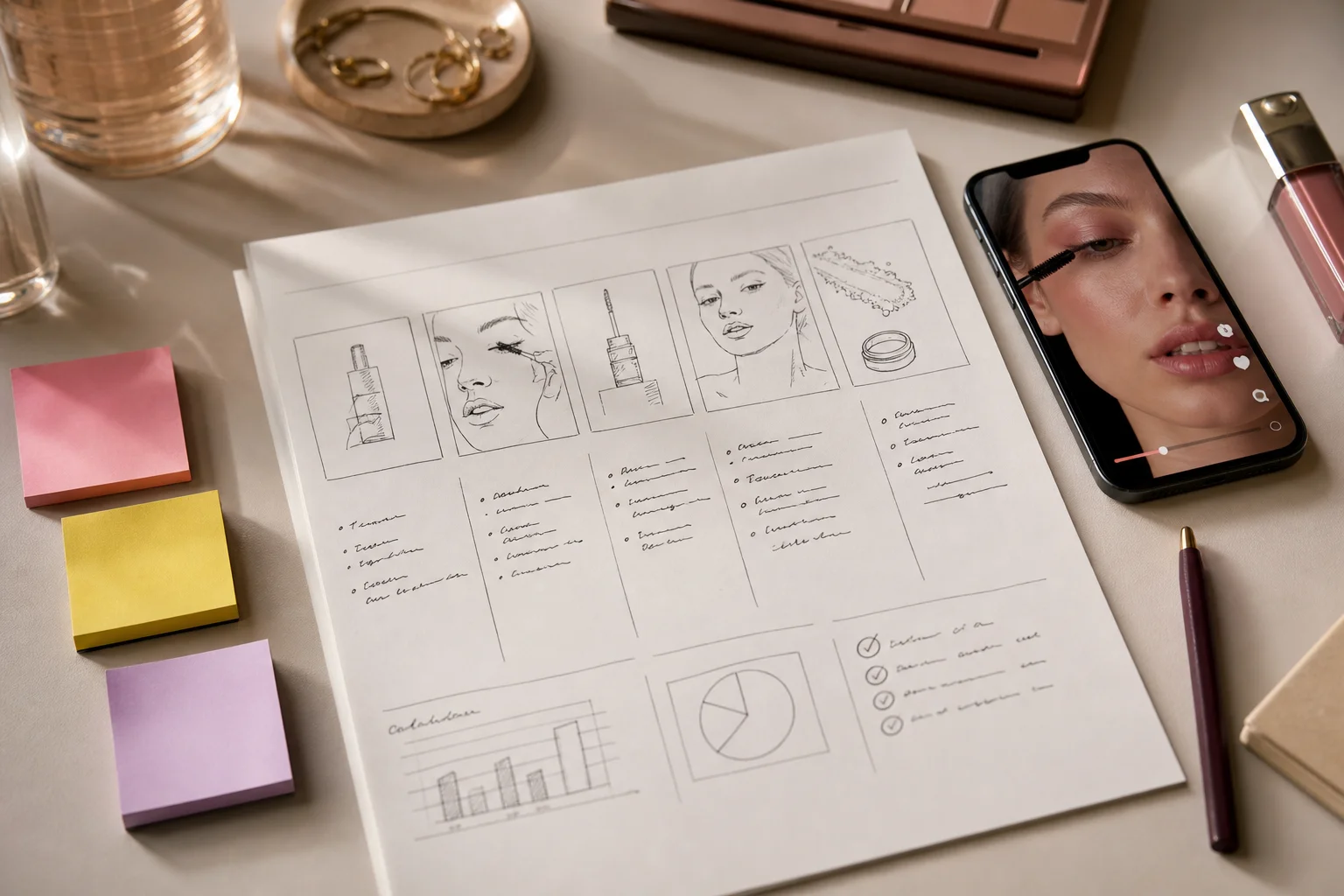
Furthermore, save the top ads in a shared folder with tags for platform, format, and CTA. As you analyze makeup advertisements improve your odds by testing only one change at a time. That discipline makes wins repeatable, not lucky.
**Book a Demo to See Live Ad Data →
Also Read!
How to Analyze Perfume Advertisements and Create Winning Fragrance Campaigns
How to Use Meta Events Manager to Track and Optimize Your Ad Campaigns
5 Common Mistakes When Creating or Studying Makeup Ads
Mistake 1: Copying creative without context
A glossy, slow pan may crush for a luxury brand but flop for a Gen Z dupe. Without knowing audience age, geo, and price point, you’ll copy the vibe and miss the reason it worked. Instead, pair the creative with the targeting context you infer from casting, comments, and CTA.
Mistake 2: Ignoring platform-specific best practices
Reels likes high-contrast first frames and on-screen captions. TikTok rewards creator-led chaos cuts and “dupe” culture. YouTube pre-roll needs the result shot before 5 seconds to beat the skip. Therefore, adapt the same angle three ways, not one-size-fits-all.
Mistake 3: Over-relying on discount CTAs
“20% off” can spike clicks, but it trains people to wait for a sale. Beauty thrives on proof. Swap a blanket discount for a trial-size CTA, shade finder, or a “mini + free ship” offer. This move grows AOV while keeping urgency.
Mistake 4: Neglecting video in a visual category
Static can work for shade grids or bundles, but makeup payoffs live in motion. A 9–12 second clip with a clear first swipe often beats a still with text. Moreover, video lets you stack proof: swatch, face, wear test, then CTA.
Mistake 5: Failing to test variations
One ad is a guess. Three is a plan. Test the first frame, hook line, and CTA as separate variables. For a liner, try “24-hour wear” vs.
“transfer-proof mask test.” For a mascara, test “tubing” vs. “no flake” angles. And yes, run short, mid, and long cuts per placement.
“We’ve cut back on testing time and launched campaigns that get results. This tool is now our agency’s secret weapon!” — Charlotte Neilson, Digital Marketing Strategist
As you analyze makeup advertisements improve your tests by logging which swap moved the needle, not just which ad “won.” A tight log beats memory every time. For a deeper view on why repeated exposure builds lift, see the psychology of the mere-exposure effect.
Tools and Resources for Researching Makeup Advertisements
Start with free, official sources:
Meta Ad Library (free): Browse current ads by page. Strength: transparency and live variants. Limit: weaker engagement context.
TikTok Creative Center (free): Trending sounds, hashtags, and top ads. Strength: trend radar plus creative benchmarks. Limit: country toggles and time windows can miss niche ads.
Cross-platform competitive research tools:
PowerAdSpy (AI-powered ad intelligence): Access to ads on Facebook, Instagram, TikTok, Google, Reddit, Pinterest, and more. Strengths include access to data on millions of ads from over 100 countries, database coverage of both video and image ads, and the ability to search ads based on niche keywords, advertisers, and competitor domains. Filters include ad positions, audience age/gender/country, CTA types, and more. You can also jump to live posts to review comments and save ideas with a bookmark feature.
Foreplay (swipe file builder): Great for tagging and team curation of ads across sources. Strength: fast save-and-organize flow. Limit: relies on the ad sources you feed it.
Minea (e‑commerce ad tracking): Useful to spot product trends, influencers, and paid placements across networks. Strength: product-first views for DTC. Limit: depth varies by niche.
Use more than one tool. For example, pull transparency data in an official library, then enrich with engagement context in an intelligence tool. As you analyze makeup advertisements improve your tool stack by picking one “broad net” and one “organize + tag” tool.
“We reduced A/B testing volume by 15% within two months and still improved revenue by 19% with better insights.” — Archie Gilbert, Marketing Director
Therefore, tool choice should serve your method, not replace it. If a team member can run your exact worksheet in any tool, you’ve got a strong process.
**Get Instant Access. Free Trial →
What to Do Next: Building Your Makeup Ad Swipe File
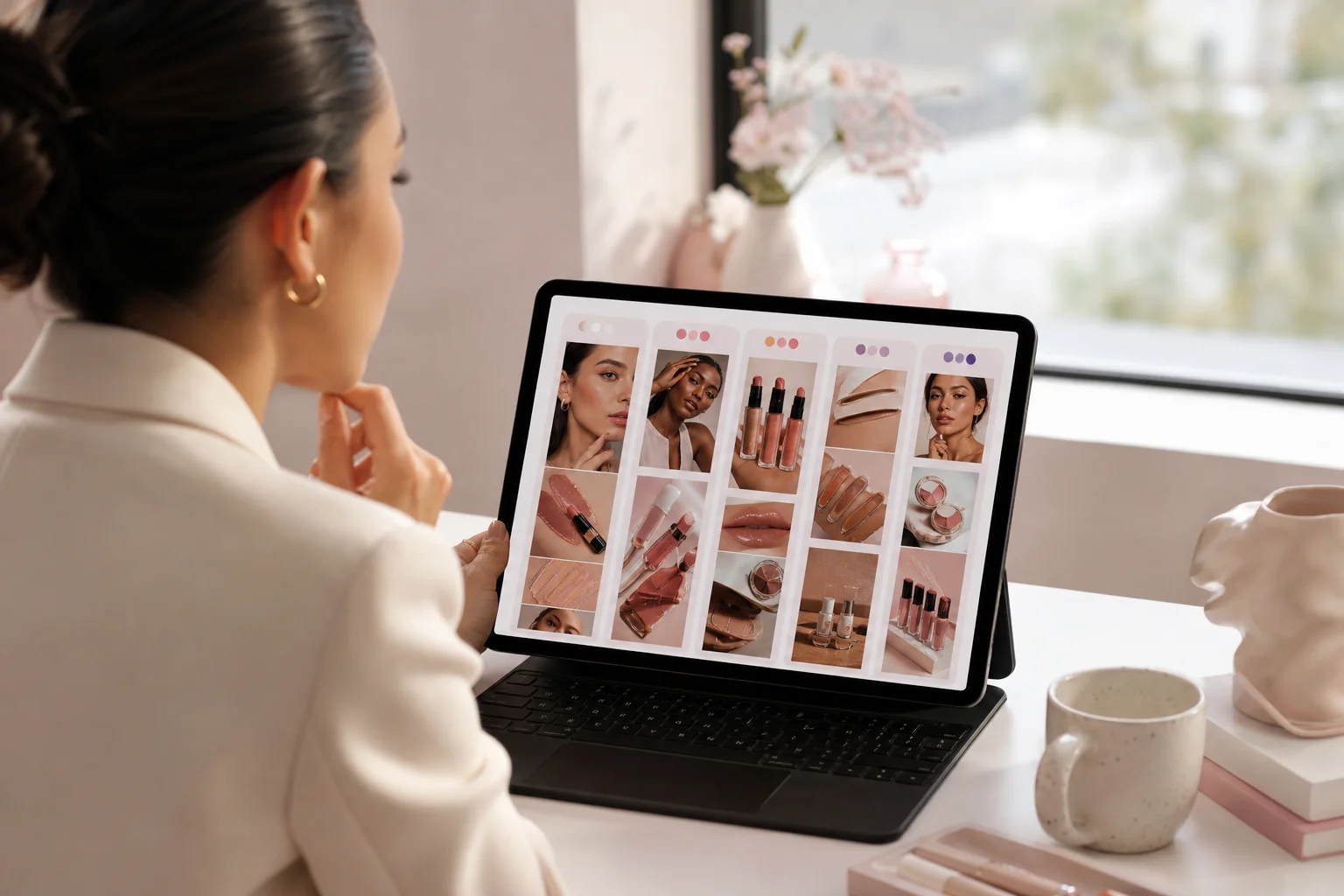
Your best next move this week is to start a structured swipe file. Do not aim for hundreds of ads. Aim for 30 good ones you can tag and learn from. Keep it simple and keep it shared.
Organize by:
- Platform: Instagram Reels, TikTok, YouTube pre-roll.
- Ad format: UGC selfie demo, studio macro, before/after carousel, product explainer.
- CTA type: “Shop Now,” “Find Your Shade,” “Try Mini,” “Bundle & Save.
Then, save 10 makeup ads per platform (30 total) from brands that mirror your price tier and target age. Tag each with the first frame, hook, claim, proof shots, and CTA. Use a bookmark feature to keep everything in one place so your team can reference and add notes.
Iteration over imitation
The goal is not to copy. It’s to spot patterns that match your brand’s truth. For instance, if three clean-beauty ads win with soft daylight and quiet captions, test that lighting and caption style with your own claims. As you analyze makeup advertisements improve your odds by testing one new variable per week, not five.
Key Takeaways
- Study structure, not style: platform, first frame, hook, proof, and CTA create results.
- Document context: age, geo, and price tier matter as much as the creative idea.
- Test small: change one variable at a time and log results you can defend.
- Build a swipe file: save 30 ads across three platforms and tag them for fast briefs.
- Use tools to speed research: pair official libraries with ad intelligence you trust.
What to Do This Week
Block two hours. Save 10 Reels, 10 TikToks, and 10 YouTube pre-rolls from brands like yours. Fill the worksheet for five. Write three test briefs: change the first frame, swap the hook, and try a “Find Your Shade” CTA. As you analyze makeup advertisements improve your plan by picking one test to ship first, speed beats scale.
**Try the Ad Research Workflow Free →
For a primer on controlled testing language and design, read the overview on A/B testing. Use it to frame cleaner test hypotheses so your next 2026 launch wastes fewer dollars and teaches more.