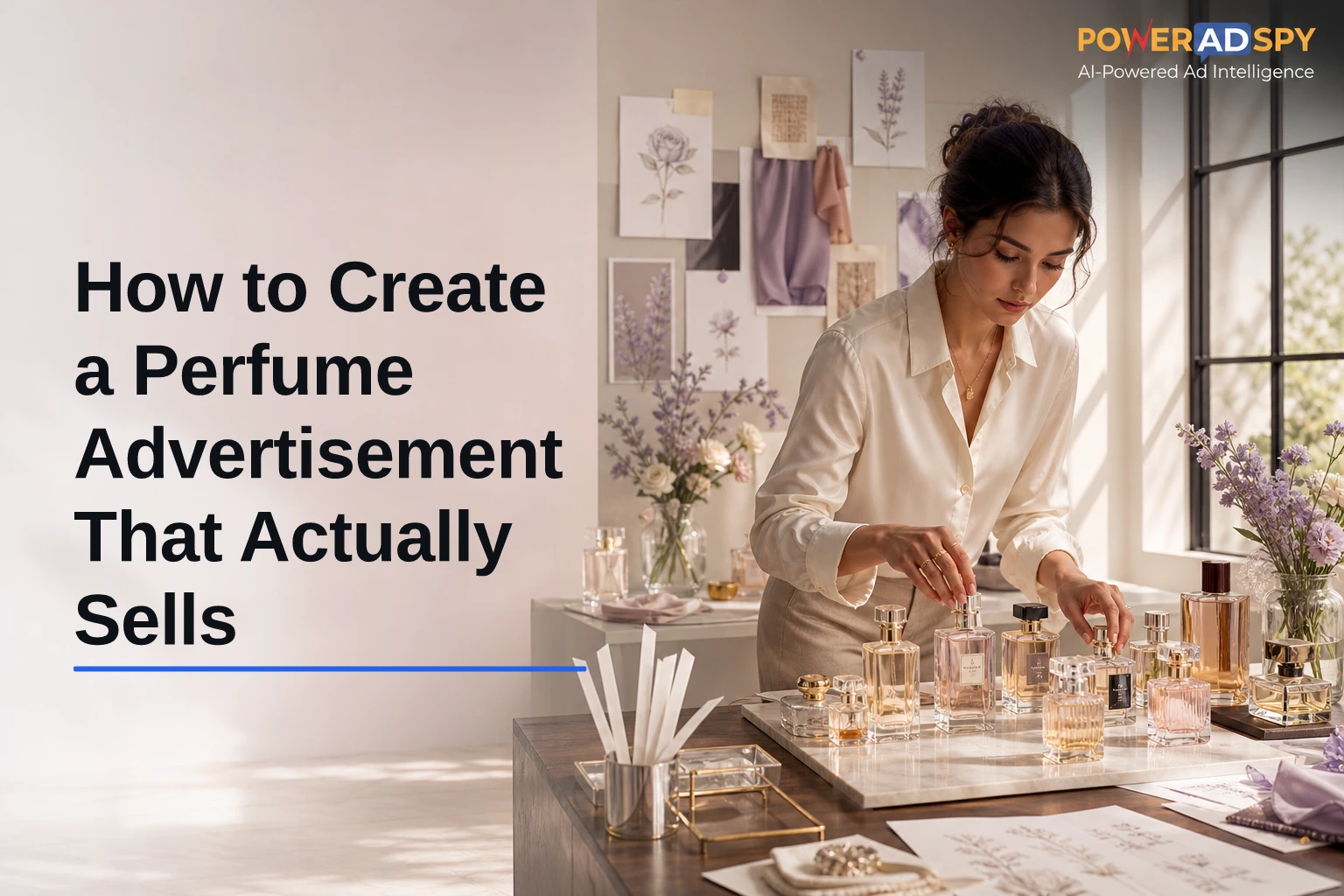

Most perfume ads don’t sell scent; they sell a feeling people want to keep. If you need to create perfume advertisement actually sells, build an emotion-led story, express the notes in visual cues and vivid verbs, and design for the platform you’ll use in 2026. Then, test small, learn fast, and scale what wins.
Here’s the short answer you can act on: anchor your concept in one precise emotion (confidence, intimacy, escape), make the bottle a totem in that world, write copy that translates notes into scenes, and end with a clear action that fits how people shop on that channel.
As a creative director, I’ve watched the best fragrance work borrow from film, not from ads. Think Chanel No. 5’s cinematic worlds or Dior Sauvage’s stark horizons.
They trade in memory and identity. That’s smart, because smell is hard to show.
You have to make people feel it first.
In 2026, attention is tight, formats are unforgiving, and the bar for taste is high. But the brands that sell do a few simple things very well. You can do them too.
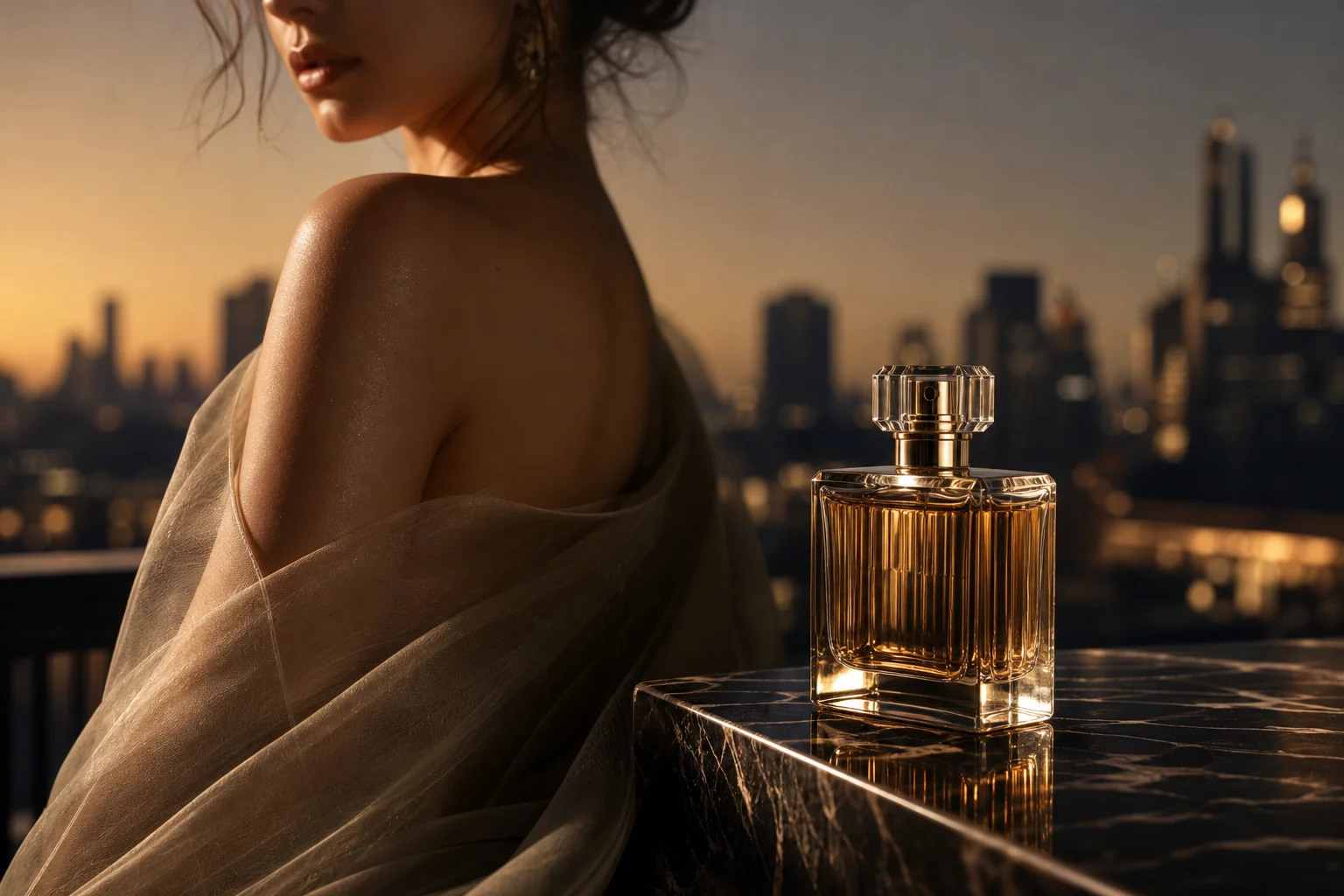
What Makes a Perfume Advertisement Work (And Why Most Fail)
You’re selling an invisible sense with images and sound. That’s the core challenge. The workaround is emotion: scent ties to memory through brain areas that process emotion, which is why it can feel instant and vivid (see Olfaction). So, ads that work anchor on one feeling, not a long list of notes. To create perfume advertisement actually sells, pick that feeling first, and protect it across script, shot list, music, and color.
Most failures come from borrowed gloss. Pretty shots without a point blur together. Aspirational branding isn’t about perfection; it’s about a believable life you can step into. Calvin Klein’s “Obsession” ads owned raw intimacy.
Chanel No. 5 claimed timeless glamour. Dior Sauvage framed stark independence. Each chose a lane and stayed there.
Moreover, the psychology behind strong fragrance ads is simple but strict:
- People remember peaks and endings more than middles (the peak–end rule). Craft one striking image and a clean close. – Repeated, pleasant exposure builds liking (the mere-exposure effect).
Use consistent visual codes across spots and posts. – Clear self-identity cues sell. If viewers can say “this feels like me,” they’ll lean in.
Emotion > Explanation
Perfume buyers don’t need a chemistry lesson. They need a reason to want a scene you promise. For example, Glossier You shows skin, fabric, and warmth, then labels it “you, but warmer.” Simple. If you’re tempted to stack metaphors, stop. One metaphor, done well, converts better than five vague ones.
Aim for a single keyword emotion, one dominant setting, and one icon shot of the bottle. That trio will keep your team aligned.
Finally, remember platform behavior. The same film won’t land the same way everywhere. We’ll get there next.
Step-by-Step: How to Build a Perfume Ad Campaign From Scratch
If you want to create perfume advertisement actually sells, follow these seven moves. They’re simple, but they force focus.
1.
Write a one-paragraph brand stance. Include: the core emotion, the role of the bottle in someone’s day, and three visual codes (color, texture, light). For example, “Modern quiet luxury; the bottle as a daily ritual; matte black, soft linen, late-afternoon sun.
2.
Choose a story shape that fits your stance: “Transformation” (day to night), “Reunion” (distance to closeness), or “Quest” (city to horizon). Chanel often plays “Reverie,” while Dior Sauvage taps “Quest.” Lock that in before scripts.
3.
Decide where the first sale happens. If it’s social, plan for 6-second hooks, 15–30 second cuts, and square/vertical crops. If it’s print or OOH, design for one hero image with space for a short line. If it’s video-first, storyboard three beats you can also slice into social posts.
4.
Make a shot list that translates notes into textures. Bergamot could be morning light on crisp cotton. Amber could be a warm bar lamp on brushed brass. Avoid clichés like petals-in-slow-motion unless you twist them. Keep one bottle macro shot clean and iconic.
5.
Use verbs and senses: “crack of citrus,” “warm skin,” “late-night cedar.” Keep it sparse. One headline (4–7 words), one support line (8–14 words), and a call to action. For social captions, lead with the feeling, then the note, then the link.
6.
Start narrow. Build 2–3 micro-segments tied to your emotion. For “confidence,” think event-goers, tailored style fans, or premium sneaker buyers. Match creative variants to each micro-segment rather than blasting one cut to a broad pool.
7.
Ship a small-budget test on one platform, with 3 creative variants and 2 copy variants. Kill losers within 72 hours. Scale the top 1–2. Save what works as brand codes you’ll re-use for the next launch.
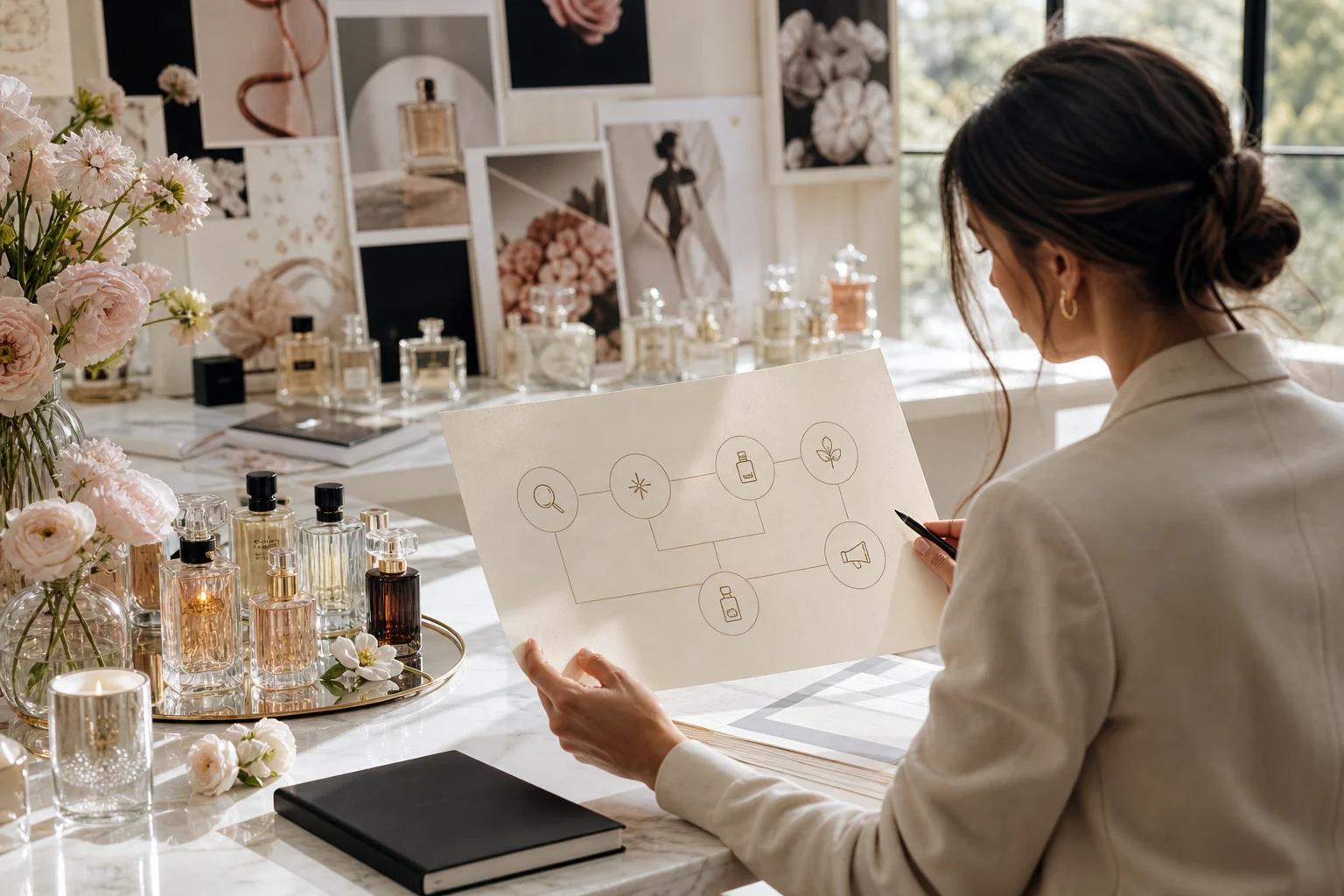
A Working Beat Sheet
- Hook (0–2s): Emotion cue + bottle hint.
- Middle (3–12s): Setting shift + texture close-ups to “show” notes.
- Peak (13–18s): The icon shot you’ll use in print/OOH.
- End (19–25s): Brand, bottle, short line, clean CTA.
Therefore, you’ll leave with a film and a kit: thumbnails, reels, print, and a landing image that all rhyme.
Also Read!
How to Create Your First Instagram Post That Actually Gets Noticed
5 Common Mistakes in Perfume Advertising (And How to Avoid Them)
To create perfume advertisement actually sells, avoid the traps the category falls into. They’re fixable, but only if you see them early.
1.
Rose petals, wind machines, and vague beaches. We’ve seen them. Chanel broke cliché by staging a micro-film with a real arc. If you must use a trope, twist it: show smashed petals, a storm beach, or only the aftermath.
2.
A 30-second TV cut rarely drops cleanly into 9:16. Dior Sauvage’s desert scenes work in widescreen, but the social edits start with a tight, moving portrait and guitar riff. Shoot native vertical takes, not just crops.
3.
Luxury can still ask for action. “Try the scent at Selfridges today” beats “Learn more.” On social, place the CTA verbally or on-screen before the final slate, not only at the end card.
4.
Brands repeat color, type, and music cues. Study them. Then choose to contrast or echo with intent. For example, if three rival brands run light, airy palettes in spring, own deep jewel tones and candlelight to stand out.
5.
“Women 18–55” is not a market; it’s a continent. Start with niche fashion interests, recent event tickets, or “gift givers” in Q4. Then expand from the segments that convert.
A Quick Diagnostic
- Can you say your ad’s core emotion in one word?
- Would your headline fit on a 300×250 banner and still make sense?
- Does your first 2 seconds stand on its own as a thumbnail?
- Does your bottle look like a hero, not an afterthought?
If you answer “no” to any of these, cut until you can say “yes.”
Tools and Resources for Researching Perfume Ads
Research saves money, taste, and time. If you aim to create perfume advertisement actually sells, use a small stack that shows you what runs now, who it’s for, and how to outdo it.
- Meta Ad Library (free): Search live Facebook and Instagram ads by brand name and keyword. Great for seeing message and format in the wild.
- PowerAdSpy (ad intelligence): One option to study creative across Facebook, Instagram, TikTok, Google, Reddit, Pinterest, and more with AI-powered filters. You can search by niche keywords, advertisers, or competitor domains, browse data from millions of ads across 100+ countries, and view GEO-targeted details on competitor ads. Users report a 15% reduction in A/B testing volume within two months and a 19% revenue improvement with a reduced workforce and better efficiency, plus 26% save at least one day preparing for an ad project. Data points like these help you decide faster and spend less.
- Canva: Build fast mockups for storyboards, reels covers, and OOH comps. Keep grids, margins, and crop-safety in mind for quick stakeholder sign-off.
- Google Trends: Check seasonality by note (e.g., “vanilla perfume” spikes before holidays). Map creative launches to rising search weeks.
What to Look For in Research
- Format patterns: Are top ads image carousels, short reels, or long-form films?
- CTA phrasing: “Shop now,” “Try in store,” or “Find your scent” — which wins in your niche?
- Creative codes: Color, fabric, light, and type choices that keep showing up in winners.
Moreover, log what you find in a simple sheet: brand, format, hook, line, CTA, targeting hints, engagement signs, and your “steal/avoid” notes. Then decide how you’ll differ with purpose.
**Book a demo, instant insights →
What to Do This Week: Your Perfume Ad Action Plan
To create perfume advertisement actually sells, act now with a tight seven-day sprint. The goal is a small win and a repeatable way of working.
Audit 10 competitor perfume ads
Block 90 minutes. Use Meta Ad Library and an ad intelligence tool to save 10 ads that match your price tier. Note hook frames, dominant color, headline length, bottle treatment, and CTA. Tag two as “contrast,” two as “echo,” and decide where you’ll stand.Draft 3 ad concepts with different emotional angles
Write three one-paragraph concepts: “Confidence at dusk,” “Closeness in the kitchen,” “Escape on a train.” For each, add a 6-shot list, a 6–8 word headline, and one sound cue. Pick the one that still feels clean after you cut two shots.Run a small-budget test on one platform
Spend a controlled amount on a single platform (e.g., $300 on Instagram Reels) with two variants of your chosen concept: one with a bold open, one with a softer open. Kill the weaker one at 48–72 hours. Keep the winner’s first frame, headline style, and color palette as your new brand codes.
A Simple Success Scorecard
- Hook hold (first 3s): aim for a clear, rising view-through curve.
- Save rate (for Reels/TikTok): higher saves signal true interest.
- CTR to product page: match CTA to platform behavior.
- Add-to-cart rate: proves intent beyond curiosity.
Therefore, roll the winner into your next formats, stories, a print still, and a landing page header, so your world feels consistent.
Key Takeaways
- Sell a feeling first. Then translate notes into textures, scenes, and verbs people can sense.
- Protect one emotion, one setting, and one icon bottle shot across every format.
- Design for the platform. Shoot native vertical, plan 6–15s hooks, and keep a clean end frame.
- Start narrow with targeting and scale only what the data proves.
- Research saves days. Use ad libraries and intelligence tools to spot what works now.
Final thought: great fragrance ads don’t shout. They invite. In 2026 and beyond, the brands that win will shape one clear world and let people see themselves inside it. Build that world with care, test it with discipline, and keep only what makes someone lean closer.