
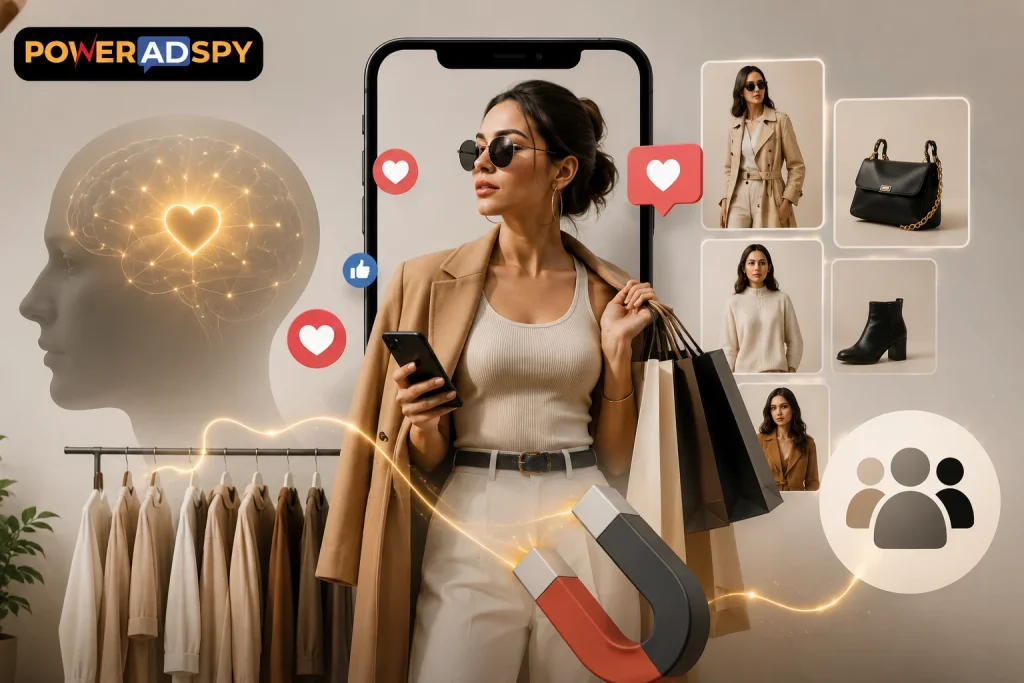
Have you ever scrolled through Instagram and suddenly felt the urge to buy a pair of sneakers you didn’t even know existed five minutes ago? That’s not a coincidence; that’s psychology at work.
Marketing brands on social media have mastered the art of tapping into human emotions, desires, and behavioral triggers to convert casual scrollers into loyal customers. Fashion, more than any other industry, is deeply woven into identity and self-expression, which makes it the perfect playground for psychological marketing.
Understanding how fashion brands use emotion, color theory, social proof, and scarcity to influence buying decisions can help marketers and business owners craft smarter, more effective strategies that actually resonate.
Listen To The Blog Post!
The Psychology of First Impressions in Fashion Ads
Humans form opinions within milliseconds. Marketing brands in the fashion space know this, which is why every ad is crafted with careful visual hierarchy. The choice of colors, models, lighting, and typography isn’t random; it’s a calculated psychological play.
Warm tones signal energy and confidence, while muted palettes evoke luxury and exclusivity. Fashion brands use aspirational imagery to create an emotional bridge between “who I am” and “who I want to be.” When a potential customer sees a model that reflects their ideal self, they aren’t just looking at clothing; they’re imagining a transformed version of their life.
This aspirational gap is one of the most powerful drivers of fashion purchases on social media.
Social Proof: Why Everyone Is Wearing It
Social proof is one of the strongest psychological forces in consumer behavior. When people see others wearing or endorsing a product, they automatically assume it’s worth having. This is why brands marketing on platforms like Instagram and TikTok heavily invest in user-generated content, influencer collaborations, and customer testimonials.
The ripple effect of seeing a trusted influencer wear a brand builds instant credibility. Fashion marketing trends have shifted dramatically toward micro-influencer creators with smaller but highly engaged audiences because their recommendations feel more genuine.
When followers trust the messenger, they trust the message. Social proof essentially removes purchasing hesitation, deciding to buy feel safe, validated, and even socially necessary.
Scarcity and FOMO: The Fear That Sells
Few psychological triggers are as potent as the fear of missing out. Fashion marketing brands have weaponized scarcity brilliantly. Limited-edition drops, countdown timers, and “only 3 left in stock” messages create urgency that bypasses logical thinking.
When something feels rare, it automatically feels more desirable. This is known as the scarcity principle. Social media amplifies this effect because real-time updates and story posts make audiences feel like they’re watching a live event. If they don’t act now, they miss out.
Marketing brands that use scarcity well don’t just sell products; they sell the experience of being part of something exclusive. That emotional pull is what separates impulse buys from forgettable ads.
Color Psychology in Fashion Social Media Marketing
Colors communicate long before words do. For marketing brands in fashion, color is not just an aesthetic decision; it’s a strategic one. Red triggers excitement and urgency, often used in sales and promotional posts.
Black communicates sophistication and luxury, favored by high-end fashion labels. Pastel tones evoke softness and approachability, popular in lifestyle and wellness-adjacent fashion brands. When a social media feed is color-consistent, it builds brand recognition subconsciously.
Followers start associating those shades with that brand even without seeing a logo. Social media marketing for fashion brands increasingly relies on color coherence across all posts, stories, and reels to create a visual identity that feels familiar, trustworthy, and emotionally appealing to their specific target audience.
Storytelling: The Emotional Core of Fashion Marketing
Facts inform. Stories sell. The most effective marketing for fashion brands goes beyond showcasing products; it builds a world the audience wants to be part of. Whether it’s the journey of a sustainable fabric, the designer’s inspiration behind a collection, or a real customer’s transformation story, narrative creates emotional connection.
On platforms like Instagram Reels and YouTube, fashion brands have more storytelling real estate than ever. When a viewer feels emotionally invested in a brand’s story, they’re far more likely to follow, engage, and eventually purchase.
Marketing brands that invest in authentic storytelling consistently outperform those that rely purely on product-focused content, because emotion drives purchase decisions far more than logic ever will.
Identity and Self-Expression: What Fashion Buying Really Means
Buying fashion is rarely just about clothing. It’s about signaling who you are or who you aspire to be to the world. Marketing brands that understand this sell identity, not fabric. Consumers choose brands that align with their values, whether that’s sustainability, boldness, minimalism, or luxury. Social media has made this identity expression more public than ever, with hauls, outfit posts, and style content generating millions of views.
Fashion brands that clearly articulate their values and aesthetic attract followers who see themselves in that identity. This deep psychological alignment is why brand loyalty in fashion can be so fierce. When someone wears a brand, they’re making a statement about who they are, not just what they wear.
Read More:
Fashion Marketing: Killer Strategies for Making Your Brand Stand Out!
7 Brilliant Clothing Ads Ideas For Your Brands
How PowerAdSpy Helps Fashion Marketing Brands Win on Social Media

Understanding psychology is only half the battle; you also need to know what’s actually working in the market right now. That’s where PowerAdSpy becomes an invaluable asset for marketing brands in the fashion space.
PowerAdSpy is an AI-powered ad intelligence tool that lets you research competitor ads across Facebook, Instagram, YouTube, Pinterest, Google, and more, all from a single dashboard. For fashion marketing brands looking to stay ahead of the competition, here’s what PowerAdSpy offers:
- Ad Spy Across 10+ Platforms: Research competitor fashion ads on Facebook, Instagram, Pinterest, TikTok, YouTube, and more, all in one place.
- Over a Billion Ads from 100+ Countries: Access one of the largest ad databases globally, giving you visibility into fashion marketing trends across different markets and audiences.
- Advanced Search & Filtering: Filter ads by keyword, advertiser, niche, or domain so you can zero in on exactly the kind of fashion ads that matter to your brand.
- Bookmark & Save Top Ads: Found an ad concept that inspires you? Save it to your personal ad inventory instantly and revisit it anytime during your campaign planning.
- Live Ad Engagement Data: See real-time likes, shares, and comments on competitor ads to understand what kind of content your target audience genuinely responds to.
- Powerful Sorting Options: Sort ads by date, engagement, or shares to quickly identify which fashion campaigns are currently trending and gaining traction.
- Competitor Domain Tracking: Monitor everything a specific competitor brand is running, giving you a complete picture of their social media advertising strategy.
For fashion brands trying to decode what psychological triggers competitors are using in their ads, PowerAdSpy delivers the competitive intelligence needed to craft smarter, more resonant campaigns.
Influencer Marketing and the Trust Economy
Trust is the currency of the digital age, and fashion marketing brands spend it wisely through influencer partnerships. Unlike traditional advertising, influencer content feels organic; it’s woven into the creator’s lifestyle rather than presented as a sales pitch.
Audiences follow influencers because they trust their taste and judgment. When an influencer genuinely endorses a fashion label, that trust transfers to the brand. The psychology here is parasocial relationships; followers feel they know the influencer personally, which makes recommendations feel like advice from a friend rather than an advertisement.
Marketing brands that choose influencers whose aesthetics and values align with their own consistently see higher engagement, stronger conversions, and a more loyal customer base than those relying on generic paid placements.
Data-Driven Psychology: Using Analytics to Refine Your Strategy
Great fashion marketing brands don’t just rely on intuition; they follow the data. Every post, story, and ad generates behavioral signals: swipe rates, watch time, save rates, and click-throughs.
These metrics reveal which psychological triggers are landing with your audience and which aren’t. Marketing brands that consistently analyze this data can A/B test visuals, messaging, and calls to action to continuously refine their approach.
Understanding when your audience is most active, which content format drives the most engagement, and what language resonates with their identity makes campaigns far more precise.
Pairing psychological insight with data-driven decision-making is the formula that separates fashion brands that grow steadily from those that plateau after an initial spike.
Conclusion
The psychology behind fashion marketing brands on social media is both an art and a science. From the colors chosen for a campaign to the influencers selected for a collaboration, every decision is designed to trigger a specific emotional response. Understanding these principles, social proof, scarcity, identity alignment, storytelling, and color psychology, gives marketers a powerful framework for creating content that genuinely connects.
Pair these insights with the right tools, like PowerAdSpy, to monitor what’s working across the industry, and you have everything needed to build a fashion brand that not only gets noticed but gets remembered and purchased.
Frequently Asked Questions (FAQs)
Q1. How do fashion brands use emotional psychology on social media to influence buying decisions?
Fashion brands use emotional psychology by creating visually appealing content that connects with consumers’ desires, lifestyles, and aspirations. Through storytelling, luxury aesthetics, and relatable experiences, brands encourage audiences to associate their products with confidence, status, or self-expression, which increases engagement and purchase intent.
Q2. How do fashion brands use the psychology of social identity on social media to drive purchasing decisions?
Fashion brands strategically leverage social identity theory by positioning their products as symbols of belonging to an aspirational group. On platforms like Instagram and TikTok, brands curate content that reflects a specific lifestyle or “tribe,” whether that’s quiet luxury, streetwear culture, or sustainable living.
Q3. How do fashion brands use color psychology on social media?
Fashion brands use color psychology to influence emotions and purchasing decisions on social media. Luxury brands often use black, gold, or neutral tones to create a premium feel, while vibrant colors are used to generate excitement and attract younger audiences. Consistent color themes also help improve brand recognition and emotional connection with followers.
Q4. How can PowerAdSpy help fashion brands improve their social media ads?
PowerAdSpy lets fashion brands spy on competitor ads across 10+ platforms, analyze engagement data, and discover what psychological triggers and creative formats are driving results, giving them the intelligence to build smarter campaigns.