

The Real Cost of “Just Posting”
Social media management looks simple from the outside. Post consistently, follow trends, reply to comments, and growth should follow. Yet most brands spend months creating content without seeing meaningful business results.
The problem usually is not effort. It is the lack of a system.
Too many teams are juggling multiple platforms, scattered workflows, inconsistent messaging, and unclear metrics. They are active online but disconnected from outcomes. This guide breaks down 10 practical tips that work together as one management framework, helping you create content with purpose, manage reputation proactively, and prove real ROI without burning out your team.
Read Aloud!
What Does Successful Social Media Management Actually Look Like?
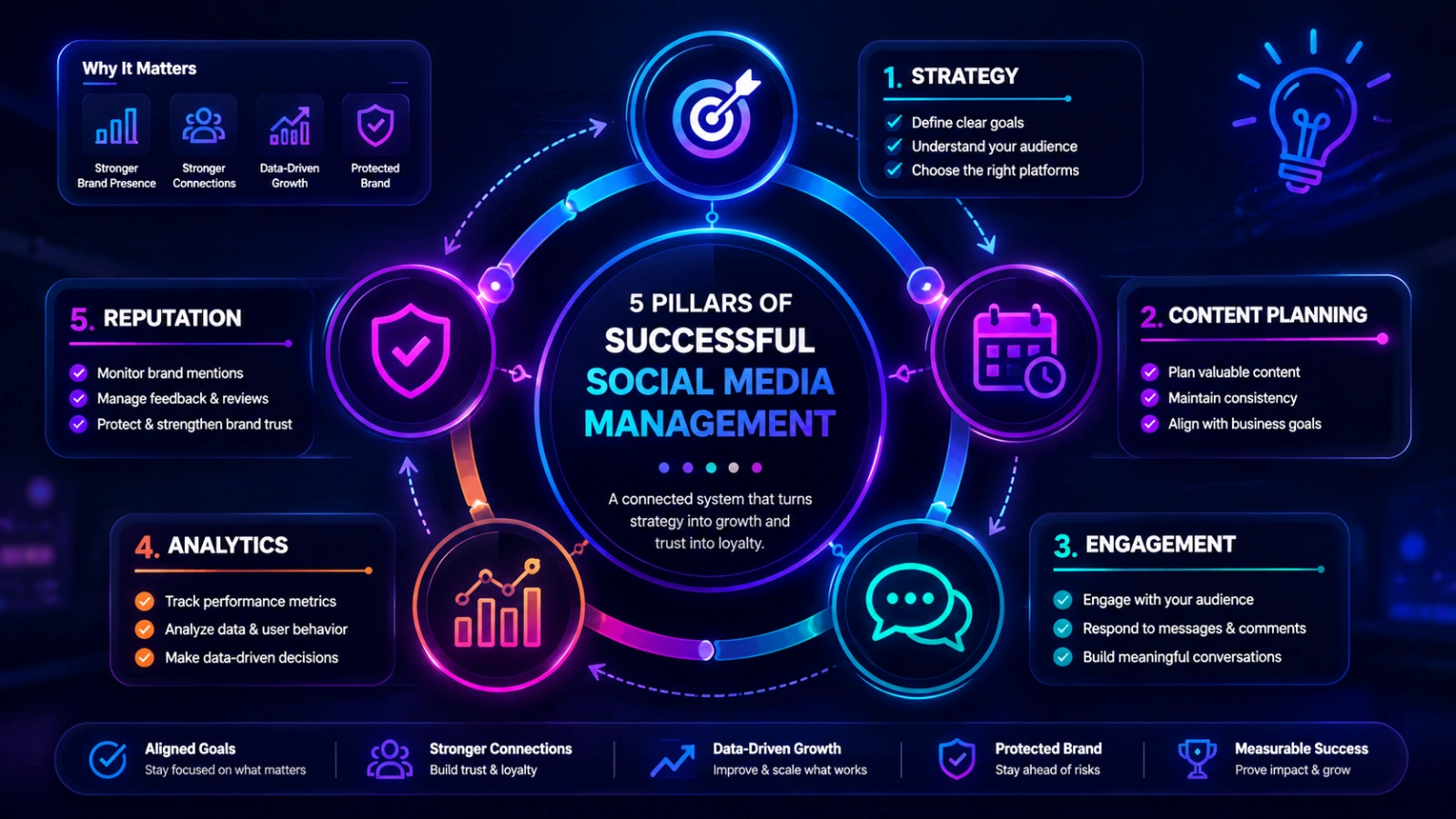
Successful social media management is the process of planning, publishing, analyzing, and improving social content while protecting and strengthening a brand’s online presence.
The strongest teams treat media management as an operational system, not just a publishing task.
Core pillars include:
- Clear strategy tied to business goals
- Consistent content planning and publishing
- Active community engagement
- Data-driven analytics and reporting
- Ongoing social media reputation management
What separates average brands from high-performing ones? They stop treating social as a content machine and start running it like a business function.
Before diving into the tips, one thing matters: these strategies are connected. Strong analytics improve your content decisions. Better workflows reduce burnout. Clear goals make platform choices easier. Management works best when every part supports the next.
Tip 1: Start With Clarity, Not Content
One of the biggest mistakes in social media management happens before the first post goes live. Brands start creating content without defining what success actually means.
A content strategy without direction quickly becomes noise.
Before building campaigns, answer three questions:
- Who exactly are we trying to reach?
- What action should this content drive?
- How will we measure success?
That last question changes everything. A growing follower count feels good, but followers alone rarely pay the bills. Leads, inquiries, email signups, product sales, and customer retention matter far more.
A simple framework helps here:
Platform × Goal × Audience = Content Direction
For example, LinkedIn may support lead generation for B2B companies, while Instagram might strengthen brand trust through visual storytelling. Different goals require different formats, tones, and posting rhythms.
A strong media management strategy starts with business clarity, not creative inspiration.
Tip 2: Build a Content System, Not Just a Calendar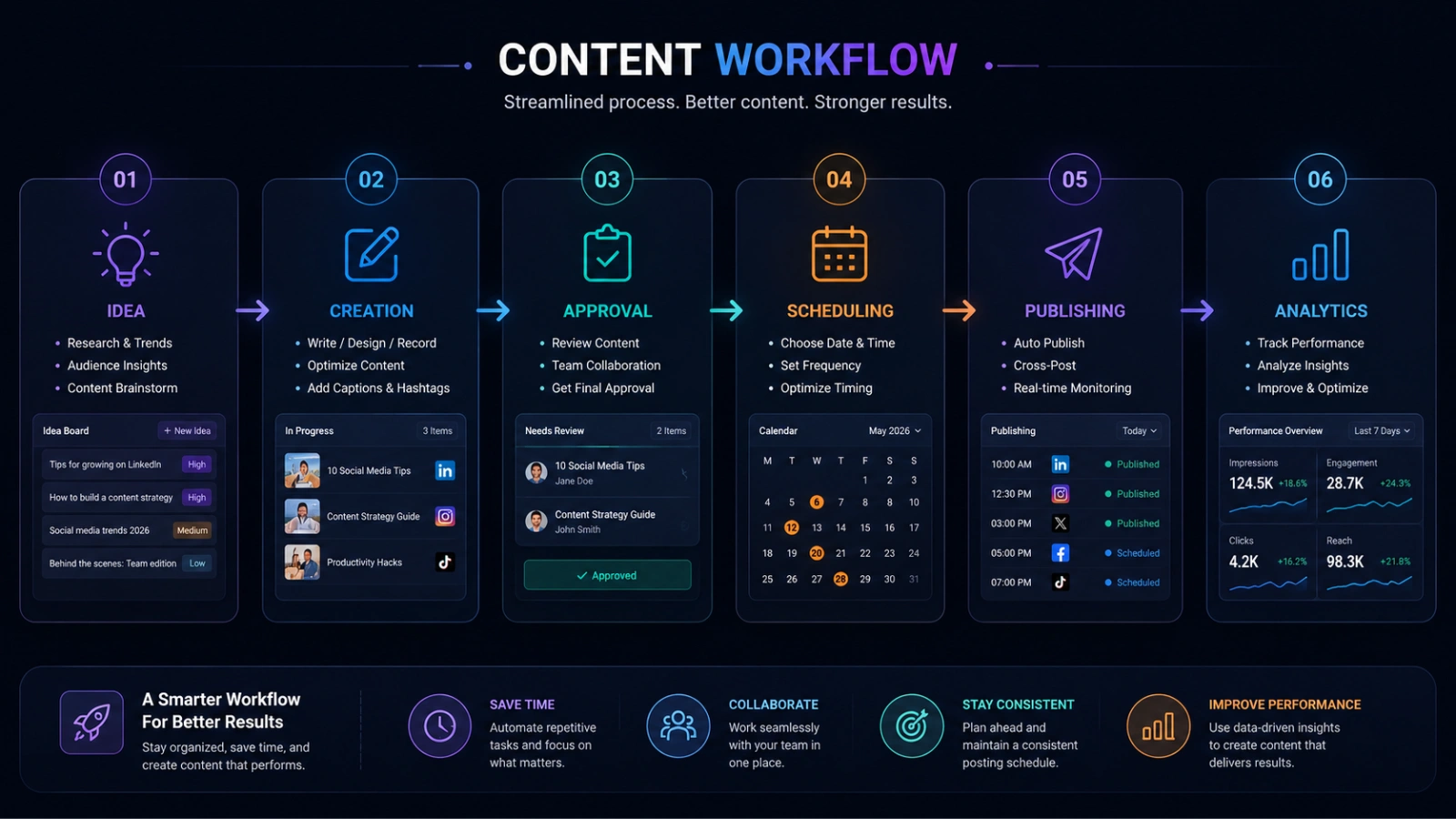
A content calendar tells you when to post. A content system explains how content gets created, approved, optimized, and published repeatedly without chaos.
That distinction matters more than most teams realize.
Many marketers live in constant reactive mode. Every morning starts with the same question: “What should we post today?” Over time, that pressure drains creativity and consistency.
Content pillars solve this problem.
Instead of creating random posts, develop three to five recurring themes aligned with audience interests and business goals. A SaaS company might use:
- Product education
- Customer success stories
- Industry trends
- Behind-the-scenes content
- Expert insights
Now the team always knows where ideas belong.
Batching also changes the game. Recording videos, writing captions, and designing graphics in focused blocks saves enormous time. Most experienced teams dramatically reduce their production workload once batching becomes part of their social media management workflow.
A strong management tool supports this process by centralizing drafts, scheduling, asset storage, and publishing approvals in one place.
Tip 3: Choose Your Platforms Based on Data, Not Pressure
Many businesses quietly exhaust themselves trying to be everywhere at once.
TikTok demands short-form creativity. LinkedIn rewards expertise. Instagram prioritizes visuals. X thrives on speed and commentary. Trying to dominate every platform usually spreads teams too thin.
Not every audience lives everywhere.
Effective multi-platform social media management starts with performance audits, not assumptions. Look at which channels consistently drive:
- Website traffic
- Engagement quality
- Direct inquiries
- Sales conversions
- Community interaction
Then compare those outcomes against the time and resources required.
A practical rule helps here: if a platform fails to generate meaningful traction after 90 days of consistent, intentional effort, reduce priority instead of doubling down emotionally.
Platform diversification still matters. Algorithms change constantly, and relying entirely on one channel creates risk. But expansion should happen strategically, not from fear of missing out.
Good social media management solutions help teams evaluate platform performance clearly instead of relying on vanity metrics.
Tip 4: Use AI as a Collaborator, Not a Replacement
AI is now deeply embedded in modern social media. The real question is not whether teams should use it. It is whether they are using it intelligently.
The strongest teams treat AI like an assistant, not an autopilot.
AI performs extremely well with repetitive operational tasks such as:
- Caption drafting
- Scheduling optimization
- Hashtag research
- Sentiment tagging
- Performance summaries
Human teams still handle the work requiring judgment, nuance, and emotional intelligence. That includes strategy, storytelling, crisis communication, and brand positioning.
Here is where many companies fail: they use AI without clear brand voice guidelines.
The result feels obvious. Generic captions. Flat messaging. Content that sounds like every other company online.
A brand voice document should define:
- Tone and personality
- Vocabulary preferences
- Formatting style
- Audience language patterns
- Topics to avoid
- Response guidelines during complaints or crises
Without those instructions, AI-generated content quickly loses authenticity.
The best social media management tools 2026 will not replace marketers. They will help skilled teams operate faster while preserving creative quality.
Tip 5: Treat Engagement Like Customer Service, Not an Afterthought
Many brands still view engagement as optional. Post content, collect likes, move on.
That mindset is outdated.
For community-driven businesses, engagement is part of the product experience. Customers expect replies quickly, especially when they ask questions publicly or send direct messages.
Ignoring comments damages trust faster than most teams realize.
A scalable social media management process treats engagement like customer support. Prioritize responses using clear tiers:
- Direct messages
- Tagged mentions
- Public comments
- Indirect mentions
Saved replies help maintain speed without sounding robotic. Assigning different message categories to specific team members also improves consistency.
Reactive engagement matters, but proactive engagement often creates stronger growth. Commenting thoughtfully on industry conversations, customer posts, and creator content expands visibility organically.
Strong social media community management builds relationships long before a sale happens.
Tip 6: Social Listening Is Not Optional
Most brands monitor what people say to them. Fewer monitor what people say about them.
That difference defines social listening.
Social monitoring tracks direct mentions and notifications. Social listening goes wider. It analyzes conversations around your brand, competitors, products, and industry trends across platforms.
This is where hidden business intelligence lives.
A spike in complaints may reveal a product issue before support tickets rise. Repeated audience questions often expose content gaps. Competitor frustrations create positioning opportunities.
Smart social media management teams turn listening insights into action.
If customers repeatedly ask the same question in comments, create a dedicated video answering it. If competitors receive backlash around pricing or support, adjust your messaging strategically.
Social listening tools and social media analytics platforms now provide insights that many companies still ignore completely.
Tip 7: Protect Your Brand Reputation Before It Needs Saving
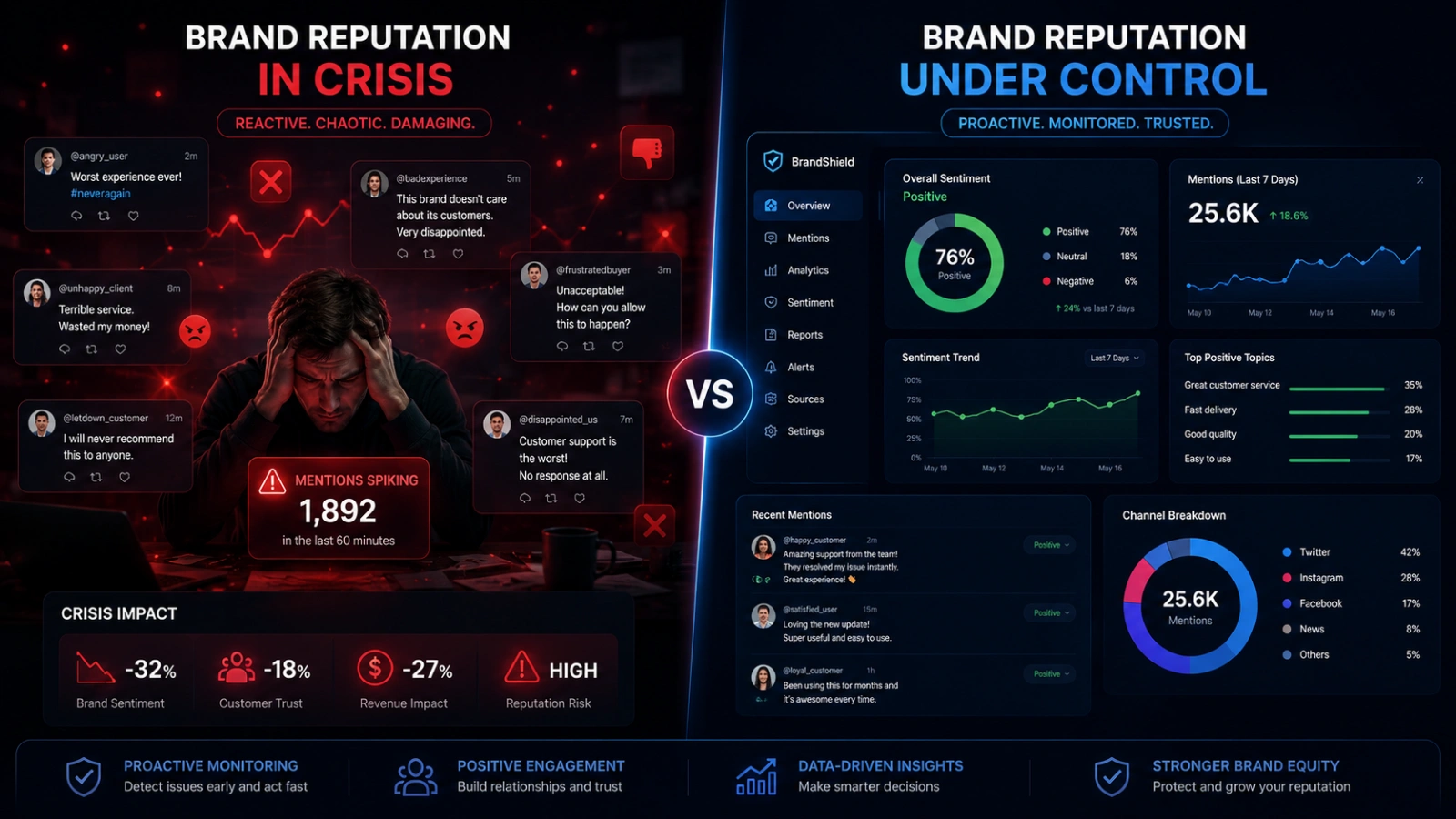
Most companies think about social media reputation management only after something goes wrong.
By then, the damage often spreads faster than the response.
Online reputation management works best as a proactive discipline. The goal is not simply responding to crises. It is detecting risks early enough to prevent escalation.
A strong reputation framework includes three layers:
Monitoring
Track brand mentions across social platforms, forums, creator videos, reviews, and AI-generated search summaries.
In 2026, reputation extends beyond social feeds. AI platforms like ChatGPT, Perplexity, and Google AI Overviews increasingly summarize public brand perception for users instantly.
That means inaccurate narratives can spread even when customers never visit your website.
Triage
Not every negative mention deserves the same response.
Teams need systems for categorizing issues:
- Minor complaints
- Service frustrations
- Viral criticism
- Coordinated attacks
- Misinformation spikes
Without triage, teams waste energy reacting emotionally instead of strategically.
Response Protocol
Who responds? How quickly? In what tone?
These answers should exist before a crisis begins.
One unresolved thread can circulate across platforms for weeks, especially when screenshots amplify the issue beyond the original audience. Strong social media reputation management protects trust before visibility turns negative.
Tip 8: Build an Approval Workflow Before You Need One
Approval chaos quietly destroys content quality.
One teammate edits captions in Slack. Another leaves feedback in an email. A client changes direction hours before publishing. Suddenly, deadlines collapse, and nobody knows which version is final.
This becomes even more dangerous when teams scale content production using AI-assisted workflows.
A healthy social media management solution includes clear approval stages:
- Creator
- Reviewer
- Final approver
Version control matters. Internal and client-facing reviews should stay separated whenever possible. Even small teams benefit from assigning publishing responsibility clearly.
Without structure, social media management for agencies becomes especially difficult. Client revisions pile up quickly, communication fragments, and publishing errors increase.
Good workflows reduce stress because everyone understands ownership.
Tip 9: Measure What Leadership Cares About, Not What’s Easy to Pull
Social teams often lose budget for one reason: reporting focuses on activity instead of outcomes.
Leadership rarely cares how many posts were published last month. They care whether social media management contributed to business growth.
That means separating activity metrics from outcome metrics.
Activity metrics include:
- Reach
- Impressions
- Follower growth
- Posting frequency
Outcome metrics include:
- Leads generated
- Website conversions
- Revenue influenced
- Customer retention
- Sales inquiries
A simple reporting structure works surprisingly well:
Business Goal → Social KPI → Monthly Change
For example:
- Goal: Increase demo requests
- KPI: Qualified leads from LinkedIn
- Result: 24% increase month over month
This keeps reporting connected to business priorities instead of vanity metrics.
Strong social media analytics should help teams explain impact clearly, not overwhelm leadership with dashboards.
Tip 10: Build Systems That Scale Without Burning Out Your Team
Social media management has one of the highest burnout rates in marketing.
The pressure never fully stops. Content cycles move daily. Notifications stay active constantly. Crises can emerge overnight.
Without operational boundaries, teams burn out quickly.
Sustainable systems matter more than endless output.
Practical changes make a huge difference:
- Batch content production weekly
- Define clear offline hours
- Rotate crisis-response responsibilities
- Build escalation protocols
- Separate strategic work from reactive work
The right social media management tool should remove manual friction. If your workflow adds unnecessary steps or platform-switching, productivity eventually suffers.
For solo creators and small businesses, sustainability also means recognizing when outsourcing becomes more efficient than handling everything personally.
The brands that scale successfully are usually the ones protecting their teams while improving execution.
Why Most Social Media Management Strategies Fail
Many social media management strategies fail for predictable reasons.
Treating Every Platform the Same
Copy-pasting identical content across platforms ignores audience behavior differences. What works on LinkedIn may fail on TikTok.
Measuring Vanity Metrics
High reach without conversions creates misleading confidence. Business outcomes matter more than surface visibility.
Scaling Before Strategy Exists
Some teams increase posting frequency before validating messaging, audience targeting, or positioning.
Using AI Without Brand Direction
AI-generated content without voice guidelines often sounds generic and forgettable.
Ignoring Reputation Until Crisis Hits
Reactive social media reputation management leaves brands vulnerable during public criticism.
How Poweradsy Fits Into a Modern Social Media Management Stack
Once your social media management system is clear, the next challenge becomes execution at scale.
Managing scheduling, approvals, analytics, engagement, and reputation across disconnected tools creates unnecessary complexity. That fragmentation slows teams down and increases mistakes.
Poweradsy helps unify those workflows into a single operating environment designed for modern social teams.
Key capabilities include:
- Competitor ad intelligence across major social and native platforms
- Advanced ad search filters by keyword, engagement, CTA, niche, and advertiser
- Massive searchable database with millions of live ads worldwide
- Real-time insights into ad performance, engagement, and placements
- Competitor analysis for creatives, copy, landing pages, and funnels
- Geo-targeted ad research across countries and audience segments
- Save and organize winning ads for faster campaign research
- Support for image, video, e-commerce, and display ad tracking
The value is not simply automation. It is operational clarity.
The Advanced Layer: Social Media Management in the Age of AI Search
Social platforms are no longer just distribution channels. They are becoming search engines.
Users increasingly search TikTok for recommendations, Instagram for products, and Pinterest for tutorials. At the same time, AI platforms summarize brand information instantly without sending users directly to websites.
That changes how social media management works.
Your content now shapes how AI systems describe your company publicly. Consistent messaging, audience sentiment, and reputation signals influence visibility far beyond social feeds.
This creates a new responsibility for brands.
Social media reputation management is no longer isolated from SEO or discoverability. If your brand messaging feels inconsistent across platforms, AI-generated summaries may reflect that confusion.
Brands succeeding in 2026 will treat social content as part of a larger digital identity system. Every post, reply, review, and public interaction contributes to how both humans and AI platforms understand the business.
That shift is subtle now, but it will define the next generation of online visibility.
Read More!
Stop Managing Social Media. Start Running It Like a System.
Most social media overwhelm does not come from the platforms themselves. It comes from reactive workflows, unclear priorities, and disconnected processes.
The 10 tips above are not isolated tactics. Together, they create a scalable social media management operating system built for modern brands.
You do not need to overhaul everything immediately.
Start with the biggest gap in your current process. Maybe it is analytics. Maybe it is reputation monitoring. Maybe your content workflow is completely unsustainable.
Fix one layer properly, then build from there.
The brands winning on social media in 2026 are not necessarily posting the most content. They are the ones operating with the clearest systems, strongest positioning, and smartest workflows.
FAQ: What Practitioners Actually Want to Know
How many platforms should one manager handle?
That depends on how much content needs to be created and how active each channel is. A single person can usually manage two or three platforms effectively before consistency and quality start slipping.
Once the workload grows, better workflows and automation become essential to keep everything organized without burning out the team.
How do I choose the right platform for my team?
The best choice comes down to usability and fit, not the number of features on a pricing page.
Look closely at:
- Scheduling reliability
- Reporting and analytics quality
- Inbox and engagement tools
- Approval and collaboration workflows
- Scalability as your team grows
A good social media management tool should simplify operations instead of adding complexity your team never asked for.
What is reputation management, and why does it matter?
Reputation management means tracking public conversations, audience sentiment, and brand mentions across digital platforms.
It matters because online perception spreads quickly. One ignored complaint or viral negative post can damage trust long after the original issue fades.
How do I prove ROI to leadership?
Tie platform performance directly to business outcomes instead of surface-level metrics.
Track website visits, qualified leads, inquiries, and conversions generated through campaigns. Clear before-and-after reporting helps leadership understand what is driving measurable growth.
How is AI changing workflows in 2026?
AI now handles repetitive tasks like caption drafting, reporting summaries, scheduling recommendations, and sentiment analysis.
Human teams still lead the areas requiring judgment and creativity, including strategy, storytelling, brand positioning, and crisis communication. The strongest teams use AI to improve efficiency, not replace expertise.