
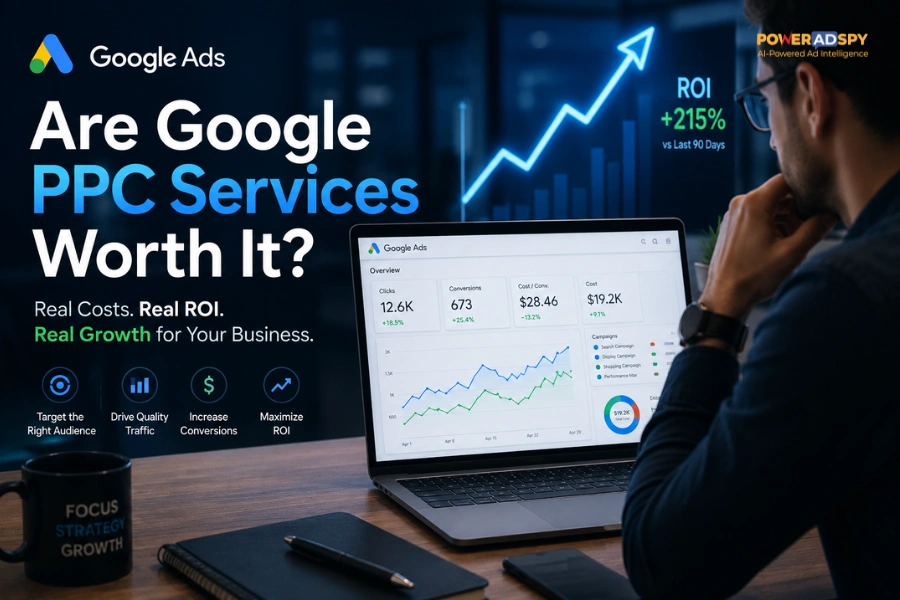
The $10,000 Question Every Business Owner Is Already Asking
Google PPC services sound simple on paper. You pay for clicks, traffic arrives, and sales follow. Yet many business owners hesitate because they have either wasted money on Google Ads before or know someone who did.
That hesitation is reasonable.
A campaign can burn through thousands of dollars without producing meaningful leads when targeting, messaging, or tracking are poorly managed. At the same time, businesses with strong campaigns often scale faster than competitors because they appear in front of buyers at the exact moment intent is highest.
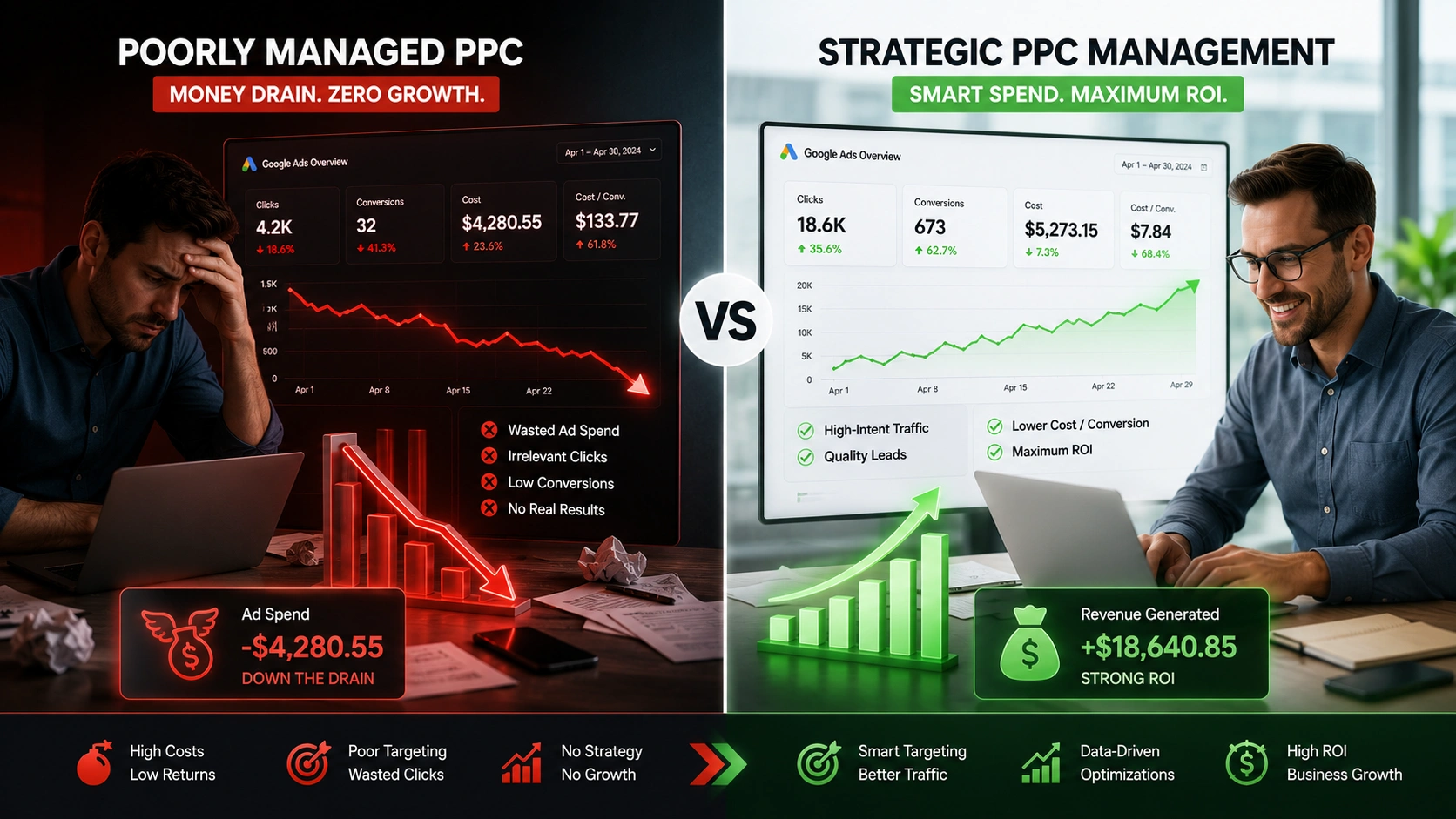
The real question is not whether Google Ads works. It clearly does for many industries. The better question is whether managed Google PPC services make financial sense for your business, your margins, and your growth stage.
At its core, Google PPC services involve professionals managing campaigns inside Google Ads. That includes strategy, targeting, bidding, optimization, reporting, and conversion tracking designed to improve return on ad spend.
This matters because successful campaigns are rarely built from guesswork. Small decisions inside the account can dramatically affect cost-per-click, lead quality, and profitability.
Read Aloud!
What Google PPC Services Actually Include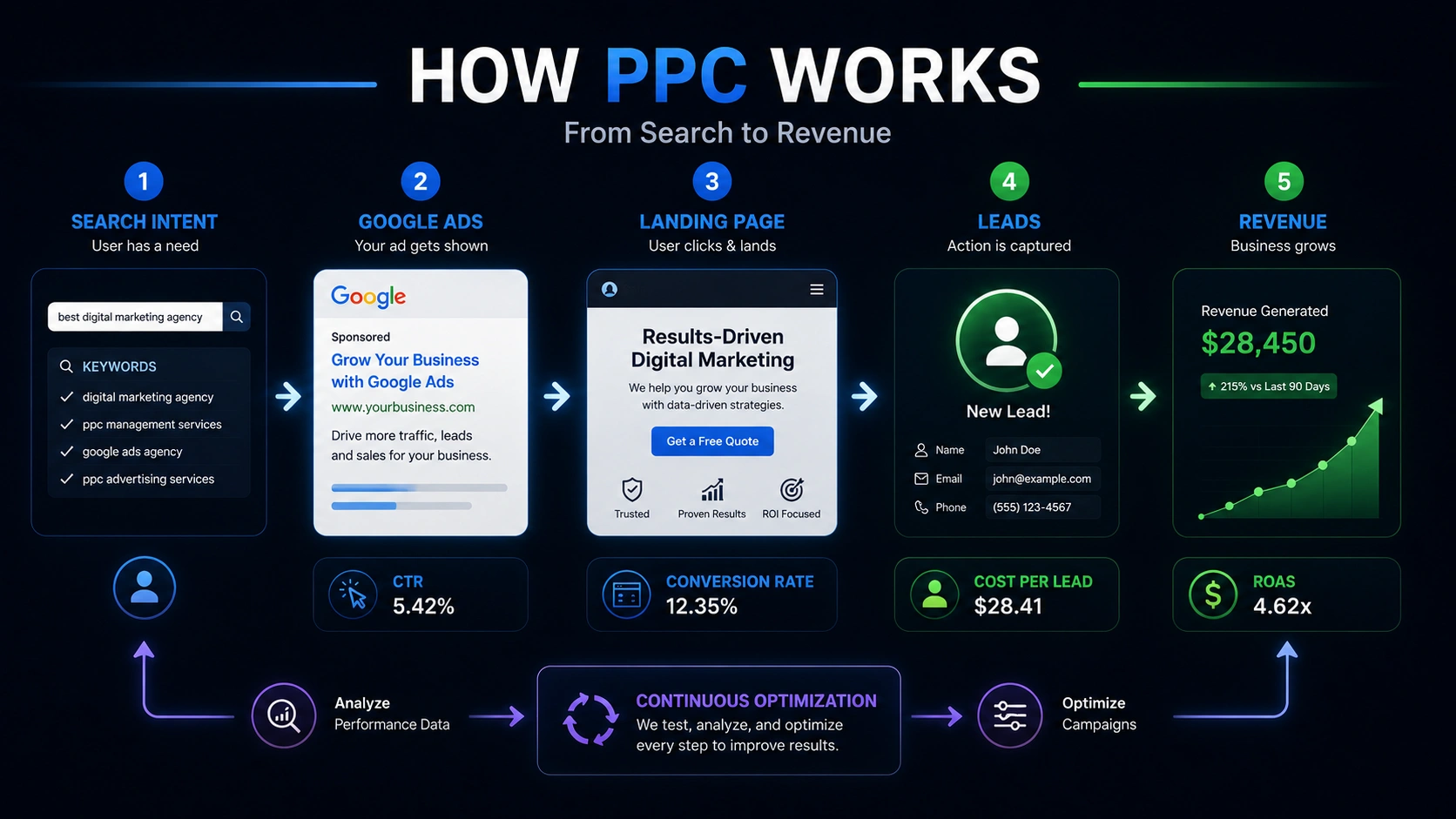
Many agencies talk about “full-service management” without explaining what happens behind the scenes. That creates confusion, especially for businesses comparing prices.
Campaign Strategy and Keyword Research
Strong campaigns begin with search intent.
A good agency studies what buyers actually type into Google before they make a purchase decision. That process goes far beyond picking obvious keywords. It includes identifying high-intent phrases, filtering irrelevant traffic, and structuring campaigns around customer behavior.
Google PPC services also involve match-type management and negative keyword research. Without negative keywords, ads may appear for unrelated searches that waste budget quickly.
For example, a law firm targeting “business attorney” may accidentally pay for clicks from people searching for free legal advice unless exclusions are properly configured.
Ad Copywriting and Creative Testing
The words inside an ad directly influence click-through rates and campaign costs.
Effective ads speak clearly, match search intent, and set realistic expectations. Agencies typically test multiple headlines, descriptions, and calls-to-action to identify which variations produce stronger results.
This process matters because Google rewards relevance. Better-performing ads often reduce cost-per-click while increasing visibility.
Experienced teams also understand how emotional triggers work in ppc advertising. Specificity, urgency, trust signals, and local relevance usually outperform generic claims.
Bid Management and Budget Allocation
Most businesses underestimate how much ongoing adjustment campaigns require.
Google PPC services often include bid strategy management, device adjustments, geographic optimization, and budget pacing. Those decisions determine where money flows during the month.
Without careful pacing, campaigns sometimes overspend early and disappear during high-converting periods later in the month.
Smart agencies monitor trends continuously. If mobile traffic converts poorly but desktop traffic performs well, budgets shift accordingly.
Reporting and Ongoing Optimization
A report filled with impressions and clicks means very little without business context.
Good Google PPC services focus on outcomes such as leads, sales, acquisition costs, and return on ad spend. Optimization happens weekly or monthly, depending on campaign size.
That ongoing refinement often separates profitable campaigns from expensive experiments.
The Real Cost Breakdown: What You’re Actually Spending
Cost is usually the first concern, and for good reason.
Most Google PPC services use either a flat monthly fee or a percentage-of-ad-spend model. Smaller businesses commonly pay between $500 and $2,000 monthly for management alone.
Ad spend is separate.
Competitive industries like legal, roofing, or software often require at least $1,500 to $5,000 per month in ad spend before meaningful data appears. In some markets, costs are far higher.
There are also hidden expenses that many agencies barely mention.
The testing period is another factor.
Most campaigns need 60 to 90 days before trends become reliable. Businesses expecting instant profitability often stop too early and never collect enough data to optimize effectively.
Google PPC services become more cost-efficient when customer value is high enough to absorb acquisition costs. A company earning $10,000 per client can tolerate higher click costs than a store selling $25 products.
Who Actually Benefits From Google PPC Services
Not every business should hire an agency immediately.
That may sound strange coming from an article about Google PPC services, but it is true.
Businesses That Often See Strong ROI
High-ticket industries tend to benefit most because one conversion can justify significant ad spend.
Examples include:
- Law firms
- Medical practices
- SaaS companies
- Home service businesses
- Financial consulting firms
Local companies also perform well when offline conversion rates are strong. A plumbing business closing even a few emergency calls monthly can see meaningful returns.
E-commerce brands with proven products often scale successfully too, especially when search demand already exists.
When Hiring an Agency May Be Premature
Some businesses are simply not ready yet.
If a website converts poorly, sending more traffic usually increases losses rather than revenue. The same problem appears when businesses lack the budget required for testing.
Google PPC services are rarely ideal for companies that can only afford a few weeks of experimentation.
Low-search-volume niches may also struggle with paid search performance. In those cases, content marketing or social campaigns sometimes create better long-term results.
DIY Google Ads vs. Professional Management
Many businesses consider running campaigns internally before hiring outside help.
That approach can work under the right conditions.
A motivated business owner can learn campaign basics, launch ads, and generate leads independently. The challenge is the learning curve.
Mistakes inside paid search campaigns are expensive because every incorrect click costs real money.
DIY campaigns often suffer from:
- Broad targeting
- Weak conversion tracking
- Poor landing page alignment
- Inefficient bidding
- Limited testing
Professional pay per click management teams usually spot issues faster because they manage campaigns daily across multiple industries.
Still, there is a middle ground.
Some businesses start with smaller internal campaigns, gather data, and later invest in Google PPC services once revenue becomes predictable.
That hybrid approach reduces risk while helping owners understand how their market responds.
Read More!
The Mistakes That Quietly Drain PPC Budgets
A surprising number of campaigns fail for preventable reasons.
One of the biggest mistakes is sending traffic to a homepage instead of a focused landing page. Visitors click expecting a specific solution, then land on a generic website with too many distractions.
Another common issue involves ignoring Quality Score.
Google evaluates ad relevance, landing page experience, and expected click-through rates. Low scores increase advertising costs over time.
Businesses also lose money by pausing campaigns too quickly.
Early performance data is often noisy. Some campaigns improve dramatically once negative keywords are added, and search terms are refined.
Conversion tracking problems create another major issue.
Without accurate tracking, businesses cannot identify which clicks actually produce revenue. Decisions become emotional rather than data-driven.
These problems explain why many companies think pay per click advertising “doesn’t work” when the real issue is campaign structure.
How to Spy on What’s Working Before Spending More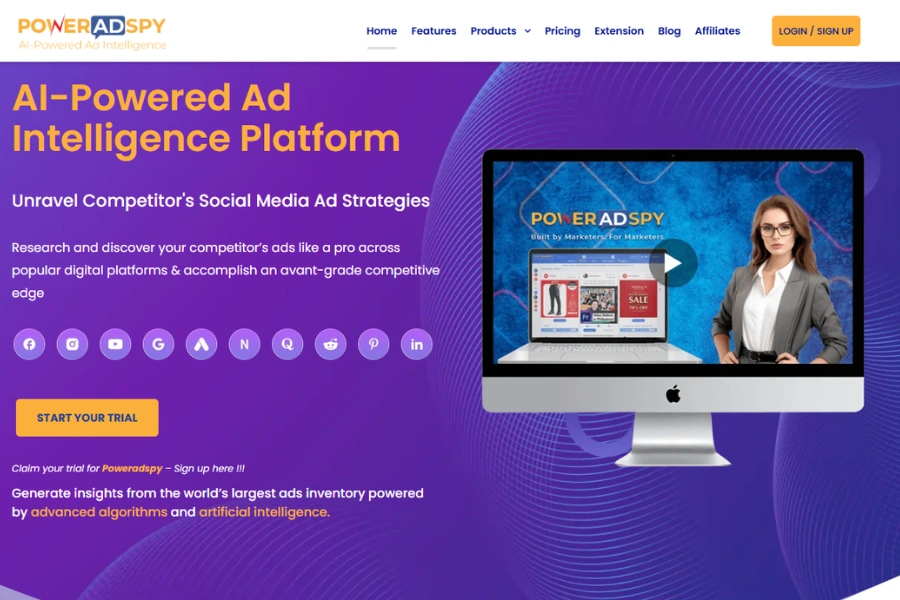
Smart marketers rarely launch campaigns blindly.
Before increasing budgets, many businesses research competitors to understand what messaging, offers, and landing pages already perform well in their industry.
Tools like PowerAdSpy make that process easier.
Businesses can analyze competitor ads by keyword, advertiser, or domain while studying creative patterns that appear repeatedly across campaigns.
- Search competitor ads by keyword, advertiser, or domain
- Filter campaigns by country, platform, ad type, and engagement activity
- Analyze ad copy patterns that consistently attract clicks in your industry
- Study landing page strategies competitors use to improve conversions
- Identify long-running ads that likely generate profitable results
Long-running ads are especially valuable.
If an advertiser has been running the same campaign for several months, there is a good chance the campaign is profitable. Companies rarely keep losing ads active for long periods.
Google PPC services become more strategic when competitive research happens before large-scale testing.
Instead of guessing which offers may convert, businesses can identify patterns already working inside their market.
That does not replace testing entirely, but it shortens the learning process significantly.
The Psychology Behind High-Converting Ads
Google’s advertising system rewards relevance more than most people realize.
Specific ads usually outperform vague promises because search intent is highly focused. Someone searching “emergency plumber in Chicago” responds differently than someone casually browsing social media.
Message match also matters.
If an ad promises “same-day AC repair,” the landing page should immediately reinforce that claim. Consistency increases trust and improves conversion rates.
Social proof works differently in search campaigns, too.
Search users already have intent. They are not discovering a problem for the first time. Reviews, ratings, guarantees, and testimonials help reduce hesitation during decision-making.
Google PPC services often succeed because professionals understand how these psychological triggers connect with platform mechanics.
Higher click-through rates and stronger engagement improve ad relevance, which can reduce costs while improving visibility.
How to Evaluate a Google PPC Services Provider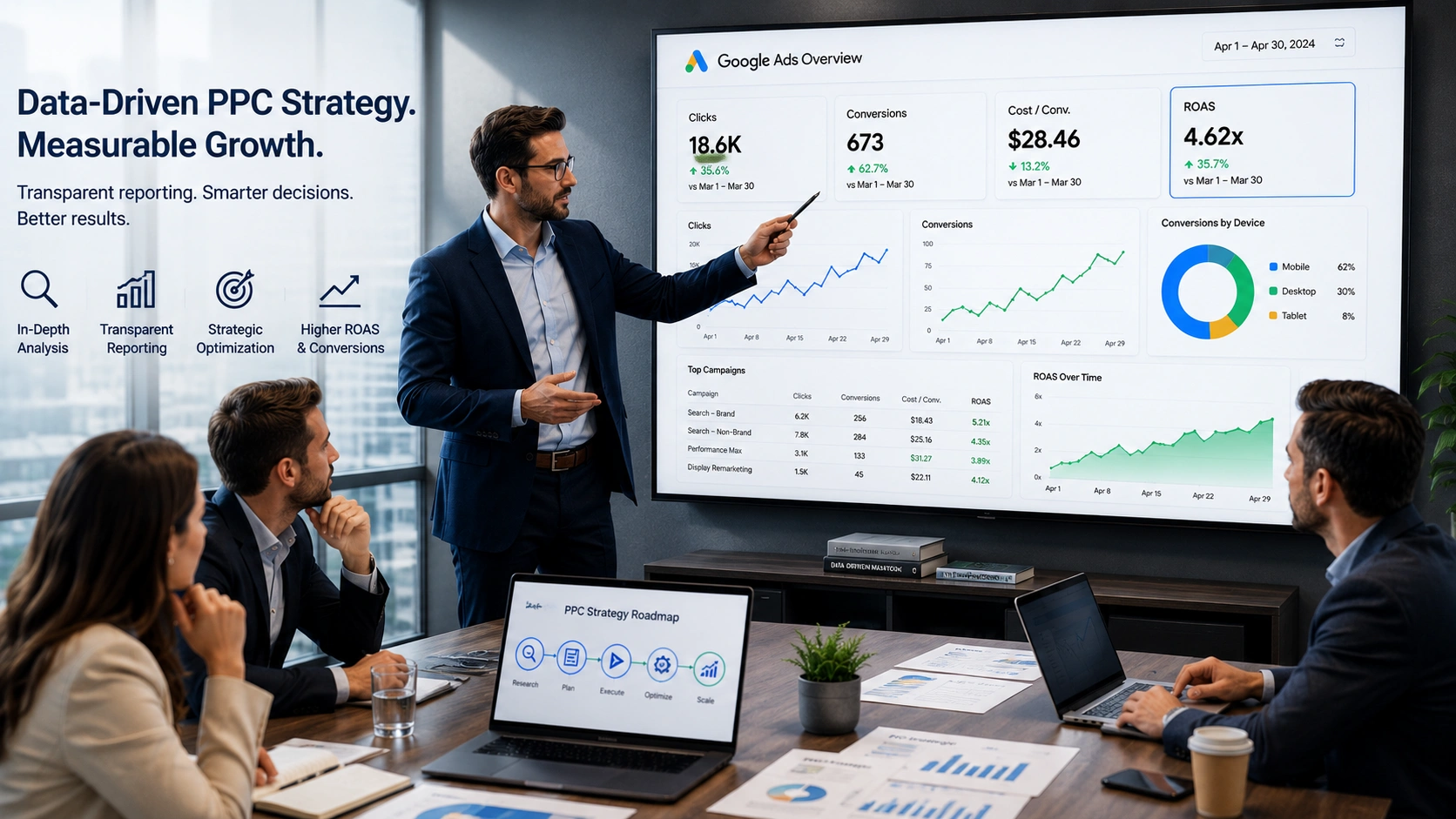
Choosing the wrong agency can waste months of time and budget.
Before signing any agreement, ask how campaigns will actually be managed.
Will your account be handled internally or outsourced? How frequently will optimization occur? Which metrics matter most to them?
Strong agencies explain reporting clearly.
They focus on leads, revenue, customer acquisition costs, and return on ad spend instead of vanity metrics.
There are also obvious warning signs.
Be cautious of agencies guaranteeing results, hiding ad spend breakdowns, or pushing long contracts without performance accountability.
Better Google PPC services usually include:
- Transparent reporting
- Clear onboarding processes
- Conversion tracking setup
- Industry-specific experience
- Dedicated account management
Google Partner badges can help establish credibility, but certifications alone do not guarantee performance.
So, Are Google PPC Services Worth It?
For businesses with a strong offer, realistic budget, and functioning website, the answer is usually yes.
The businesses succeeding with Google Ads are not always spending the most money. More often, they are making smarter decisions about targeting, messaging, tracking, and optimization.
Google PPC services work best when campaigns, landing pages, and customer experience support each other.
The smartest approach is rarely blind spending.
Research competitors first. Understand your numbers. Set realistic expectations. Then invest with a clear strategy instead of hoping clicks automatically become revenue.
That difference matters more than most businesses realize.
FAQ
How much should small businesses budget for Google PPC services?
Most small businesses need enough budget for both management fees and testing. A realistic starting point is often $2,000 to $5,000 monthly combined.
How long does it take to see results?
Some campaigns generate leads within days, but optimization usually takes 30 to 90 days before performance stabilizes.
What’s the difference between SEO and Google Ads?
SEO builds long-term visibility gradually, while paid campaigns produce immediate visibility. Many businesses use both together.
Can businesses run campaigns without outside help?
Yes, but mistakes can become expensive quickly. Businesses using Google PPC services often avoid costly learning errors.
What is considered a good ROAS?
Many industries target at least a 3:1 return on ad spend, though ideal benchmarks vary based on margins and customer lifetime value.