


You’ve seen the same message appear across search results, social feeds, and websites. Chances are, that wasn’t random. The most effective digital ads are carefully designed to reach the right person at the right moment.
Yet many businesses launch campaigns, spend money, and see little return. That disconnect creates an obvious question: if ads work so well for some brands, why do others struggle? The answer comes down to targeting, psychology, measurement, and optimization.
Read Aloud!
The Short Answer (For Those Who Want It Fast)
Digital ads are effective because they combine precise audience targeting, real-time performance data, and psychology-driven messaging. Unlike traditional advertising, they allow marketers to adjust campaigns while they are running instead of waiting weeks or months to evaluate results.
The strongest campaigns typically share four characteristics:
- Precise audience targeting
- Data-driven optimization
- Relevant and compelling creative
- Continuous testing and refinement
When these elements work together, digital ads become far more efficient than broad-reach advertising methods.
Why Digital Ads Work When Traditional Ads Don’t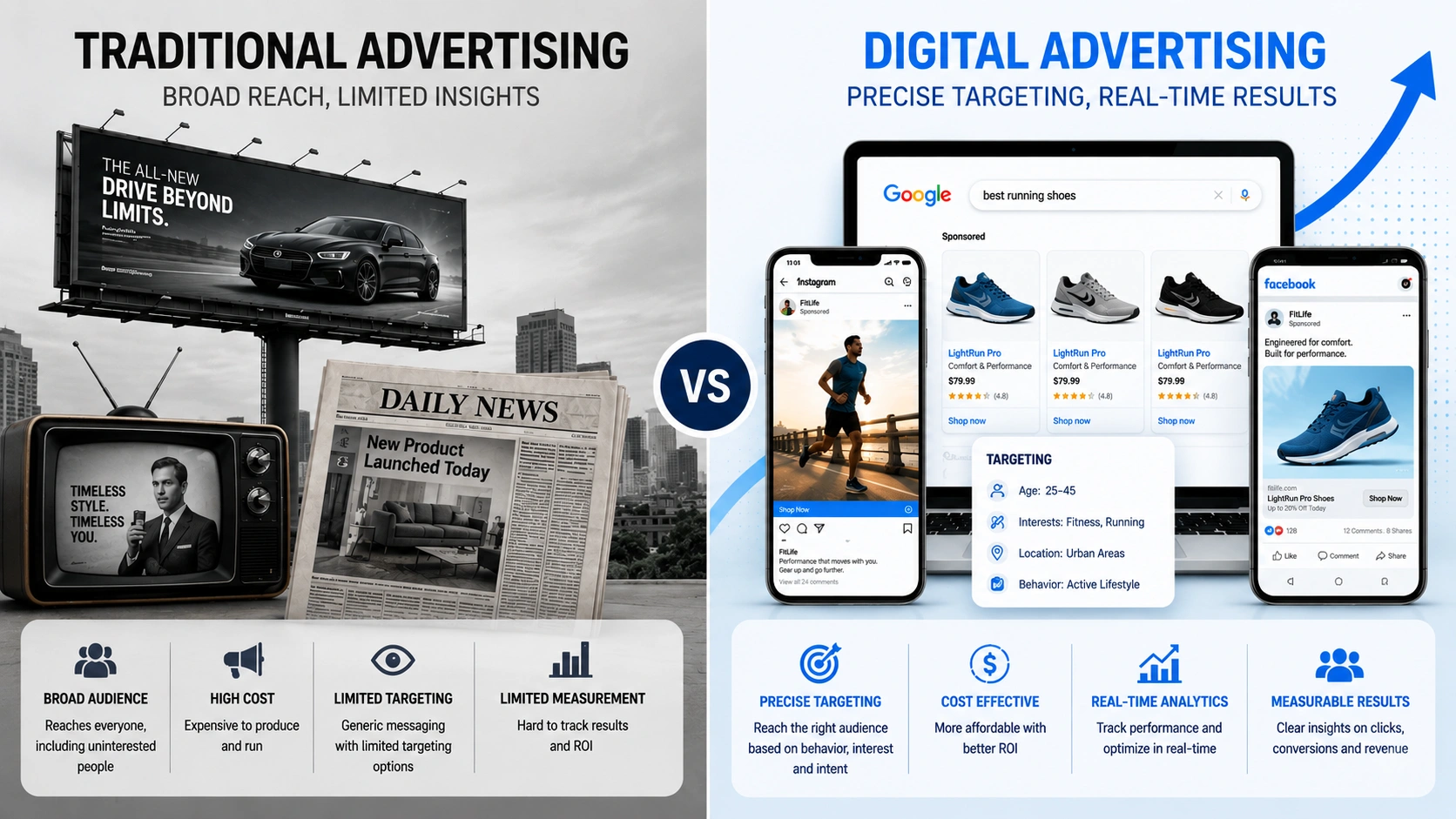
Traditional advertising still has value. Television, radio, and print can build awareness at scale. The challenge is that they provide limited feedback.
You Can Target a Mindset, Not Just a Demographic
One of the biggest advantages of digital ads is the ability to target intent.
A television commercial might reach one million viewers. A search campaign, meanwhile, can reach ten thousand people actively looking for a solution. Those audiences behave very differently.
Modern platforms allow advertisers to target based on:
- Search intent
- Online behavior
- Purchase history
- Interests and engagement patterns
If you’re wondering how to improve digital ad performance, better audience intent is often the first place to look.
Every Click Tells You Something
Every interaction creates data.
When people see, click, ignore, or convert from digital ads, advertisers gain insights that can improve future performance. This creates a feedback loop that traditional channels simply cannot match.
Impressions lead to clicks. Clicks lead to conversions. Conversions reveal what is actually working.
That continuous learning process is a major reason these campaigns remain so effective.
The Psychology Behind Ads That Actually Get Clicked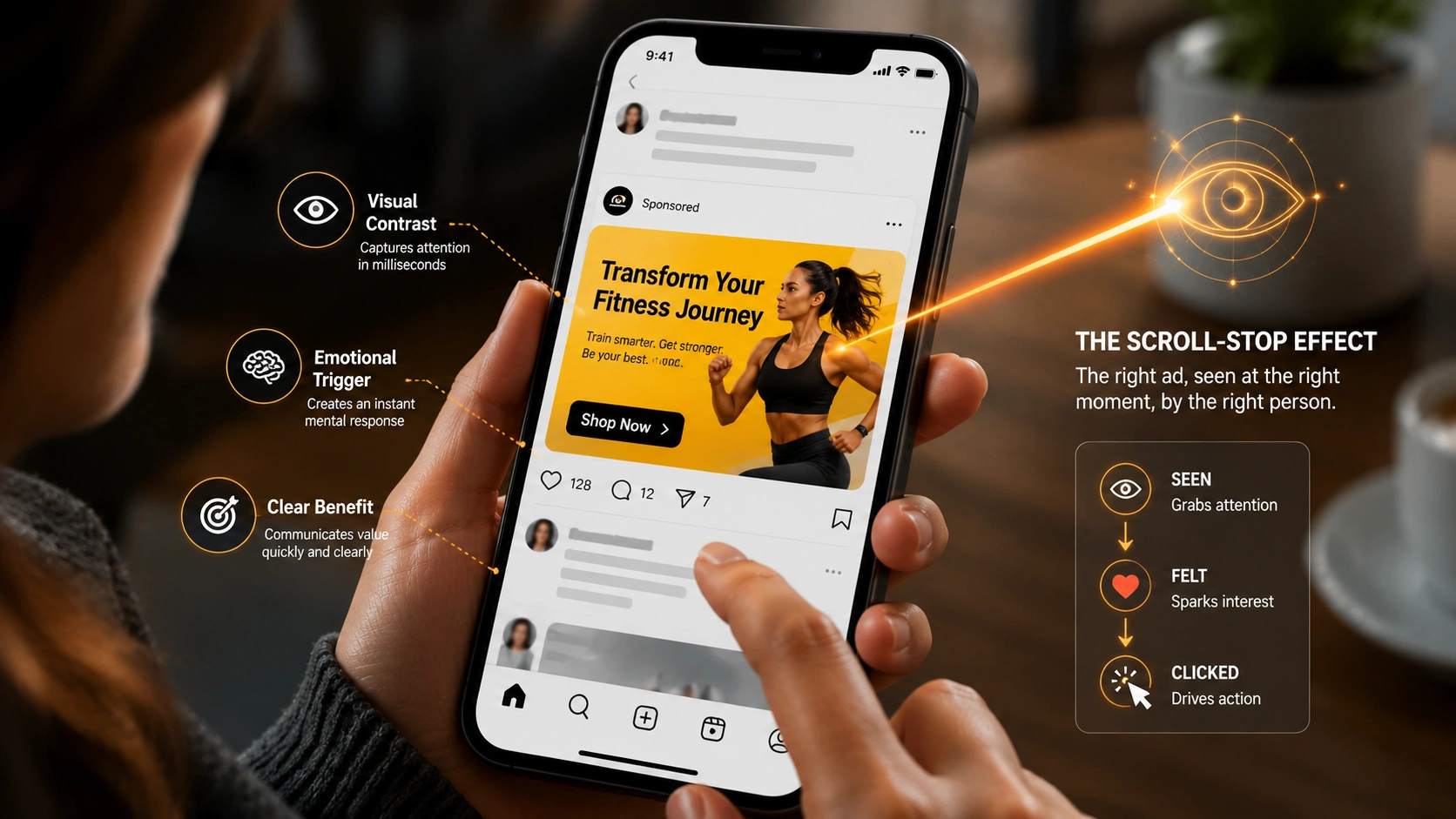
Technology matters, but people make purchasing decisions. Understanding how people think is often the difference between average and exceptional results.
The Scroll-Stop Moment: Why Creative Is 50% of Your Result
Most consumers make decisions in seconds.
Strong digital ads use visual contrast, movement, emotional expressions, and compelling headlines to interrupt habitual scrolling. According to research from Meta and Nielsen, creative quality contributes significantly to purchase intent.
A mediocre offer with great creative can outperform a strong offer presented poorly.
Relevance Is the Real Conversion Driver
Many advertisers focus on making better campaigns when they should focus on making more relevant campaigns.
A well-designed message shown to the wrong audience will almost always fail. Successful digital ads connect a specific problem with a specific audience.
This is often the hidden answer behind the question: why are my digital ads not converting?
Frequency, Familiarity, and the Trust Effect
People rarely buy the first time they see an offer.
Psychologists refer to this as the mere exposure effect. Familiarity increases trust. Repeated exposure helps people remember a brand and feel more comfortable engaging with it.
Still, there is a limit. Excessive frequency can turn effective campaigns into annoying interruptions. Monitoring engagement trends helps prevent fatigue.
So Why Aren’t Your Ads Converting?
Not every campaign succeeds. In fact, many failures follow predictable patterns.
Wrong Audience, Right Message, Still Wrong
Even excellent messaging fails when it reaches the wrong people.
Businesses often target audiences that are too broad, rely heavily on inaccurate lookalike audiences, or show bottom-funnel offers to cold prospects.
Many cases of low performing digital ads can be traced back to audience mismatches rather than creative issues.
The Landing Page Problem Nobody Talks About
Campaigns do not convert in isolation.
Someone clicks an ad because of a promise. The landing page must immediately reinforce that promise. If the message changes, trust declines.
Slow loading times, unclear calls to action, and poor mobile experiences frequently explain why online ads fail after generating clicks.
You’re Measuring the Wrong Things
Impressions and reach look impressive in reports.
Revenue does not come from impressions. It comes from actions.
Marketers who understand how to measure advertising effectiveness focus on metrics such as conversion rate, cost per acquisition, and return on ad spend.
Those numbers reveal business impact, not just visibility.
Budget Timing and Bid Strategy Mistakes
New campaigns need time to learn.
Many advertisers stop campaigns before platforms gather enough data to optimize delivery. Others choose bidding strategies that do not align with campaign goals.
Even strong advertising campaigns can struggle when budgets and bidding structures are poorly managed.
The Framework High-Performing Brands Actually Use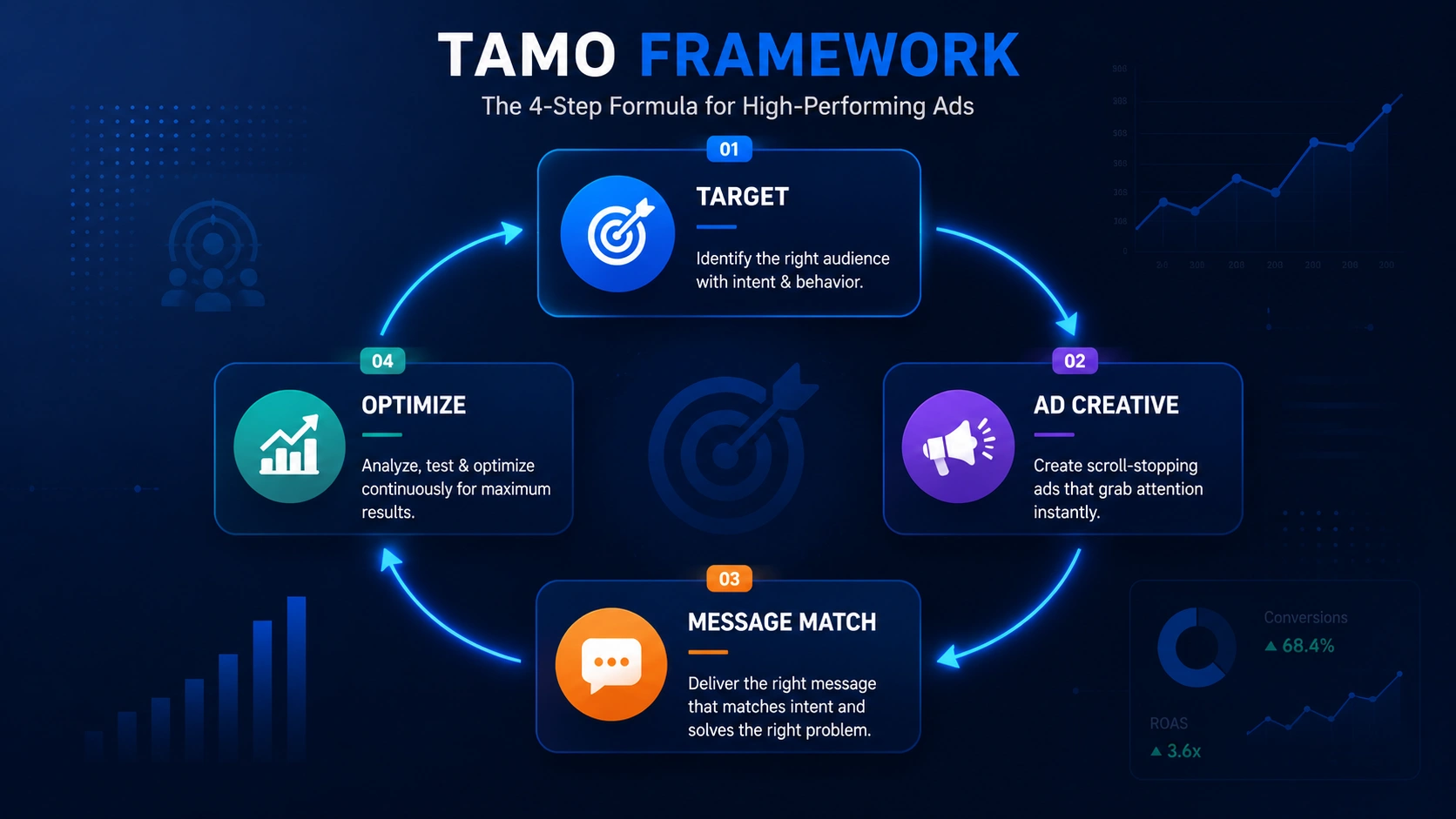
Successful advertising often follows a repeatable process. One practical approach is the TAMO Framework: Target, Ad Creative, Message Match, Optimize.
T: Target With Intent, Not Just Interest
Interest-based targeting can be useful, but intent is often more valuable.
The best digital ads prioritize signals that indicate purchasing readiness. Search behavior, retargeting audiences, and recent engagement often outperform broad interest categories.
A: Ad Creative That Earns Attention in 1.5 Seconds
Attention is the scarcest resource online.
Effective digital ads use clear visuals, strong headlines, customer proof, and concise messaging. The goal is not to explain everything. The goal is to earn the next click.
M: Message That Matches Where the Buyer Is
Someone discovering a problem needs different information than someone ready to buy.
Top-of-funnel prospects need education. Mid-funnel prospects need proof. Bottom-funnel prospects need confidence.
The most effective digital ads align messaging with buyer intent.
O: Optimize Based on Real Signals, Not Gut Feel
Assumptions can be expensive.
Advertisers should regularly evaluate conversion rates, acquisition costs, and audience behavior. A reliable digital advertising analytics tool helps identify what deserves more investment and what should be paused.
Optimization is where average campaigns become profitable campaigns.
Seeing What’s Working: The Competitive Intelligence Advantage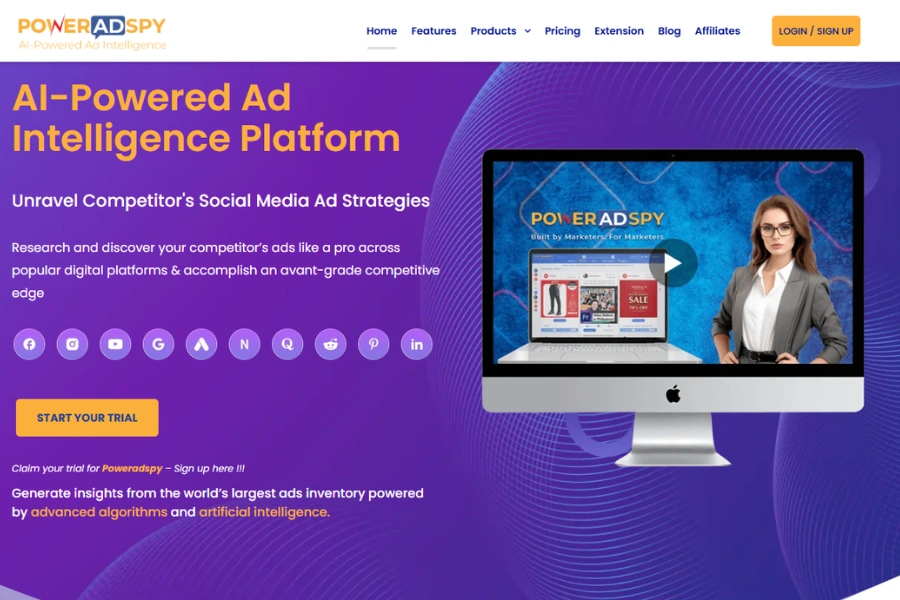
Great campaigns rarely emerge from guesswork.
The fastest-improving advertisers study the market around them. They analyze offers, messaging angles, creative formats, and audience engagement patterns.
This is where tools such as PowerAdSpy become valuable. Rather than operating blindly, marketers can examine active and historical digital ads across major platforms.
PowerAdSpy allows users to:
- Explore competitor campaigns
- Filter ads by engagement and niche
- Analyze creative approaches
- Study landing page strategies
- Identify emerging advertising trends
Viewed correctly, it functions less like a spy tool and more like a market intelligence resource.
The Metrics That Actually Matter (And How to Read Them)
Collecting data isn’t the hard part anymore. Most advertising platforms give you dashboards filled with charts, percentages, and performance reports. The real challenge is knowing which numbers deserve your attention and which ones are simply creating noise.
The metrics that matter depend on what you’re trying to achieve. A campaign designed to build awareness should be judged differently from one focused on generating sales.
Awareness Campaigns
When the goal is visibility, focus on how many people are seeing your digital ads and how often they’re seeing them.
Reach tells you how many unique people were exposed to your campaign. Frequency shows how often the average person saw it, while CPM reveals how much you’re paying for every thousand impressions.
A healthy awareness campaign steadily expands reach without repeatedly showing the same ad to a small audience. If frequency climbs too quickly, you may be spending money showing your message to the same people over and over again.
Consideration Campaigns
Once people know your brand exists, the next question is whether they’re interested enough to engage.
This is where metrics like CTR, CPC, and time on page become useful. They help reveal whether your message is capturing attention and motivating action.
For example, a strong click-through rate suggests your creative and offer resonate with the audience. On the other hand, if thousands of people see your digital ads but very few click, the issue may be your headline, visual, or audience targeting.
Conversion Campaigns
At the bottom of the funnel, business results matter more than traffic.
Metrics such as CPA, ROAS, conversion rate (CVR), and customer lifetime value help determine whether your campaigns are generating profitable growth. A campaign can produce plenty of clicks and still fail if acquisition costs are too high.
This is where a reliable ad performance tracking software solution becomes valuable. Instead of focusing on surface-level numbers, it helps connect campaign activity to actual revenue, making it easier to identify what’s driving growth and what needs improvement.
Read More!
What Causes Ad Fatigue & How to Fix It Quickly?
Creative Ads: The Ultimate Guide to Making Ads That Actually Stop The Scroll
The Trends Reshaping Digital Ad Effectiveness Right Now
Advertising continues to evolve quickly.
AI-powered personalization is helping brands tailor a digital ad to smaller audience segments without dramatically increasing workload.
At the same time, generic audience targeting is becoming less effective. Hyper-segmentation is replacing broad targeting strategies across many industries.
Short-form video remains dominant. Many of today’s best-performing campaigns are designed specifically for fast, mobile-first consumption.
Meanwhile, first-party data is becoming increasingly important as privacy regulations reshape targeting capabilities.
The Bottom Line: Great Ads Are Built, Not Launched
The most successful digital ads are not the result of luck. They emerge from a system that combines targeting, creative strategy, audience understanding, and ongoing optimization.
The TAMO framework provides a practical roadmap: Target, Ad Creative, Message Match, and Optimize.
If there’s one lesson worth remembering, it’s this: effective advertising is rarely about finding a perfect campaign. It’s about building a process that improves with every test, every click, and every insight.
The brands that win tomorrow are the ones learning from the data today.
FAQ: Real Questions Advertisers Are Actually Asking
Why are my digital ads getting impressions but no clicks?
This usually indicates a creative or relevance problem. The audience is seeing the ad but finding little reason to engage.
How long should I run a digital ad before judging performance?
Most campaigns need enough data to reach statistical significance. Avoid making decisions after only a few days.
How do I know if my targeting is too broad or too narrow?
Broad targeting often produces weak engagement. Extremely narrow targeting limits reach. Testing multiple audience segments helps identify the right balance.
Can small budgets still get results with digital advertising?
Yes. Precise targeting and focused messaging often allow smaller advertisers to compete effectively.
How often should I refresh ad creatives?
Monitor engagement trends. Declining click-through rates often signal creative fatigue and indicate it’s time to test new variations.