
If your campaigns are getting clicks but not customers, you are not alone. Thousands of brands pour money into paid Social Media Ads every day, yet only a fraction see real conversions. The good news is that this isn’t a budget problem; it’s a strategy problem.
When built around the right audience, message, and platform, these campaigns work incredibly well, turning casual scrollers into paying customers without wasting ad spend on guesswork or broad, unfocused targeting.
In this blog, we will break down exactly how to plan, launch, and optimize campaigns that convert consistently, covering platform selection, creative strategy, budgeting, retargeting, and performance tracking, along with a few practical tools and habits that make the entire process faster, smarter, and far less stressful for marketers at any experience level.
Listen To The Podcast Now!
What Do These Campaigns Actually Look Like?
Paid social media ads are sponsored posts that brands pay platforms like Facebook, Instagram, LinkedIn, and TikTok to display to targeted audiences. Unlike organic posts, these ads guarantee visibility because you’re paying for placement in front of people who match your ideal customer profile. They come in various formats, including image ads, video ads, carousel ads, story ads, and increasingly, short-form video content designed to feel native to the platform.
What makes paid social media ads powerful is precision targeting. You can reach people by age, location, interests, behavior, and even past interactions with your brand or website. This level of control is something traditional advertising simply cannot match, which is why so many businesses now treat social advertising as a core growth channel rather than an occasional experiment reserved for big budgets alone.
Even a modest daily spend can outperform traditional print or broadcast advertising, since it reaches people who have already shown genuine interest in similar products. Most platforms also allow lookalike targeting, finding new prospects who share traits with your existing customers.
Why Businesses Invest in Paid Social Media Ads?
Every business, regardless of size, is now competing for attention in crowded feeds. Organic reach has dropped significantly over the years, making paid social media ads one of the few reliable ways to guarantee visibility in front of the right people at the right moment. Beyond visibility, these ads offer measurable results, allowing marketers to track impressions, clicks, engagement, and conversions in real time, rather than relying on guesswork.
Another major reason brands invest is speed. While SEO and organic content take months to show results, a well-targeted ad campaign can start driving traffic and sales within hours of going live. This makes it an ideal channel for product launches, seasonal promotions, and testing new markets quickly without waiting for slow, unpredictable organic growth to eventually pay off. It also levels the playing field, allowing smaller brands with limited followings to compete directly against larger, more established competitors for the same customer attention, budget for budget, click for click.
A Step-by-Step Approach to Paid Social Media Ads:
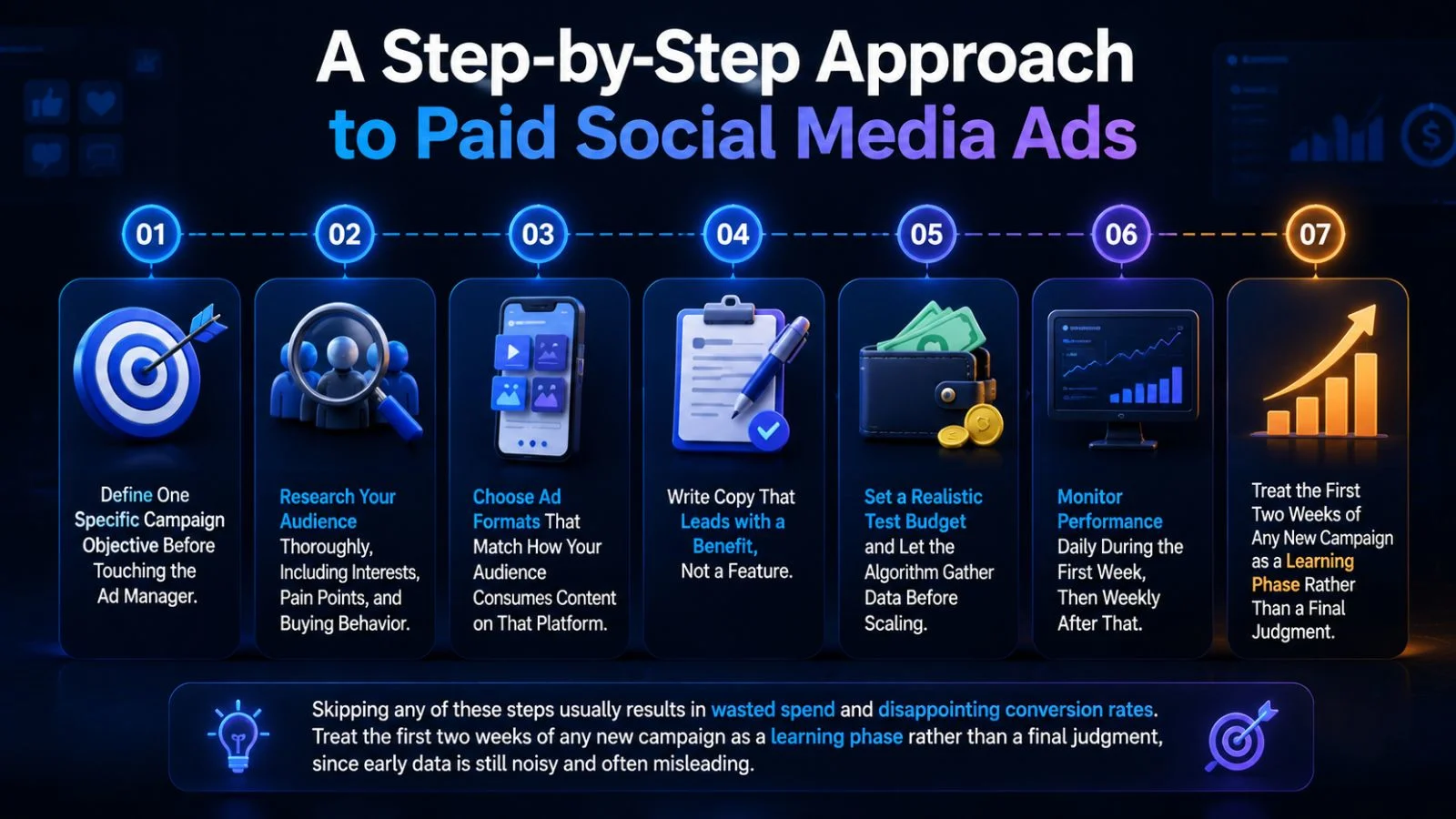
Running paid social media ads successfully starts with a clear goal. Are you aiming for brand awareness, website traffic, or direct sales? Your objective shapes everything from creative direction to bidding strategy, so skipping this step often leads to wasted budget later and confused, unfocused messaging across your funnel.
Here’s a simple framework to launch campaigns that convert:
- Define one specific campaign objective before touching the ad manager.
- Research your audience thoroughly, including interests, pain points, and buying behavior.
- Choose ad formats that match how your audience consumes content on that platform.
- Write copy that leads with a benefit, not a feature.
- Set a realistic test budget and let the algorithm gather data before scaling.
- Monitor performance daily during the first week, then weekly after that.
Skipping any of these steps usually results in wasted spend and disappointing conversion rates. Treat the first two weeks of any new campaign as a learning phase rather than a final judgment, since early data is still noisy and often misleading.
Choosing the Right Platform for Your Campaigns:
Not every platform suits every business, and this is where many marketers lose money on paid ads on social media without realizing it. Choosing the wrong platform for paid social media ads is one of the fastest ways to burn through a budget without generating any meaningful traction. Facebook and Instagram work well for e-commerce and lifestyle brands, thanks to strong visual formats and detailed targeting options built over more than a decade of ad-tech refinement.
LinkedIn is better suited for B2B companies selling to professionals and decision-makers who respond to more informative, value-driven messaging. TikTok has become a strong contender for brands targeting younger audiences with entertaining, fast-paced video content, while Pinterest works well for niches like home decor, fashion, and DIY projects.
Before investing heavily, test small budgets across two or three platforms to see where your specific audience actually responds best, since assumptions based on general trends rarely hold true for every individual brand or niche.
Crafting Creatives That Actually Convert:
The creative is often the biggest factor separating a profitable campaign from a failing one. Strong hooks in the first three seconds of a video, or the first line of ad copy, determine whether someone stops scrolling or keeps moving without a second glance.
Focus on showing the product in real use, addressing a specific pain point, and including a clear, direct call to action. Testing multiple creative variations is essential because even small changes in color, wording, or format can significantly change performance. Successful paid social media ads rarely rely on a single winning creative forever; they are built on continuous testing and refinement informed by real audience responses, engagement patterns, and honest performance data over time.
User-generated content and authentic, unpolished visuals often outperform overly produced ads, especially on platforms like TikTok and Instagram Reels, where audiences are naturally skeptical of anything that feels overly staged or scripted. Pair strong visuals with concise, benefit-driven copy so the message lands even if someone watches with the sound off.
Budgeting and Bidding Strategies:
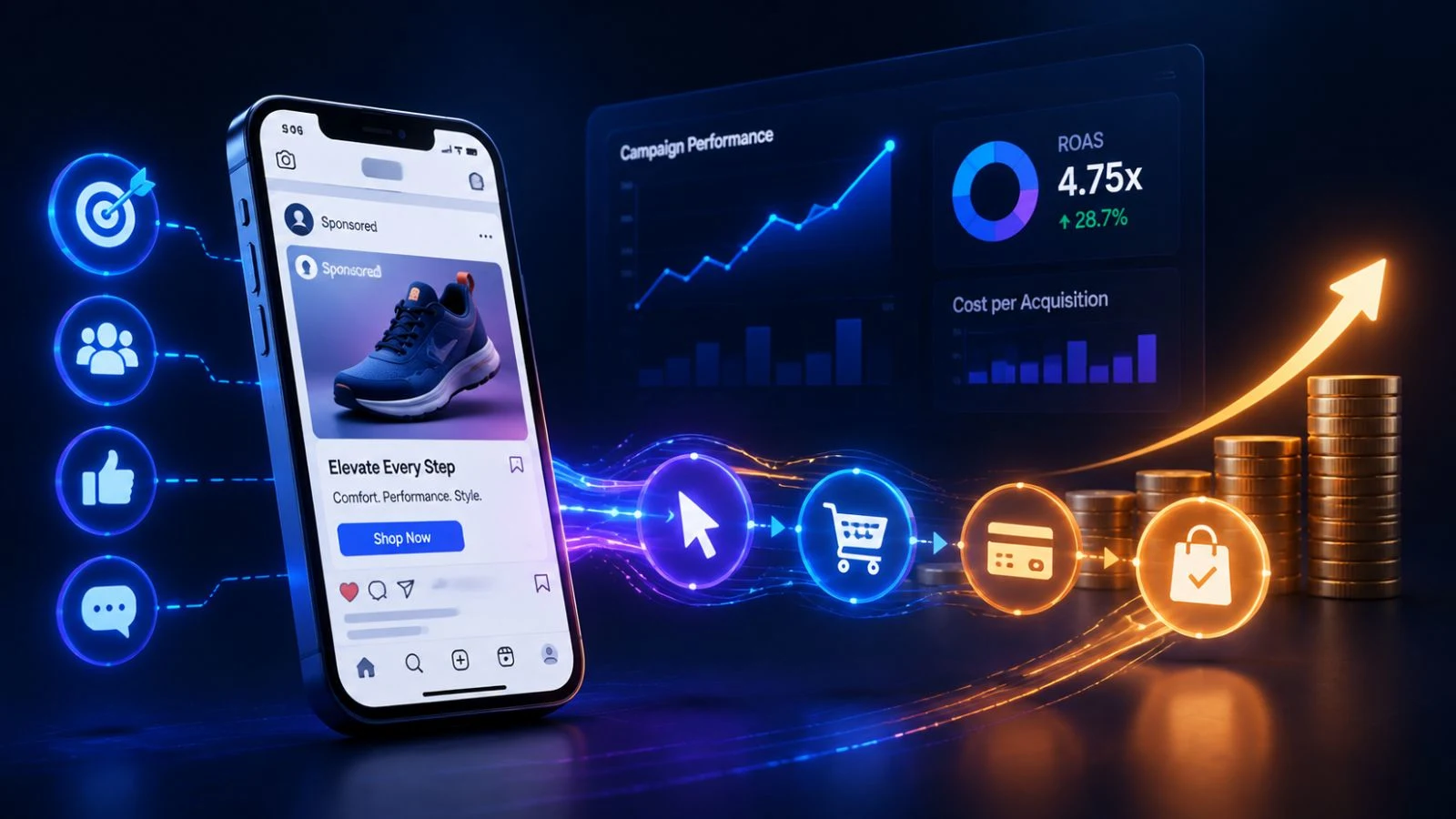
Getting your budget right is just as important as the creative itself. Start with a modest daily budget that allows the platform’s algorithm enough data to optimize delivery properly. Avoid changing budgets too frequently, since this resets the learning phase and quietly hurts performance across the board.
Choose a bidding strategy aligned with your goal, whether it’s lowest cost, cost cap, or bid cap. Beginners should generally stick to automatic bidding until they have enough historical data to justify manual control. Scaling should happen gradually, typically by increasing budgets in small percentages rather than doubling spend overnight, which often confuses the algorithm and quietly increases your cost per result instead of lowering it.
Track cost per acquisition alongside overall spend so growth in budget always translates into proportional growth in actual sales, not just impressions or reach numbers that look good on a dashboard but don’t actually pay the bills at the end of the month.
Retargeting: Turning Interest Into Action:
Not everyone converts on the first click, and that’s completely normal. Retargeting allows you to re-engage people who visited your site, watched a video, or added a product to cart without completing checkout. This audience is already familiar with your brand, making them significantly cheaper and easier to convert than cold traffic.
Effective retargeting for paid social media ads often uses slightly different messaging than cold campaigns, such as addressing objections, offering limited-time incentives, or showcasing social proof, such as reviews and testimonials. Segmenting retargeting audiences by their specific action, rather than treating all site visitors the same way, typically produces noticeably stronger results and a healthier overall return on ad spend.
A layered funnel, where cold, warm, and retargeting audiences each receive tailored creative, consistently outperforms a one-size-fits-all approach that treats every visitor the same regardless of intent. Frequency caps are worth watching too, since showing the same retargeting ad too often can quickly annoy rather than persuade.
Common Mistakes to Avoid:
Many campaigns fail not because of the platform, but because of avoidable errors that could have been caught early with a quick review. Targeting audiences that are too broad or too narrow often leads to poor results and inflated costs. Similarly, running social media paid ads without a properly optimized landing page wastes clicks that could have otherwise converted into paying customers.
Other common mistakes include ignoring mobile optimization, reusing outdated creatives for too long, and failing to install proper tracking pixels before launch. Without accurate tracking, it becomes nearly impossible to understand what’s actually working versus what merely looks good on the surface.
Reviewing performance data regularly and pausing underperforming ads quickly can save significant budget over the course of a campaign, freeing that spend for creatives that are genuinely earning attention, clicks, and ultimately, sales. It also helps to document what you learn from each test, so future campaigns build on real evidence rather than starting from scratch every single time.
Also Read:
How PowerAdSpy Helps You Run Smarter Campaigns:
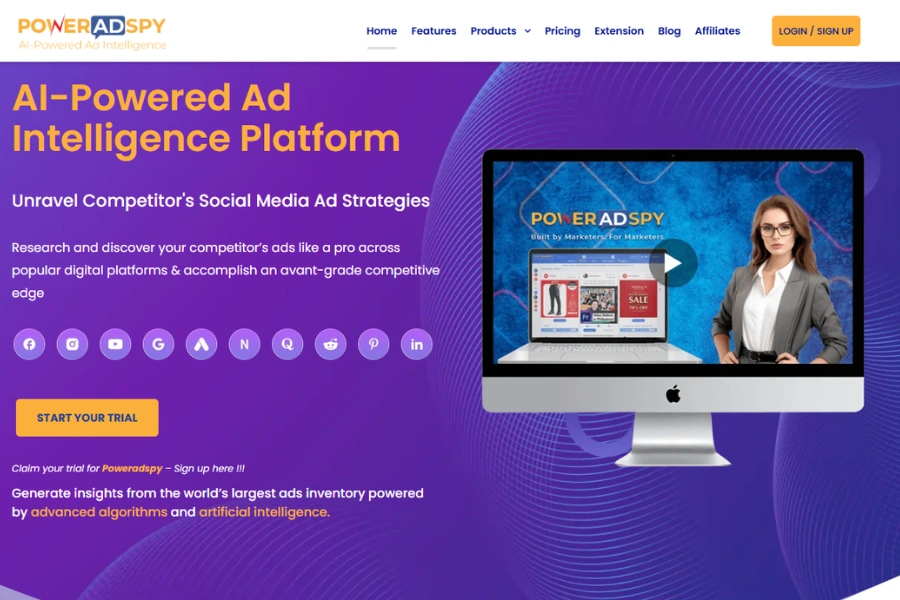
Creating high-performing paid social media ads becomes much easier when you can see what’s already working for others in your industry. This is where PowerAdSpy comes in. It’s a competitive ad intelligence platform that lets you search over 500 million ads across Facebook, Instagram, YouTube, Google, Pinterest, Reddit, and more, refreshed continuously with fresh data every day.
Instead of guessing which hooks, visuals, or offers will work, you can study real campaigns already generating strong engagement in your exact niche, giving your team a data-backed starting point rather than a blank page.
Key features include:
- Search any niche or advertiser and view live ad creatives instantly
- AI-parsed breakdowns of hooks, copy, visuals, and CTAs
- 40+ filters for region, platform, engagement, and format
- Downloadable performance reports in PDF or CSV
- Watchlists to track competitor campaigns automatically
For marketers serious about scaling efficiently, this kind of research shortens the testing cycle considerably.
Measuring and Optimizing Performance:
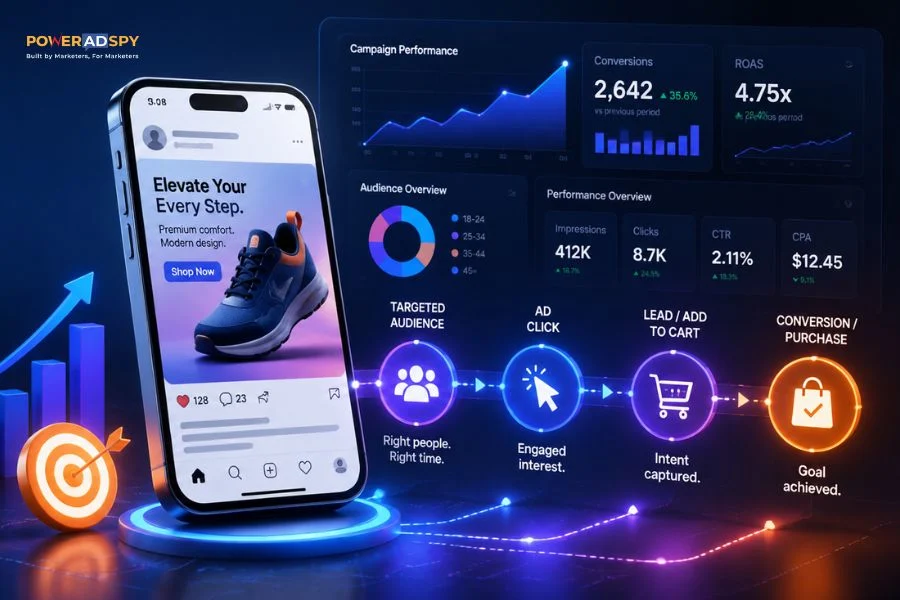
Launching paid social media ads is only half the job; measuring performance determines long-term success. Focus on metrics that align with your goal, such as click-through rate, cost per result, and return on ad spend, rather than vanity metrics like likes or shares that rarely reflect real business impact. Marketers who treat performance data as a constant feedback loop, rather than a one-time report card, generally extract far more value from every dollar spent on paid social media ads.
Set a consistent review schedule, ideally weekly, to compare creative performance and audience segments side by side. Pause underperforming ads early, but give new creatives enough time and budget to exit the learning phase before judging them too harshly. Small, consistent optimizations compound into significantly better results over a full campaign cycle rather than a single lucky win, which is ultimately what separates sustainable growth from short-lived spikes in traffic.
Conclusion:
Running successful paid social media ads isn’t about luck; it’s about consistent strategy, testing, and optimization over time. From choosing the right platform to crafting scroll-stopping creatives, retargeting warm audiences, and managing your budget wisely, every step plays a role in conversion. Tools like PowerAdSpy can further sharpen your approach by revealing what’s already working across your industry, helping you make informed decisions instead of expensive guesses, so every campaign you launch starts a little smarter than the last.
FAQs:
Q1: How much budget do I need to start?
Ans: You can start with as little as $5–$10 per day and scale gradually once you identify winning creatives and audiences.
Q2: Which platform is best for beginners just starting out?
Ans: Facebook and Instagram are generally the easiest starting points due to their user-friendly ad managers and broad targeting options.
Q3: How long before I see results?
Ans: Most campaigns need 3–7 days to exit the learning phase, though clear trends often emerge within the first two weeks.