
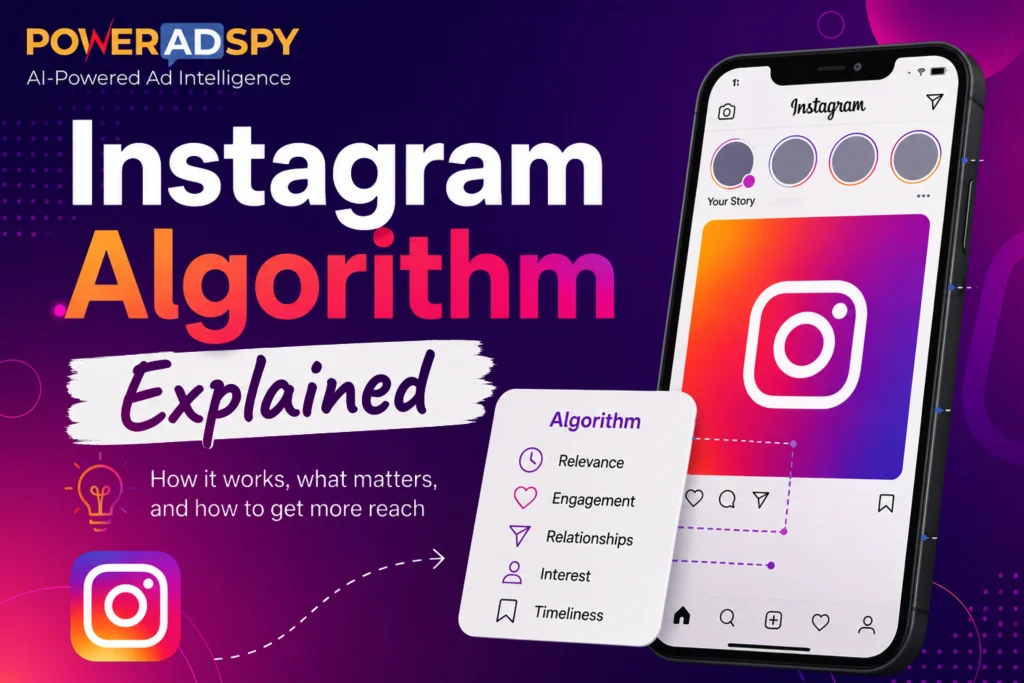
If your reach has felt unpredictable lately, you’re not imagining it. The Instagram algorithm changed more in the last year than it had in the previous three, and most advice floating around is built on rules that no longer apply. Chasing likes, dumping thirty hashtags for Instagram under a blurry photo, and reposting other people’s videos, none of it works the way it used to.
This guide breaks down how the Instagram algorithm actually works in 2026, the ranking factors that move the needle now, and the practical steps creators, marketers, and business owners can take to grow. It’s written in plain language, so whether you’re managing a brand account or just trying to get your Reels seen, you’ll walk away knowing what to do next.
What Is the Instagram Algorithm?
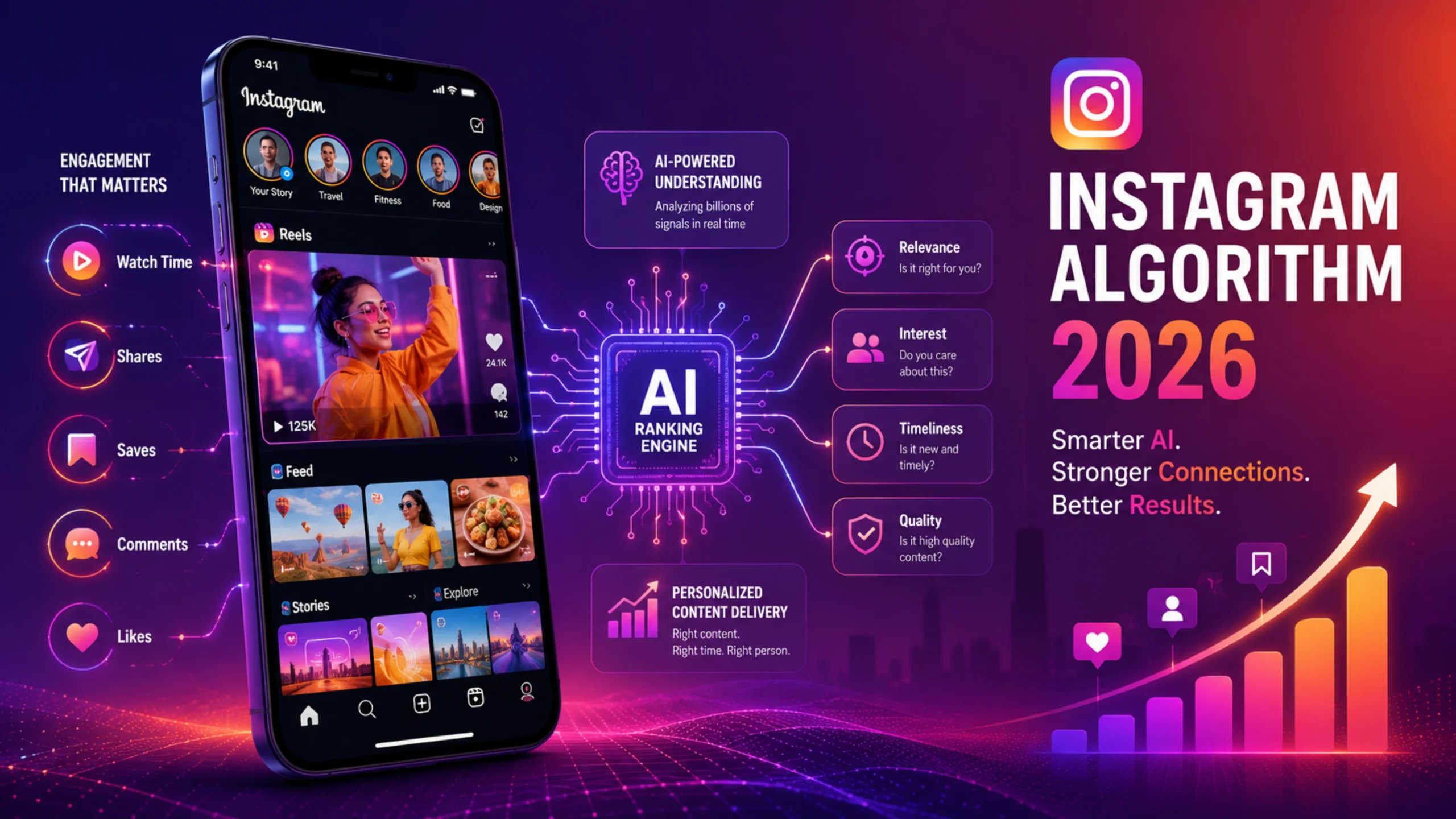
The Instagram algorithm is the ranking system that decides which posts, Reels, and Stories each person sees, and in what order. Instead of showing everything in the order it was posted, Instagram predicts what you’re most likely to enjoy and interact with, then puts that content first.
That prediction is the whole game. Every time someone watches, saves, shares, or scrolls past your content, the system learns a little more about who should see it next.
Why Instagram Uses a Ranking System
The math is simple: people follow more accounts and see more content than they could ever scroll through. Ranking keeps the most relevant content at the top so users stay engaged and keep coming back. For creators, that means visibility is earned, not guaranteed, even by your own followers.
Is There Really One Instagram Algorithm?
No, and this is the single most important thing to understand. Instagram head Adam Mosseri has stated plainly that there isn’t one Instagram algorithm overseeing the app. Instead, Instagram algorithm runs a collection of separate ranking systems, one each for the Feed, Reels, Stories, and Explore, and each weighs signals differently.
This matters because a strategy that grows your Feed reach won’t necessarily help your Reels, and your Explore traffic may reach a completely different slice of people than your Stories. When people ask how the Instagram algorithm in Instagram works, the honest answer is: it depends on which part of the app you mean.
How the System Has Evolved
Instagram started as a simple chronological feed. Over the years, it became a machine-learning engine running, by Meta’s own account, more than a thousand models at once. The shift accelerated in 2024–2025, when the platform leaned hard into recommendations, meaning your feed is no longer just accounts you follow, but content Instagram predicts you’ll like based on your interests.
Want better engagement and conversions? Read What Makes Digital Ads So Effective Today And Why Yours Might Not Be.
How Does the Instagram Algorithm Work in 2026?
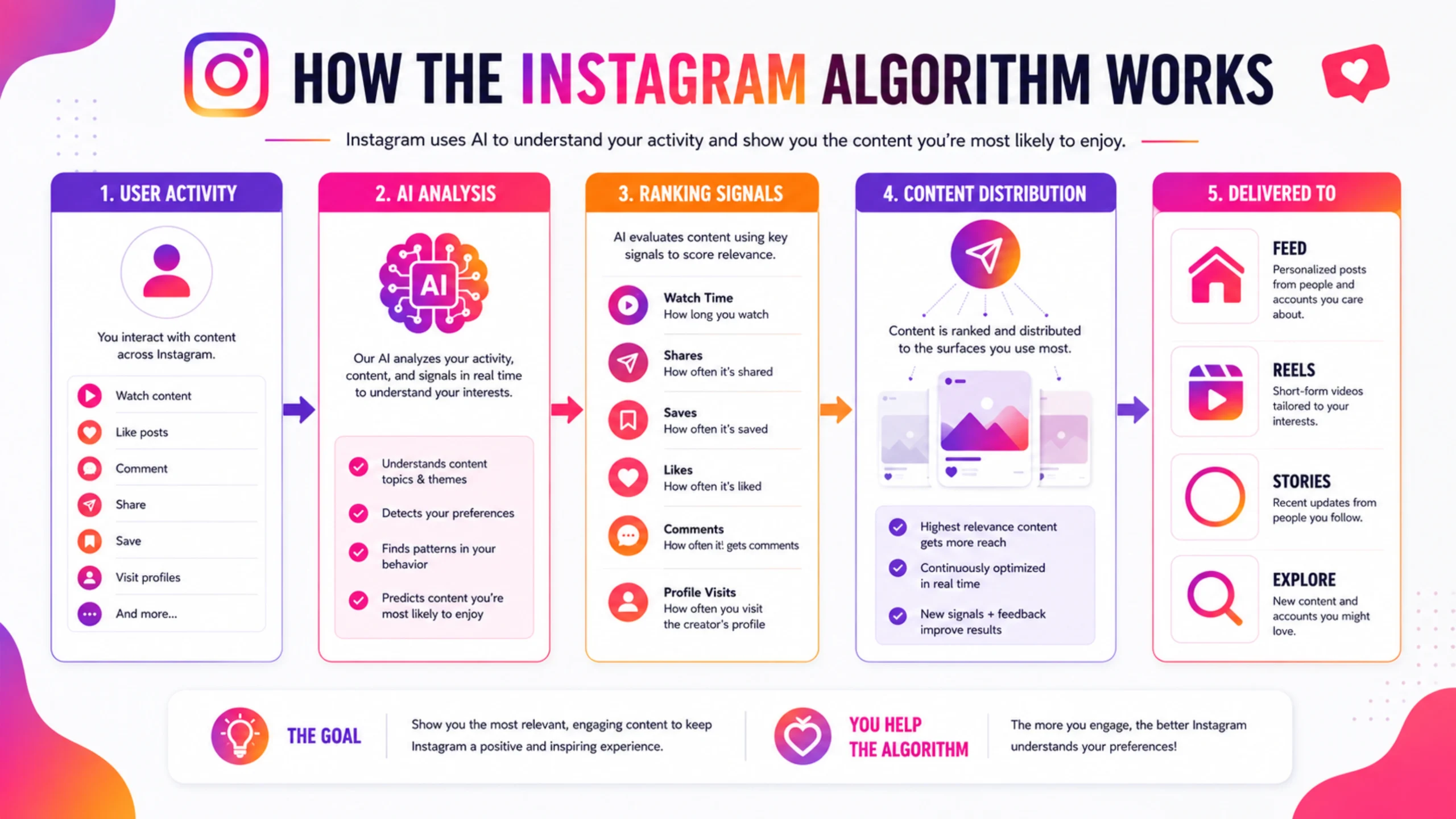
The IG algorithm makes a series of predictions for every piece of content: How likely is this person to watch it? To send it to a friend? To linger, comment, or follow? The more likely you are to take a valued action, and the more heavily Instagram weighs that action, the higher the content climbs.
Connected vs. Unconnected Reach
Mosseri describes two ways content travels. Connected reach is the distribution to people who already follow you. If you want to keep track of your recent following and better understand your audience connections, this can also help you see which accounts you’ve recently started following. Unconnected reach is distribution to people who don’t, through Reels, Explore, and recommendations.
The distinction is practical. For your existing followers, your relationship with them and their past engagement matter most. For strangers, an Instagram boost post has no relationship data to lean on, so raw content signals, watch time, send rate, and save rate do almost all the work. If your goal is growth, you’re optimizing for unconnected reach.
Views Became the Headline Metric
Mosseri has pushed Views as the primary metric across Reels, Stories, photos, and carousel on Instagram. It’s now the number one Instagram surface first in analytics. Views reflect how far your content actually traveled, which lines up with how the system thinks: reach is the outcome of getting the underlying signals right.
Instagram Ranking Factors: What Matters Most in 2026
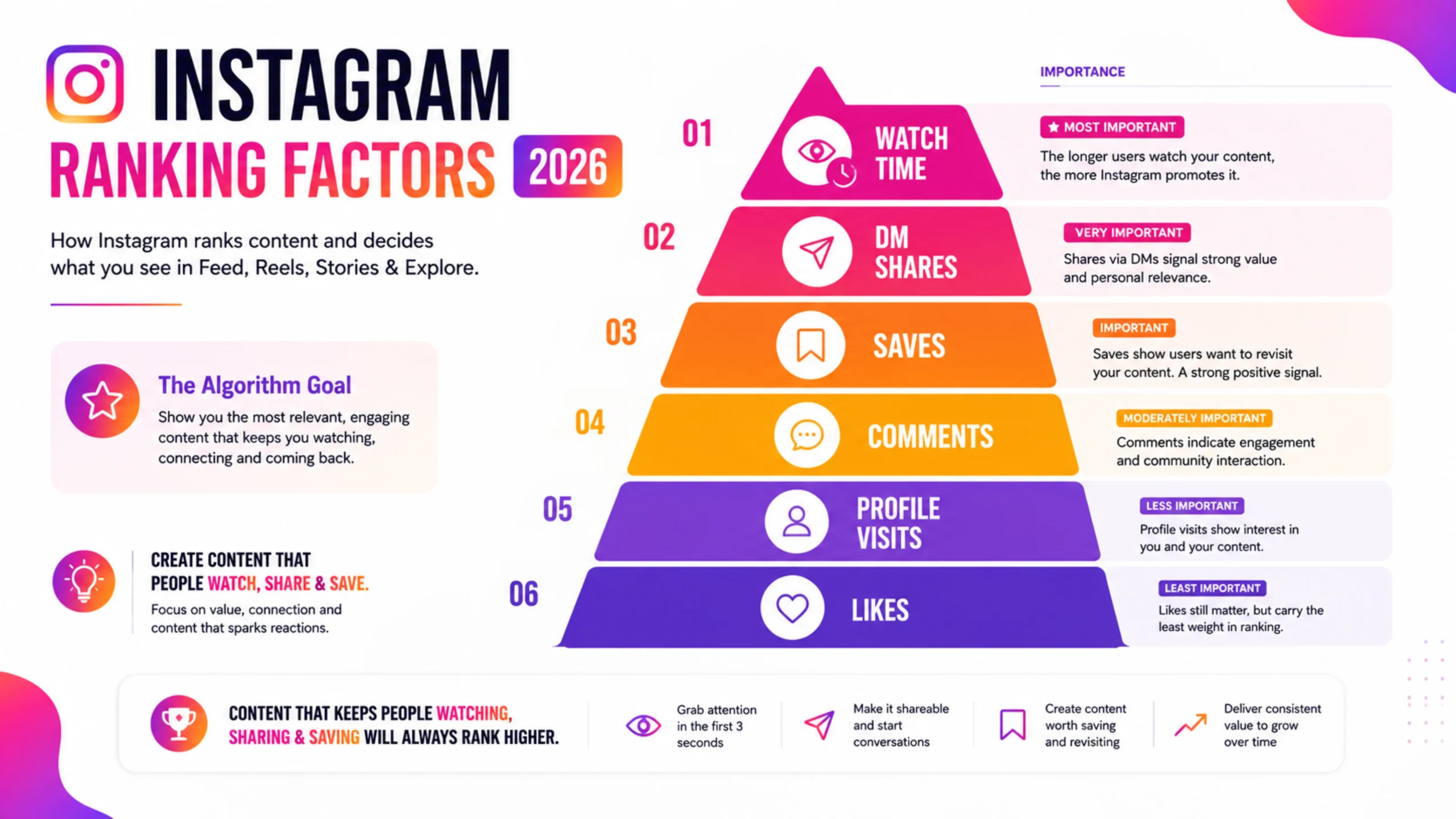
In January 2025, Mosseri confirmed the three signals that carry the most weight across the app. Memorize these, because almost everything else is downstream of them.
1. Watch Time and Retention
Watch time is the strongest single factor. How long people stay with your content, especially video, tells Instagram algorithm whether it’s worth showing to more people. A 45-second Reel watched nearly to completion will typically outperform a shorter clip that people abandon. Repeat views are an especially strong positive signal.
The first three seconds decide everything. Instagram heavily weighs whether viewers keep watching past that point, which is why a strong hook isn’t optional anymore.
2. Sends Per Reach (DM Shares)
This is the big 2026 shift. When someone sends your post to a friend in a DM, Instagram treats it as a powerful endorsement, far stronger than a like. By most industry estimates, DM shares are several times more valuable than likes for reaching new audiences. Mosseri’s advice is direct: make something people want to send to a friend.
3. Likes Per Reach
Likes still count, but they now carry the least weight of the three. A passive tap is easy to give and tells the system little. Building your entire strategy around likes is, frankly, optimizing for the weakest signal on the platform.
Other Signals That Still Matter
Saves, strong evidence that your content has lasting value, which is why educational and reference posts punch above their weight.
Meaningful comments and depth of conversation matter more than raw comment count.
Relationship signals, DMs, replies, and repeated engagement push an account higher in someone’s Feed and Stories.
Content recency, fresher content gets a visibility edge, especially in the Feed.
Profile visits and follows, a follow after viewing is one of the clearest signs your content converted a stranger.
If you’re looking beyond reach and engagement, check out How to Build a Digital Marketing Campaign That Actually Converts.
Instagram Feed Algorithm Explained
The Feed is a relationship-first environment. It blends posts from accounts you follow with recommended content the system thinks you’ll like, plus the occasional ad.
For people who already follow you, the strongest factors are your relationship with them and their history of engaging with you. For everyone else, content-level signals take over. Instagram also watches negative signals, fast scroll-bys, quick bounces, “see fewer posts like this”, and limits back-to-back posts from the same account to keep the Feed varied.
One underrated note: carousels tend to earn high saves and strong dwell time, which makes them quietly effective for Feed reach.
Instagram Reels Algorithm Explained
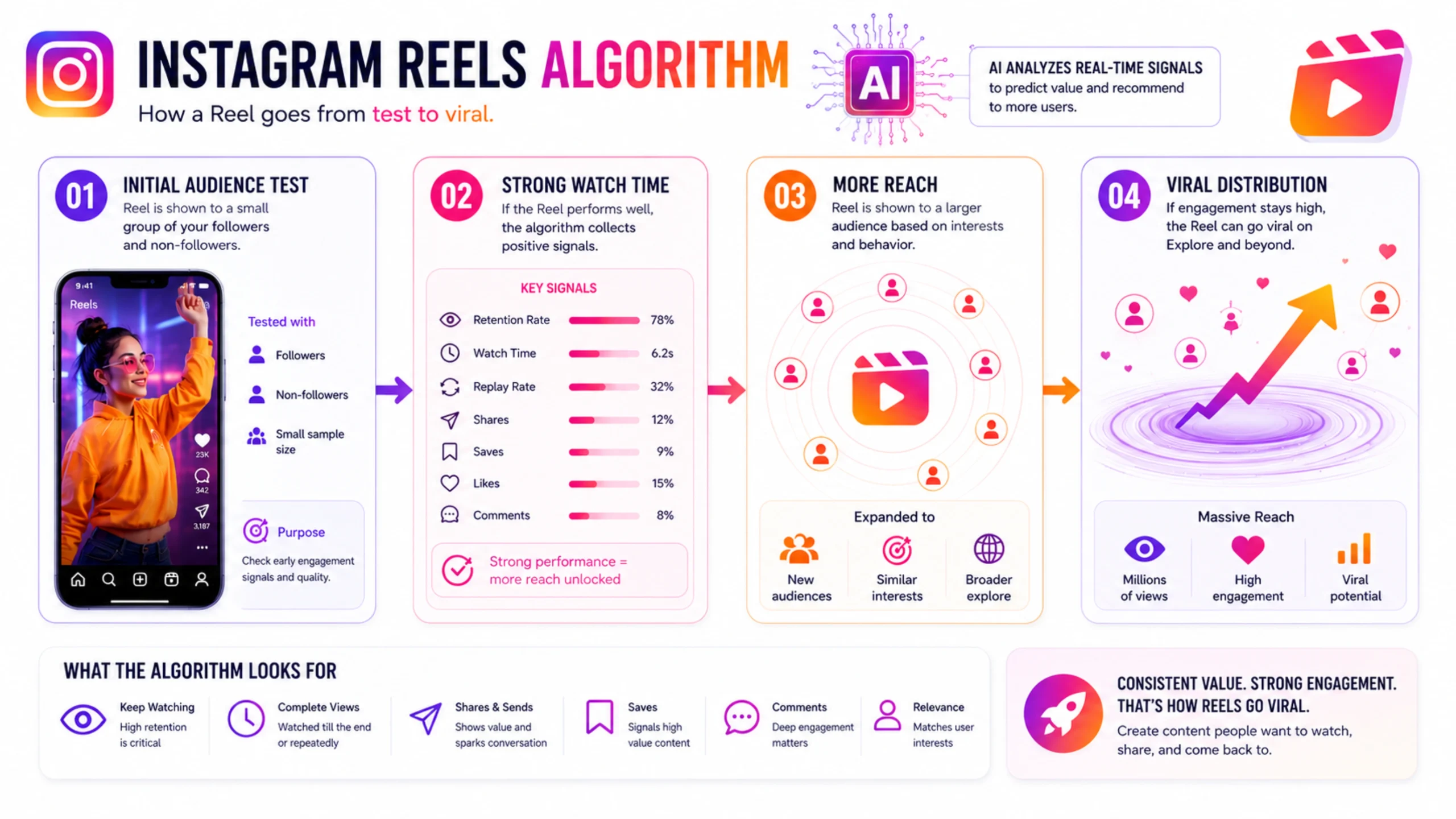
Reels are the most important format for growth in 2026, because they are the one thing Instagram proactively shows to people who don’t follow you yet. Carousels, Stories, and static posts mostly serve your current audience; Reels serve your future one.
Here’s the typical path: Instagram tests a new Reel on a small batch of non-followers. If watch time and send rate hold up, it expands distribution to a larger group, and so on. Strong early retention is what unlocks each next wave.
A few format details that affect ranking:
Captions matter. Most people watch with the sound off, and captions also help Instagram’s AI categorize your content. Mosseri has listed captions as a Reels ranking factor.
Eligibility hygiene. No visible watermarks (from TikTok or elsewhere), include audio, and keep it original. Watermarked, recycled content gets suppressed.
Longer Reels reach strangers. Reels up to three minutes can now be recommended to non-followers, so there’s room to tell a fuller story if the retention is there.
Trial Reels
A feature worth knowing: Trial Reels let you publish a Reel to non-followers only, before deciding whether to show it to your audience. If it performs with cold viewers, that’s your signal to post it broadly. If it flops, you revise it without affecting how your existing followers see you. It’s one of the most useful testing tools Instagram has added in years.
Want to maximize your Reel views? Take a look at What’s The Best Time to Post Reels on Instagram
Instagram Stories Algorithm Explained
Stories are about strengthening the relationships you already have. Mosseri has said the top Stories signals are how likely you are to tap into a Story, like it, or reply to it.
Three things push your Stories to the front of someone’s tray: their viewing history (people who regularly watch you), their engagement history (likes, replies, reactions), and overall closeness (if you DM often, the system treats you as inner-circle). Interactive stickers, polls, questions, and quizzes are an easy way to spark the taps and replies that feed this system.
Instagram Explore Algorithm Explained
Explore is pure discovery, almost entirely unconnected reach. The system looks at what you’ve engaged with in the past and finds similar content from accounts you don’t follow.
To improve your odds of landing there: create content that earns saves and shares, stay consistent within a clear topic so the system can categorize you, and study what already performs well on Explore in your niche. Because Explore is its own ranking system, it can lag behind your other surfaces; content patterns there take longer to shift.
Instagram Search and SEO
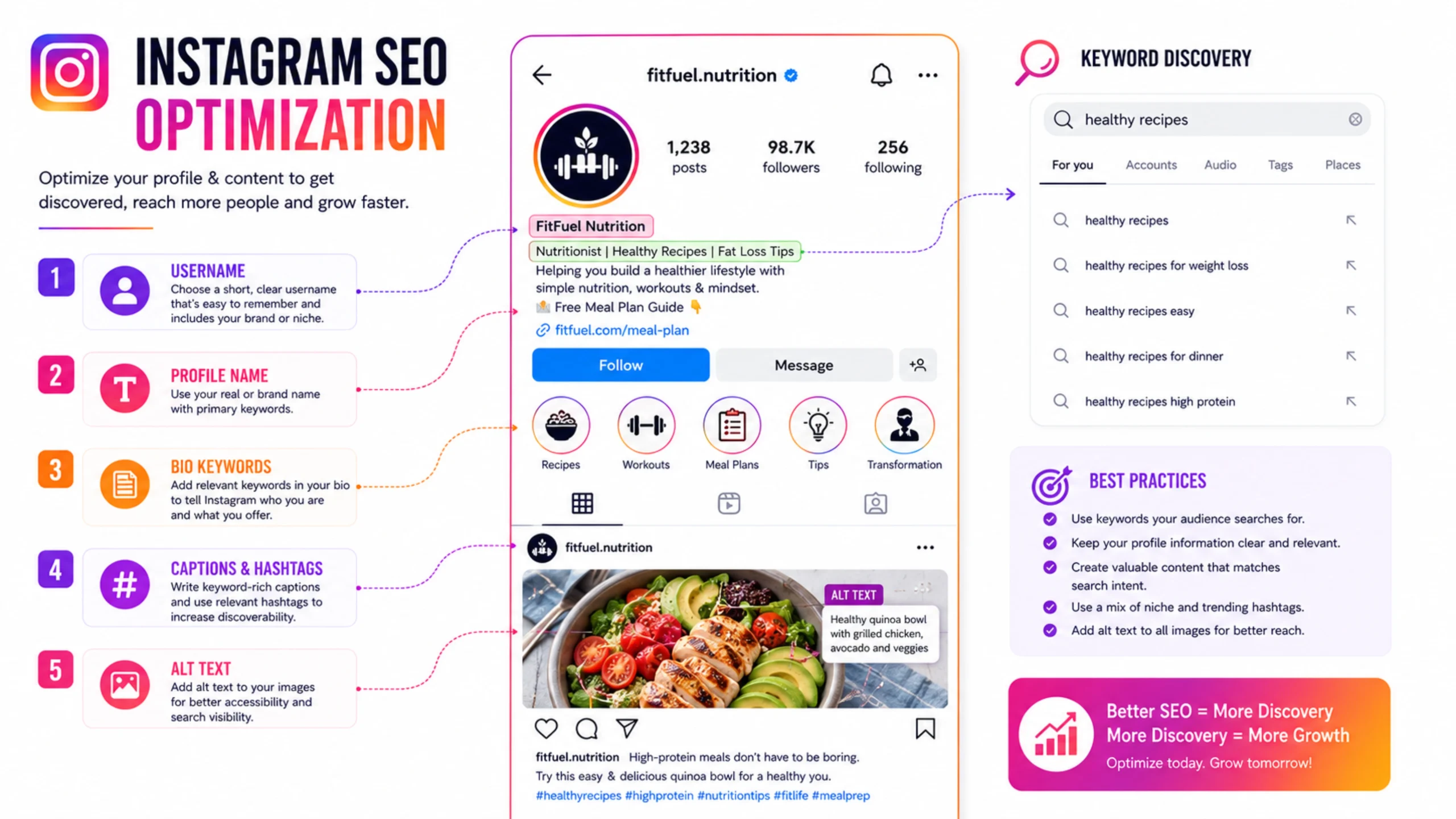
Instagram search has improved a lot, and that makes Instagram SEO a real growth lever in 2026. The system reads the actual words in your captions, your profile name, and your bio to understand what you’re about.
Practical steps:
Use real keywords in captions, and describe your content in plain language that people would search for.
Optimize your name field (not just your handle) with a keyword, e.g., “Maya | Vegan Recipes.”
Write descriptive alt text on images to help both search and accessibility.
Keep your niche tight so Instagram associates your account with specific topics.
This keyword-first approach increasingly matters more than hashtags, which leads to a common question.
Do Hashtags Still Matter?
Yes, but far less than they used to, and not the way you remember. Hashtags now act mostly as topic labels that help Instagram understand and categorize a post, not as magic reach multipliers. A handful of relevant, specific tags is plenty. Stuffing thirty generic hashtags looks spammy and does nothing.
In 2026, keywords in your caption generally do more for discoverability than hashtags. Think of tags as a small assist, not a strategy.
What the Instagram Algorithm Rewards (and What Hurts You)
The platform has gotten clearer about both.
Rewarded:
Original content. As of April 30, 2026, Instagram extended its original-content rules from Reels to photos and carousels. Accounts that mostly repost other people’s work, roughly ten or more reposts in a rolling 30-day window, stop being recommended to non-followers. Original means you shot it, made it, or genuinely transformed it with commentary or editing.
Raw, human content. In a December 2025 year-end message, Mosseri argued that because AI can now produce polished content instantly, the stuff that stands out is more human and less manufactured. Behind-the-scenes clips, talking-head videos, and genuine moments are outperforming glossy production. Phone footage is fine.
Save-worthy and shareable content. If it’s worth saving or sending, it spreads.
Consistency within a niche. Posting steadily on one topic is now an Instagram algorithmic advantage, not just a branding choice.
What hurts reach:
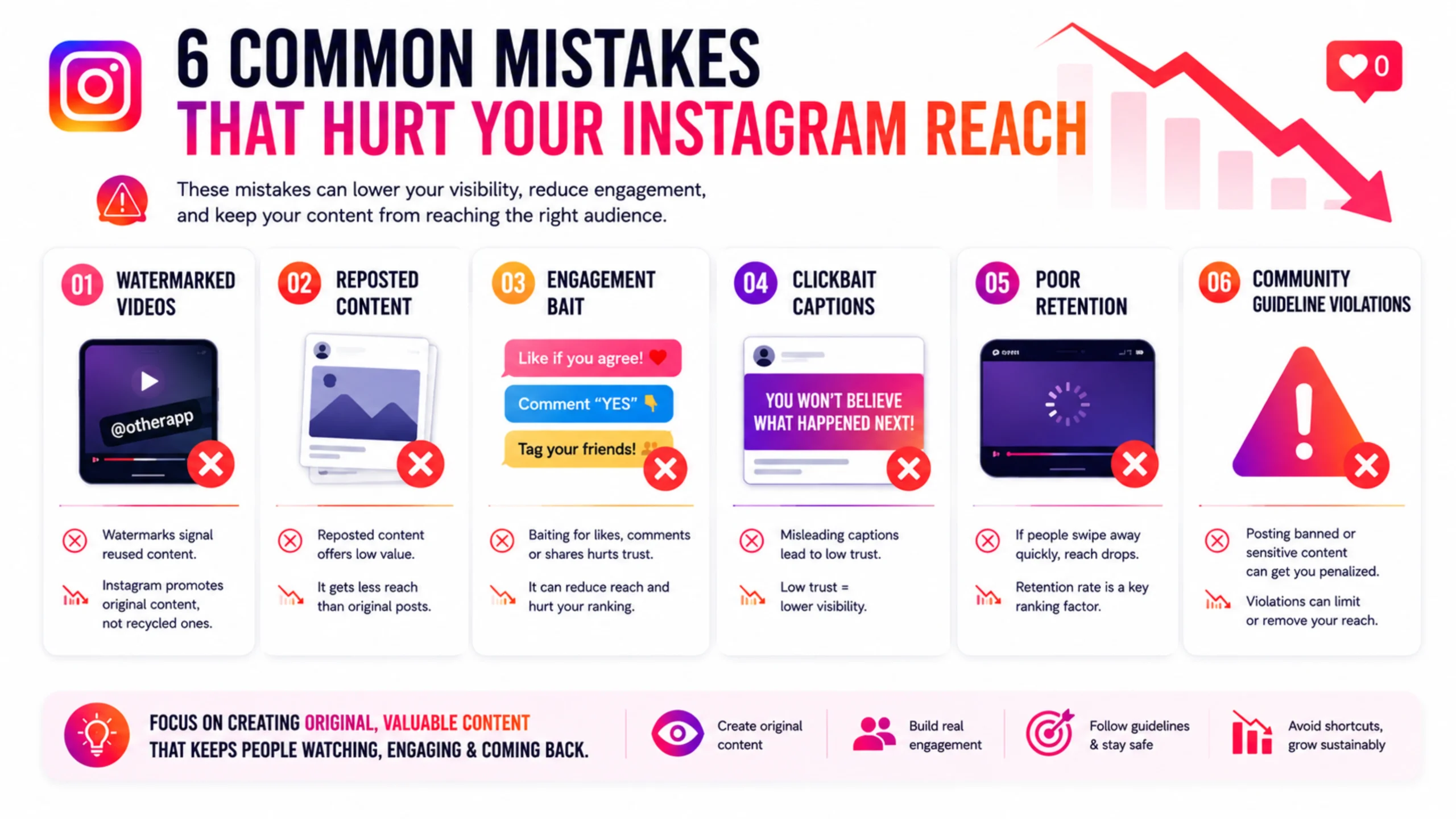
- Reposting and watermarked videos.
- Engagement bait and misleading clickbait captions.
- Pure AI-generated content with no visible human perspective, Instagram is actively deprioritizing it and exploring AI labeling.
- Poor retention and fast scroll-bys.
- Community Guidelines violations, which can restrict your reach across every surface at once.
Researching What Works: Competitor and Ad Analysis
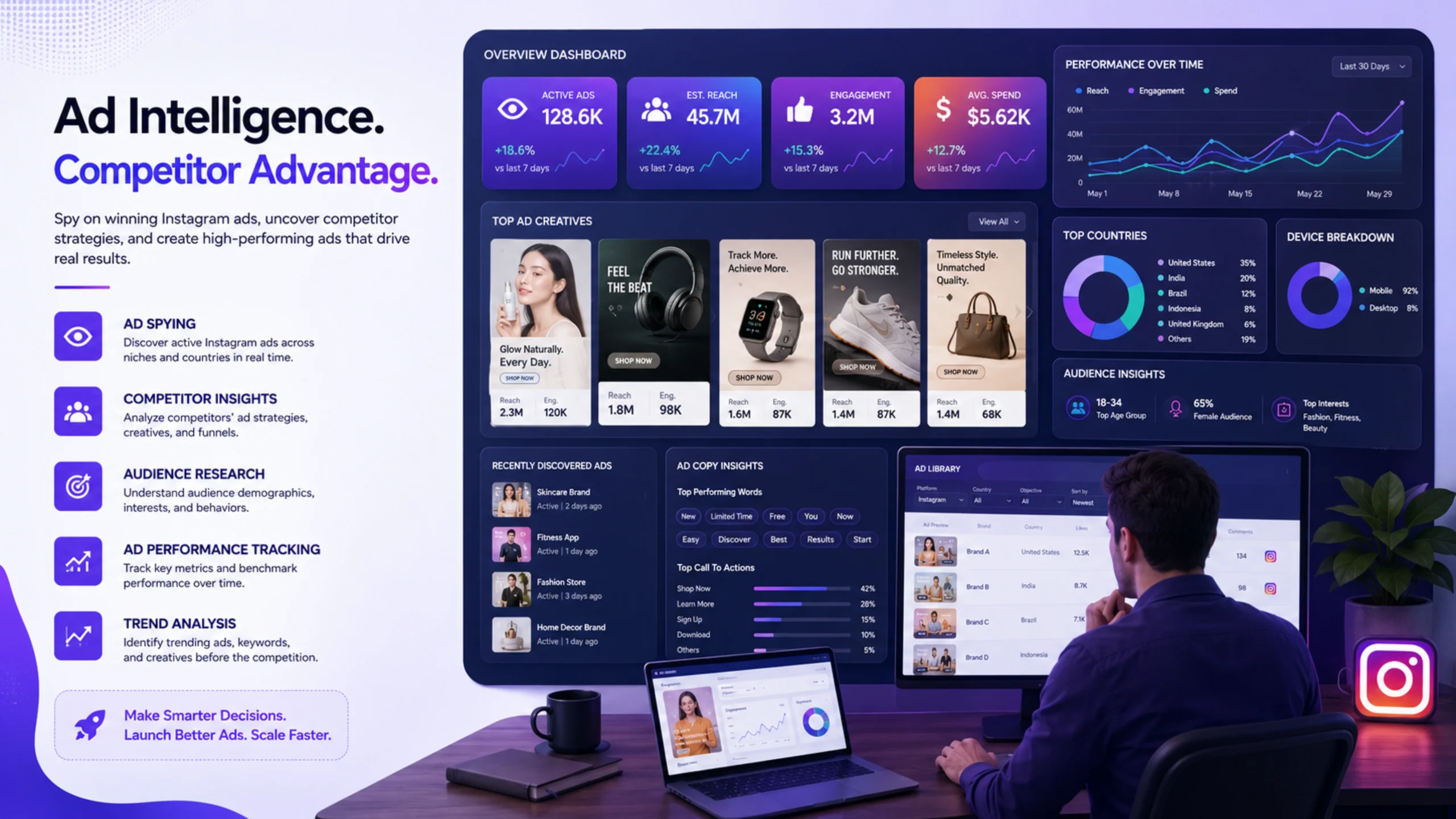
Understanding the Instagram algorithm is half the job. The other half is seeing what’s actually landing in your niche, and that’s where structured research beats guesswork, especially if you’re also running paid campaigns alongside organic content.
A tool like PowerAdSpy is built for exactly this. It’s an AI-powered ad intelligence platform with one of the largest ad databases available, covering Instagram, Facebook, YouTube, Google, and more. Instead of scrolling endlessly to figure out what competitors’ ads are doing, you can search and filter live ad creatives to see the hooks, captions, formats, and calls-to-action that brands in your space are putting money behind.
For Instagram specifically, that’s useful in a few concrete ways. You can break down the components of a winning ad, the text, the visuals, the offer, to understand *why* it works, then apply those lessons to your own organic Reels and posts. Its filters let you narrow by platform, placement, and ad type, and its reporting helps you spot trends early instead of after they’ve peaked. There’s also a free Chrome extension for quick competitive checks.
The point isn’t to copy anyone. It’s to shorten the learning curve: see what’s already proven with real audiences, and let that inform your hooks and creative direction so you’re not testing every idea from scratch.
How to Improve Your Reach in 2026
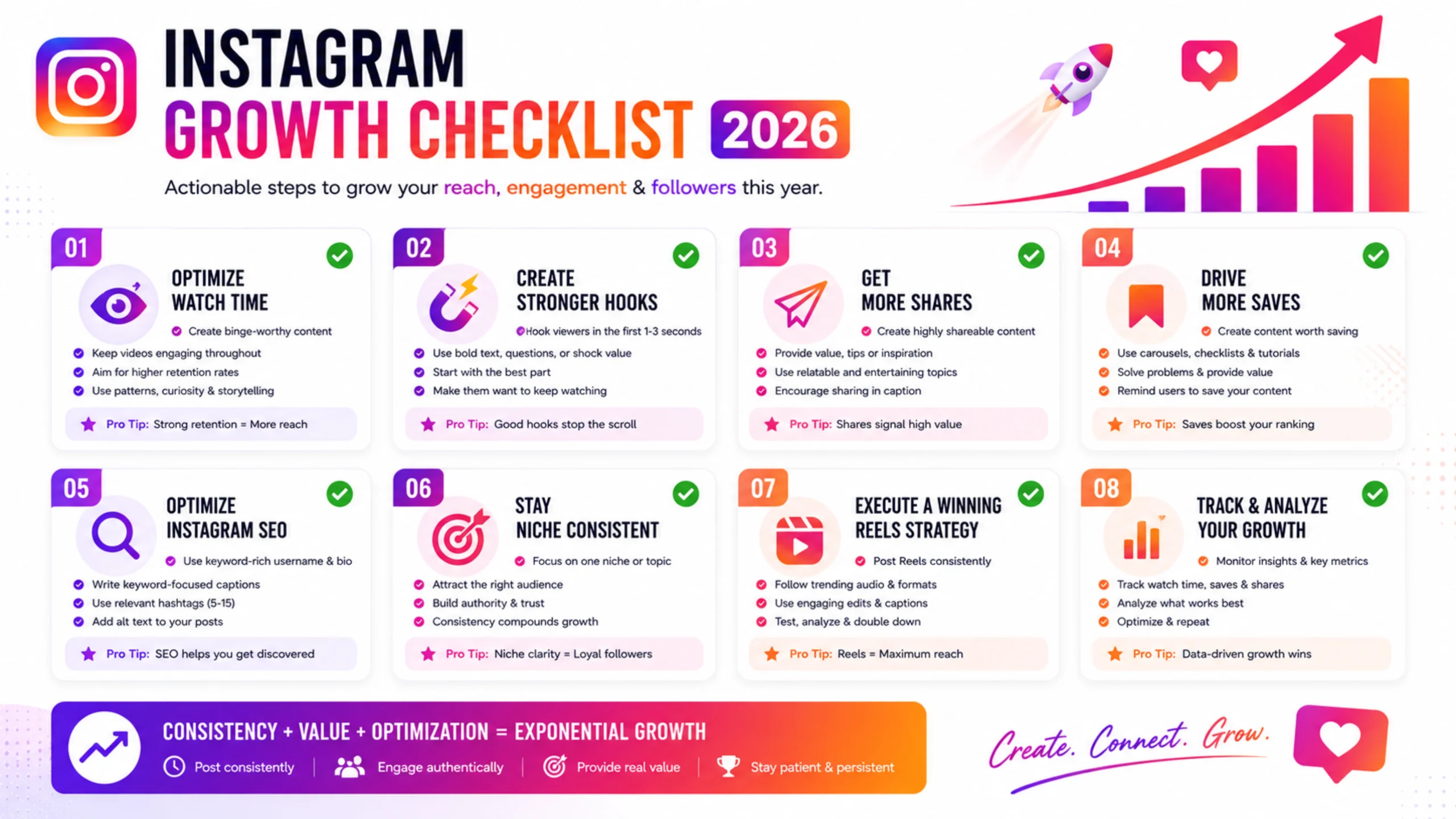
Pulling it together, here’s what actually works now:
- Win the first three seconds. Open with a hook that stops the scroll, a question, a bold claim, a visual payoff.
- Optimize for watch time. Tight editing, no slow intros, captions on. Aim to keep people watching to the end.
- Make content that people send. Before posting, ask: would someone DM this to a friend? Utility, relatability, and “this is so you” content earn sends.
- Encourage saves. Educational and reference posts (how-tos, checklists, carousels) get saved and travel far.
- Lean into Reels for growth, carousels, and Stories for loyalty. Match the format to the goal.
- Pick a niche and stay in it. Consistency helps the system route you to the right audience.
- Go human, not polished. Authentic beats are over-produced right now.
- Use Instagram SEO. Keywords in captions, name field, and bio.
- Post a sustainable cadence. Mosseri has reportedly pointed to a rhythm like a couple of Reels plus several Feed posts a week, but consistency you can maintain beats a burst you can’t.
- Read your Insights. Watch your average watch time, sends per reach, and saves. Those three tell you more than your like count ever will.
Latest Instagram Algorithm Changes in 2026
A quick roundup of what’s new this year:
“Your Instagram Algorithm” controls. Launched in late 2025, this dashboard (look for the two-hearts icon in Reels/Explore, or check Settings → Content Preferences) shows the topic categories Instagram has assigned to your account. You can add or remove topics to reshape what you see, and it underlines how much niche clarity matters for distribution.
Instagram Algorithm reset. Instagram added a “Reset suggested content” option that wipes your recommendation profile so the system relearns your interests from scratch. It’s meant for occasional use when your feed feels off.
Expanded original-content rules. Now covering photos and carousels, not just Reels.
Authenticity over AI. A clear, stated preference for real human content over pure AI generation.
Going forward, expect more transparency tools, more emphasis on private sharing, and continued rewards for original, niche-consistent creators.
Instagram Algorithm Myths, Debunked
“Instagram hides my posts.” The system ranks rather than hides. Low reach usually means weak signals (retention, sends, saves), not punishment.
“There’s a secret shadowban.” There’s no hidden switch labeled “shadowban.” What people experience is usually a recommendation restriction tied to Account Status, check Settings → Account → Account Status. Violations or reposting can limit how recommendable you are until resolved.
“Business accounts get less reach.” Account type isn’t a ranking factor. Your content and engagement are.
“More posting is always better.” Only if quality holds. Flooding the feed with mediocre content can train the system to expect less from you. Consistency beats volume.
“Scheduling tools hurt your reach.” Mosseri has confirmed there’s no penalty for posting through Instagram’s official API-based scheduling tools.
Conclusion
The Instagram algorithm in 2026 rewards something refreshingly straightforward: original, human content that people want to watch to the end and send to a friend. The mechanics underneath are complex, multiple systems, thousands of signals, but the takeaways aren’t. Hook fast, hold attention, earn shares and saves, stay in your lane, and use your Insights to learn what’s working.
The platform will keep changing. The creators who thrive won’t be the ones chasing every hack; they’ll be the ones building genuine content in a clear niche, watching the right metrics, and adapting early. Get those fundamentals right, and you’re working with the Instagram algorithm instead of against it.
Frequently Asked Questions
What is the Instagram algorithm?
It’s the set of ranking systems that decide which posts, Reels, and Stories each user sees and in what order, based on predicted interest and engagement.
How does the Instagram algorithm work?
Instagram uses separate AI systems for Feed, Reels, Stories, and Explore. Each predicts how likely you are to take valued actions, watching, sending, and saving, and ranks content accordingly.
What are the most important Instagram ranking factors in 2026?
Watch time, sends per reach (DM shares), and likes per reach are the three metrics Mosseri has confirmed carry the most weight, with saves and meaningful comments close behind.
What does “sends per reach” mean?
It’s how often people send your content to others via DM, relative to how many saw it. It’s one of the strongest signals for reaching new audiences in 2026.
Does Instagram favor Reels over posts?
Reels get the most unconnected reach because they’re shown to non-followers. Carousels and Stories are better for engaging the audience you already have.
Are hashtags still important in 2026?
They help categorize content, but no longer drive big reach. Keywords in your caption now matter more. Use a few relevant tags, not thirty.
Why are my Reels getting fewer views?
Usually, weak retention in the first few seconds, watermarked or reposted content, an unclear niche, or a recommendation restriction on your account.
How do I get on the Explore page?
Create save-worthy, shareable content, stay consistent in one niche, and earn strong early engagement so the system matches you to interested non-followers.
Can I reset my Instagram algorithm?
Yes. Use “Reset suggested content” in Content Preferences to clear your recommendation profile, then engage only with content you actually want more of.
Does Instagram penalize AI-generated content?
It deprioritizes pure AI content with no human perspective. AI-assisted work with a genuine human voice still performs fine.
How often should I post?
Consistency you can sustain matters more than a specific number. A few Reels and several Feed posts a week is a commonly cited rhythm, but don’t sacrifice quality to hit a quota.