**Start your free trial today →
A 15% reduction in A/B testing volume in under two months is what real advertisers report after they improve how they research ads and content (Source: PowerAdSpy user outcomes). If you’ve wondered how a sponsored post does work, here’s the short answer: a brand pays a publisher or creator to share content that fits the platform’s style, the post carries a clear ad label, and the results get tracked like any other campaign.
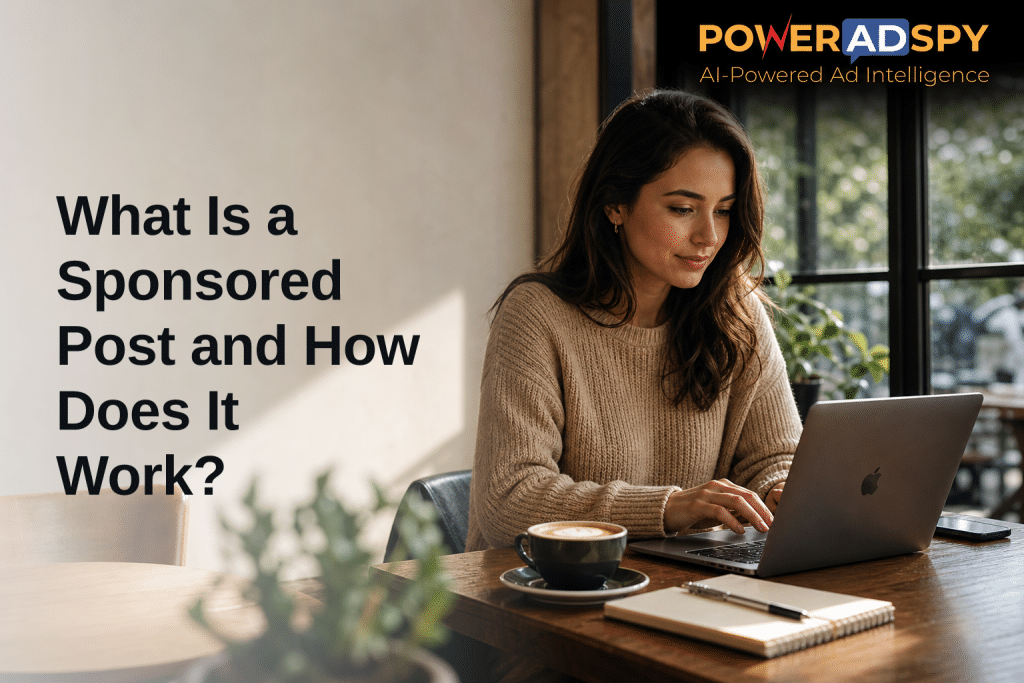
In plain terms, a sponsored post is paid media that blends into a feed, newsletter, or blog, but it’s not trying to trick you. It is labeled, and it must follow disclosure rules. In 2026, you’ll see this across Instagram, Facebook, LinkedIn, TikTok, YouTube, and blogs. The format can be a photo, video, story, carousel, article, or even a podcast segment. The key is the deal behind it: the brand funds it, the creator or publisher makes or posts it, and both sides agree on goals.
For you as a reader, that clarity matters. You want to know who’s paying for the message. For you as a marketer, it matters because success comes from fit: a post that feels natural to the audience, on the right platform, with honest, up-front disclosure.

What Exactly Is a Sponsored Post?
A sponsored post is paid content published by a media outlet, influencer, or creator on their channel. The brand funds it, but the host controls the voice, format, and posting. The goal is to reach a well-matched audience in a way that feels native to the feed or site, while still being transparent that it’s an ad. According to the FTC Endorsement Guides, transparency is not optional in the United States; you must disclose clearly and upfront.
Instagram and TikTok may show a creator’s Reels video with a “Paid partnership” label. Facebook and LinkedIn posts may carry a “Sponsored” tag. For blogs, it’s an article with a line such as “This post is sponsored by [Brand]” near the top, plus any hashtags or tags a platform requires. LinkedIn might also feature a thought-leadership post with the label; a newsletter could have a section marked as “sponsored.
This brand–publisher relationship is a partnership. Brands bring budget, product access, and key messages. Publishers or influencers bring reach, trust, and creative style. Both agree on the scope: deadlines, revision rounds, content rights, usage period, and what success looks like.
Sponsored vs. Other Post Types
- Organic post: No money changes hands. It’s just a regular update.
- Boosted post: You pay a platform to push your own organic post to more people.
- Display ad: A banner or pre-roll unit that sits beside or before content, not inside the feed’s main narrative.
- Sponsored post: Paid content inside the feed or article stream, labeled as advertising, created and/or shared by the host account.
On Facebook, for example, a marketplace listing is user-generated and not the same as a brand-funded sponsor slot. If you want a quick primer on that ecosystem, this guide on how does facebook marketplace work shows how the platform’s native flows differ from paid posts.
For clarity, Wikipedia frames this type of paid content under “sponsored content” and “native advertising”, both labels stress that the ad format matches the surrounding editorial style while being disclosed as paid media (Wikipedia on sponsored content).
In practice, a sponsored post does work when the creator’s voice stays intact, the disclosure is clear, and the content gives the audience something they actually want, tips, a demo, or a story, not just a pitch.
Also Read!
PiPiAds Review: What It Does, Who It’s For, and How It Compares
How Sponsored Posts Work: A Step-by-Step Breakdown
At a high level, the path is simple: plan, pick, agree, create, disclose, and measure.
Brand identifies the audience
First, define who you want to reach and why. Profile age ranges, interests, pains, and jobs-to-be-done. Set a specific goal: clicks to a landing page, trial signups, coupon use, or video watch time.Selects platform and partner
Second, choose where your audience hangs out and who they trust there. Short videos thrive on Instagram Reels and TikTok. B2B trust skews toward LinkedIn posts and newsletters. Long-form deep dives fit blogs and YouTube. Pick partners by audience fit and past content quality, not follower counts alone.
Agree on scope and create
Negotiates terms
Third, agree on scope. Lock the number of posts, deliverable formats, exclusivity, deadlines, usage rights (e.g., can the brand repost?), and payment milestones. Define success metrics and reporting cadence up front so both sides know how the sponsored post does work for the campaign.Content creation
Fourth, collaborate on the brief and the creative. Share product access and key claims with proof. Keep the creator’s voice. Provide talking points, not a script. Build in one or two revision rounds with safety checks for brand and legal accuracy.
Disclose and measure
Disclosure and publishing
Fifth, meet disclosure rules. In the U.S., the FTC Endorsement Guides require clear and conspicuous disclosures. That means obvious labels like “Ad,” “Sponsored,” or “Paid partnership,” placed where users will see them without clicking “more.” Platforms also add their own tags: “Sponsored” on Facebook/LinkedIn, “Paid partnership” on Instagram, and labeled sections on blogs/newsletters.Performance tracking
Sixth, measure what matters. Track reach, saves, comments, CTR, CPC, conversion rate, and any post-purchase metrics like refund rate. For B2B, you might also track pipeline touches or demo requests. As a result, you’ll learn which partners, topics, and formats drive business, not just views.
Practical Measurement Tips
- Define one primary KPI per post (e.g., trial signups) and 2-3 support metrics.
- Tag links with UTM parameters for clean source tracking.
- Save native screenshots of platform labels to confirm disclosures were present at publish.

Common Mistakes People Make with Sponsored Posts
Skipping disclosure
Failure to disclose is the biggest risk. In the U.S., the FTC expects clear, near-the-top labels. If you hide the label or use vague language, you invite legal headaches and audience backlash. Therefore, agree on the exact label before you post.
Making content too salesy
Pushy copy kills trust. For example, a reel that reads like a 30-second spot will flop on a creator’s feed. Instead, show how a product solves one real problem. Keep the creator’s tone and give viewers a reason to watch, teach a trick, show a before/after, or tell a quick story.

Ignoring audience–platform fit
A how-to thread may thrive on LinkedIn but stall on TikTok. On the flip side, a 15-second product hack can shine on Reels but feel thin in a long blog. As a result, you waste spend if you force the wrong format on the wrong audience.
Not tracking performance
If you don’t tag links or define a primary goal, you can’t tell if the post worked. You also can’t scale what you can’t measure. Therefore, set KPIs and tracking methods before the creative starts.
Choosing partners by follower count alone
A small creator with strong engagement can beat a mega account with a cold audience. Look for content quality, comment sentiment, and topic fit. Moreover, review past sponsored posts to see whether their audience welcomes brand content or tunes out.
Red Flags to Watch
- Vague or missing disclosure language
- Inflated vanity metrics with low comments
- One-off “ad dumps” instead of steady content
- No agreement on usage rights or deadlines
Handled well, a sponsored post does work as a trust-builder, not just a reach boost. It earns attention because the content helps first and sells second.
Also Read!
How Does Facebook Marketplace Work: A Complete Beginner’s Guide
The Complete Guide to Testimonial Advertising: How It Works, Examples, and Best Practices
Tools and Resources for Analyzing Sponsored Posts
If you want to study what competitors run and how creators present promos, you have options.
Free starting points
- Meta Ad Library lets you search active ads on Facebook and Instagram by advertiser.
- Social listening tools (e.g., basic platform searches, hashtag tracking) show how audiences react in comments, threads, and shares.
- The FTC’s business guidance library explains disclosure rules in clear language; the Endorsement Guides page linked above is the place to start.
Ad intelligence platforms
For deeper research, tools like PowerAdSpy analyze paid social and sponsored creatives across networks. In fact, PowerAdSpy provides AI-powered ad intelligence with access to ads on Facebook, Instagram, TikTok, Google, Reddit, Pinterest, and more. You can query data on millions of ads from over 100 countries and search by niche keywords, advertisers, and competitor domains. Furthermore, you can sort by likes, comments, shares, or running longest to find proven angles.
“We’ve cut back on testing time and launched campaigns that get results. This tool is now our agency’s secret weapon!” — Charlotte Neilson, Digital Marketing Strategist
As social proof, users report a 15% reduction in A/B testing volume within two months, a 19% improvement in revenue with less workforce and higher efficiency, plus 26% say they save at least one day when prepping a project. Additionally, 23% of users call the tool affordable, easy, and complete (Source: PowerAdSpy user outcomes).
How to Put Tools to Work on Day One
- Search by your product category to see the hooks and visuals others repeat.
- Filter by country and device to match your rollout markets.
- Bookmark 5 concepts you could adapt.
- Note disclosure formats that read clearly in your niche.
For more platform context, you can also scan this primer on how does facebook marketplace work to see how native flows differ from paid placements.
A thoughtful tool stack plus clear rules will help your sponsored post does work analysis go from guesswork to repeatable wins in 2026.
What to Do Next: Putting This Knowledge to Work
Whether you’re a reader who wants to spot ads or a marketer planning your first campaign, start simple and build habits you can repeat.
If You’re a Consumer: Quick Spot-Check Checklist
- Look for clear labels like “Ad,” “Sponsored,” or “Paid partnership” near the top.
- Ask: Is the creator sharing an honest view, or reading a script?
- Check the comments: Are followers engaged and asking real questions?
- Note links or codes: They’re fine, but they signal a paid tie.
- Save posts that teach you something, even if they’re sponsored.
If You’re a Marketer: First-Campaign Checklist
- Define one primary goal (e.g., trial signups) and 2-3 support metrics.
- Pick a platform that matches your story and audience.
- Shortlist 5 partners by content fit and comment quality, not follower count.
- Share a tight brief with proof for each claim and a simple storyboard.
- Approve the exact disclosure line and placement before publish.
- Tag links with UTMs; set a reporting cadence for the first 14 and 30 days.
- Document what worked and what didn’t to guide the next post.
Handled with care, your first run will teach you a lot. In fact, that learning loop is how a sponsored post does work best, each cycle gets clearer, faster, and more aligned with your buyers.

Key Takeaways
- A sponsored post is paid, labeled content published by a creator or outlet in their native style.
- Clear disclosure is required; the FTC expects obvious labels near the top.
- Success hinges on audience–platform fit, helpful content, and tracked goals.
- Don’t pick partners by follower count alone; study engagement and topic fit.
- Tools like PowerAdSpy help you research angles across networks and countries.
What to Do This Week
Pick one platform, shortlist three creators or publishers, and write a one-page brief for a single sponsored post. Add the exact disclosure, your primary KPI, and a draft caption. Then, search recent sponsor posts in your niche for proof-backed angles you can adapt. By shipping one clean test, you’ll learn faster, and make the next one better.
For extra context on platform flows and listings, you can also read this guide on how does facebook marketplace work.