


**Start Your Free Trial Today →
You snap a few photos, set a price, and locals see your item within minutes. So does facebook marketplace work for a first-time seller? Yes, it’s simple, fast, and built into Facebook, and in 2026 it’s still one of the easiest ways to turn a closet cleanout into real cash.
Here’s the short version: you make a listing, nearby buyers message you, and you agree on pickup or shipping. Payments are handled in person or through secure checkout if you ship. Because people already use Facebook daily, your listing can get quick views without building a new profile or store.
However, you might feel nervous about scams or no-shows. That’s normal. In this guide, you’ll learn how Marketplace works behind the scenes, how to list step by step, and how to avoid common mistakes. You’ll also see simple tools to price well, answer fast, and sell safely, without jargon.

What Is Facebook Marketplace and How Does It Actually Work?
Facebook Marketplace is a local buy-and-sell hub inside the Facebook app and website. You don’t need a new account. You use your existing Facebook profile, which helps buyers and sellers check basic profile details before they meet. For background on how the feature fits within Facebook’s products, see this brief Facebook Marketplace overview.
At a high level, does facebook marketplace work by showing your items to people near you first. Therefore, your couch will mostly appear in feeds of folks within a set radius of your town or city. As a result, common household items, baby gear, and furniture move fast because they’re bulky and perfect for local pickup.
Here’s the everyday flow: you create a listing with photos, a price, and a category, and it becomes discoverable to nearby shoppers through browse and search. Interested people message you, often with a quick “Is this still available?”, and you confirm details before you commit. From there, you agree on local pickup or offer shipping and finalize payment in person or via checkout. Once the deal is done, you can leave feedback or simply mark the item sold.
On the browse side, people can filter by category (like Home, Electronics, or Baby & Kids), price range, and distance. In addition, buyers can save searches and turn on alerts for new matches. That means the right buyer might view your item within minutes if it fits a saved alert.
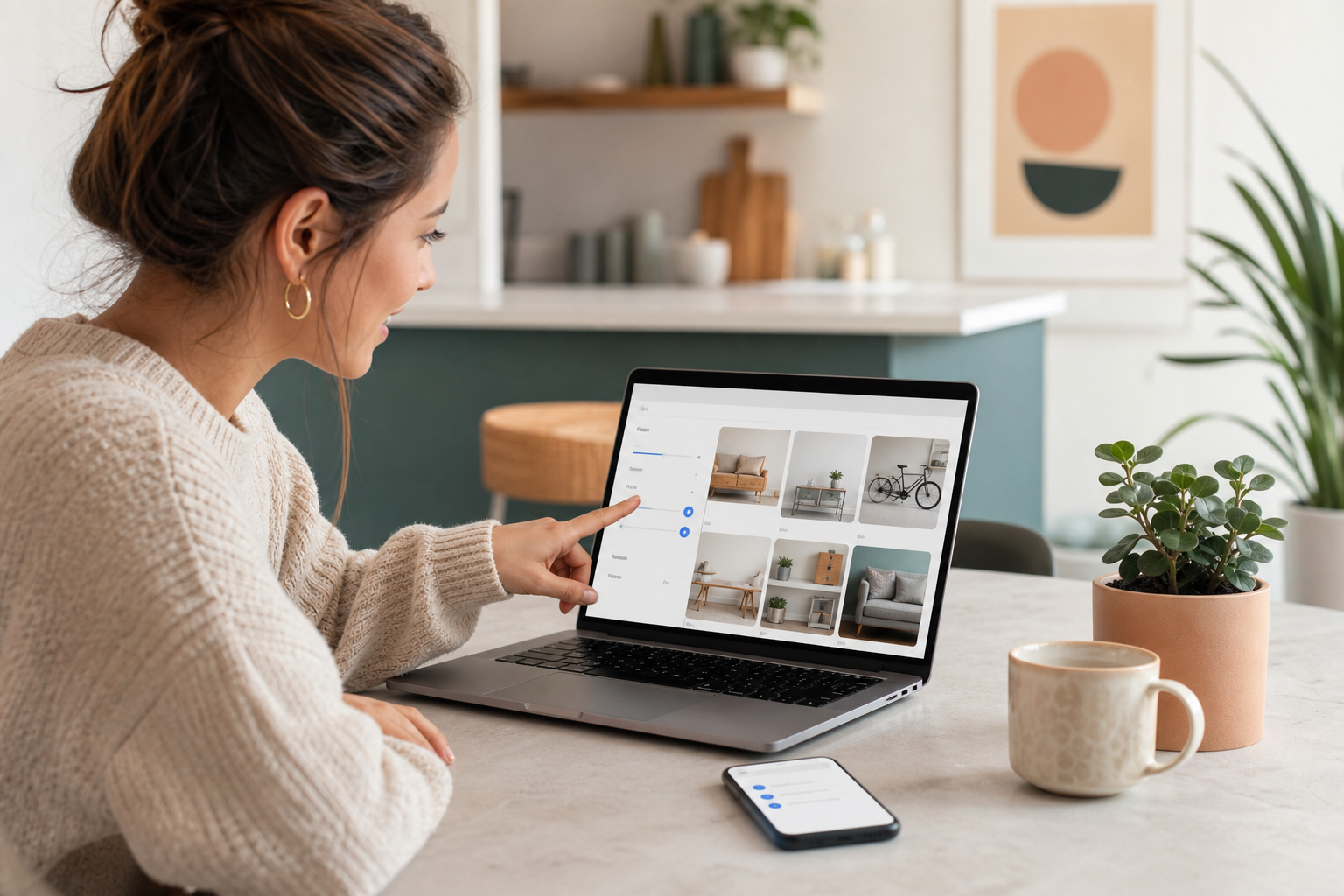
For shipping, Marketplace supports a built-in checkout on eligible item types and locations. If you enable it, buyers pay online and you ship with a tracked label. On the other hand, for local sales, you’ll meet in person and exchange the item for payment. Both paths are simple; you just pick the one that fits the item and your comfort level.
Local Visibility vs. Shipping Reach
Local pickup is fast, free, and ideal for oversized or heavy items that don’t ship well. Shipping, by contrast, broadens your buyer pool nationwide for small, easy-to-pack goods. When you enable built-in checkout on eligible listings, it adds a layer of protection for both sides on shipped orders.
Step-by-Step: How to Buy and Sell on Facebook Marketplace
This section walks you through the process for both sides. You’ll see that buying and selling share the same simple loop: photos, price, messages, meet or ship, pay, done. To keep things clear, we’ll separate seller steps and buyer steps. Along the way, we’ll answer the quiet question in your head, does facebook marketplace work if you’ve never sold online? Yes. Follow these steps and you’ll be fine.
For Sellers: Create, Price, Communicate, and Close
- Gather 6–10 clear photos.
- Shoot in daylight. Clean the item. Show close-ups of any wear.
- Include one wide shot and a few detail shots.
- Write a plain-English title and description.
- Example: “IKEA Lack Coffee Table, 43×23, black-brown — light wear.
- Add must-know details: size, brand, year, condition, pickup area.
- Choose the right category and condition.
- Correct categories help the algorithm match buyers faster.
- Set a fair price with sold “comps.
- Search the item and tap “Sold” filters to see real sale prices.
- Price 5–10% under the average to move it this week.
- Post your listing and turn on alerts.
- Respond within an hour when possible. Fast replies win the sale.
- Screen messages the smart way.
- Ask simple questions: “When can you pick up?” and “Cash or built-in checkout if shipping?
- Check buyer profiles for basic signals (years on Facebook, public photos, recent activity).
- Arrange pickup or offer shipping.
- For pickup, choose a safe, public place during the day.
- For shipping, use Marketplace’s checkout if eligible.
- Get paid and mark as sold.
- For local, cash is simple. If digital, use a secure method you trust.
- For shipping, the buyer pays at checkout and you ship with tracking.
For Buyers: Search, Vet, Confirm, and Pay
- Search with filters.
- Set location, distance, price range, and category.
- Save your search and turn on alerts.
- Vet the listing and seller profile.
- Read the description, zoom photos, and check seller ratings if shown.
- Scan profile basics to feel safe.
- Send a clear first message.
- “Hi! I can pick up Tuesday 6–8 pm. Is this still available?
- Offer a time window to speed things up.
- Confirm condition and price.
- Ask: “Any issues not shown?” or “Does $40 cash on pickup work?
- Meet safely or use checkout.
- Public spot, daylight, and confirm the item matches photos.
- If shipping, use Marketplace’s built-in checkout where offered.
- Complete payment and confirm receipt.
- Keep your proof of payment and any messages.

Also Read!
How to Choose a Facebook Ad Spy Tool for Your Ad Agency
How to Use Facebook Ad Spy Tools to Improve Your Small Business Ads
Common Mistakes to Avoid on Facebook Marketplace
Even smart folks slip on simple things. You can skip the stress by steering clear of these traps. And yes, does facebook marketplace work long term? It does, if you avoid the pitfalls that waste time or invite scams.
Pricing too high is the most common stall. If you list an item 20% over recent sold comps, views may come in but messages will lag. Bring your price in line with what actually sold this month, or aim 5–10% under the average if you want it gone this week. A quick price check before posting saves days of waiting.
Weak or fuzzy photos kill trust fast. Dark, blurry shots hide details and make buyers hesitate, while bright daylight photos show true color and condition. Clean the item, remove clutter, and include close-ups of any wear so people don’t feel misled. One better cover photo can revive a stale listing.
Watch for red flags in messages. Vague notes like “Code?” or pressure to move to a strange app are warning signs. Stick to Messenger and use Marketplace’s built-in checkout on shipped items to keep payment and tracking in one place. A quick scan of the buyer’s profile (years on Facebook, public photos, recent activity) also helps you feel safer.

Protect your privacy and plan meetups with safety in mind. Avoid sharing your home address, phone, or email early on, and meet in a well-lit public spot whenever possible. Bring a friend for high-value deals, tell someone your plan, and trust your gut if anything feels off. For shipped orders that qualify, using Marketplace checkout adds helpful guardrails.
Quick Fixes That Boost Results
If views are high but messages are low after 48–72 hours, drop your price by 5–10% to spark activity. Swap in a brighter first photo to refresh the listing and improve click-throughs. You can also rewrite the title with brand and size details buyers actually search to surface your item more often.
Tools and Resources to Sell Smarter on Marketplace
You don’t need fancy gear to make your first sale. Still, a few free or low-cost tools can lift your photos, pricing, and replies, the three levers that drive speed.
Check Stats and Adjust
First, use Facebook’s built-in listing stats to see views and saves. If views are high but messages are low, adjust the first photo or price. If views are low, rewrite the title and add brand, size, or model terms buyers search.
Pricing With Proof and Cross-Posting
Second, price with proof. Search your item, tap to filter for sold listings, and note 3–5 recent sales. Then price within that band. For small items, cross-post to another local app if allowed, but keep your messages clear so you don’t double-book.
Tidy Photos Fast
Third, tidy your photos. Free phone photo editors can fix exposure in ten seconds. Remove clutter behind the item. Place it near a window and use a plain backdrop if you can.
Finally, if you also run paid Facebook or Instagram ads to boost your store or test product demand, tools like PowerAdSpy are one option to study what’s already working. PowerAdSpy lets you search ads by niche keywords, advertiser names, and competitor domains so you can see what resonates. You can filter by placement, including Marketplace, to hone in on creatives that fit your channel mix. With direct links to live posts, you can check real-time engagement and comments without guesswork.
Per PowerAdSpy’s user stats, there’s a 15% reduction in A/B testing volume for users under two months of usage, plus a 19% improvement in user revenue with decreased workforce and increased work efficiency. That can free up hours you can put back into better photos and faster replies.
As one marketer put it, “We used to struggle with Facebook ads for lead generation. It felt like we were throwing darts in the dark. PowerAdSpy helped us see what our competitors were doing right, and suddenly, things clicked. The clarity of the tool makes ad decision-making much easier.”.
Therefore, while Marketplace can work fine on its own, pairing it with smart research can help, especially in 2026 if you plan to scale beyond a few yard-sale items.
Also Read!
How to Use Facebook Ad Spy Tools to Find Winning Affiliate Offers
What to Do Next: Getting Your First Sale This Week
You can make your first sale in a few days with a simple plan. And yes, does facebook marketplace work on a short timeline? It does, if you pick the right items and respond fast.
Day 1: Pick three items. Choose goods with clear local demand like a small table, a stroller, or a game console so you’re not fighting a slow market. Clean each item and gather any cords or parts so buyers feel confident they’re getting everything they need. This prep keeps questions to a minimum and speeds up the first serious message.
Day 1: Shoot photos like a pro. Put the item near a window and take 6–10 shots, including close-ups of any wear to set expectations. Add one photo with a tape measure for size, and aim for a clean background so your cover image pops. Clear, honest photos do the heavy lifting for trust.
Day 1: Price with comps. Search for the exact brand and model, then tap sold listings and note three real sale prices so you’re working from proof. Price 5–10% under the median if you want it gone this week, especially for common categories. That small discount often trades a few dollars for days saved.

Day 2–3: Post and reply within an hour. Turn on alerts and plan two check-in windows per day so you don’t miss hot leads. Use quick replies: “Yes, still available.” “Pickup today 5–7 pm?” “Cash on pickup works. The faster you answer, the sooner you can lock in a time and move to the next task.
Day 3–7: Set safe meetups. Choose a bright, public place, share a short pickup window, and stick to it so the handoff is smooth. If someone flakes, move to the next buyer without apology; your time matters. Keeping communications inside Messenger helps you stay organized and safe.
Day 7: Review and adjust. If you didn’t sell, improve the first photo, drop the price 5%, and relist to reenter search results. Repeat the tweaks for the next two items and note which change gets the most responses. Small iterations compound into faster sales.
As a result, you’ll learn fast which titles get clicks, which prices convert, and which times of day spark the most messages. Keep it simple. Keep it safe. Then repeat.

Key Takeaways
Getting started felt hard before you saw the steps. Now you know the flow, the safety checks, and the small tweaks that speed up sales. The question “does facebook marketplace work” isn’t a mystery, it works when you pair clear photos, fair pricing, and fast replies. Marketplace is built into Facebook, so your listings get local reach fast without a new account, while shipping and checkout help small items travel farther.
A strong listing has three parts: bright, honest photos; a title with brand, model, and size; and a price backed by 3–5 sold comps. Start each post with those basics and you’ll stand out in search. This focus keeps you from overexplaining and helps buyers decide quickly.
Safety is a habit, not a hurdle. For local deals, meet in public during daylight and keep messages inside Messenger. For shipped sales, use built-in checkout when offered so payment and tracking live in one place. These routines reduce risk and make repeat selling feel easy.
If you’re also testing paid ads or running a shop, tools like PowerAdSpy can show which creatives and offers already resonate. With ad placement filters (including Marketplace placement) and search by keywords or domains, you can cut testing time while learning from what’s live right now. Your first-week plan is simple too: select three items, shoot clean photos, price with comps, answer within an hour, and schedule safe meetups, and in 2026 that basic playbook still works.
“Running ads for multiple clients can be stressful, especially when results are slow. This Facebook ad spy tool made life so much easier. We’ve cut back on testing time and launched campaigns that get results. This tool is now our agency’s secret weapon!” — Charlotte Neilson, Digital Marketing Strategist
Therefore, take one small step today: photograph one item, write a title with brand and size, set a comp-backed price, and post. You’ll learn more from that one listing than from an hour of scrolling tips.
**Get Started. Instant Access →
What to Do This Week
List three items, answer fast, and meet safely. Then review what worked and repeat. Small, steady wins make Marketplace work, for your schedule, your space, and your wallet.