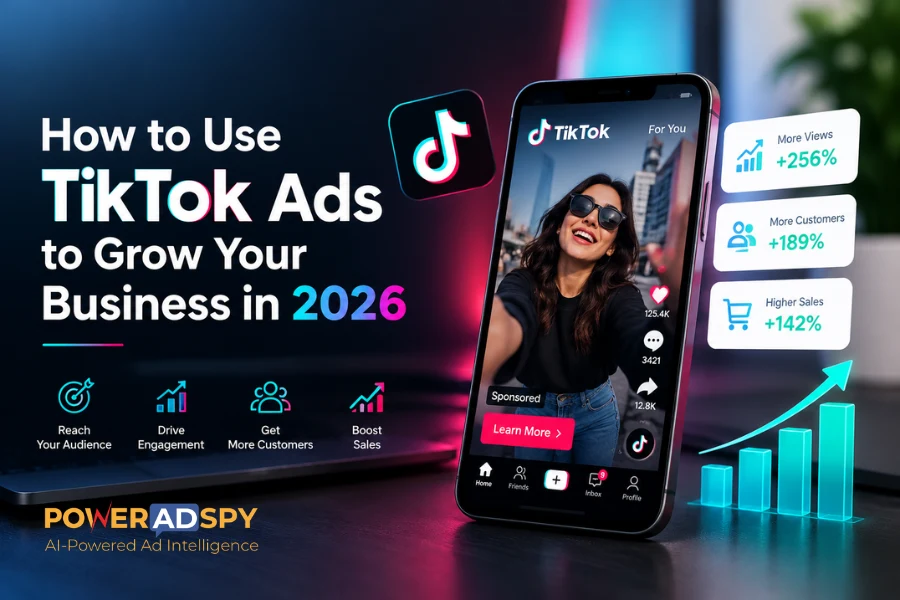
No paid social channel has grown as fast or changed creative advertising as fundamentally as TikTok Ads in recent years. What started as a platform for dance videos and viral trends is now one of the most powerful paid acquisition channels available to businesses of any size.
Short-form video content on TikTok reaches over a billion active users globally with some of the highest engagement rates in the industry and a discovery algorithm that rewards relevance over spend. In 2026, brands that master this platform are building audiences, generating sales, and outcompeting rivals who are still relying on more saturated platforms.
This guide covers everything you need to know from setting up your first campaign to scaling with competitor intelligence.
Why This Platform Works Differently From Other Ad Channels
TikTok’s algorithm makes it fundamentally different from Facebook or Instagram advertising. On most platforms, targeting does the heavy lifting; you define your audience, and the platform delivers your ad to them. On TikTok, the content itself does the targeting. If your video hooks, retains, and engages viewers, the algorithm surfaces it to more relevant people automatically.
This means creative quality is the most critical variable in performance on the platform. A mediocre ad with precise targeting underperforms a genuinely compelling ad with broad targeting. This inverts the usual paid social playbook: creative investment yields more return than audience precision in most TikTok campaigns.
Setting Up TikTok Ads Manager for Your First Campaign
TikTok Ads Manager is the central platform for creating, managing, and tracking all paid campaigns on TikTok. Setting it up correctly from the start prevents the common errors that waste early budget before campaigns have a chance to optimize.
Begin by creating a TikTok business account and linking it to Ads Manager. Install the TikTok Pixel on your website immediately; this tracks conversions, enables retargeting, and feeds the algorithm the data it needs to find your most likely buyers. Set up your business center to manage multiple ad accounts, team access permissions, and billing from one place. These foundations seem basic but are what separate campaigns that learn and improve from ones that spend without generating useful data.
Ad Formats on TikTok: Choosing the Right Creative Type
Choosing the right format is one of the most important decisions in any campaign strategy. Each format reaches users differently and performs best for different objectives.
- In-Feed Ads: The most widely used format. Short video ads (9–60 seconds) appearing in the For You Page feed. Best for awareness, traffic, and conversion campaigns with strong creative.
- TopView Ads: Full-screen takeover the moment users open the app. Maximum visibility for brand awareness campaigns with premium budgets.
- Spark Ads: Boost organic posts or creator content as paid ads. Highest authenticity signal because the creative already looks native to the platform.
- Collection Ads: Display product catalogues within the video format. Ideal for ecommerce brands running product discovery campaigns.
- Branded Hashtag Challenges: User-generated content campaigns built around a branded hashtag. Extremely high reach when the challenge mechanic resonates with TikTok’s community.
Creative Strategy: What Makes Short-Form Ads Actually Convert
Creative strategy is where most brands win or lose their budget. The content conventions of other platforms don’t translate here, and repurposing Facebook video ads is one of the most reliable ways to get low engagement and poor spend efficiency.
What works on TikTok: authentic UGC-style footage, problem-solution hooks in the first two seconds, strong audio that fits platform trends, text overlays that convey the core message without audio, and clear CTAs integrated naturally into the video rather than appended at the end. What doesn’t work: polished corporate video, brand-first messaging, static image content, and preambles that delay the hook.
TikTok Ads Library: Using Public Ad Data for Competitor Research
The TikTok Ads Library is TikTok’s official transparency tool, a publicly accessible database of active ads running on the platform. You can search by advertiser, keyword, or product category and view which creative executions brands are actively running.
For advertisers, the TikTok Ads Library is a starting point for competitive research, seeing which formats and hooks competitors are using and how long specific ads have been running. A long-running ad is almost always a sign of strong performance. If a competitor has been running the same creative for 30+ days, that creative is likely profitable and worth understanding in detail.
Audience Targeting: Getting Precision Right Without Oversegmenting
The platform offers several targeting approaches. Understanding when to use each prevents the common mistake of oversegmenting and limiting the algorithm’s ability to optimise effectively.
- Interest and behavior targeting: Target users by their content interests and platform behaviours. Best for top-of-funnel awareness where audience breadth supports scale.
- Custom audiences: Upload customer lists, website visitor data, or app user segments. Most effective for retargeting and lookalike generation.
- Lookalike audiences: Based on your best customers or highest-value converters. One of the most efficient scaling mechanisms once you have enough conversion data for the algorithm to work from.
- Broad targeting: No audience restrictions. Counterintuitive but often highly effective on TikTok, where the algorithm’s content matching frequently outperforms manual segmentation.
How PowerAdSpy Gives You an Unfair Advantage on Paid Social
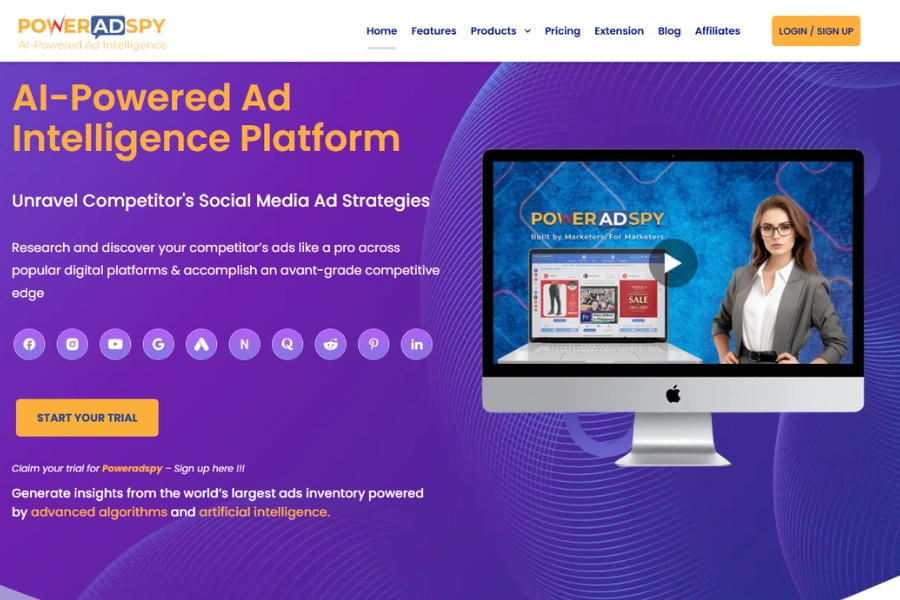
Understanding what creative strategies are working in your category before you spend your own budget testing them is one of the most significant advantages available to performance advertisers. PowerAdSpy is an AI-powered competitive ad intelligence platform that indexes 500M+ ads across 10+ platforms across TikTok and 9 other platforms, giving you access to the creative intelligence that most advertisers spend weeks and thousands of dollars discovering through A/B testing.
Here’s what PowerAdSpy delivers for your paid social strategy:
- TikTok Creative Intelligence – Search and browse creatives by keyword, advertiser, niche, engagement level, or ad duration. Find what’s working in your category before your competitors do.
- 500M+ Ads Indexed – The largest ad database in the industry, updated with 50K+ new ads daily. Real-time competitive intelligence, not stale archives.
- 40+ Search Filters – Stack filters for geography, engagement, format, funnel position, language, and platform simultaneously. Save filter combinations as presets.
- AI-Parsed Creative Anatomy – Every ad is automatically labelled by hook type, copy style, CTA, visual format, and intent so you can search “testimonial UGC with discount hook” and get precise results, not keyword matches.
- Competitor Watchlists – Pin the competitors that matter. Get alerted when a watched advertiser launches new creative across any platform.
- Market Trends Dashboard – Compare up to 5 advertisers across 11 networks. Track ad volume, top movers, and rising categories in real time.
- Engagement Timeline Reports – See how long specific ads have been running and how engagement has changed over time the clearest signal of creative profitability available without access to an advertiser’s own data.
- Landing Page Intelligence – Click through to any ad’s landing page directly. Decode the full funnel, not just the creative.
- 10+ Networks, One Subscription – TikTok, Facebook, Instagram, YouTube, Google, Display, Pinterest, Reddit, Quora, Native, and LinkedIn are all searchable from one workspace.
- 3-Day Free Trial – Full platform access, no commitment. Cancel any time.
PowerAdSpy cuts average A/B testing volume by 57% and saves a full research day per creative brief, according to 2026 customer survey data from 240 teams.
TikTok Ads News Today: What’s Changing in 2026
Staying current with TikTok Ads news today matters because the platform updates its ad products, policies, and algorithm behaviour more frequently than most others. Key developments in 2026 that advertisers need to track include expanded AI creative tools within TikTok Ads Manager, broader availability of TikTok Shop ad formats integrating direct purchase into the video experience, updated brand safety controls for sensitive category advertisers, and further expansion of Performance Max-style automated campaign types that reduce manual audience configuration. Following TikTok’s official Business Blog and tools like PowerAdSpy’s trend radar keeps you ahead of changes before they affect campaign performance.
Conclusion
Advertising on TikTok rewards businesses that invest in creative quality, move quickly on what works, and use competitive intelligence to reduce testing time. The combination of TikTok’s algorithm-driven discovery and tools like PowerAdSpy’s ad intelligence library gives growth-focused advertisers a compounding advantage.
Frequently Asked Questions
Q1. How do I get started with advertising on TikTok?
Create a TikTok business account, set up TikTok Ads Manager, install the TikTok Pixel, and launch your first in-feed campaign. Start with broad targeting and let the algorithm optimize based on early conversion signals.
Q2. What is the TikTok Ads Library?
The TikTok Ads Library is TikTok’s official transparency database of active ads. It lets you search by advertiser or keyword to see what creative brands are currently running, useful for basic competitor research.
Q3. How much budget do I need to start advertising on TikTok?
Campaigns can start from as low as $20/day at the campaign level. Most advertisers see meaningful optimization data after spending 50–100 per ad set during the learning phase.
Q4. How does PowerAdSpy help with paid TikTok campaigns?
PowerAdSpy indexes platform creatives and lets you search by keyword, niche, engagement, and hook type, giving you competitive creative intelligence that typically takes weeks and a significant budget to discover through direct testing.