
Advertising success is rarely built on a single creative idea. Brands often need to test different visuals, messages, formats, and audience angles before finding what truly connects with customers.
This is especially true for digital advertising, where platforms reward creatives that capture attention quickly and encourage engagement. A video that performs well for one audience may not work for another, and a message that succeeds on one platform may need adjustments for a different channel.
Traditionally, creating multiple ad variations required separate production cycles. Teams had to plan new concepts, organize shoots, edit different versions, and manage multiple creative assets. For startups and growing brands, this process could slow down experimentation.
AI tools are changing how marketers approach creative production. Instead of creating every ad from scratch, teams can now explore more ideas, generate variations, and adapt existing concepts faster.
The goal is not simply to produce more ads. It is to create more opportunities to discover which creative direction works best.
Why Brands Need More Ad Creatives Today
The advertising landscape has become increasingly competitive. Customers see hundreds of marketing messages every day, making it harder for brands to capture attention with a single creative.
Successful campaigns often rely on testing multiple variations, including different:
- Opening hooks
- Product demonstrations
- Visual styles
- Customer pain points
- Calls to action
For example, an ecommerce brand promoting a skincare product may test one video focused on product benefits, another featuring customer experiences, and another highlighting before-and-after results.
Each creative provides insights into what resonates with different audiences.
However, producing this volume of content manually can be time-consuming. AI tools help brands create more variations without increasing production complexity.
The Challenge of Traditional Creative Production
Creating multiple advertisements traditionally involves several steps. Marketing teams need to develop concepts, write scripts, arrange production, capture footage, edit videos, and prepare different versions for advertising platforms.
This approach works well for major campaigns but can become difficult when brands need frequent testing.
A performance marketing team may need several new creatives every week to prevent ad fatigue and improve campaign results. Producing this amount of content through traditional methods requires significant resources.
AI-assisted workflows help reduce these limitations by making creative development faster and more flexible.
Turning One Concept Into Multiple Video Formats
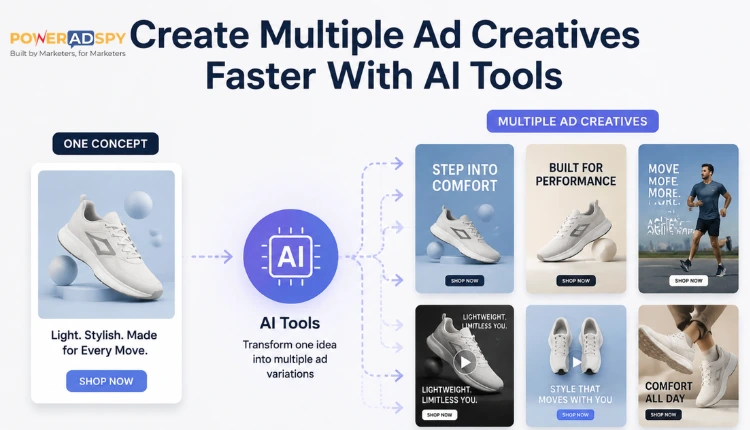
One of the biggest advantages of AI video workflows is the ability to transform a single idea into multiple creative formats.
A brand may start with one campaign concept and adapt it into different versions for different audiences and platforms.
For example, a product launch idea can become:
- A short social media advertisement
- A longer product story
- A demonstration video
- A customer-focused creative
- A vertical mobile-first ad
Invideo Agent helps marketers approach this process through a connected video workflow, allowing teams to move from ideas and references to complete video projects. Instead of rebuilding every creative separately, brands can develop different video variations while keeping the original campaign direction, product details, and messaging aligned.
For startups and growing brands, this approach can make it easier to experiment with different ad formats without managing separate production processes for every variation.
How AI Helps With Creative Testing
Creative testing is one of the most important parts of modern advertising. Marketers need to understand which visuals, messages, and formats generate better responses from audiences.
AI tools support this process by making it easier to create variations quickly.
A brand can test different approaches, such as:
- Emotional storytelling versus product-focused messaging
- Lifestyle visuals versus studio demonstrations
- Short-form videos versus longer explanations
By creating more versions, marketing teams can gather more insights and improve future campaigns.
AI does not replace advertising strategy. Instead, it gives teams more room to experiment and learn.
Creating Video Ads for Different Platforms
Different advertising platforms require different creative approaches.
A video designed for Instagram Reels may need a fast opening and vertical format, while a YouTube advertisement may allow more storytelling time.
AI tools help brands adapt their creatives for different platforms without recreating the entire production process.
For example, the same product campaign can be adjusted into multiple formats while maintaining consistent branding, visuals, and messaging.
This is especially useful for companies running campaigns across multiple channels.
Also Read –
Best AI Tools for Creating High-Converting Video Ads in 2026
Using AI to Reduce Creative Fatigue
Creative fatigue happens when audiences see the same advertisement repeatedly, and engagement starts declining.
This is a common challenge for performance marketers, especially in paid social campaigns.
AI helps brands respond by making it easier to refresh existing campaigns with new creative variations.
Instead of completely replacing a campaign, marketers can modify elements such as:
- Visual scenes
- Video structure
- Product presentation
- Messaging approach
This allows brands to keep campaigns fresh while maintaining a connection with the original idea.
Maintaining Brand and Product Consistency Across Variations
Creating more advertisements should not mean losing brand consistency.
When multiple versions of a campaign are produced, brands need to ensure that products, visuals, and messaging remain accurate.
This is especially important for ecommerce companies where product appearance directly influences customer trust.
AI workflows that support references and connected creative decisions help teams maintain consistency across different ad variations.
For example, a fashion brand creating multiple product advertisements needs the same clothing details, colors, and styling across every version.
AI Models Are Improving Creative Possibilities
Different AI models are improving different parts of video production, from visual generation to motion and editing.
Some models help create realistic scenes, while others support image references, animation, or cinematic effects.
For example, Seedance 2.0, Kling AI, and Google Veo 3.1helps creators generate cinematic video sequences with improved motion and scene understanding. This can help brands explore more creative directions when developing advertisements and marketing videos.
Using different AI capabilities allows marketers to choose the right approach depending on the type of creative they want to test.
How Startups Can Benefit From AI-Powered Ad Creation
For startups, the ability to create multiple ad creatives quickly can provide a major advantage.
Early-stage companies often need to discover which messages and audiences work best. AI tools allow smaller teams to experiment with more ideas without requiring large production budgets.
A startup can test different campaign angles, improve messaging, and create content faster while focusing resources on strategies that perform well.
This makes AI especially valuable for companies that need to move quickly and adapt based on customer feedback.
Building a More Efficient Creative Workflow
The future of advertising is moving toward continuous creative experimentation.
Instead of launching one campaign and waiting for results, brands are building systems where they can constantly develop, test, and improve new creatives.
AI tools support this approach by reducing the time between an idea and a finished advertisement.
A more efficient workflow allows marketing teams to spend less time managing production tasks and more time understanding audiences and improving creative strategy.
Final Thoughts
Creating multiple ad creatives has become essential for brands that want to compete in today’s advertising environment. Testing different ideas helps marketers understand what connects with audiences and improves campaign performance.
AI tools are making this process faster by helping teams develop more variations, adapt content for different platforms, and maintain consistency across campaigns.
The biggest advantage of AI-powered creative workflows is not simply producing more advertisements. It is giving brands the ability to experiment faster, learn more effectively, and create content that better matches their audience.