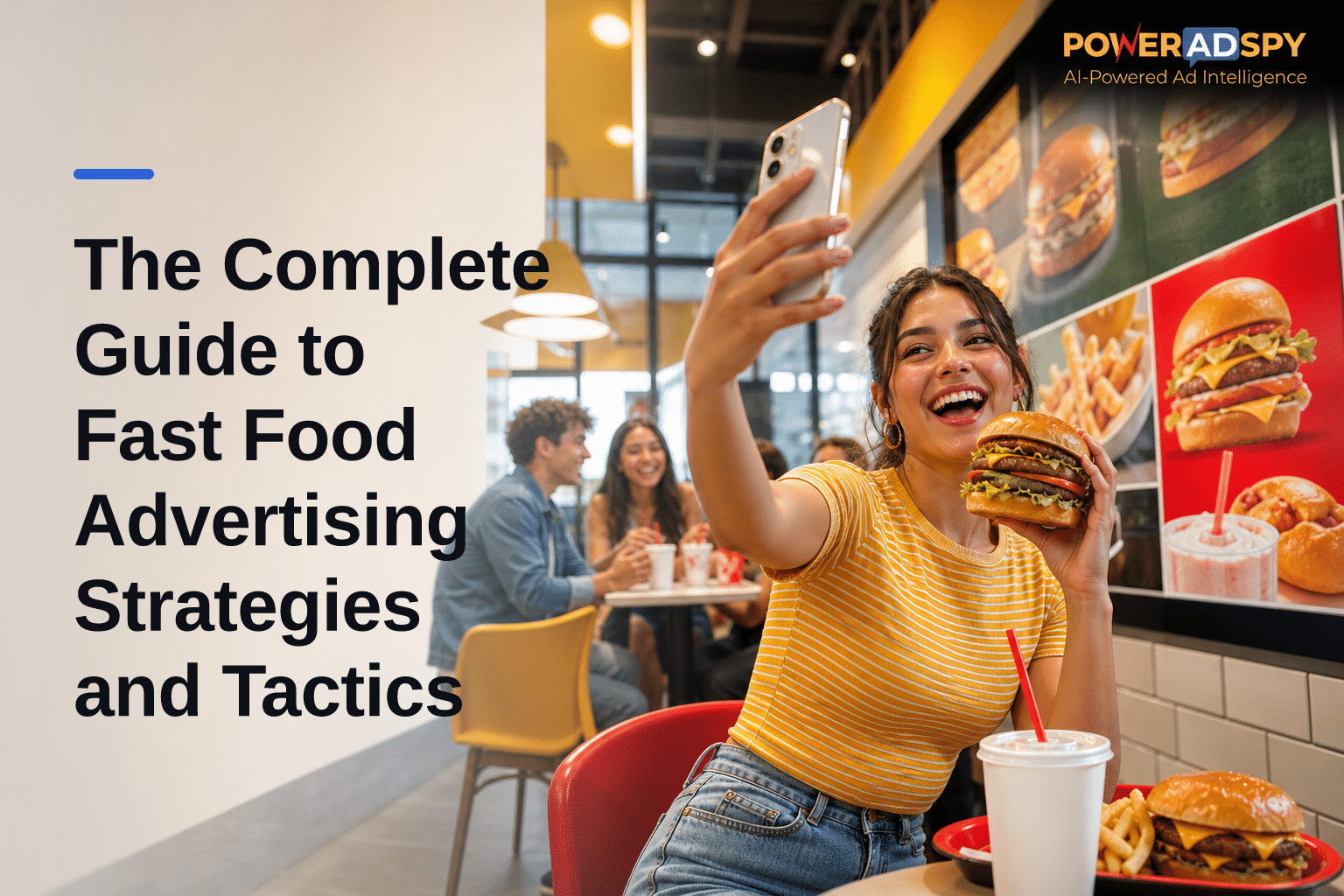

Fast food ads move people by poking hunger, price, and speed, then closing with an easy, local path to buy. This complete guide fast food playbook shows you what works in 2026 and how to test it without burning budget.
McDonald’s has spent over $1 billion on U.S. ads in several recent years, according to public reporting compiled on Wikipedia’s McDonald’s page. As a result, QSR is a paid media arms race. However, you don’t win by shouting. You win by cueing cravings, stacking value, and meeting a person exactly where they are, on TV at night, in a TikTok scroll at lunch, or at a stoplight 500 feet from your drive‑thru.
Therefore, here’s the answer first: Build fast creative that shows hot, close, and cheap. Then pair it with geo-aware mobile and app offers. Finally, prove it with ratings and repeat it with loyalty. The rest of this guide breaks those moves into steps you can test this week.
How Fast Food Advertising Actually Works
Fast food ads work because they trigger primal, near-term choices. Specifically, they press four buttons: urgency (now), cravings (hot, salty, sweet), value (more for less), and sensory appeal (close-up sizzles and pours). When those cues hit at the right time and place, people detour.
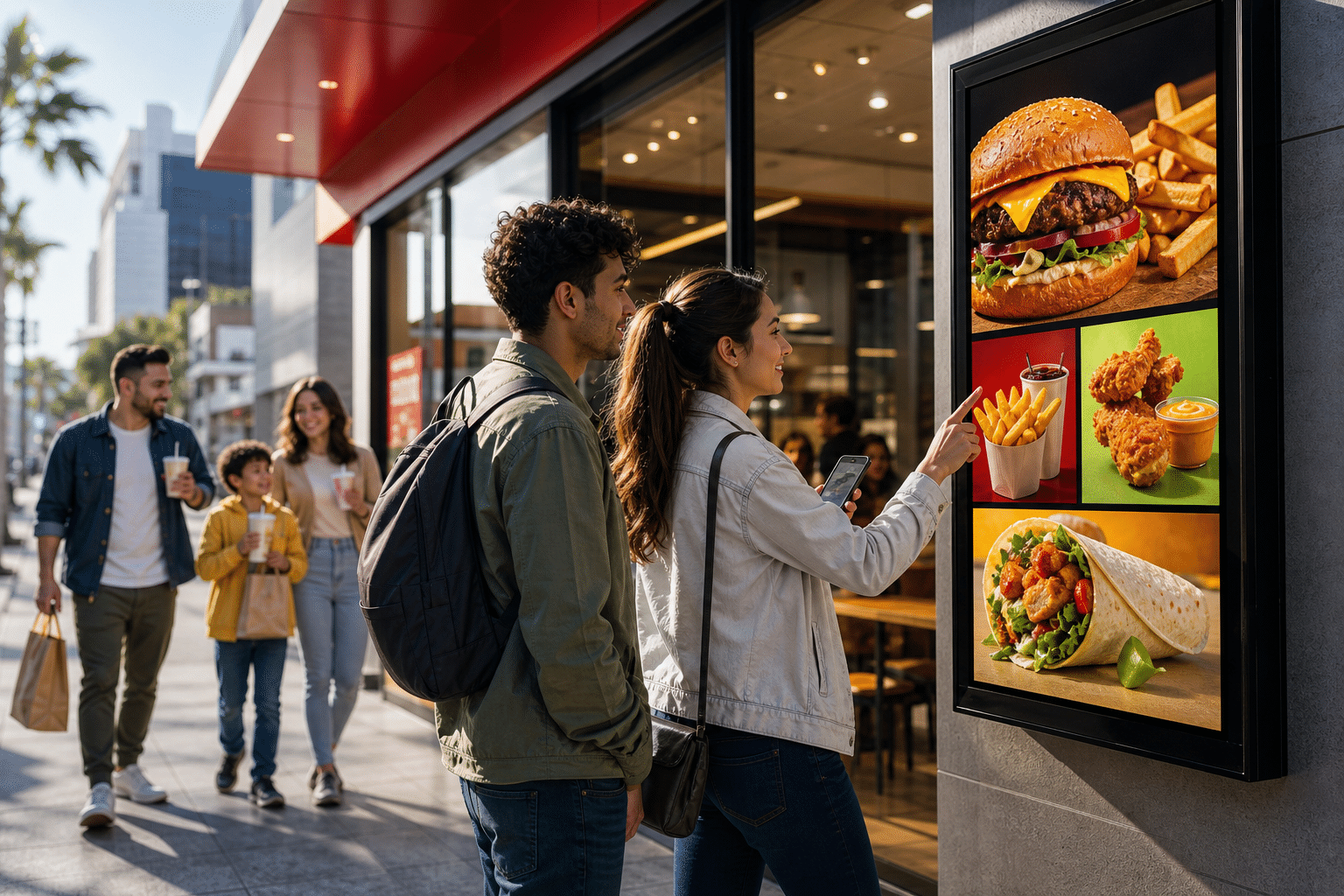
In practice, you seed desire on big screens, then harvest it on small ones. TV and connected TV build reach with short, crave-heavy spots during sports and primetime. For example, a 6-second sizzle cut after a touchdown can lift search interest within minutes. In addition, social video hits younger demos with creators and memes. Finally, mobile ads near stores close the loop with “open until 1am” and “2 for $5, 0.3 mi.
Furthermore, value talk lands only if the food looks great. Close-ups of steam, crisp edges, and sauce drips matter. Therefore, the best ads sequence: beauty shot first, price second, clock and map last. You can see that order across category leaders like McDonald’s, Burger King, Taco Bell, and Wendy’s.
Channel Mix Guide
- TV/CTV: Reach and memory; dramatic food macro shots; national LTO launches.
- Digital/Social: Short vertical video; creators tasting; memes; Duets; Reels.
- OOH: Highway boards, bus shelters near campuses; late-night messages.
- Mobile: Store-radius push, maps units, click-to-order, app promo banners.
Spend Context (Directionally)
Public sources show that McDonald’s U.S. ad outlays have crossed $1B in several years, while Burger King and Wendy’s typically play in the high eight to nine figures in the U.S. Taco Bell also commits large national budgets tied to frequent launches. Because exact spend shifts by year and source, use competitive ad libraries and transparency centers to confirm current pressure in your market before you brief creative.
“We cut back on testing time and launched campaigns that get results. This tool is now our agency’s secret weapon!” — Charlotte Neilson, Digital Marketing Strategist
7 Proven Fast Food Advertising Strategies to Study
You can copy the playbook leaders use and adapt it to your market. Below are seven moves, each with a brand example you can study and test.
1) Limited-Time Offers (LTOs) That Stack Scarcity
Short windows force choice. First, tease the item with a hero image and a date. Second, drop a countdown in stories and OOH near stores. For example, Taco Bell rotates product drops with short arcs and heavy TikTok chatter. As a result, demand spikes in week one, then clears by week four, avoiding fatigue.
2) Value Menu Positioning That Still Looks Premium
Price pulls only if the food still looks craveable. Therefore, show a macro of the item first, then reveal the price badge. Wendy’s “4 for $4” style bundling, for example, pairs a clean hero shot with a clear stack of items, then anchors with a round price in a bold color. Add “no app needed” in OOH to catch deal seekers.
3) Emotional Storytelling Around Moments, Not Menus
People buy moments: post-game, study break, midnight run. McDonald’s seasonal brand films tie a simple story to a ritual, then show the bag and the logo sting. In addition, that story makes digital retargeting warmer, your next ad can be pure product because the feeling is already in mind.
4) Influencers and UGC That Feel Native, Not Ads
Creators do mouthfeel better than any 30-second spot. For example, Burger King’s Whopper revamps often ride taste-test duets and stitch chains. However, the best posts use first bites, menu hacks, or “order with me” flows that mirror real behavior. Always allowlist top UGC to push reach beyond the creator’s feed.
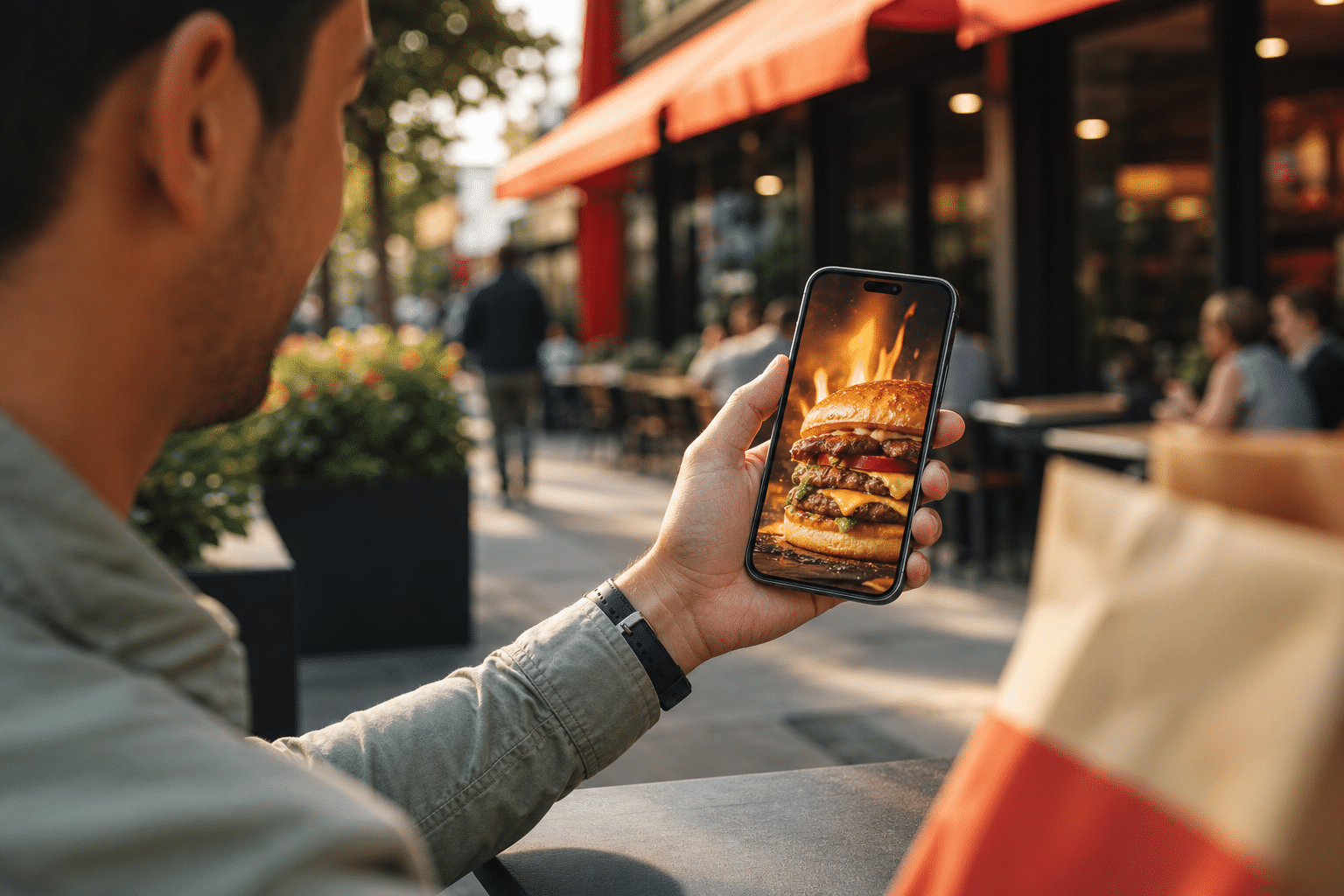
5) Geo-Targeted Mobile Ads That Nudge the Last Mile
Geo-fencing within 1–3 miles with daypart rules turns attention into action. Show distance, hours, and a one-tap map. In addition, rotate “open late” after 10pm and “skip the line” at lunch. For example, chains near stadiums run surge messaging 90 minutes before kickoff and 30 minutes after final whistle.
6) App-Driven Loyalty That Funds Paid Media
Loyalty lets you fund ads with margin you keep. Starbucks proved the model for coffee; QSR uses it for food. Therefore, run paid that drives to “first app order” with a strong bundle, then remarket with points multipliers on slow days. McDonald’s app pushes deals tied to repeat visits, which lowers blended CAC over time.
7) Platform-Native Video Ads That Obey the Feed
Vertical video needs face, motion, and captions in the first second. As a result, your TV cutdown rarely wins in Reels or TikTok. Instead, shoot vertical first: bite sounds, hand-held movement, bold price text, and end-cards tuned to each platform’s font and button. For example, Taco Bell’s creator-first shorts nail this rhythm.
Also Read!
The Complete Guide to Testimonial Advertising: How It Works, Examples, and Best Practices
How to Analyze Cologne Ads and Find Winning Fragrance Ad Strategies
Common Mistakes in Fast Food Advertising Campaigns
The category is fast, but waste creeps in when basics slip. Below are the misses I audit most and how to fix them.
Ignoring Local Nuances
You can’t run the same copy in a college town and a commuter suburb. Therefore, shift dayparts, deals, and hero items by store cluster. For example, late-night tacos near campuses, family bundles near big box retail, and breakfast near transit hubs.
Over-Relying on Discounts
Price-only training teaches people to wait for a code. Instead, lead with taste and speed, then hold value for the second frame. In addition, cap deal frequency per audience to protect margin.
Neglecting Mobile-First Creative
Landscape cuts shrink in vertical feeds. As a result, they get swiped. Fix this by shooting vertical, adding big captions, and front-loading sound. Moreover, test 6–9 second hooks, not just 15s or 30s.
Failing to A/B Test Formats
Running one format hides the winner. Split stories vs. Reels, UGC vs.
studio, and price-first vs. food-first. However, keep the test clean: one change at a time, 7-day windows, and stable budgets.
Underestimating Social Proof and Reviews
A 4.6-star badge and “10k+ orders this week” line move fence-sitters. Pull top reviews into creative and landing pages. In addition, pin fresh comments and reply fast to keep the thread warm.
Tools and Resources for Analyzing Fast Food Ad Campaigns
If you want to copy what works, you need a research toolkit. Here’s a set that covers both official transparency and broad paid creative.
Official Ad Libraries and Transparency Centers (Guide)
- Meta Ad Library: Search by brand, keyword, and country across Facebook and Instagram. Export creative and see spend ranges on political/civic if relevant.
- Google Ads Transparency Center: See live and historic ads by advertiser and region across Google surfaces; helpful for YouTube creative direction and text trends.
Cross-Platform Ad Research (Fast Food Focus)
Tools like PowerAdSpy let you search millions of ads across Facebook, Instagram, TikTok, Google, Reddit, Pinterest, and more with AI-powered filters.
Access data on millions of ads from over 100 countries. – Search by niche keywords, advertisers, and competitor domains.
Pull GEO-targeted info on competitor ads to see where they push late-night vs. lunch. – Sort by likes, comments, and shares to spot proven hooks fast.
“We have reduced A/B testing costs and also have improved revenue!” — Archie Gilbert, Co-Founder
As social proof, user studies report a 15% reduction in A/B testing volume within two months and a 19% improvement in revenue with less workforce and more work efficiency. Moreover, 26% of users save at least one day of prep per project, and 23% say the tool is affordable, easy, and full. Those gains free you to make better offers and faster creative edits.
**Get free competitive insights today →
Broader Market Recon
Pair ad research with SEM tools (e.g., SEMrush) for branded search trends, and traffic estimators (e.g., SimilarWeb) to gauge which delivery partners or pages earn the most visits. Then cross-check with local store performance to guide geo budgets.
Key Takeaways and What to Do This Week
You came for a complete guide fast food blueprint you can use now. Here it is, tight and testable.
Key Takeaways
- Cravings first, price second, local proof last: show hot, then cheap, then close.
- TV/CTV seeds demand; social and mobile harvest it with geo and daypart logic.
- LTOs and loyalty drive both spikes and repeats; creators make it feel real.
- Measure format vs. format; don’t guess. Keep tests clean and mobile-first.
- Social proof (stars, orders, reviews) lifts click-through and lowers CAC.
What to Do This Week
First, audit a competitor’s ads by store geo. Screenshot their best six vertical videos and note the first-second hook, price placement, and CTA. Second, pick one tactic from the seven above, for example, a two-week LTO with a countdown, and script three vertical variants that swap hook, price frame, and end-card. Third, set up an ad monitoring workflow: track five competitors, three keywords, and your top three geos; tag winners by daypart and save them to a shared board for your team.
As you run this plan in 2026, keep your keyphrase discipline in creative briefs: crave, value, and local proof. Then let the data call your next move.
**Set up ad monitoring free →