
You launch a campaign.
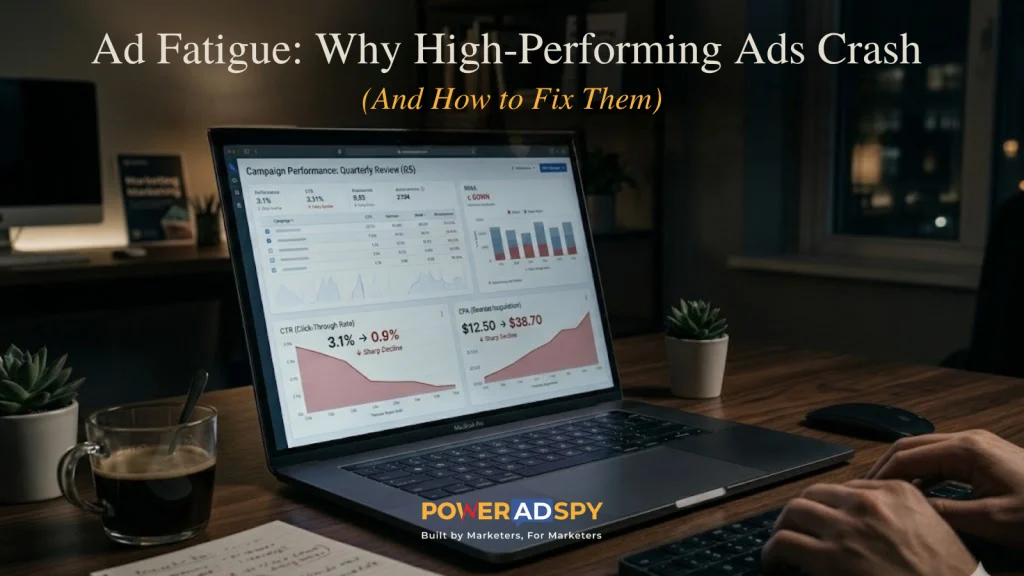
The numbers look great high CTR, strong conversions, and low CPA.
Then suddenly… everything drops.
Clicks slow down. Costs go up. Conversions dip.
What changed?
Nothing, except your audience.
Welcome to ad fatigue, the silent performance killer that turns winning campaigns into budget drains.
If you’ve ever wondered, “What is ad fatigue?” why it happens, and how to stop it before it wrecks your ROI, this guide breaks it all down, with real insights, strategies, and actionable fixes.
In a hurry? Listen to the blog instead!
What Is Ad Fatigue?
Let’s start with the basics.
Ad fatigue happens when your audience sees the same ad too many times, causing them to lose interest, ignore it, or even get annoyed by it.
At first, repetition helps with recall. But beyond a certain point, familiarity turns into frustration.
Instead of engaging, users start scrolling past your ad without a second thought.
This is especially common in ad fatigue in marketing, where audiences are constantly exposed to similar messages across platforms like Meta, Google, and LinkedIn.
And here’s the real problem:
It’s not just your audience that notices.
Algorithms do too.
Once engagement drops, platforms reduce your ad’s reach, making it more expensive to get the same results.
Why High-Performing Ads Suddenly Crash

It’s frustrating when your best-performing ad stops working. But it’s not random.
There are clear reasons behind it, and understanding them is the first step to fixing the issue.
1. Overexposure Kills Interest
Seeing the same creative repeatedly leads to boredom.
Even the most creative campaign loses its charm when it becomes predictable.
2. Audience Saturation
If your target audience is small, your ads hit the same people again and again.
This accelerates ad creative fatigue, where the message feels repetitive and ineffective.
3. Algorithmic Downranking
Platforms prioritize ads that generate engagement.
When performance drops, your ad is shown less reducing reach and increasing costs.
4. Competitive Noise
Your audience isn’t just seeing your ads.
They’re being bombarded by competitors too. Over time, everything starts blending together, and your message loses its impact.
Ad Fatigue Statistics You Shouldn’t Ignore
Let’s talk numbers, because ad burnout statistics clearly show how serious this problem is:
- Studies show that repeated exposure can reduce CTR by up to 50% over time
- Around 75% of marketers report declining returns from paid social campaigns due to fatigue
- High frequency (above 5–7 impressions per user) often leads to sharp drops in engagement
- CPA can increase significantly as platforms struggle to find users who still respond
But here’s a deeper insight:
Performance doesn’t drop linearly, it falls off a cliff.
In many campaigns, results stay stable for a while… then suddenly decline rapidly. This is why campaign fatigue often feels “unexpected,” even though it’s been building in the background.
How to Recognize Ad Fatigue (Before It’s Too Late)

Most marketers notice fatigue only after performance drops.
But by then, the damage is already done.
Here are the early warning signs you should watch closely:
1. Declining CTR
Your click-through rate starts falling even though your targeting hasn’t changed.
This is usually the first sign that your audience is losing interest.
2. Rising CPC & CPA
You’re paying more for clicks and conversions.
Why? Because fewer people are engaging, so platforms charge more to deliver results.
3. Drop in Conversions
Traffic may still come in, but conversions decline.
This means your audience isn’t just ignoring your ad, they’re disengaging completely.
4. High Frequency
If users see your ad too often, fatigue kicks in faster.
A high frequency score is a strong indicator of overexposure.
5. Reduced Impressions
Even if your budget stays the same, impressions drop.
This happens when platforms deprioritize your ad due to low engagement.
Hidden Signs Most Marketers Miss
Beyond the obvious metrics, there are subtle signals of ad burnout that often go unnoticed:
- Increased negative feedback (hides, skips, “not interested”)
- Lower video watch time or completion rates
- Drop in engagement quality (fewer meaningful interactions)
- Comments showing annoyance or disinterest
These qualitative signals are just as important as numbers.
Because sometimes, your audience tells you they’re tired, before your dashboard does.
Ad Fatigue in Marketing: Why It’s Getting Worse
Ad burnout in marketing isn’t new, but it’s becoming more intense.
Here’s why:
1. Content Overload
Users scroll through hundreds of ads daily.
Standing out is harder than ever.
2. Shorter Attention Spans
Today’s audience decides within seconds whether to engage, or scroll past.
3. Platform Competition
More brands are investing in paid ads, increasing saturation.
4. Creative Repetition
Many brands reuse the same winning creatives for too long, leading to faster burnout.
5. Algorithm Dependency
Modern advertising heavily depends on algorithms.
Once performance dips, platforms quickly shift delivery elsewhere, accelerating the decline.
How Fast Does Ad Burnout Set In?
There’s no fixed timeline, but patterns do exist:
- Social media (Meta, TikTok): 2–3 weeks
- LinkedIn: 3–6 weeks
- Google Display: 1–3 months
The speed depends on:
- Audience size
- Frequency
- Creative quality
- Platform dynamics
Smaller audiences + high frequency = faster fatigue.
But here’s the key takeaway:
Fatigue isn’t about time, it’s about exposure.
An ad shown 10 times in 3 days can burn out faster than one shown 10 times over a month.
The Real Cost of Ignoring Ad Fatigue
If left unchecked, this fatigue impacts more than just performance:
- Wasted ad spend
- Lower ROI
- Increased acquisition costs
- Reduced brand perception
- Audience annoyance
Over time, it can even damage your brand’s relationship with customers.
In extreme cases, users may start associating your brand with irritation, making future campaigns less effective, no matter how good they are.
How to Fix Ad Fatigue (Before It Kills Your Campaigns)

Now the important part, solutions.
Here’s how to tackle the fatigue like a pro:
1. Refresh Your Creatives Regularly
The simplest fix? Change what people see.
But don’t just swap randomly, be strategic.
Try:
- New visuals
- Different hooks
- Updated headlines
- Fresh CTAs
Even small tweaks done in your creative ads can make a big difference.
2. Rotate Multiple Ad Variations
Don’t rely on one winning ad.
Run multiple variations at the same time.
This reduces repetition and keeps your campaign fresh.
3. Use Frequency Caps
Limit how often users see your ad.
This prevents overexposure and extends the life of your creatives.
4. Expand or Adjust Your Audience
If your audience is too small, fatigue happens faster.
Try:
- Broadening targeting
- Testing lookalike audiences
- Excluding already engaged users
5. Leverage Dynamic Ads
Dynamic ads automatically mix creatives, images, headlines, and CTAs.
This reduces ad creative fatigue without constant manual updates.
6. Personalize Your Messaging
Generic ads burn out faster.
Personalized ads feel more relevant and stay effective longer.
Focus on:
- Pain points
- User intent
- Behavioral targeting
7. Explore New Platforms
If you’re only relying on Meta or Google, you’re limiting your reach.
Test new channels to reduce saturation and diversify performance.
8. Monitor Data – Not Gut Feeling
Don’t change ads just because you’re bored with them.
Let data guide your decisions.
Track:
- CTR
- CPC
- ROAS
- Frequency
These metrics tell you exactly when to refresh.
But even with the right data, one challenge remains, knowing what to test next. This is where leveraging external ad intelligence tools like PowerAdSpy can give you a serious edge, especially when you’re trying to stay ahead of ad fatigue instead of reacting to it.
PowerAdSpy: Stay Ahead of Ad Fatigue With Smarter Ad Intelligence

By now, you know that tackling ad fatigue isn’t just about refreshing creatives; it’s about consistently finding what works next before performance drops.
That’s where tools like PowerAdSpy come into play.
Why Choose PowerAdSpy (Ad Intelligence For Marketers)?
PowerAdSpy is an AI-powered ad intelligence tool that helps marketers discover, analyze, and replicate high-performing ads across platforms like Facebook, Instagram, TikTok, and Google.
Instead of guessing your next move, it allows you to learn directly from proven ad strategies already working in your niche.
This becomes especially powerful when dealing with ad fatigue in marketing, where fresh ideas and timely creative shifts are critical.
Key Features That Help You Beat Ad Fatigue
Here’s how PowerAdSpy helps you stay ahead:
- Massive Ad Database
Access millions of ads from 100+ countries and discover winning creatives across industries. - Advanced Search & Filters
Find ads by keywords, competitors, niches, or platforms, so you always get relevant inspiration. - Competitor Strategy Analysis
Break down ad creatives, messaging, and engagement to understand why an ad is performing. - Real-Time Engagement Insights
Analyze likes, shares, and comments to identify which ads are truly resonating with audiences. - Geo-Targeting Insights
Discover which regions your competitors are targeting and refine your own audience strategy. - Reduced A/B Testing Effort
Instead of testing blindly, start with proven ideas saving time, budget, and effort.
If you want to stay ahead of ad fatigue instead of constantly fixing it, the key is simple:
👉 Don’t just create ads, study the ones that already win.
PowerAdSpy helps you discover, analyze, and replicate high-performing ads, so you can scale what works without wasting budget.
Start making smarter ad decisions today – https://poweradspy.com/
Advanced Strategies to Stay Ahead of Ad Burnout
If you want to go beyond the basics, here are some advanced tactics used by top marketers:
Creative Sequencing
Instead of repeating one ad, show a sequence:
- Ad 1: Awareness
- Ad 2: Problem
- Ad 3: Solution
- Ad 4: Offer
This keeps storytelling fresh while guiding users through the funnel.
Micro-Testing Creatives
Test small variations instead of full changes:
- Different headlines
- Alternate thumbnails
- CTA variations
This helps you extend the life of a winning concept.
Use User-Generated Content (UGC)
UGC feels authentic and less repetitive.
It naturally reduces fatigue because it doesn’t look like a traditional ad.
Creative Fatigue Calendar
Plan creative refresh cycles in advance.
Instead of reacting late, you stay ahead of performance drops.
The Balance: Consistency vs. Freshness
Here’s where most marketers go wrong.
They either:
- Change creatives too often
OR - Stick with one ad for too long
The key is balance.
Keep your brand identity consistent (colors, tone, messaging)
But vary your execution (visuals, hooks, formats)
This ensures your ads stay recognizable without becoming repetitive.
Also Read: –
What Causes Ad Fatigue & How to Fix It Quickly?
Creative Ads: The Ultimate Guide to Making Ads That Actually Stop The Scroll
Pro Tip: Don’t Wait for the Crash
The biggest mistake?
Waiting until performance drops.
By the time you feel ad burnout, you’ve already lost money.
Instead:
- Track early signals
- Plan creative refresh cycles
- Test continuously
Think of it as prevention, not reaction.
Final Thoughts
Ad fatigue isn’t just a creative problem, it’s a performance problem.
It’s the reason your best ads stop working.
The reason your costs rise.
The reason your ROI drops.
But here’s the good news:
It’s completely preventable.
By understanding what is ad fatigue, recognizing the early signs, and applying the right strategies, you can keep your campaigns fresh, effective, and profitable.
Because in today’s competitive landscape, it’s not just about creating great ads,
It’s about keeping them great.
Frequently Asked Questions (FAQs)
1. What is ad fatigue in simple terms?
Ad fatigue happens when people see the same ad too many times and stop paying attention to it. Over time, engagement drops, costs increase, and your campaign performance starts declining.
2. How do I know if my ads are suffering from ad fatigue?
Look for early warning signs like a drop in CTR, rising CPC or CPA, lower conversions, and high frequency. If your ads are reaching the same audience repeatedly with declining results, ad burnout or fatigue is likely the reason.
3. How often should I refresh my ad creatives?
There’s no fixed rule, but on fast-paced platforms like Meta or TikTok, creatives may need refreshing every 2–3 weeks. Instead of waiting for performance to drop, monitor your metrics and refresh proactively.
4. What is ad creative fatigue and how is it different?
Ad creative fatigue is a type of fatigue specifically caused by repetitive ad visuals, messaging, or formats. Even if your targeting is correct, stale creatives alone can reduce engagement and hurt performance.