
Most businesses don’t fail because they avoid advertising. They fail because they invest in the wrong ads. With dozens of platforms competing for attention, choosing the right marketing ads can mean the difference between rapid growth and wasted budget.
The challenge isn’t finding a place to advertise. It’s figuring out which format actually matches what your customer is doing at that moment. This guide breaks down the eight core ad types, when each one delivers, and provides a simple framework for smarter decisions before spending a dollar.
Read Aloud!
Marketing Ads Explained in Simple Terms
What Are Marketing Ads?
Marketing ads are paid promotional messages designed to increase brand awareness, generate leads, drive sales, or encourage specific customer actions. They appear across search engines, social platforms, websites, video channels, and traditional media like TV or print.
What separates them from organic content is simple: you pay to guarantee placement. That means greater control over who sees your message, when, and how often.
Why Businesses Use Marketing Ads
The reasons go well beyond just “getting sales.” Different ad types serve different purposes:
- Brand awareness – introduce your business to people who’ve never heard of you
- Lead generation – collect contact details from interested prospects
- Direct sales – convert browsers into buyers, often through retargeting
- Customer retention – re-engage past customers with relevant offers
Understanding your goal before choosing a channel is the most overlooked step in advertising.
The 8 Types of Marketing Ads Every Business Should Know

Search Ads – Reaching Customers With High Intent
Search ads appear when users actively look for products or services, making them one of the highest-intent ad formats available. Google Ads lets businesses bid on keywords and appear at the top of results. You’re not interrupting someone – you’re meeting them exactly when they want what you offer.
The trade-off is cost. Competitive keywords in finance, legal, and e-commerce can get expensive fast, and without careful targeting, budgets disappear quickly.
Social Media Ads – Capturing Attention Where People Spend Time
Facebook, Instagram, LinkedIn, and TikTok each serve different audiences. One of the most useful social media marketing tips is this: know your target audience before you worry about format. Facebook and Instagram work well for consumer products and retargeting. LinkedIn earns its place for B2B companies targeting by job role. TikTok rewards creative risk-taking for younger demographics.
Display Ads – Building Visibility Beyond Search
Banner and image ads appear across millions of websites in the Google Display Network. People aren’t searching for your product when they see a banner – but that’s precisely the value: large audiences at relatively low cost, keeping your brand in front of warm prospects.
Video Ads – Turning Attention Into Action
Video consistently outperforms static formats for brand recall. YouTube pre-roll and short-form videos on TikTok and Reels give businesses a storytelling advantage no banner can replicate. The key is holding attention in the first three seconds.
Native Ads – Advertising Without Feeling Like Advertising
Native ads match the editorial style of the platform where they appear. Sponsored articles and in-feed content that blends with organic results tends to generate better engagement than display ads. They work especially well for longer-form content like guides or case studies.
Email Marketing Ads and Sponsored Promotions
Newsletter sponsorships remain underrated. Sponsoring a trusted publication borrows its credibility. For businesses with their own list, promotional campaigns consistently deliver some of the highest ROI of any channel – because the audience already opted in.
Shopping Ads – The Shortcut to Product Sales
Product listing ads on Google Shopping display your image, price, and store name directly in search results. For e-commerce brands, these are often the most direct path from intent to purchase – users see what they’re buying before they even click.
Traditional Marketing Ads That Still Work
TV, radio, print, and outdoor aren’t dead – they’re repositioned. Local businesses often find radio and community publications far more cost-effective than broad digital campaigns.
Which Marketing Ads Work Best for Different Business Goals?
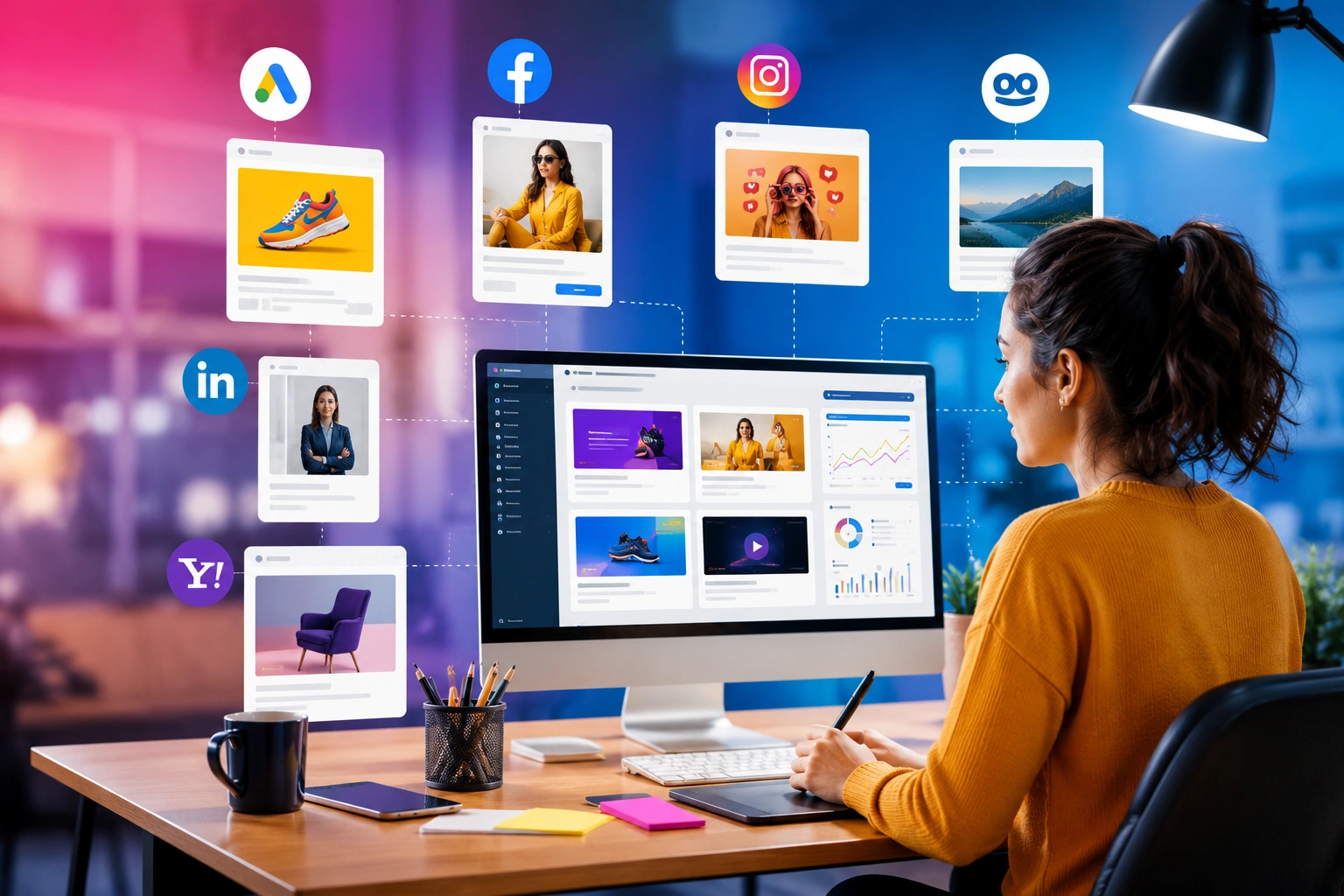
Matching your ad format to your actual objective is where most strategies either take off or break down.
For brand awareness: Display ads, video, and social placements build recognition across large audiences. Search ads are poor choices here; they reach people who already know what they want.
For lead generation: Search ads and LinkedIn ads lead the pack for most industries. A strong landing page paired with either dramatically improves results.
For e-commerce sales: Shopping ads and retargeting via display or social deliver the most direct ROI. Abandoned cart retargeting alone can recover a meaningful chunk of lost revenue.
For local businesses: Following small business marketing tips that prioritize local search, Google Business Profile, and geo-targeted social campaigns typically beat broad national spend. Local radio still punches above its weight in many markets.
A Simple Framework for Choosing the Right Marketing Ads
Step 1: Define the Customer Action
What specific action do you want? Fill out a form, buy a product, or call your office? Every ad decision flows from this single answer.
Step 2: Match Ads to Buyer Intent
High-intent buyers respond to search and shopping ads. Low-intent audiences respond to awareness formats. The mismatch between intent and format is the most common reason campaigns fail.
Step 3: Calculate Budget and Risk
Start with the channel that gives the most measurable return. For smaller budgets, search ads with tight targeting often outperform expensive social campaigns.
Step 4: Test Before Scaling
One of the most practical tips for effective marketing: never scale what you haven’t tested. Run small experiments, measure cost per acquisition, and only increase spend on what the data confirms works.
How PowerAdSpy Helps You Build Smarter Marketing Ads
Launching an ad campaign without understanding what’s already resonating with your audience can lead to unnecessary spending and missed opportunities. PowerAdSpy helps marketers make more informed decisions by revealing real-world ad trends, successful creatives, and competitor strategies across multiple platforms. Instead of relying on guesswork, marketers can identify proven approaches and build campaigns with greater confidence.
Key PowerAdSpy Features
- Access extensive ad libraries across major advertising platforms.
- Discover high-performing ad creatives and messaging within your niche.
- Analyze competitor campaigns to understand successful targeting and creative strategies.
- Filter ads by platform, country, engagement metrics, keywords, and campaign objectives.
- Identify winning ad formats, offers, and audience approaches before launching your own campaigns.
- Monitor advertising trends and uncover new opportunities in your market.
How It Helps Marketers Create More Effective Campaigns
- Research what types of ads are generating engagement and conversions in their industry.
- Gain inspiration from proven campaigns rather than starting from scratch.
- Refine ad creatives, copy, and offers based on market insights.
- Reduce testing costs by focusing on strategies that already show strong performance.
- Allocate budget more efficiently by avoiding ineffective concepts and prioritizing validated ideas.
- Continuously optimize campaigns using competitor and market intelligence.
The Biggest Marketing Ad Mistakes That Drain Budget
Choosing platforms before defining goals. Picking TikTok because it’s trending, when your customer is a 52-year-old procurement manager on LinkedIn, is expensive guesswork.
Ignoring audience intent. Showing a high-pressure sales message to someone in the awareness stage pushes them away. Effective content marketing tips consistently point to this: meet buyers where they are, not where you want them to be.
Scaling too early. More spending behind a weak offer produces more losses, faster. Confirm conversion costs first.
Tracking vanity metrics. Impressions and clicks mean nothing disconnected from revenue. Measure success by leads generated, cost per acquisition, and return on ad spend.
The Psychology Behind Marketing Ads That Convert
Logic gets people interested. Emotion gets them to act. Ads that tap into genuine desires or concerns outperform purely rational pitches nearly every time. This isn’t manipulation – it’s understanding what your customer actually cares about.
Relevance and timing matter just as much. A great ad shown to the wrong person at the wrong moment is a wasted impression. Modern advertising is shifting toward personalized, AI-assisted targeting while still relying on human creativity to match the right message to the right person.
What Marketing Ads Will Look Like in the Next Few Years
AI-assisted campaign tools are moving from novelty to standard practice. Predictive targeting is getting more precise. Creative automation is compressing the time between idea and execution.
The bigger shift is around data. As third-party cookies phase out, brands that build first-party strategies now will have a durable advantage. Privacy-first advertising doesn’t mean less effective advertising. It means smarter relationship-building.
Read More!
7 Strategies for Decoding Competitor Ads
What is Competitor Ads Analysis and Why is it Important | 7 Best Practices
The Best Marketing Ads Are the Ones That Match Intent
There’s no universal best format. The brands that win consistently aren’t spending more – they’re spending smarter. They match their channel to their audience’s intent, test before scaling, and measure what actually moves the business forward.
Start with who your customer is and what action you want them to take. Choose the format that closes the gap between where they are and where you want them to go. Everything else follows from there.
Frequently Asked Questions
What are marketing ads?
Paid promotional messages that help businesses reach specific audiences to build awareness, generate leads, or drive sales across digital and traditional channels.
Which ad formats generate the best ROI?
Search and email campaigns typically deliver the highest returns, particularly when targeting high-intent audiences with a clear conversion path.
Are social media ads better than search ads?
Neither is universally better. Search outperforms for high-intent buyers. Social is stronger for awareness, retargeting, and interest-based targeting.
What are the tips for effective marketing?
Focus on your audience, deliver clear value, use the right marketing channels, measure results, and refine your strategy regularly based on performance data.
Can ads work with a small budget?
Yes. Tight targeting, a focused offer, and one strong channel will outperform a spread-thin approach every time.