
In 2026, dropshippers evaluating tools for competitor ad search by keyword and domain need more than a pretty UI, they need fast, trustworthy signals that translate into winning creatives and efficient testing. This comparison breaks down how PowerAdSpy and Dropispy stack up for speed, depth, and cross-channel scale so you can validate products with less guesswork.
What Dropshippers Actually Need From a Competitor Ad Search Tool
For a dropshipper, research time is test budget. You need to land on a short list of proven angles fast, then launch with confidence. That’s why the core feature is simple: competitor ad search by keyword and domain that returns high-signal results with low noise.
First, keyword and advertiser search should surface ad creatives tied to clear buyer intent. For example, “posture corrector” or “dog seat belt” should reveal variations in hooks, creatives, and calls to action. In addition, you should be able to run an advertiser or domain lookup to verify whether a brand is still spending and how their message has shifted week by week.
Second, dropshippers need Shopify and e-commerce cues. Specifically, the tool should let you search and analyze Shopify ads with complete engagement details, and it should expose e-commerce platform and affiliate network filters. Therefore, you can tell if a funnel is dropship-ready or skewed toward brand-heavy DTC.
Third, platform coverage matters, but only if you can filter signal from noise. Moreover, sorting by engagement (likes, comments, shares), post date, and “last seen” lets you separate evergreen winners from brief spikes.
Non‑negotiables for a dropship workflow
- Keyword search, Advertiser Search, and Domain Search that work together
- Shopify and e-commerce platform filters plus affiliate network filters
- Sorting by engagement and freshness (post date and last seen)
- GEO filters to check if a hook works in your launch country
- Export or bookmarking to track tests and keep your swipe file lean
“We have reduced A/B testing costs and also have improved revenue!” — Archie Gilbert, Co-Founder
As a result, you spend fewer hours stuck in research loops and more time shipping creatives that match what the market is buying now. And because profit margins are tight, you also need transparent pricing that scales sensibly with your plan, not hidden caps on basic searches.
PowerAdSpy Overview: Strengths and Weaknesses for Dropshippers

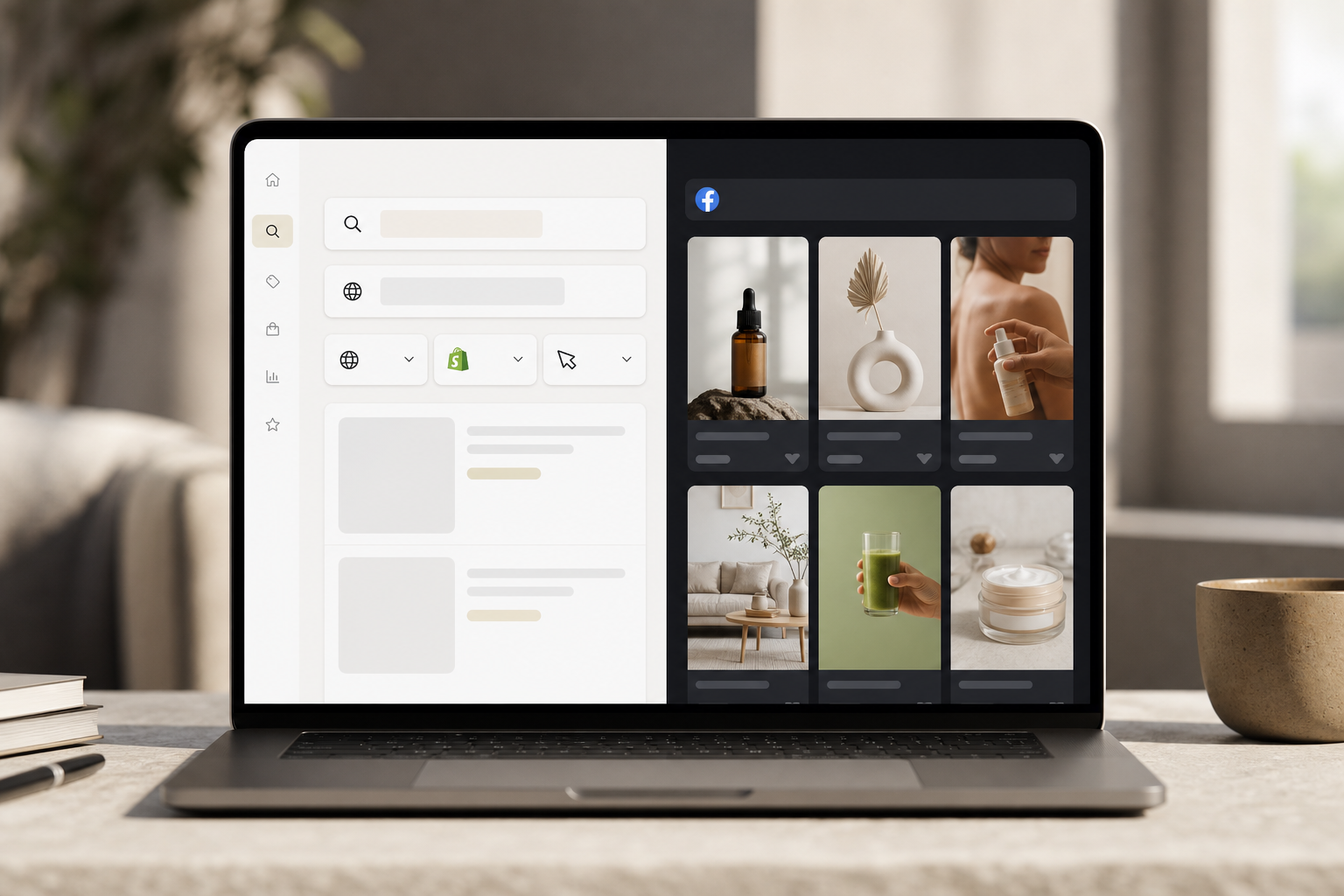
PowerAdSpy is an AI-powered ad spy tool with data on millions of ads from over 100 countries. In my tests, the standout was depth and breadth together. You can search by niche keywords, advertisers, and competitor domains. Furthermore, you can filter by ad positions, calls to action, country, device, and even sort by likes, comments, shares, newest, running longest, and popularity and impressions index.
In addition, multi-platform coverage is strong: Facebook, Instagram, TikTok, Google, Reddit, Pinterest, YouTube, Native, Display, and Quora. For a scaling store, this lets you confirm whether a hook that prints on Facebook also holds on TikTok or YouTube, or if it needs a fresh angle per channel. Moreover, you can search and analyze Shopify ads with complete engagement details, then refine by lander properties like e-commerce platform, marketing platform, funnel, or affiliate network.
On the plus side, the tool points you straight to live ad posts to check real-time engagement and audience comments. As a result, you can spot negative feedback patterns or shipping complaints before you copy a concept. The database adds thousands of new ads daily, and GEO-targeted information helps you localize faster.
On the other hand, PowerAdSpy has a steeper learning curve if you only need Facebook creative scouting. The filters are deep, which is great once you learn them, but it can feel like a lot on day one. Pricing also has multiple tiers, which is flexible but takes a few minutes to map to your use case.
“The clarity of the tool makes ad decision-making much easier.” — Steve Decker, SaaS Marketing Manager
For dropshippers who plan to add TikTok or Google Display after Facebook, the breadth pays off. If you’re sure you’ll stay single-platform for months, you might not use all the extra knobs yet. Still, the advanced search and Shopify filters proved useful even at low spend.
Dropispy Overview: Strengths and Weaknesses for Dropshippers
Dropispy is built with the dropshipper workflow in mind. In testing product ideas aimed at Facebook, I found its Facebook-first flow quick to scan. If your use case is to validate a product with social proof from Facebook ads and confirm that a store runs on Shopify, the tool’s focus makes sense.
For early-stage research, that focus can help you move faster from keyword to a shortlist of creatives. Moreover, Shopify store cues help you judge if a funnel matches your model. As a result, you can spot if an angle like “bundle and save” or “before/after” is trending in your niche without hopping through extra networks.
On the plus side, the entry price tends to be lower than multi-platform suites. If you’re on a strict budget and your tests live only on Facebook for the next few months, a leaner tool can be the right call. In addition, the simpler scope means less to learn and fewer filters to misconfigure.
However, the trade-off for a Facebook-first focus is narrower platform coverage. If you plan to branch into TikTok, YouTube, Google, or Reddit, you’ll need another tool or an upgrade elsewhere. In my tests, engagement views felt less granular than I wanted for side-by-side creative benchmarking. Therefore, if you rank ads by multiple engagement signals or want lander property filters beyond store detection, you may hit limits sooner.
Where Dropispy fits
- You want a Facebook creative scout to validate products fast
- You value Shopify store detection cues for a dropship-style funnel
- You’re pre-scale and price sensitivity is high for the next 60–90 days
If that’s you, the focused scope is a feature, not a bug. If you expect to expand to multi-channel in 2026, weigh whether you prefer to switch tools later or start with broader coverage now.
Feature-by-Feature Comparison: Keyword Search, Domain Search, and Filtering
Both tools support the core workflow, but they diverge in depth and breadth. I ran the same test set across six dimensions and picked a winner for each, with reasoning grounded in the tool design and, where relevant, PowerAdSpy’s published features.
How it compares to other ad spy tools in 2026
- Compared with Meta Ad Library, which is helpful but limited to Meta placements and lacks reliable engagement sorting, both PowerAdSpy and Dropispy offer domain and advertiser lookups and richer filters. PowerAdSpy adds multi-network views; Dropispy adds Shopify cues that the free library doesn’t expose.
- Versus AdSpy, a familiar Meta-focused option, PowerAdSpy’s broader network coverage and e-commerce/affiliate filters gave me more control once testing beyond Facebook/Instagram; Dropispy remains faster for a simple Facebook-only scan.
- Compared with BigSpy, which canvasses many networks for broad discovery, PowerAdSpy’s domain-level filters and “last seen” freshness signals felt more actionable for validating current spend, while Dropispy still wins on speed for FB-only sprints.
First, keyword search depth: PowerAdSpy’s powerful search algorithm lets you sort by keywords, date, and social metrics, and even break down components like text, brands, and objects. Moreover, targeted ad search includes domains, advertisers, keywords, and specific CTAs. As a result, PowerAdSpy wins for depth.
Second, domain and advertiser lookup: Both tools let you vet a competitor, but PowerAdSpy layers on “sort by post date, when last seen, or domain registration date,” which helped me understand life cycle and freshness. Therefore, PowerAdSpy wins for domain/advertiser analysis.
Key takeaway: if you want to pivot from a keyword scan into a live, domain-level audit with controls for recency and lifecycle, PowerAdSpy offers more levers, while Dropispy keeps the experience lighter for quick Meta checks.
Third, platform coverage: PowerAdSpy supports Facebook, Instagram, TikTok, Google, Reddit, Pinterest, YouTube, Native, Display, and Quora. On the other hand, Dropispy focuses on Facebook workflows. PowerAdSpy wins on coverage.
Fourth, e-commerce filters: PowerAdSpy includes e-commerce platform, affiliate network, marketing platform, and funnel filters, plus dedicated Shopify analysis. For dropship-specific checks, both can help, but the broader lander properties tilt the scale. PowerAdSpy wins for ecom filtering.
Fifth, engagement metrics: PowerAdSpy enables sorting by likes, comments, shares, running longest, popularity and impressions index, and it links to live posts. In practice, that gave me more ways to rank creative strength. PowerAdSpy wins on engagement granularity.
Sixth, geo-targeting and freshness: GEO-targeted information plus “last seen” sorts made it easy to test by country and recency. Moreover, the inventory draws from millions of ads with thousands added daily. PowerAdSpy wins here as well.
Quick comparison table
| Dimension | Winner | Why it matters for dropshippers |
|---|---|---|
| Keyword search depth | PowerAdSpy | More ways to sort by text, CTAs, and social proof |
| Domain/advertiser lookup | PowerAdSpy | Sort by post date and last seen to gauge recency |
| Platform coverage | PowerAdSpy | Plan cross-channel tests without switching tools |
| E-commerce filtering | PowerAdSpy | Filter by Shopify, funnel, and affiliate network |
| Engagement metrics | PowerAdSpy | Rank creatives by multiple signals, plus live post links |
| Geo-targeting and freshness | PowerAdSpy | Validate per-country hooks with current data |
If your only need is Facebook creative scouting for 30 days, Dropispy’s focus may be enough. However, if your plan includes multi-platform tests in 2026, PowerAdSpy’s breadth saves tool swaps and context switching.
Pricing Comparison: Value for Money on a Dropshipping Budget
Pricing has to work with thin margins.
- Basic: $69/month or $29/month billed annually
- Standard: $129/month or $42/month billed annually
- Premium: $179/month or $67/month billed annually
Moreover, there are higher tiers (Platinum, Titanium, Palladium) if your needs expand further. In my experience, Basic covers early research, while Standard makes sense once you run multi-geo or add more platforms. As a result, you can stage your spend with your test volume.
With Dropispy, the entry cost is usually lower than multi-network suites. If you only need Facebook creative validation for a sprint, you can stay lean. However, if you add channels, the effective cost goes up when you adopt a second tool. Therefore, think in terms of “cost per validated angle” across all channels you plan to run.
“We used to throw darts in the dark. PowerAdSpy helped us see what competitors were doing right.” — Steve Decker, SaaS Marketing Manager
In addition, PowerAdSpy users report a 19% improvement in revenue with decreased workforce needs and increased work efficiency, and a 15% reduction in A/B testing volume under two months. Those gains matter if time is your real cost.
**Get instant pricing details →
“Running ads for multiple clients was stressful. We cut testing time and launched campaigns that get results.” — Charlotte Neilson, Digital Marketing Strategist
Therefore, choose based on where you’ll be in 60–90 days, not just next week. If you expect to add TikTok, YouTube, or Google, start with the tool that already covers them.
- Choose PowerAdSpy if you need multi-platform coverage, deep filters, and GEO/freshness controls for faster validation across channels.
- Choose Dropispy if you need a Facebook-first scout with Shopify cues at a lower entry price for early tests.
- Consider Adplexity if you’re exploring native or affiliate-heavy funnels outside social and want a separate stack for that channel.
**Start researching ads today →
Finally, remember that the best stack is the one you’ll use daily. Keep your process simple: search by keyword, confirm by domain, filter by Shopify and geo, sort by engagement, and ship tests. If you can do those steps in one pass, you’ll win more product sprints in 2026.