
In 2026, agencies choosing between two leading platforms need an ad engagement and performance tracker. It should turn market noise into clear, defensible decisions. If your team lives and dies by creative proof and speed to insight, the right ad engagement and performance tracker matters. It will determine how quickly you can brief, test, and present results clients can trust.
**Book a live demo today → and depth (to justify creative choices with hard engagement data).
PowerAdSpy Overview: Strengths and Weaknesses for Agency Use

PowerAdSpy is an AI-powered ad research platform built for social and cross-channel discovery. It tracks ads across Facebook, Instagram, TikTok, Google, YouTube, Reddit, Pinterest, and Quora. It also covers native and display networks. In practice, that means your paid social and paid search teams can work from one shared source. Coordinated discovery gets faster, and creative iteration tightens.
You can sort ads by keywords, date, shares, likes, and comments. You can also click through to live ad posts to check real-time engagement and audience tone before you pitch a concept. Agencies like this because it reduces guesswork. It also cuts time spent on first-round A/Bs.
Its geo reach spans 100+ countries. You can filter by country, age group, gender, device, and ad position. For example, you can compare News Feed versus side placement. You can also filter by CTA and lander properties like funnel or eCommerce platform. As a result, audience, creative, and placement learnings live side by side.
Standout filters for teams: Instead of sifting through generic views, you can use an Ad Position Filter to separate feed, side, and video placements, which helps shape creatives to the surrounding experience. Demographic planning is faster with Gender Wise and Audience Age filters that reveal who responds where. CTA sorting highlights calls-to-action correlated with stronger social proof, while lander properties plus domain/advertiser search make it easier to trace funnels and see which eCommerce platforms or affiliate networks recur. To close the loop, you can also export detailed ad performance reports suitable for slides and client email, so insight travels cleanly from research to approval.
- High-impact filters and views in practice:
- Ad Position Filter: Separate feed, side, and video placements. Tailor assets to match in-context behavior.
- Demographic filters: Gender Wise and Audience Age views show who engages and where they do it.
- CTA sorting: Highlight calls-to-action linked to stronger proof. Prioritize messaging that converts.
- Lander properties: Surface funnels, eCommerce platforms, and affiliate networks that repeat across winners.
- Domain and advertiser search: Trace a brand’s footprint across networks and spot recurring tactics.
- Exports: Generate detailed reports for slides and email. Keep client communication tight and traceable.
In terms of results, the platform reports a 19% improvement in user revenue with decreased workforce. In addition, 26% of users save at least one day preparing for an advertising project. Teams also see a 15% reduction in A/B testing volume within two months. Those gains stack when you manage many accounts. The savings compound across quarters and across regions.
Where it falls short for agencies
While you can export detailed reports, there’s no native, white-labeled client dashboard inside the tool. You will still assemble slides or share exports to present your findings. The depth of filters is ultimately a strength. Even so, new users benefit from a short learning ramp to craft high-signal searches. That prevents overly broad queries on day one.
“PowerAdSpy’s FB ads spy tool transformed our ad strategy. We can now spy on top ads, uncover hidden targeting, and see real-time competitor insights.” — Archie Gilbert, Marketing Director
To ground this section back to your goal: if your day-to-day hinges on live social proof and fast creative validation, PowerAdSpy fits that workflow. And it does so at a price point suited to growing teams. The result is quicker decisions and cleaner approvals.
Also Read!
Ad Agency Guide to Tracking Ad Engagement Across Platforms
PowerAdSpy vs Dropispy for Dropshippers: Which Is Better for Shopify Ad Spying?
AdClarity Overview: Strengths and Weaknesses for Agency Use
AdClarity is built for display, video, and social ad intelligence with a strong focus on the open web. Agencies use it to map publishers, estimate spend, and study who buys what inventory. If your media plans lean on programmatic and publisher deals, this is where AdClarity earns its keep.
Specifically, teams value modeled ad spend estimation and publisher-level data. In addition, SEO-led agencies note its connection points with broader market research stacks. The Semrush integration helps create a single view of search and media. As a result, planners can align creative and channel choices against market movers. They can do this without stitching together siloed tools.
However, there are trade-offs for social-led shops. AdClarity supports social, but it covers fewer social platforms than tools built first for paid social. Moreover, its social engagement metrics are less granular than a social-first spy tool. Those tools let you sort by likes, comments, and shares and click through to live posts for context. That level of proof is critical for creative sprints.
Where AdClarity excels
AdClarity stands out when you need display and video market mapping supported by publisher-level analysis. You get a clear view of which sites and formats dominate your category. Its modeled ad spend estimation helps guide media mix and budget ranges.
These are directional numbers clients often request in upfronts. Finally, its integrated research workflow pairs well with SEO and market tools. Analysts can connect ad intelligence to broader traffic and demand signals without reinventing the stack.
Where AdClarity may feel heavy
The platform can feel heavier for social-first teams because it often carries a higher price point. Custom quotes are most common at the enterprise tier. It also covers fewer social networks compared with social-first tools.
That limits creative validation for channels like TikTok or Reddit. And while its display insights are strong, its social engagement metrics are less granular. That gap makes it harder to justify creative bets using comment-level proof.
If your mix tilts to TikTok, Instagram Reels, or Reddit, you may miss the post-level nuance that social-first trackers provide. That nuance is often the difference between a safe bet and a risky test.
If your clients buy a lot of display or you need to justify a publisher plan with spend estimates, AdClarity is a strong fit. But if your team lives in social creative sprints, you may still pair it with a social-first discovery tool to see live engagement on posts.
Start tracking ads today → and take advantage of Ad Position, Date Interval, and Audience filters to accelerate research. Moreover, you can target lander properties (affiliate network, funnel, eCommerce platform) and export detailed ad performance reports to keep client communication clean. Winner: PowerAdSpy.
Creative analysis depth
Fifth, competitive ad creative analysis. PowerAdSpy’s ad component search (text, brands, celebrities, objects) plus direct links to live posts help you study hooks and formats with proof. Meanwhile, AdClarity’s creative view supports display analysis, but it is not built for comment-level social proof.
Winner: PowerAdSpy. If you present to clients who demand visible reactions and thread tone, the ability to click a live post is a big improvement. It fuses qualitative signals with hard numbers.
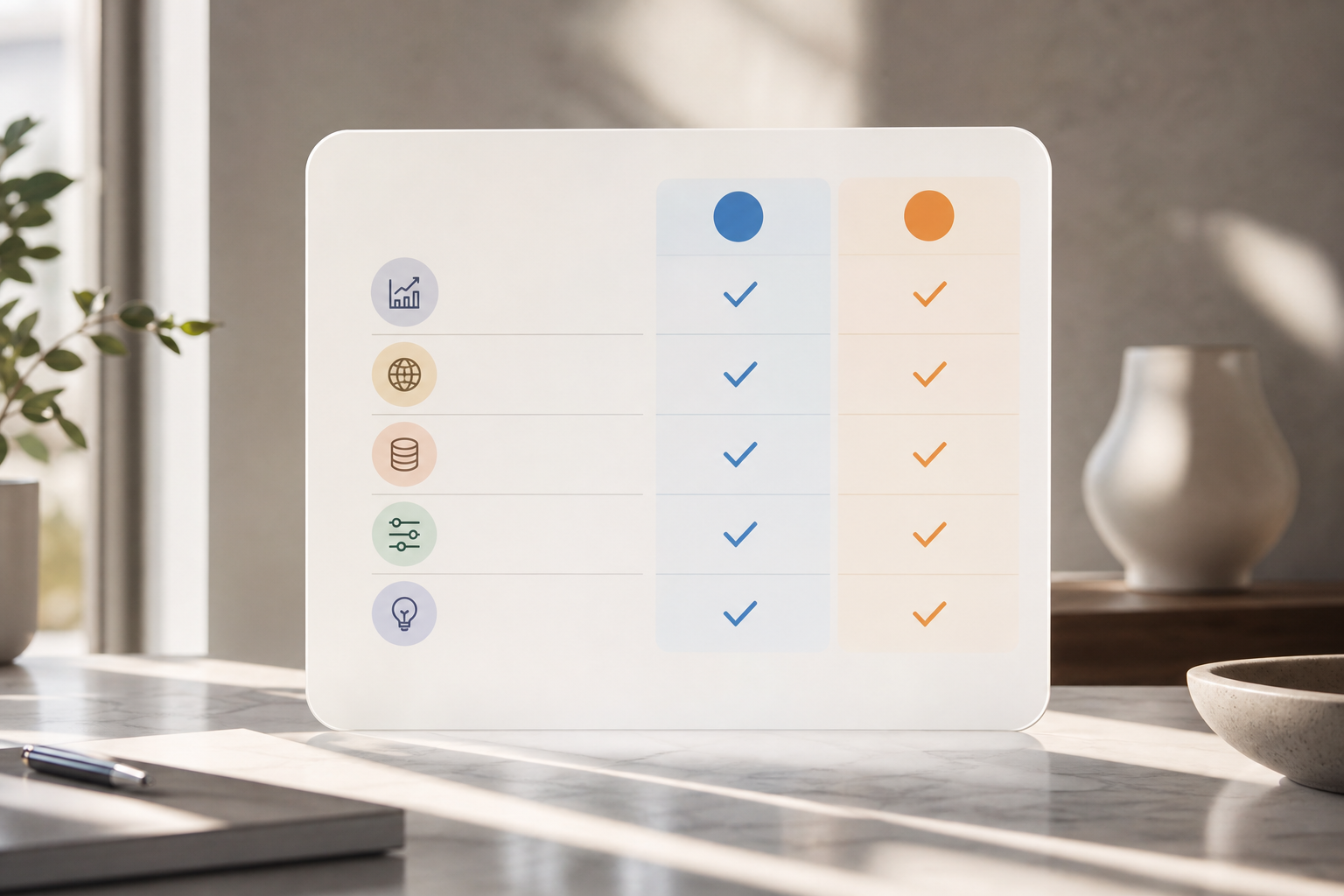
Quick summary table
| Dimension | PowerAdSpy | AdClarity | Winner |
|---|---|---|---|
| Social engagement metrics | Sort by likes/comments/shares; live post checks | Less granular on social engagement | PowerAdSpy |
| Platform coverage breadth | 10+ networks incl. TikTok, Reddit, Pinterest | Strong display/video focus | PowerAdSpy |
| Ad spend estimation | Popularity/impression index focus | Modeled spend estimates | AdClarity |
| Search/filter granularity | Deep filters (CTA, geo, gender, age, device, position, lander) | Solid, display-led filters | PowerAdSpy |
| Creative analysis | Ad component search; live context | Display creative overview | PowerAdSpy |
Why this matters in practice
In day-to-day creative sprints, PowerAdSpy lets you rank variants by likes, comments, and shares in seconds. You can then click to the live post to audit tone and audience cues before you spend. For geo-led briefs, you can combine country, age group, and gender filters to compare norms across more than 100 countries. That helps you arrive at regionally tuned concepts.
Placement decisions also get sharper because Ad Position filters separate feed, side, and video contexts. You can then tailor assets to where they’ll appear. When it’s time to socialize findings, detailed export options speed internal handoffs and client updates. You avoid manual reformatting and reduce review loops.
To keep the comparison fair: if your plan requires publisher-level spend estimates for display and video, AdClarity fills that gap. But for fast social validation and multi-platform creative research, PowerAdSpy moves quicker. It acts as an ad engagement and performance tracker that teams can run daily. The rhythm matches the pace of modern creative testing.
Pricing Comparison: Which Delivers Better Value for Agency Budgets?
PowerAdSpy offers six tiers, with transparent monthly and annual pricing that scales well for agencies:
- Basic: $69/month or $29/month billed annually
- Standard: $129/month or $42/month billed annually
- Premium: $179/month or $67/month billed annually
- Platinum: $279/month or $83/month billed annually
- Titanium: $349/month or $92/month billed annually
- Palladium: $399/month or $125/month billed annually
Seat-based cost math for teams
- Example 1: A three-seat team on Premium at the annual rate pays 3 × $67 = $201 per month. That’s $2,412 per year.
- Example 2: A five-seat team on Platinum at the annual rate pays 5 × $83 = $415 per month. That’s $4,980 per year.
- Example 3: A two-seat team on Titanium at the annual rate pays 2 × $92 = $184 per month. That’s $2,208 per year.
- In each case, the per-seat structure is predictable. Finance can model costs around client cycles without guesswork.
At the annual rate, that’s $29–$125 per seat per month across tiers. For a two-to-five seat team, those costs leave room for creative and media tools in your 2026 stack. Moreover, reported outcomes, a 15% reduction in A/B testing volume within two months and a 19% revenue lift with less workforce, suggest a clear ROI story at scale. The savings return as fewer false starts and faster approvals.
AdClarity operates at a higher price point with custom quotes, especially for teams that want full display/video coverage and publisher-level data. If you buy programmatic at volume, the cost per seat can be worth it because spend estimates shape your plan. However, for social-led agencies that need fast creative validation across 10+ social/search channels, PowerAdSpy’s lower per-seat pricing delivers strong value. Budget breathes easier when per-seat tiers are known in advance.
Therefore, for most multi-client social programs, PowerAdSpy will be the more budget-friendly choice. For enterprise display planning, AdClarity’s modeled spend can justify its higher seat cost. Many agencies run both at different tiers and assign access by use case. That blend keeps costs aligned to outcomes.
See pricing and save today → with deep filters and live post checks that speed research and approvals. If you need display/video publisher mapping and modeled ad spend estimates to plan buys at enterprise scale, choose AdClarity to complement your stack. And if you want a third lens on site-level traffic trends to pair with your ad research, consider Similarweb to round out market context.