
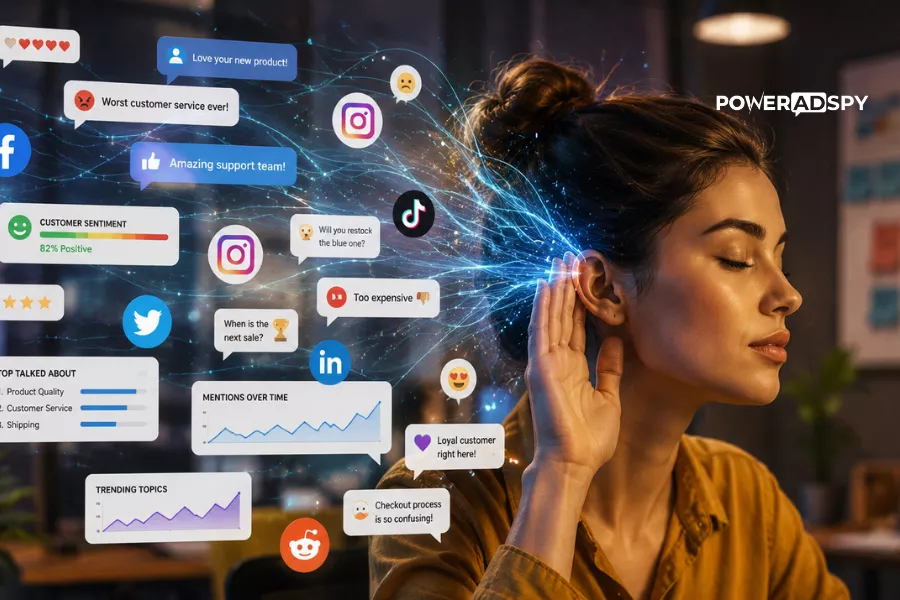
Picture this: Your competitor just launched a product that’s generating massive buzz on social media. Meanwhile, customers are complaining about your latest feature in Facebook groups you didn’t even know existed. And somewhere on Twitter, an influencer is praising your brand, but you’re completely unaware.
This is the reality for businesses that aren’t practicing social listening.
In 2026, conversations about your brand are happening everywhere, whether you’re part of them or not. Social listening isn’t just about monitoring mentions anymore. It’s about understanding the emotions, intentions, and pain points hidden in millions of social media conversations. It’s the difference between guessing what your customers want and actually knowing.
The brands winning today aren’t the ones with the biggest budgets. They’re the ones listening closest.
In this guide, you’ll discover exactly what social listening is, why it’s become non-negotiable for modern marketing, and how to leverage it to build campaigns that actually resonate. More importantly, you’ll learn how to turn raw social data into actionable intelligence that drives revenue.
Let’s dive in.
Listen To The Podcast Now!
What Is Social Listening?
 Social listening is the process of monitoring digital conversations to understand what customers are saying about your brand, industry, competitors, and relevant topics across social media platforms. But here’s where most people get it wrong, it’s not just tracking mentions or hashtags.
Social media listening goes deeper. It’s about analyzing the context, sentiment, and trends within those conversations to extract meaningful insights you can act on.
Think of it this way: Social monitoring tells you what people are saying. Social listening tells you why they’re saying it and what you should do about it.
For example, if 500 people mention your brand name today, monitoring captures that number. Listening reveals that 300 of them are frustrated with your checkout process, 150 love your customer service, and 50 are comparing you to competitors.
That’s intelligence you can use.
The Evolution of Social Listening
Back in 2015, social listening meant setting up Google Alerts and manually checking Twitter. Today, we’re talking about AI-powered platforms analyzing millions of data points across Facebook, Instagram, TikTok, LinkedIn, Reddit, YouTube comments, and even ad campaigns.
Social listening tools in 2026 don’t just track keywords. They understand context, detect sarcasm, identify emerging trends before they explode, and even predict customer behavior based on conversation patterns.
The game has changed completely.
Also Read
The Ultimate Guide To Social Advertising: Examples, Types & Best Practices
Why Social Listening Matters More Than Ever
Here’s a uncomfortable truth: Your customers are already telling you exactly what they want. The question is, are you listening?
1. Your Customers Expect You to Be Present
Modern consumers don’t just complain to customer service anymore. They tweet about bad experiences, post reviews in Facebook groups, and share opinions on Reddit. If you’re not monitoring these spaces, you’re missing critical feedback that could prevent PR disasters or spark product innovations.
I’ve seen brands turn around their reputation overnight simply by responding to concerns they discovered through social listening. Conversely, I’ve watched companies bleed customers because they ignored the warning signs clearly visible in social conversations.
2. Competitive Intelligence on a Silver Platter
Your competitors are running ads, launching products, and testing messaging right in front of you. Social listening lets you see which social media advertising campaigns resonate, what pain points they’re addressing, and where they’re falling short.
Why guess at market gaps when you can identify them in real-time by listening to what customers say about competitor offerings?
3. Trend Detection Before It’s Too Late
Remember when TikTok exploded and brands scrambled to create content? The early adopters who were listening to social conversations saw it coming months earlier. They noticed the shift in where younger audiences were spending time and how they consumed content.
Social media listening tools help you spot these shifts before they become obvious, giving you a first-mover advantage that’s worth millions.
4. Content That Actually Connects
Stop creating content based on what you think your audience wants. Start creating based on what they’re actually talking about.
Social listening reveals the exact language your customers use, the questions they ask, and the problems keeping them up at night. This intelligence transforms generic content into magnetic material that people can’t help but engage with.
How Social Listening Actually Works
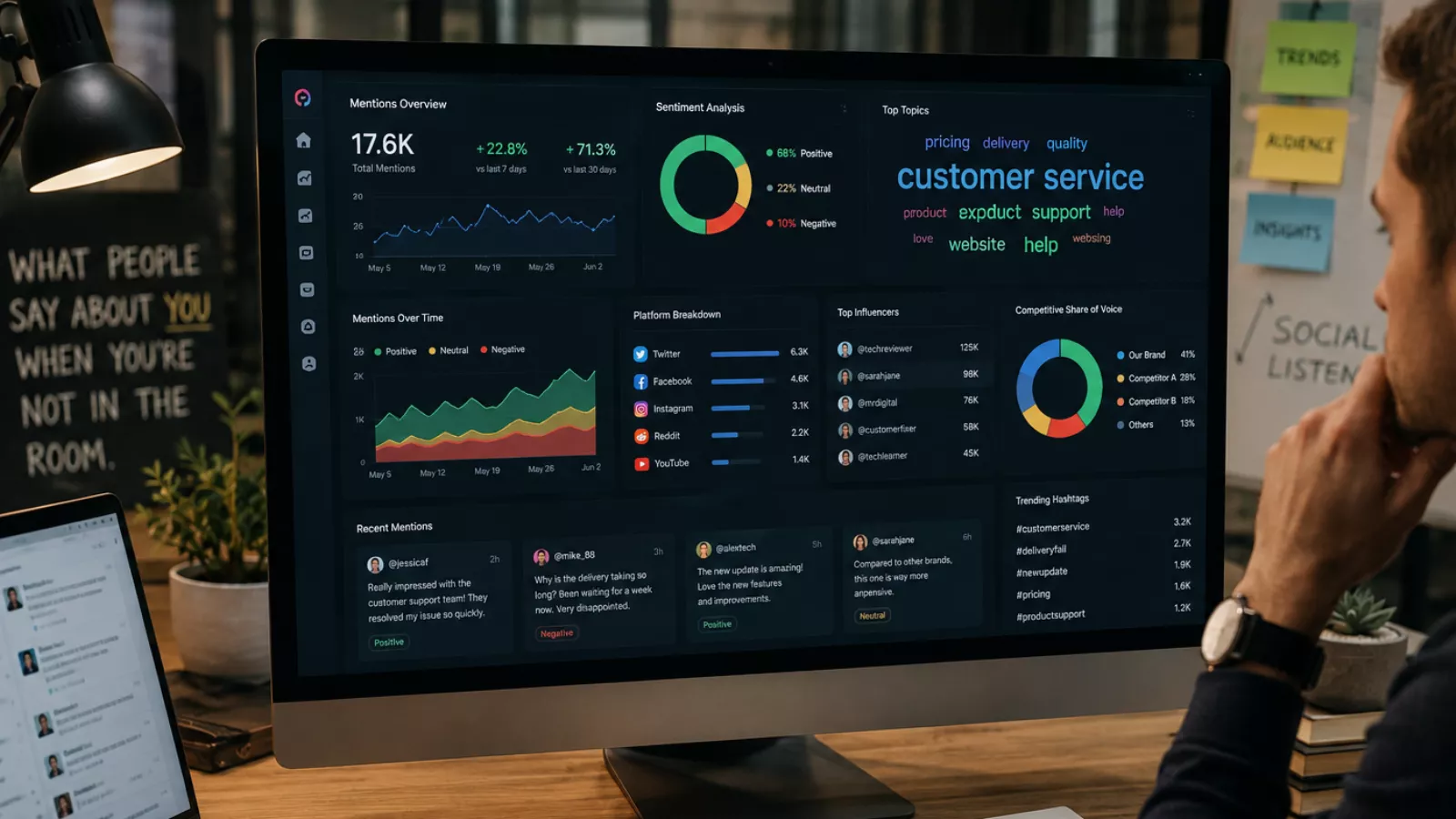 Let’s get practical. Here’s the framework successful brands use to turn social noise into strategic gold.
Step 1: Define Your Listening Objectives
Before you dive into data, get clear on what you’re trying to achieve:
- Track brand health and sentiment over time?
- Identify product improvement opportunities?
- Monitor competitor activities and market positioning?
- Discover influencers and brand advocates?
- Find hot topics for content creation?
Your objectives determine which conversations matter most and how you’ll analyze them.
Step 2: Identify the Right Keywords and Topics
This is where most people stop at just their brand name. Big mistake.
You need to monitor:
- Brand mentions (including common misspellings)
- Product names and features
- Industry keywords and pain points
- Competitor names and their products
- Campaign hashtags and slogans
- Executive names (CEO, founders)
- Common customer complaints in your space
The broader your keyword net, the richer your insights.
Step 3: Choose Your Platforms Wisely
Not every platform matters for every business. A B2B software company should prioritize LinkedIn and Twitter over TikTok. An e-commerce fashion brand needs Instagram and Pinterest coverage.
The best social listening tools 2026 offer multi-platform monitoring, but you should focus your analysis where your audience actually lives.
Step 4: Analyze Sentiment and Context
Raw mentions mean nothing without context. Is that mention positive, negative, or neutral? Is the person a customer, prospect, or competitor?
Advanced platforms use natural language processing to understand:
- Sentiment scores (how people feel)
- Emotion detection (anger, joy, frustration)
- Intent signals (buying intent vs. casual browsing)
- Influencer identification (who has reach in your space)
Step 5: Turn Insights into Action
Data without action is just noise. The real magic happens when you:
- Route customer complaints to your support team
- Share product feedback with your development team
- Alert your PR team to potential crises
- Feed insights to your content and ad teams
- Benchmark your performance against competitors
This is where social listening transforms from a nice-to-have to a revenue-generating machine.
Essential Features Your Social Listening Strategy Needs
If you’re serious about social listening, you need a systematic approach backed by the right capabilities. Here’s what separates amateur monitoring from professional intelligence gathering.
But here’s the reality: Most social listening tools focus exclusively on mentions and conversations. They miss a massive piece of the puzzle, the ads themselves.
Think about it. Ads are where brands put their most polished messaging. They’re where competitors test new products. They’re where market trends become visible before they hit organic content. And most importantly, engagement on ads tells you what actually drives action, not just what generates passive likes.
This is where PowerAdSpy changes the game entirely.
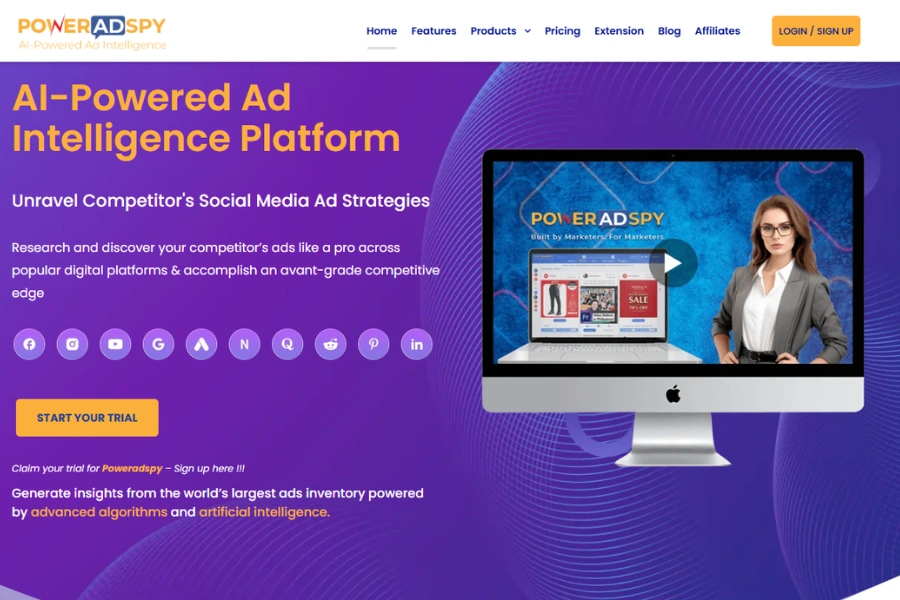
Search That Actually Finds Winners PowerAdSpy’s algorithm lets you search for keywords within ads, then sort by engagement metrics, likes, shares, comments. You’re not studying random ads; you’re analyzing proven performers in your niche.
Complete Visibility Visit live ad posts directly from the platform. See real-time engagement, read actual comments, and understand sentiment as it unfolds. No static screenshots, just living, breathing campaign data.
Competitive X-Ray Vision Search by competitor domains to see every ad they’re running. Analyze their messaging evolution, spot their winning CTAs, and identify gaps in their strategy before they do.
Geo-Targeting Intelligence Discover which messages work in which markets. Perfect for expansion planning or understanding regional preferences that impact conversion rates.
Smart Organization Bookmark winning ads with one click into your personalized inventory. Build a swipe file of proven concepts you can adapt and test.
Video + Image Analysis Access both formats in one platform. Compare performance, download winning videos, and understand what content types your audience actually responds to.
Always Current Thousands of fresh ads added daily means you’re seeing the latest trends and competitor moves as they happen, not three weeks later.
Best Practices for Effective Social Listening
Knowing what to do is one thing. Doing it well is another. Here’s how to maximize your social listening efforts.
Set Up Alerts for Critical Keywords
Don’t just check your dashboard when you remember. Configure alerts for:
- Brand crisis keywords (lawsuit, recall, problem, worst, terrible + your brand name)
- Competitor product launches
- Sudden spikes in mentions
- High-engagement content in your niche
This keeps you proactive instead of reactive.
Look Beyond Your Brand
The biggest mistake brands make is only listening to direct mentions. Expand your monitoring to:
- Industry pain points (“I hate when…”, “Why is it so hard to…”)
- Competitor frustrations (goldmine for positioning opportunities)
- Emerging trends and buzzwords
- Influencer conversations
Some of the most valuable insights come from conversations that never mention your brand.
Analyze Timing Patterns
When are people talking about your industry? time of y? When does engagement spike?
These patterns reveal optimal posting times, help you predict when trends will peak, and show you when your audience is most receptive to your message.
Connect Social Listening to Business Outcomes
Track how insights translate to results:
- Did addressing customer complaints reduce churn?
- Did content based on trending topics increase traffic?
- Did competitive intelligence improve your win rate?
- Did sentiment improvements correlate with sales?
When you can draw direct lines from listening to revenue, you’ll get buy-in for bigger investments in this capability.
Create a Response Protocol
Establish clear guidelines for:
- Who responds to different types of mentions
- Response time expectations
- Escalation procedures for crises
- How to handle negative sentiment
- When to join conversations vs. when to monitor silently
Social listening is useless if insights sit in a dashboard and never trigger action.
Common Social Listening Mistakes to Avoid
Even experienced marketers fall into these traps. Here’s what to watch out for.
Mistake #1: Focusing Only on Volume
10,000 mentions means nothing if they’re all neutral bot-generated content or spam. A hundred passionate conversations from actual customers are infinitely more valuable.
Focus on meaningful engagement, not vanity metrics.
Mistake #2: Ignoring Sentiment Shifts
Sentiment trends matter more than absolute numbers. If your positive sentiment drops from 80% to 60% over three months, that’s a red flag even if total mentions increase.
Watch the direction of change, not just the snapshot.
Mistake #3: Neglecting Smaller Platforms
Just because Reddit or niche forums have less reach than Facebook doesn’t mean they’re less important. Some of the most influential conversations happen in specialized communities with 500 members, not public posts with 50,000 likes.
Quality communities often matter more than mass-market platforms.
Mistake #4: Treating Social Listening as a Solo Activity
Insights should flow across your entire organization:
- Product teams need feature requests and complaints
- Customer service needs to know common issues
- Sales teams need to understand objections
- Marketing needs content ideas and messaging insights
Break down silos and share intelligence broadly.
Mistake #5: Analysis Paralysis
You can drown in data if you try to track everything. Start focused, prove value, then expand. Better to act on three strong insights than to collect 300 data points and do nothing.
The Future of Social Listening
As we move deeper into 2026, social listening is evolving rapidly. Here’s what’s coming:
AI-powered predictive analytics will move beyond understanding what’s happening to predicting what will happen next. Imagine knowing a crisis is brewing before it erupts or spotting a trend opportunity weeks before competitors.
Cross-platform identity resolution will connect fragmented conversations, showing you the full customer journey across multiple platforms and touchpoints.
Voice and audio monitoring will expand as platforms like Clubhouse, Twitter Spaces, and podcast platforms become search-able and analyzable.
Emotion AI will move beyond positive/negative sentiment to detect nuanced emotions like frustration, excitement, confusion, or desire, giving you even richer context.
The brands that invest in sophisticated social listening now are building a compounding advantage that will be nearly impossible for competitors to catch up to later.
Conclusion
Social listening isn’t optional anymore. It’s the foundation of modern customer intelligence, competitive strategy, and content creation.
The conversations are happening whether you’re listening or not. The trends are emerging whether you’re tracking them or not. Your competitors are analyzing this data whether you are or not.
The question isn’t whether social listening matters; it’s whether you’re doing it well enough to actually gain an edge.
Start by defining clear objectives. Choose a platform that gives you comprehensive coverage, powerful search capabilities, and actionable insights, not just raw data dumps. Build processes that turn insights into action across your organization.
And remember: The best time to start listening was yesterday. The second-best time is right now.
FAQs About Social Listening
Q1: What’s the difference between social listening and social monitoring?
Social monitoring tracks mentions, hashtags, and keywords to see what people are saying. Social listening analyzes those conversations to understand why people are saying it, what it means for your business, and what actions you should take. Monitoring is reactive; listening is strategic.
Q2: How much does social listening cost?
Social listening tools range from free basic options with limited features to enterprise solutions costing thousands monthly. The investment depends on your needs, coverage breadth, data volume, platform variety, and analytical depth. For most businesses, the ROI from preventing one PR crisis or capturing one trend early justifies the cost entirely.
Q3: Which social media platforms should I monitor?
Focus on platforms where your audience is most active and vocal. B2B companies should prioritize LinkedIn and Twitter. E-commerce brands need Facebook, Instagram, and TikTok. Don’t spread yourself too thin, better deep coverage of three platforms than shallow monitoring of ten.