Effective Facebook Ad Targeting: How to Reach Your Audience
Most campaigns fail long before the ad creative becomes a problem. The real issue is usually Facebook ad targeting. If the audience is off, even the most polished ad will struggle to deliver results.
Think about it from the user’s perspective. People scroll quickly. They only stop when something feels relevant to them. That relevance often starts with who the ad is shown to, not how it looks.
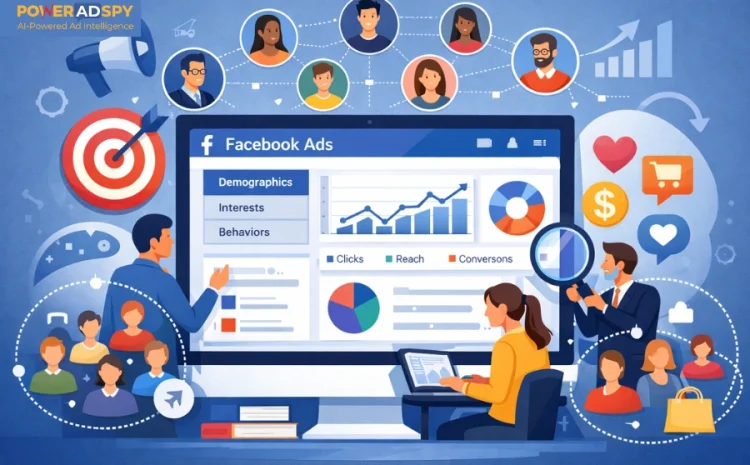
This is why experienced marketers spend more time refining audiences than designing visuals. Facebook ad targeting allows advertisers to filter users by interests, behaviors, demographics, and previous interactions with a brand. Done thoughtfully, it turns a massive platform into a highly focused marketing channel.
The challenge is not accessed to targeting tools. The challenge is understanding how to use them strategically without overcomplicating the campaign.
This guide breaks down how targeting actually works, what the most useful Facebook ad targeting options are, and how businesses can reach the people most likely to respond.
Read Aloud!
Why Facebook Ad Targeting Matters More Than Most People Realize
Many advertisers assume success depends on the ad itself. Creativity certainly matters, but it rarely compensates for weak targeting.
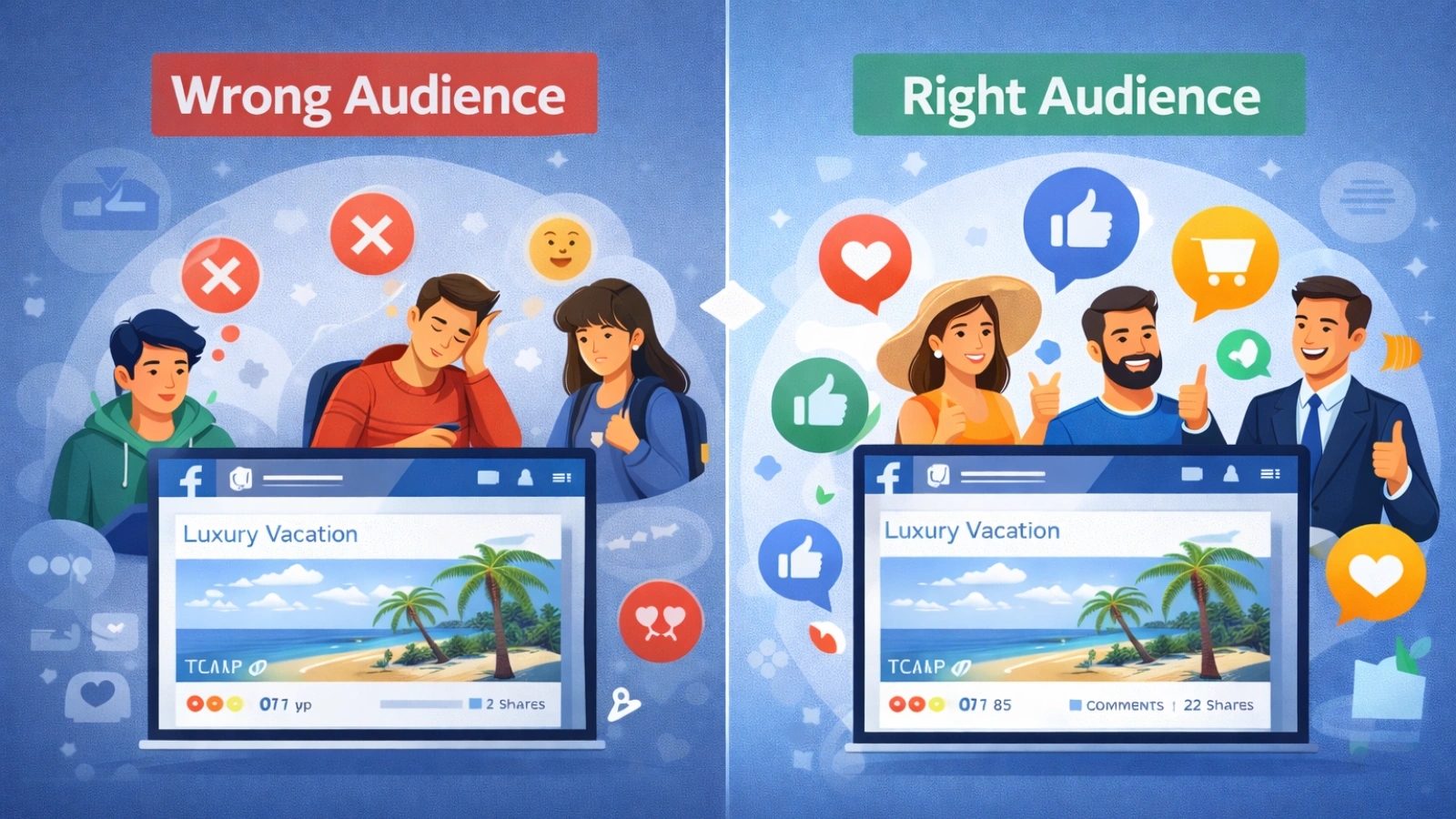
If an ad promoting luxury travel appears in front of students who cannot afford it, the campaign will struggle. Even if the visuals are beautiful.
That is the fundamental role of Facebook ad targeting. It places ads in front of people who are more likely to find them relevant.
When the audience is well matched to the offer, several things happen naturally:
- Engagement rates increase
- Click-through rates improve
- Advertising costs stabilize
- Conversions become more predictable.
This is the reason Facebook targeted ads remain effective even in competitive industries. Relevance reduces wasted impressions and focuses spending on audiences that actually matter.
Understanding How Facebook Builds Targeting Profiles
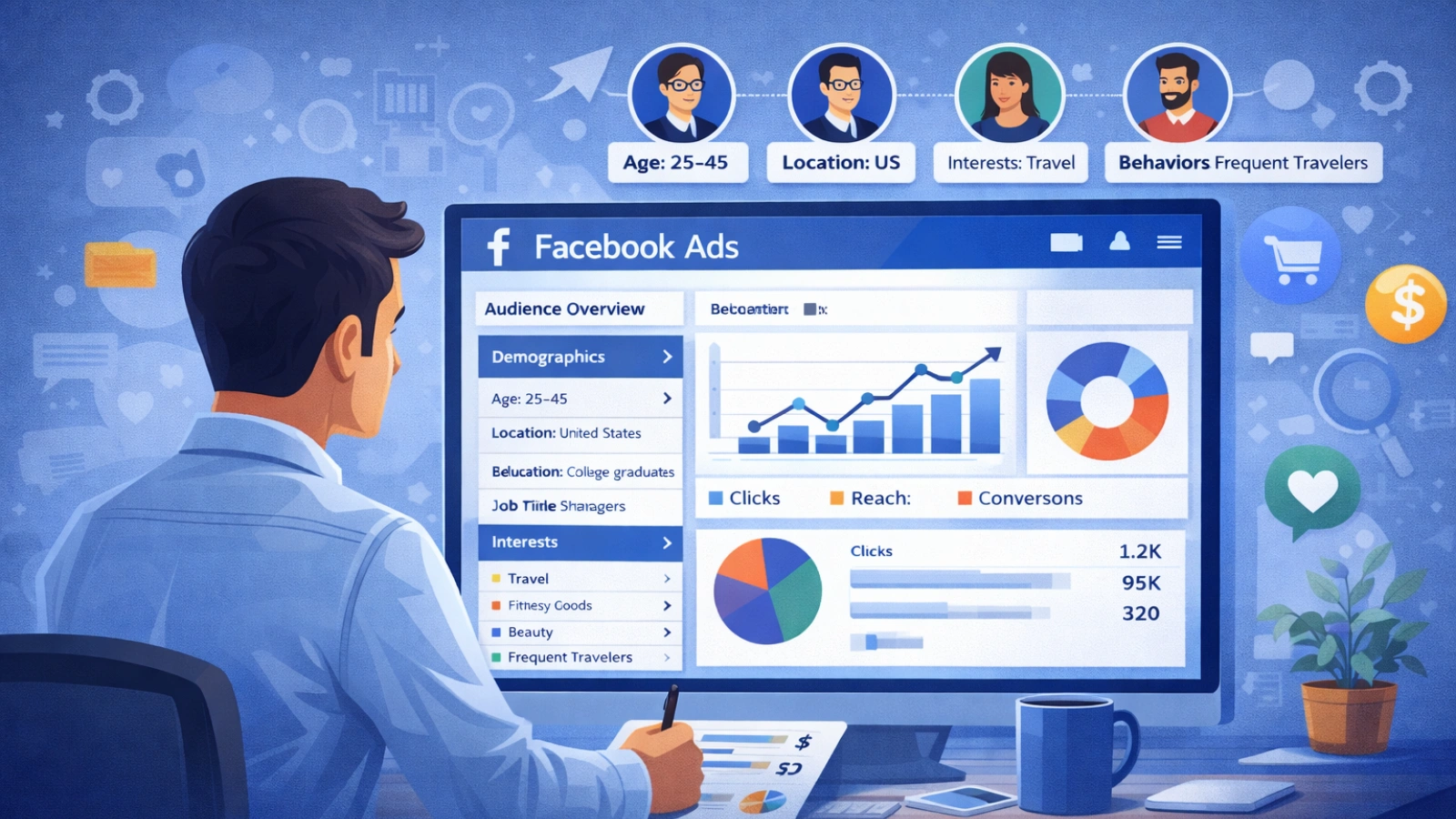
To understand Facebook ad targeting, it helps to know how the platform determines user interests.
Facebook gathers signals from many sources. These include user profiles, page interactions, ad engagement, website activity tracked through pixels, and app usage patterns.
Each interaction adds context. Over time, Facebook builds a fairly detailed behavioral picture of each user.
Advertisers do not see individual user data. Instead, they access targeting categories that group users based on shared traits or behaviors.
For example, someone who frequently engages with fitness content might fall into several interest groups related to health and exercise. When advertisers select those interests, their ads become eligible to reach that person.
This is the foundation of Facebook ads targeting.
Core Facebook Ad Targeting Options
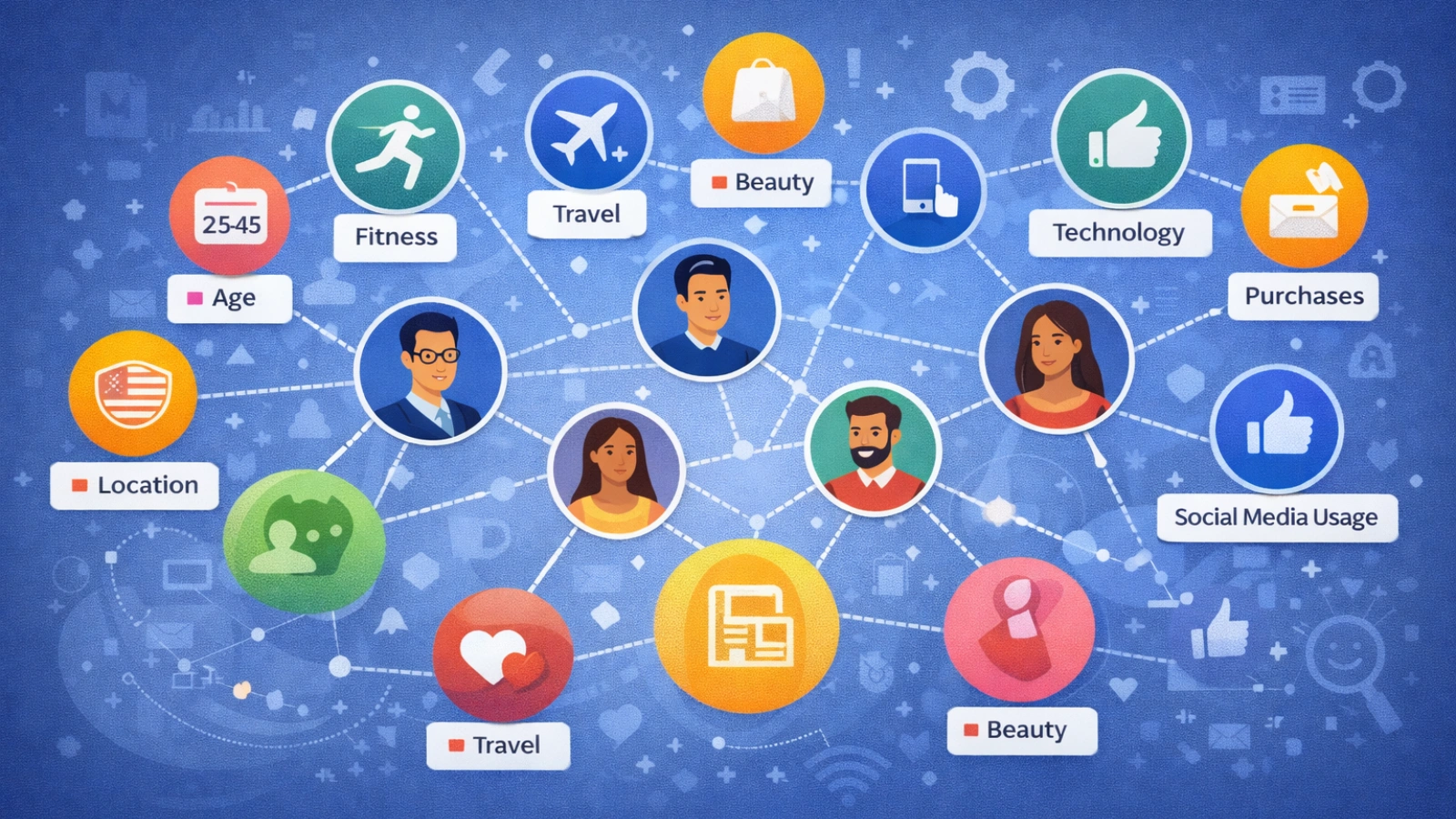
The platform offers several audience types. Each plays a different role in a campaign.
Understanding the strengths of each option helps advertisers avoid common mistakes.
Core Audiences
Core audiences allow advertisers to target people based on demographics, interests, and behaviors.
Common filters include:
- Age and gender
- Geographic location
- Education level
- Job roles
- Interests and hobbies
- Consumer behaviors
For many campaigns, this is where Facebook ad targeting options begin. Core audiences help businesses reach potential customers who may not know the brand yet.
For example, a small skincare brand might target women aged 25 to 45 who show interest in beauty products and skincare routines.
The idea is simple. Reach people whose interests naturally align with your offer.
Custom Audiences
Custom audiences focus on people who already have some relationship with your business.
This might include:
- Website visitors
- Email subscribers
- Past customers
- App users
- People who interacted with your content
This form of Facebook ad audience targeting is especially useful for retargeting campaigns.
Imagine someone visits your website and browses a product but leaves without purchasing. A retargeting ad can remind them about that product later.
These campaigns often perform well because the audience is already familiar with the brand.
Lookalike Audiences
Lookalike audiences allow Facebook to identify users who resemble your existing customers.
The system analyzes behavioral patterns within your original audience and then finds similar users across the platform.
This is one of the most effective ways to scale a campaign. Businesses frequently combine lookalike audiences with other Facebook ad targeting strategies to reach new customers without losing relevance.
Building a Thoughtful Targeting Strategy
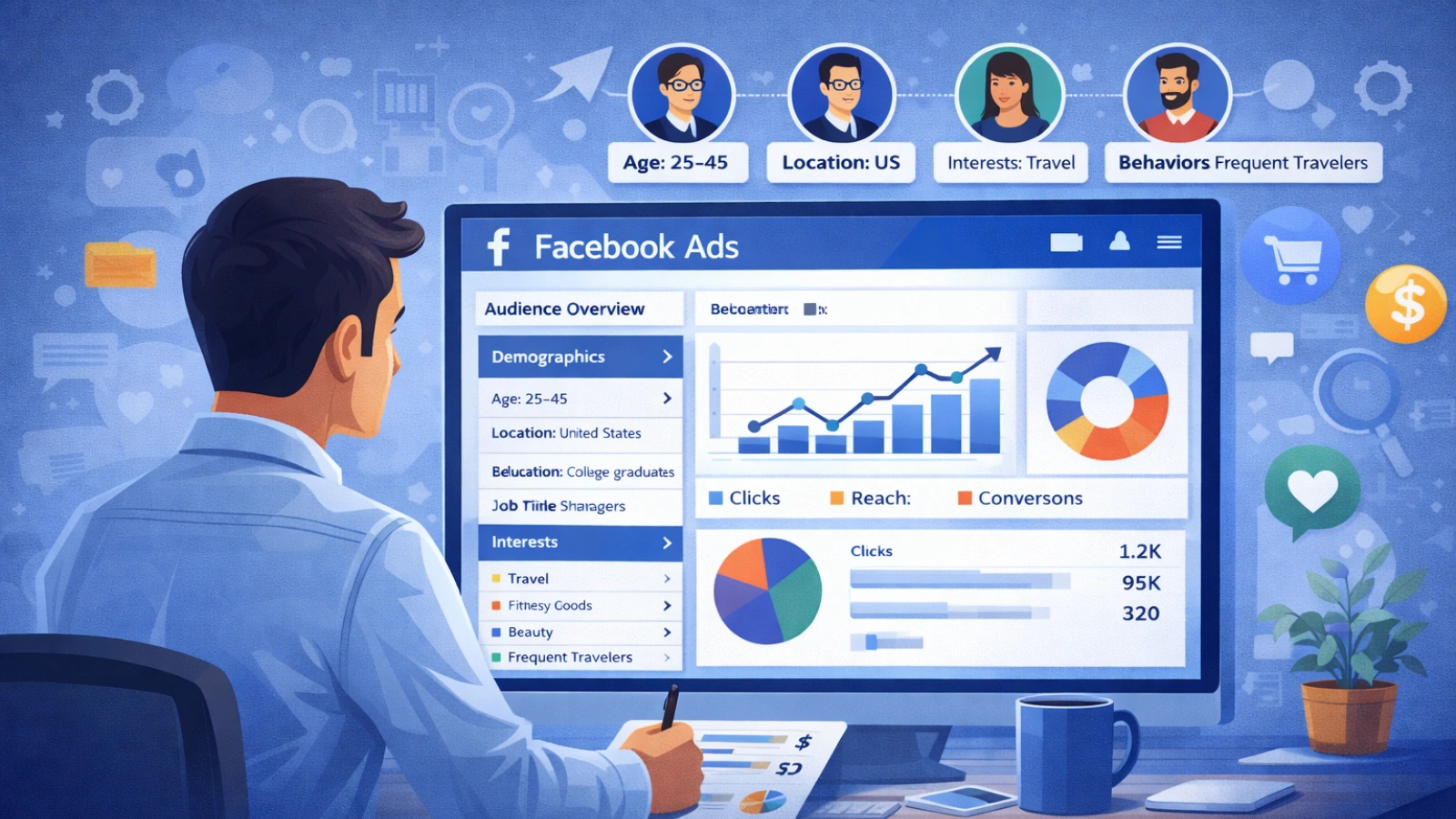
A common mistake among advertisers is searching for a perfect audience immediately. In practice, the best audiences usually emerge through testing.
A practical Facebook ad targeting strategy tends to follow three stages.
Stage One: Exploration
Early campaigns focus on discovery. Advertisers test different interests, demographics, and behaviors to see which audiences respond.
The goal here is learning, not perfection.
Some audiences will perform poorly. That is part of the process.
Stage Two: Optimization
Once campaigns collect enough data, patterns start to appear.
Certain audiences generate stronger engagement. Others produce more conversions.
At this point, Facebook ad audience targeting becomes more refined. Budget shifts toward the segments that show consistent results.
Stage Three: Scaling
After identifying strong audiences, advertisers expand their reach.
This might involve creating lookalike audiences or broadening certain interest groups. Scaling allows campaigns to grow while maintaining efficiency.
Common Targeting Mistakes That Hurt Campaigns
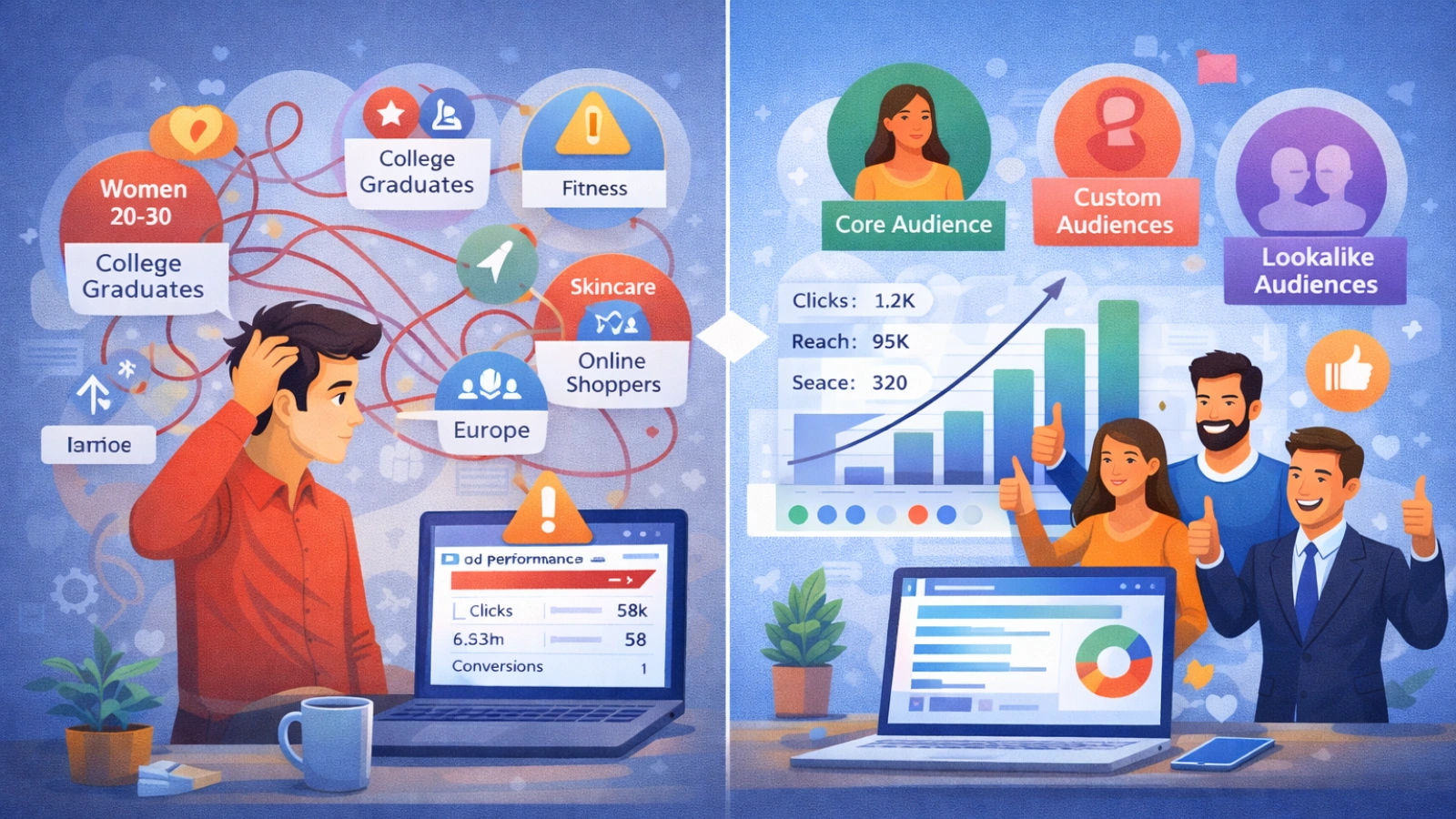
Even experienced marketers occasionally make targeting mistakes. Most issues come from misunderstanding how Facebook’s delivery system works.
One frequent mistake is over targeting. Some advertisers stack too many filters in an attempt to reach the perfect audience.
In reality, extremely narrow audiences restrict the algorithm’s ability to optimize delivery.
Another problem involves ignoring data. Campaign metrics often reveal which audiences respond best, yet many advertisers continue using the same targeting structure regardless of results.
It is also common to rely exclusively on interest targeting. While interests help discover new audiences, combining them with custom audiences often produces stronger outcomes.
Finally, advertisers sometimes forget that creativity still matters. Even the best Facebook ad targeting options cannot rescue a weak message.
Aligning Ad Messaging With Your Audience
Targeting determines who sees an ad. Messaging determines how they react.
When these two elements align, ads feel far more natural.
For example, an ad aimed at first-time entrepreneurs should focus on challenges like launching a business or finding early customers. An ad aimed at experienced executives might focus on growth or efficiency.
This alignment is what makes Facebook targeted ads work so well.
Users respond when they feel the ad speaks directly to their situation.
A useful exercise is to ask one question before launching a campaign. What specific problem does this audience want to solve right now?
If the ad clearly addresses that problem, engagement usually improves.
Read More!
Using Performance Data to Improve Targeting
Targeting decisions should rarely rely on instinct alone. Campaign data provides valuable insight into audience behavior.
Important metrics include:
- Click-through rate
- Conversion rate
- Cost per acquisition
- Engagement rate
These numbers reveal whether your Facebook ad targeting strategy is actually working.
For example, a high click rate combined with low conversions may indicate that the audience is curious but not ready to purchase.
In that situation, retargeting campaigns often perform better than cold audiences.
Over time, these insights help refine targeting decisions.
Tools That Help Refine Targeting Decisions
Managing multiple campaigns and audiences can become complicated faster than most advertisers expect. Once several ad sets are running at the same time, it becomes harder to clearly see which audience signals actually drive performance.
This is where specialized tools can add a layer of clarity.
How to Use PowerAdSpy To Refine FB Ad Targeting
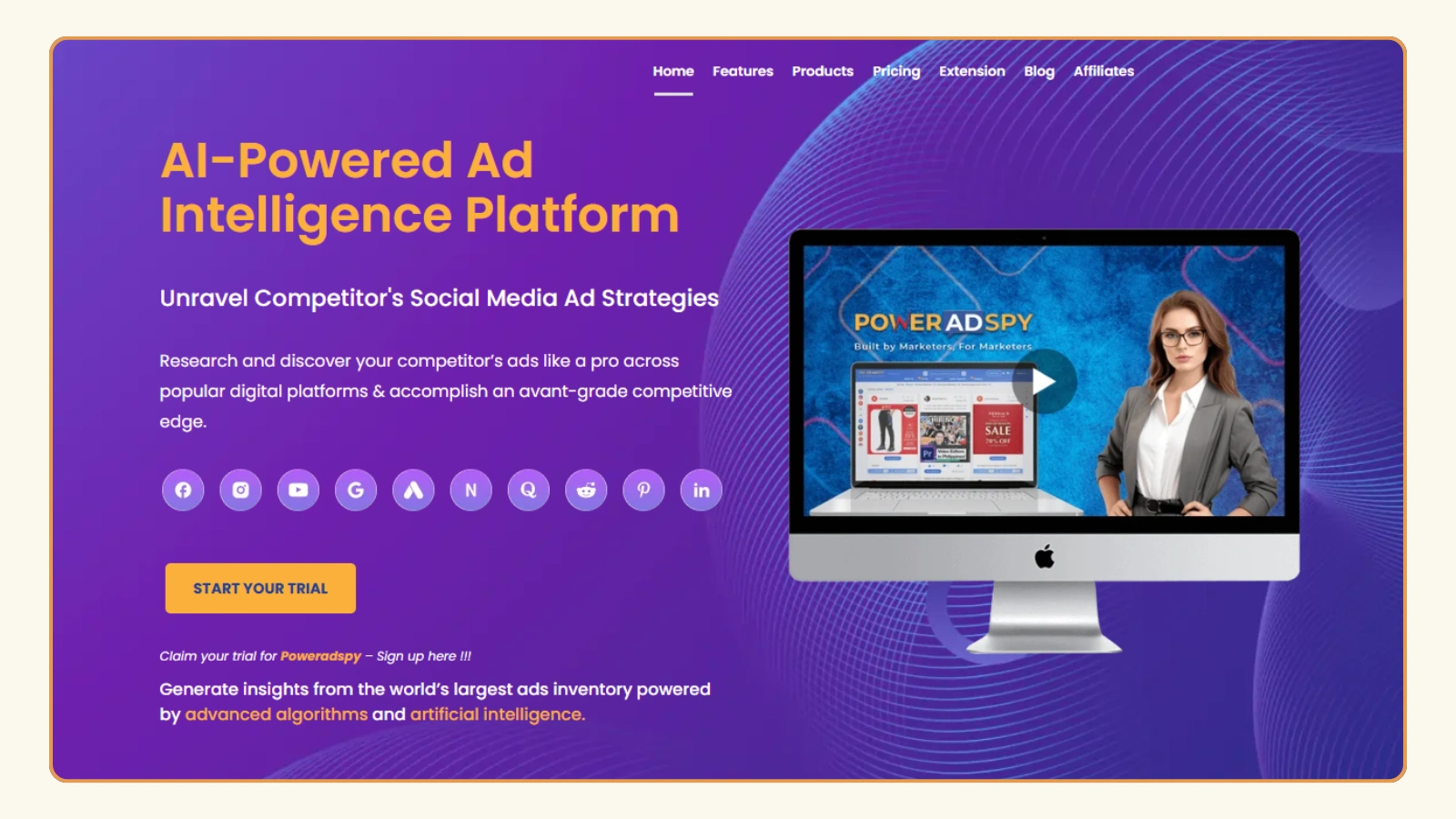
PowerAdSpy helps marketers refine Facebook ad targeting strategies by allowing them to analyze active advertisements and identify audience patterns that are already working in the market.
Instead of building targeting assumptions from scratch, advertisers can study real campaigns, observe how competitors position their ads, and understand what kinds of audiences are responding.
Key features include:
- Ad Intelligence Database
PowerAdSpy provides access to a large collection of Facebook ads, helping marketers observe how different brands structure their targeting strategies. - Advanced Ad Filtering
Users can filter ads by niche, keyword, engagement level, and ad type. This helps identify campaigns that are resonating with specific audiences. - Engagement-Based Ad Discovery
The platform highlights ads that generate high engagement, offering clues about which audience segments are reacting positively. - Competitor Ad Analysis
Marketers can examine how competitors design their campaigns, including messaging and creative structure, which can indirectly reveal effective Facebook ad audience targeting approaches. - Audience Insight Exploration
By reviewing successful ad patterns across industries, advertisers can refine their own Facebook ad targeting strategies and discover audience segments they may have overlooked.
These insights make it easier for advertisers to move beyond guesswork and build targeting strategies grounded in real campaign behavior.
Testing and Refining Targeting Over Time
One thing becomes clear after managing campaigns for a while. Audience behavior changes.
Consumer interests shift. Markets evolve. Platforms update their algorithms.
For that reason, Facebook ad targeting should always be treated as an ongoing process rather than a one-time setup.
Advertisers who regularly test new audiences tend to uncover valuable insights.
This testing might involve:
- Exploring new interest categories
- Creating additional lookalike audiences
- Expanding into different regions
- Excluding certain audience groups
Each experiment provides new information about how people respond.
Over time, these insights form a reliable targeting framework that supports consistent campaign performance.
Advertising platforms continue to evolve, but one principle remains consistent. The success of most campaigns depends on reaching the right people.
When businesses approach Facebook ad targeting with careful testing, thoughtful audience selection, and consistent optimization, their ads become far more effective.
Instead of simply reaching large audiences, they reach the people who are most likely to care. And that difference changes everything about campaign performance.
Frequently Asked Questions
What are the most useful Facebook ad targeting options for beginners?
Core audiences are usually the best starting point. They allow advertisers to test demographics and interests before moving into advanced targeting strategies.
How does Facebook ad audience targeting improve ad performance?
It helps ensure that ads appear in front of people who are more likely to engage or convert. This improves relevance and reduces wasted impressions.
Are Facebook targeted ads still effective for small businesses?
Yes. In many cases, targeting allows smaller companies to compete effectively by reaching niche audiences without large advertising budgets.
How often should targeting be adjusted in a campaign?
Campaigns should be reviewed regularly. Many advertisers analyze performance weekly and adjust audiences when clear patterns appear.
Can broad targeting sometimes perform better than narrow targeting?
Yes. Facebook’s algorithm often performs well when given room to optimize. Extremely narrow audiences can sometimes limit delivery efficiency.