


Ad Engagement and Performance Tracker: Dropshippers 2026
Use an ad engagement and performance tracker to spot early signals like likes, comments, shares, saves, and click-through rate; score every creative by engagement per 1,000 impressions; read comment sentiment; and cut losers by Day 2. Then, send traffic with clean UTMs so you know which creative, audience, and placement pulled its weight. That’s how you avoid burning $300–$500 on dead tests.
Ad spend doesn’t pick winners, engagement does. An ad engagement and performance tracker helps you spot winning products days before ROAS shows it in 2026.
I’ve been there. I’ve watched $50/day “learning” budgets run for a week because I hoped ROAS would flip. It rarely does.
Instead, you’ll make calls on hard data that costs less to buy. A $40 sample to see 1,000–2,000 impressions can tell you more than a $400 sprint if you measure the right signals. Moreover, you’ll move from “I think” to “the data says,” which matters when your margin on a $29 product leaves you $10–$12 after fees and shipping. For a deeper benchmark view, see this agency-oriented explainer: Best Ad Engagement Tracker for Ad Agencies in 2026.
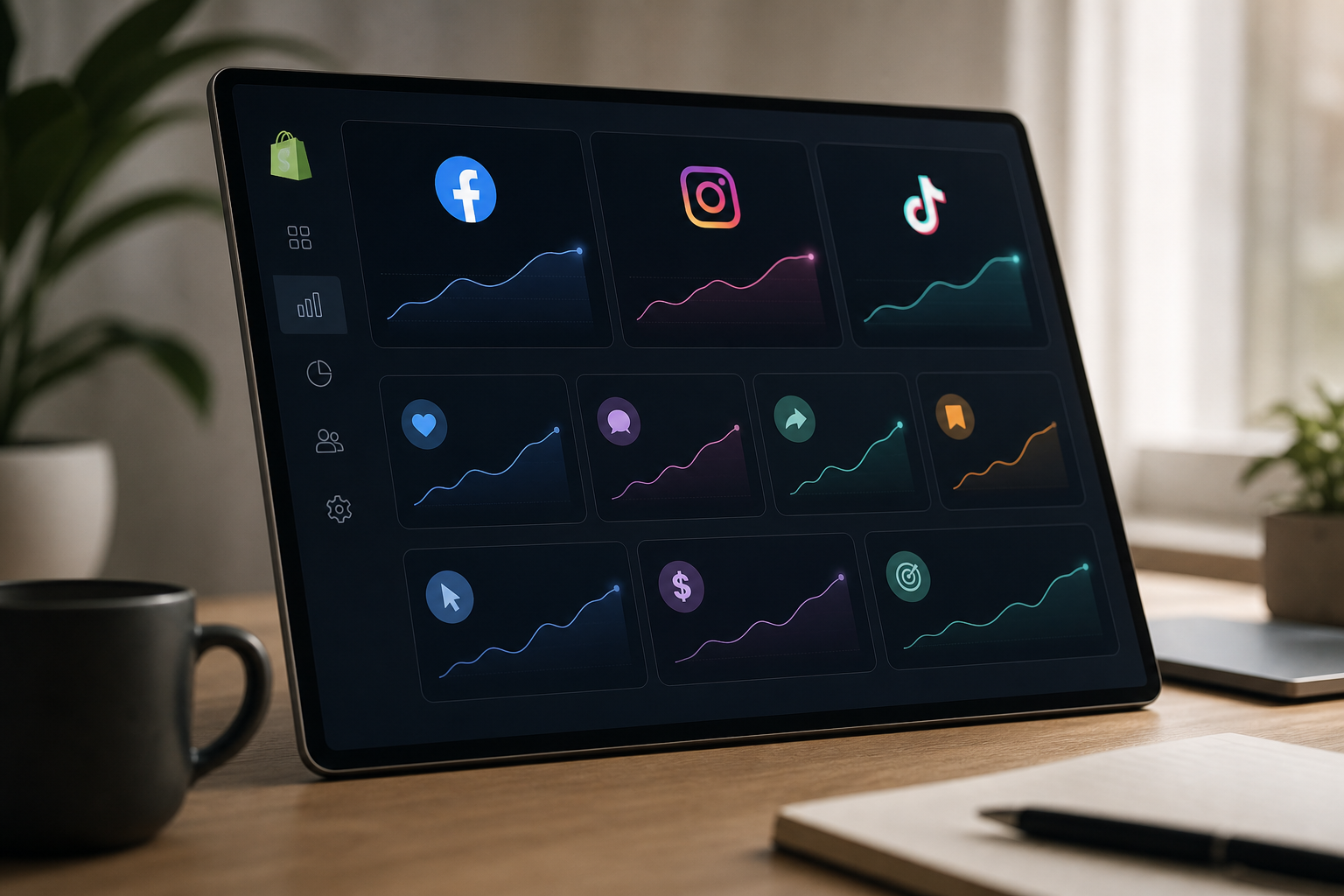
Why Ad Engagement Tracking Matters More Than Ad Spend for Dropshippers
Early engagement signals predict winners sooner than purchase data because they show product-market fit before the pixel has enough conversions to learn. If a creative can’t earn a like or a save at $10–$20 spend, expecting it to convert at $100–$200 is wishful thinking. As a mentor who has torched thousands, I’ll take a strong engagement ratio over a bloated test budget any day.
Specifically, you want to track the inputs that lead to clicks and adds-to-cart. A tight hook produces a thumb-stop. A clear demo prompts comments like “need this” or “does it fit size 12?” that you can answer to nudge buyers.
In addition, saves and shares raise your earned reach, which lowers your true CPM. With complete ad analytics and social engagement metrics, you can rank creatives by proof, not hope.
Here are the core engagement metrics I track and why they matter:
- Engagement rate (ER): (likes + comments + shares + saves)/impressions. Shows broad appeal per view.
- Click-through rate (CTR): clicks/impressions. Signals clarity of offer and hook.
- Thumb-stop rate (TSR): 3s video views/impressions. Predicts watchability and click intent.
- Comment sentiment: ratio of “want/buy” vs. “scam/cheap” words. Flags fit and trust.
- Share/save rate: (shares + saves)/impressions. Indicates future low-CAC scale.
- Cost per engaged user: spend/unique engagers. Helps compare across CPM swings.
Moreover, these signals help you pick products before checkout data forms. That’s vital when you’re testing five items at $20–$30 each with tight cash flow. Therefore, your ad engagement and performance tracker should store post-level interactions plus context like creative type, hook, offer, placement, and geo.
What “good” looks like at test scale
- ER above 2–3% on cold traffic hints at promise.
- Comments with buyer intent within the first 500–1,000 impressions count more than raw likes.
- Saves above 0.2% on reels/shorts suggest evergreen potential.
“We have reduced A/B testing costs and also have improved revenue!” — Archie Gilbert, Co-Founder
Step-by-Step: How to Set Up an Ad Engagement Tracking System
You don’t need a bloated stack to track what matters. You need clear KPIs, clean links, and a repeatable system.
Here’s the 7-step framework I give to stores with $50–$150/day test budgets.
-
Choose ER, CTR, TSR, sentiment index, and cost per engaged user as your first screen. Then add CPA/ROAS for scale calls. Document stop rules (e.g., “Pause at 1,500 impressions if ER < 1% and CTR < 0.7%”) so you don’t chase sunk costs.
-
Tag source, campaign, ad set, ad, hook, and angle. For example: utm_campaign=bf_quickclip, utm_content=hook_timer_only. This lets you tie site metrics back to the exact post. For syntax, use Google’s GA4 campaign parameters guide.
-
Look up ads by niche keywords, advertiser names, or domains. Then sort by likes, comments, shares, and date first seen vs. last seen to gauge longevity. If an ad has been seen for 45+ days and keeps gaining comments, it probably sells. In addition, track Shopify stores in your niche to see complete engagement details at the post level.
-
Save the video, primary text, headline, CTA, hook, offer, price, geo, placement, and comments you’d reply to. Add “why it works” notes (e.g., “demo in first 2s,” “price reveal before CTA,” “UGC voice”). This makes your next creative brief faster by a day or more.
-
Create a simple score: (ER weight 40%) + (CTR weight 30%) + (sentiment weight 20%) + (share/save weight 10%). For tests under 2,000 impressions, score on engagement; for scale, add CPA/ROAS. Moreover, sort by post date, last seen, or even domain registration date to spot trends vs. flukes.
-
Change the hook, angle, or offer, not all three at once. For video, front-load the benefit in the first two seconds. For image, try a clean product-on-white vs. lifestyle-in-use comparison. Furthermore, split placements by ad positions (feed vs. reels/shorts) to learn where your audience reacts.
-
Step 7: Scale winners with small, steady moves. Increase budgets 20–30% per day on winning ad sets. Duplicate into new geos that show similar engagement.
Keep a control creative live while you test a new hook. And always reply to high-intent comments within one hour; that lifts CTR and lowers CPC.
A simple engagement score you can trust
- ER target: 2–5% on cold; 5–10% on warm audiences.
- CTR target: 0.9–1.5% on feed; 0.7–1.2% on short video.
- Sentiment index: aim for 3:1 positive-to-negative or better.
 sending traffic with UTM parameters (source, campaign, content) to GA4; arrows labeled; simple colors; legible text; 2026 design)
Therefore, your ad engagement and performance tracker should sit on top of a search layer that can sort by keywords, date, shares, likes, and comments, and let you visit the live post to read audience opinion. In practice, that single feature will save you from copying dead creatives.
Also Read!
5 Ad Tracking Mistakes That Cost Dropshippers Money
I’ve made each of these and paid for them. Learn from my receipt stack.
1.
Raw like counts mislead. Instead, judge by ER relative to impressions and by saves/shares. Ten saves on 1,000 views beats 100 likes on 20,000 views. Moreover, watch comment quality. “Link?” beats “lol” every time.
2.
If the top comments question trust, shipping time, or product quality, fix the offer or move on. On the other hand, replies like “ordered two” or “does this come in black?” are gold. Pin FAQs to lift trust.
3.
A wall of new ads doesn’t mean sales. However, ads seen for 30–60 days with steady comments likely convert. Therefore, sort by when an ad was first and last seen to spot survivors.
4.
Results shift by country. Use GEO-targeted information to see where your niche over-indexes. In fact, many products sell in 3–5 core countries and stall elsewhere. Start there, then expand.
5.
Feed vs. story vs. reels/shorts behave differently. Filter by Ad Positions to see where your buyers engage. Then benchmark across Facebook, Instagram, and TikTok before you scale. Data from millions of ads across 100+ countries gives you confidence that a trend is real, not a one-off.
“Using PowerAdSpy has improved my efficiency in handling multiple projects and conversion prospects all at the same time!” — Steve Decker, Marketing Manager
Therefore, build your process to catch these five traps. As you do, your ad engagement and performance tracker becomes the nerve center for clear, fast calls.
Best Tools for Tracking Ad Engagement as a Dropshipper
You have real choices, and the right pick depends on your budget, the platforms you run, and how deep you want to filter by engagement. Here’s a plain take, no hype.
- Meta Ad Library (free): Good for transparency and quick looks at active creatives on Facebook and Instagram. However, it lacks cross-platform views, deeper engagement filters, and call-to-action sorting. It also doesn’t let you sort by live likes/comments in one screen or track Shopify-specific ads with full engagement details.
- Minea: Well-known in dropshipping circles for product scouting and social ad examples. It covers Facebook, Instagram, and TikTok. Still, watch for limits on advanced engagement filters and pricing tiers as you scale research. Beginners may find the starter plan a fit, but weigh cost against the depth of filters you’ll actually use.
- Dropispy: Focused on ecom and Shopify stores. It can be handy for finding store-backed ads and funnel snapshots. That said, platform breadth and search depth vary by plan, so check if you can sort ads by date, shares, likes, and comments before you buy.
- Tools like PowerAdSpy: This class brings AI-powered ad research with access to ads across Facebook, Instagram, TikTok, Google, Reddit, Pinterest, and more. You can search ads by niche keywords, advertisers, or competitor domains and even sort by the Call to Action to see which prompts win in your niche.
For beginners, the Basic plan is $69/Month or $29/Month billed annually (as of 2026), which is a workable entry point if you test weekly and want to save time. Mentioning a brand once is enough, choose the tool that fits your stack and budget.
- PiPi Ads: Noted for TikTok focus. If your offers are short-video first, you’ll like the creative wall and trend feel. However, if you need broad cross-platform coverage, pair it with another source that tracks Google or Pinterest too.
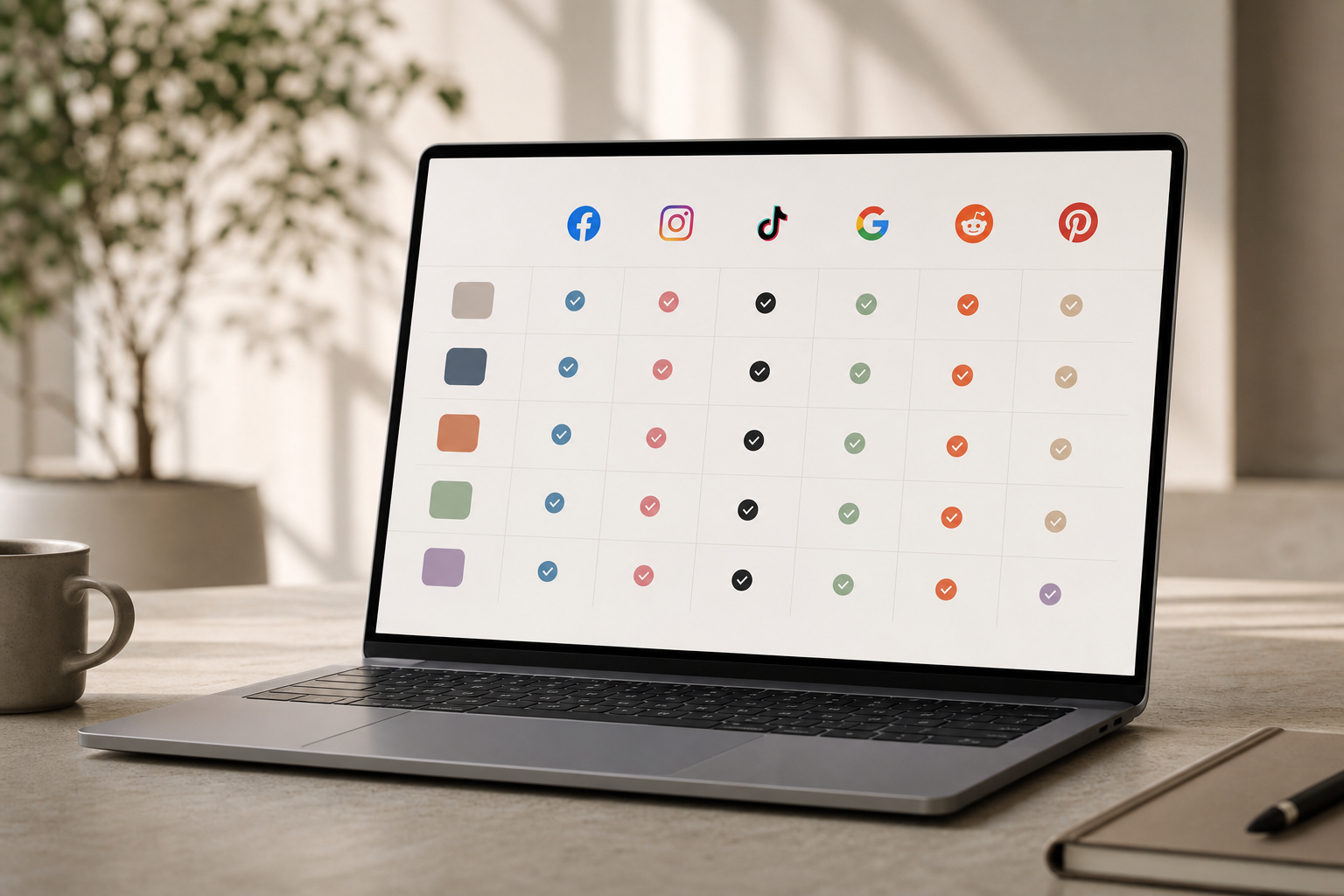 , engagement filters (likes, comments, shares, CTA), pricing for beginners; clean, neutral design)
If you want a framework to evaluate any of these tools, skim this related read on process and filters: Best Ad Engagement Tracker for Ad Agencies in 2026. The principles apply to solo stores too.
Key Takeaways
- Early engagement beats ad spend for picking winners; score ER, CTR, sentiment, and saves/shares per 1,000 views.
- Clean UTMs plus comment reads connect creative to on-site results and reveal the real hook.
- Sort competitor ads by date first seen/last seen and engagement to spot survivors worth modeling.
- Use geo and placement filters before you scale; feeds vs. reels/shorts can double or halve CTR.
- Pick tools by platform coverage and engagement filters, not hype; price only makes sense if it saves you test dollars weekly.
What to Do This Week: Your First Ad Engagement Audit
- Day 1.
Choose one product lane (e.g., pet grooming). Lock your stop/scale rules. Write them down where you run ads. - Day 2.
Search by niche keywords and top store domains. Sort by likes, comments, shares, and when the ad was first/last seen. Save posts with buyer-intent comments into a swipe file with notes. - Day 3.
Score ER, CTR if visible, saves/shares, and sentiment. Pick three angles (demo, problem/solution, social proof) for your first creative batch. - Day 4.
Write hooks, VO lines, and CTAs. Tag every ad with UTMs for campaign/ad set/ad/hook. According to user-reported results, 26% of users save at least one day preparing for an advertising project when they work from a structured brief. Use that as your aim. - Day 5.
Run $20–$40 per creative to 1,000–2,000 impressions. Pause anything under your ER/CTR floors. Reply to intent comments within an hour. Expect a 15% reduction in A/B testing volume under two months of practice as your first-screen calls get sharper.
As you repeat this loop, your ad engagement and performance tracker becomes a weekly habit that protects margin and speeds scale.