
What Are the Best Strategies for Pinterest Ads?
If you’ve ever opened Pinterest to “just look for ideas” and somehow ended up planning a full kitchen remodel, you’ve already seen why Pinterest ads can be so powerful. The way people use the platform is exactly what makes Pinterest ads different from almost every other ad channel.
Pinterest isn’t built for distraction. It’s built for intention.
That’s exactly why Pinterest ads can work incredibly well, but only if you approach them differently from typical social media campaigns.
People aren’t scrolling mindlessly here. They’re researching. Comparing. Imagining. Planning. If your strategy respects that mindset, your results will look very different from someone trying to force quick conversions.
Let’s break down what actually works.
First, Understand Why Pinterest Is Different
Before we get tactical, this is important.
Pinterest behaves more like a visual search engine than a social platform. When someone types “home office ideas” or “summer capsule wardrobe,” they’re signaling intent. They’re exploring options for something they plan to act on.
That changes how you approach advertising on Pinterest.
Instead of interrupting someone’s entertainment, you’re inserting your brand into their planning process.
That’s subtle but powerful.
It means:
- Relevance matters more than aggression.
- Visual clarity matters more than clever copy.
- Patience often outperforms urgency.
If you ignore that dynamic, your campaigns may get clicks but not results.
Choose the Right Pinterest Ad Types (Not Just the Trendy Ones)
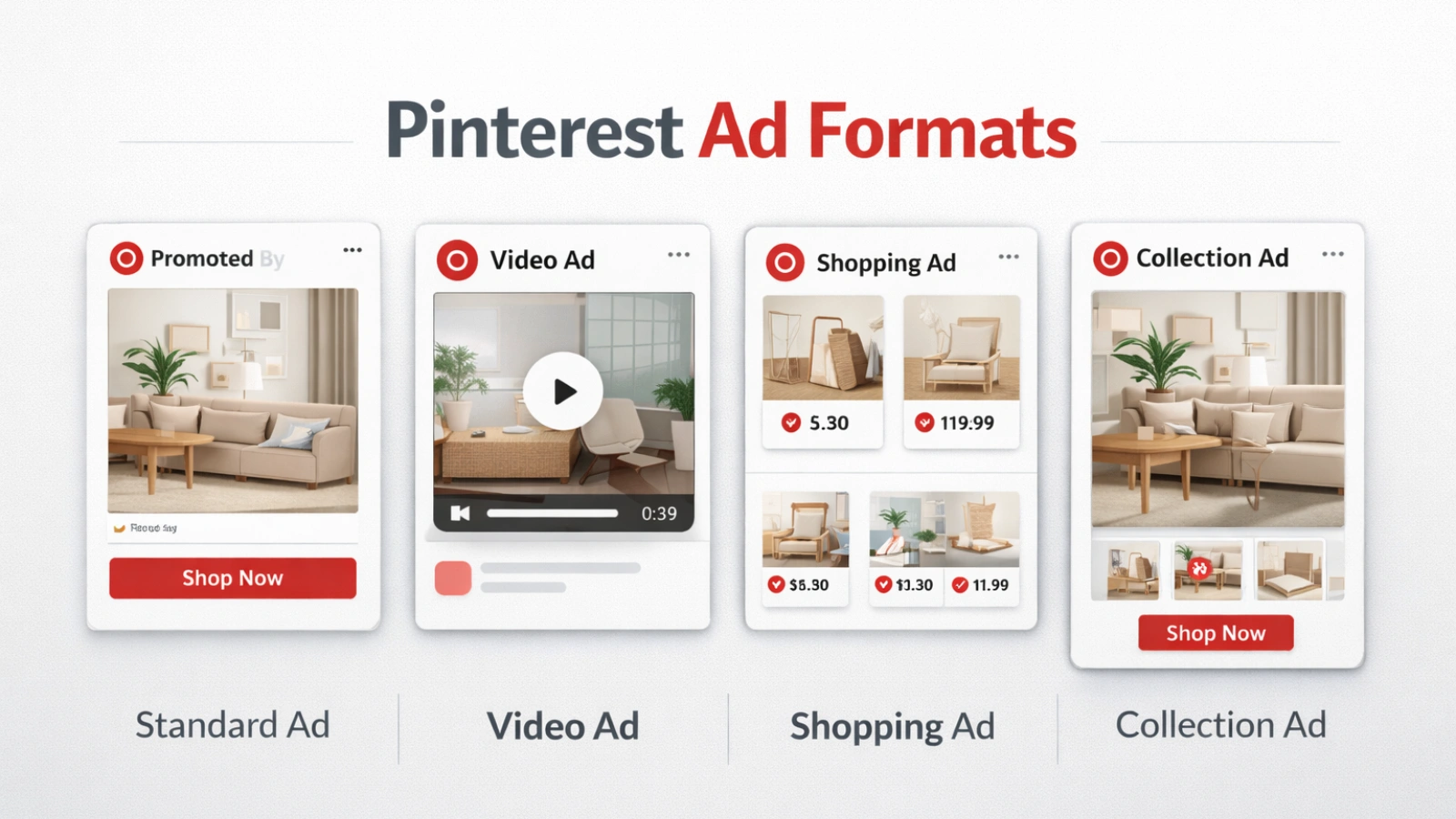
There are multiple Pinterest ad types, and each one serves a different purpose. Using the wrong format for the wrong objective is one of the most common mistakes advertisers make. The format should support your goal, not complicate it.
Standard Ads
These look like regular pins, which is exactly why they perform well. They blend naturally into search results and home feeds, making them feel native rather than overly promotional.
Standard ads work well for driving blog traffic, promoting product discovery, and building brand awareness. Because they appear similar to organic content, users are more likely to engage with them without feeling interrupted.
Another advantage is that they often generate strong saves. Saves matter more than many advertisers realize because they signal future intent.
When someone saves a pin, it usually means they want to revisit the idea later. That simple action can eventually lead to delayed but meaningful conversions.
Video Ads
Video adds depth, but only when it’s intentional.
Long intros don’t work. Overproduced commercials don’t work. Clear demonstrations do.
If you sell something that benefits from showing movement, transformation, or results, video can be powerful. Think quick tutorials, before-and-after sequences, or simple step-by-step visuals. The first few seconds matter most, so get straight to the point and make the benefit obvious without sound.
Shopping and Collection Ads
For e-commerce brands, these formats shorten the path between inspiration and checkout. They allow users to explore multiple products without leaving the platform immediately, which reduces friction.
They work especially well in retargeting campaigns, where the user is already familiar with your brand. Clear pricing, product variety, and clean visuals make a noticeable difference here.
Understanding different Pinterest ad formats isn’t about memorizing technical specs. It’s about matching the format to your funnel stage and giving users exactly what they need at that moment.
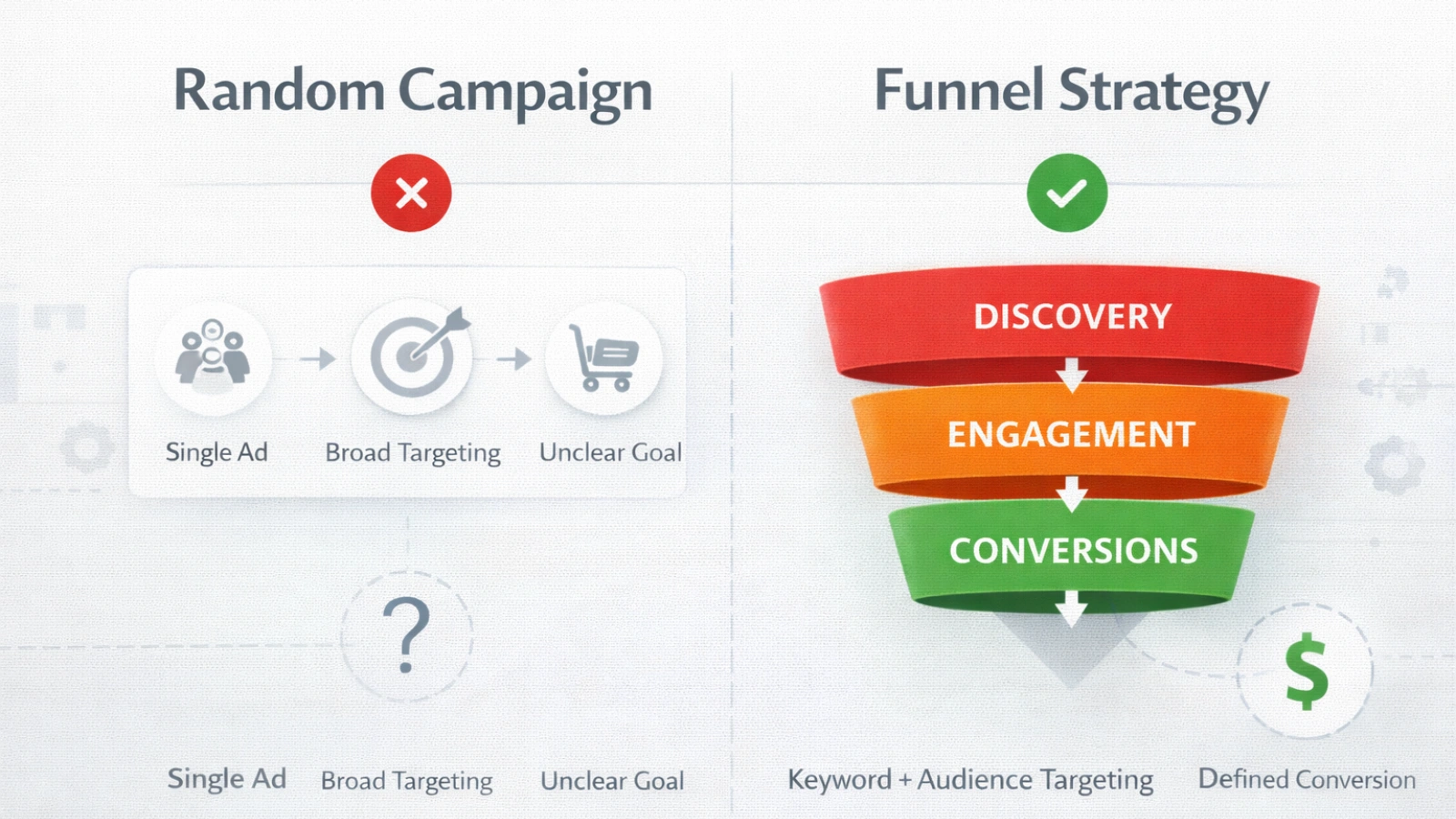
Build a Funnel Instead of Running Random Campaigns
Many brands launch one campaign and hope for conversions.
That’s rarely enough.
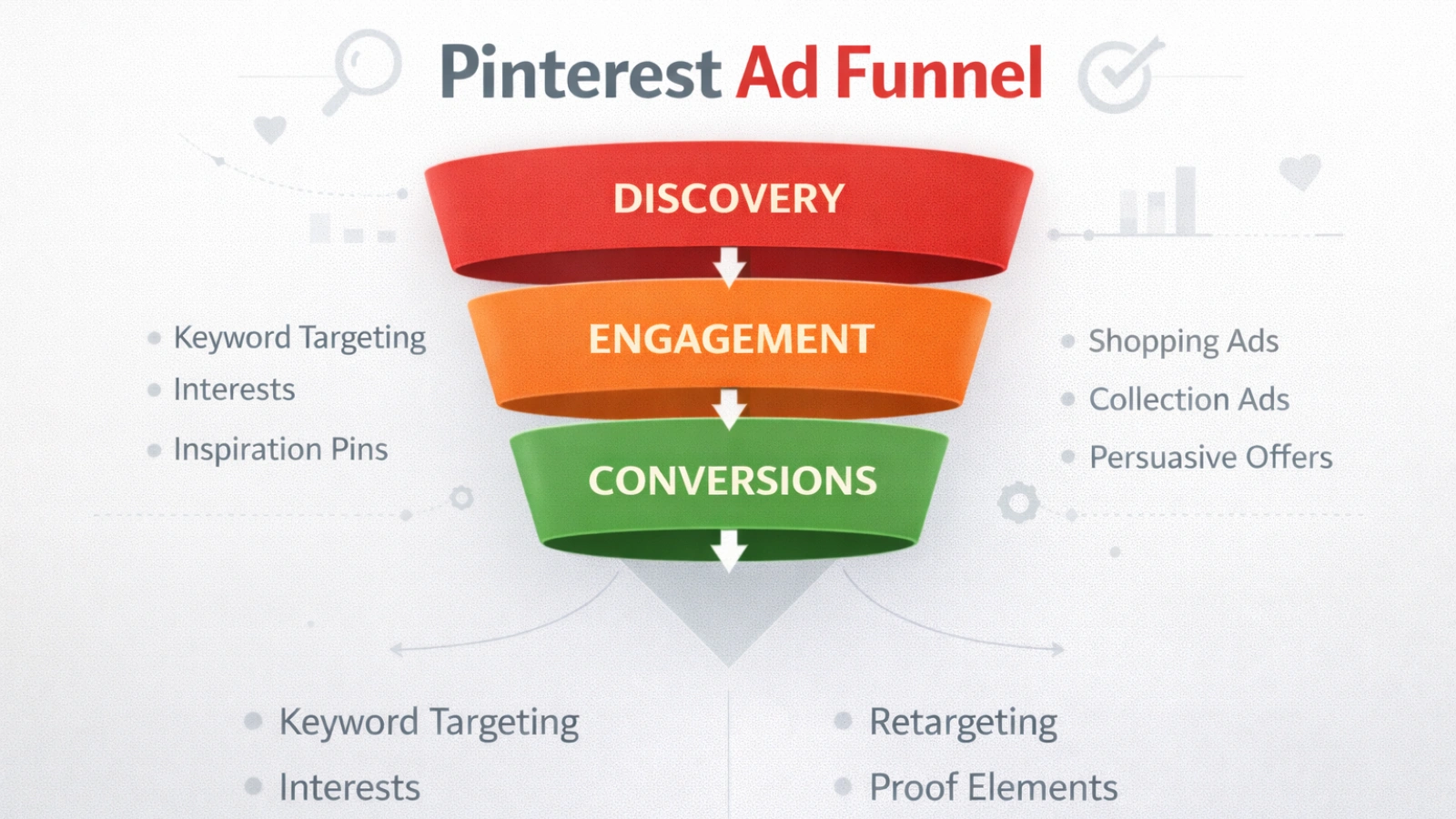
The best Pinterest ad strategies follow a simple funnel structure.
Top of Funnel: Discovery
Here, your goal isn’t sales. It’s visibility.
Use keyword targeting and relevant interests. Pinterest heavily relies on search signals, so keyword selection is critical.
Think:
- “Small bedroom storage ideas”
- “Healthy lunch prep”
- “Minimalist skincare routine”
At this stage, engagement and saves are wins.
Middle of Funnel: Warm Engagement
At this stage, you begin retargeting people who have already interacted with your content. This may include users who saved your pins, clicked through to your website, or watched a large portion of your video.
These users are already somewhat familiar with your brand. Now the goal is to build trust and strengthen interest.
This is the point where you introduce proof. Testimonials, comparisons, and clearer explanations can help address doubts and answer common questions.
The tone of your messaging should also shift here. Instead of pure inspiration, the focus moves toward reassurance and credibility.
Bottom of Funnel: Conversions
Now you focus on product details, pricing clarity, or limited offers.
This is where e-commerce focused formats tend to shine.
When structured this way, Pinterest advertising becomes layered and strategic, not hopeful and scattered.
Targeting: Where Most Advertisers Undershoot
If you’re learning how to advertise on Pinterest, you’ll quickly find tutorials explaining interests and keywords.
But here’s what they don’t emphasize enough.
Keyword Targeting Is Non-Negotiable
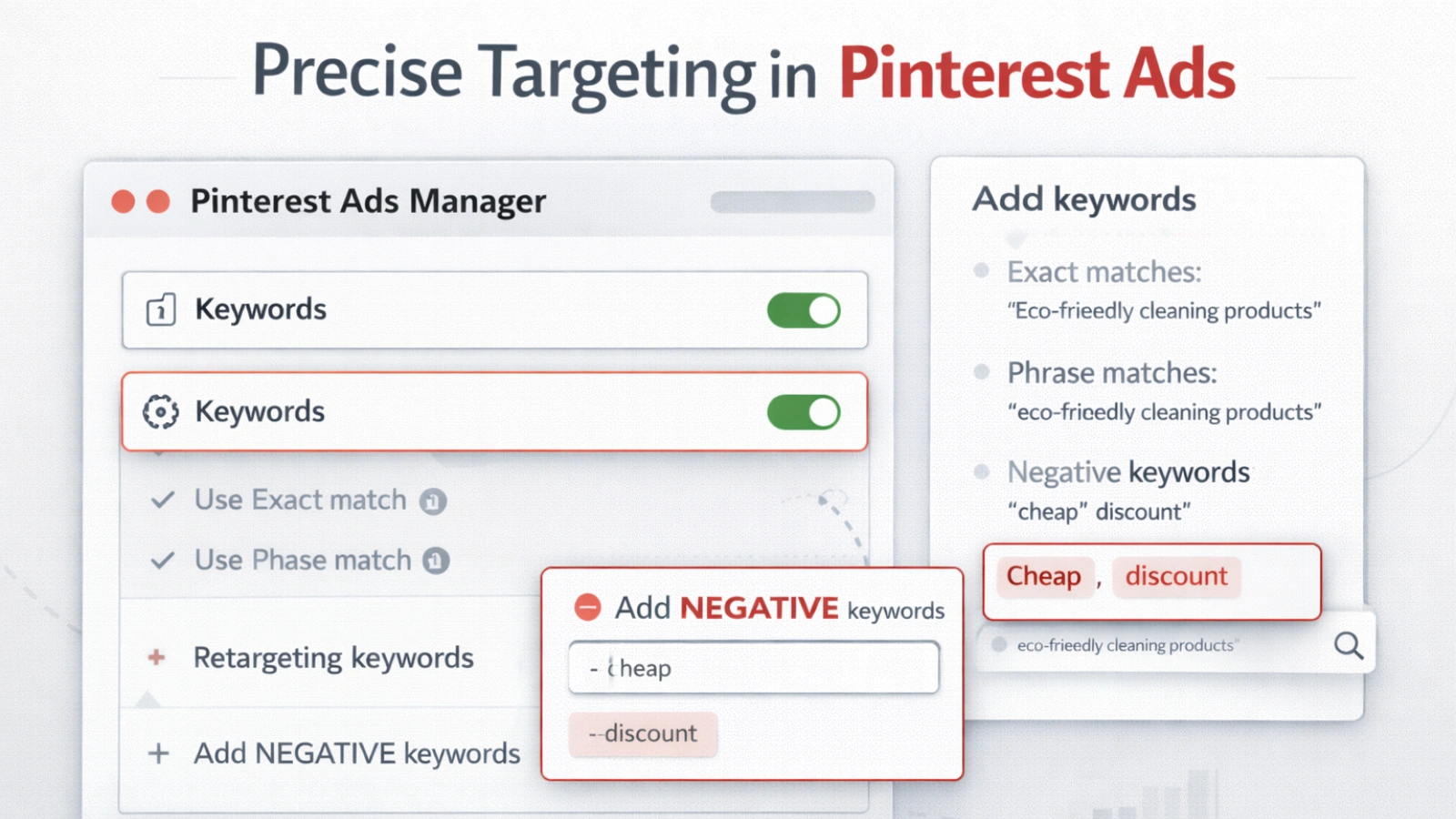
Pinterest is search driven. Keywords determine placement.
Use:
- Exact matches for precision
- Phrase matches for broader reach
- Negative keywords to prevent wasted spend
Skipping negatives is like leaving your wallet open.
Layering Improves Relevance
Instead of relying only on interests or only on keywords, combine both targeting methods. This approach helps narrow your audience while still keeping the campaign scalable.
For example, you might target users interested in sustainable living while also using the keyword “eco-friendly cleaning products.” This combination connects your ad with people who care about the topic and are actively searching for solutions.
When used correctly, this layering makes your Pinterest ads more relevant and increases the chances of meaningful engagement.
Audience Quality Matters
When creating lookalike audiences, use high-intent seed data. Purchasers are better than general visitors.
The better the input, the better the output.
Creative: Stop Thinking Like a Salesperson
This is where many campaigns quietly fail.
Pinterest users don’t respond well to aggressive “Buy Now!” messaging.
They respond to possibilities.
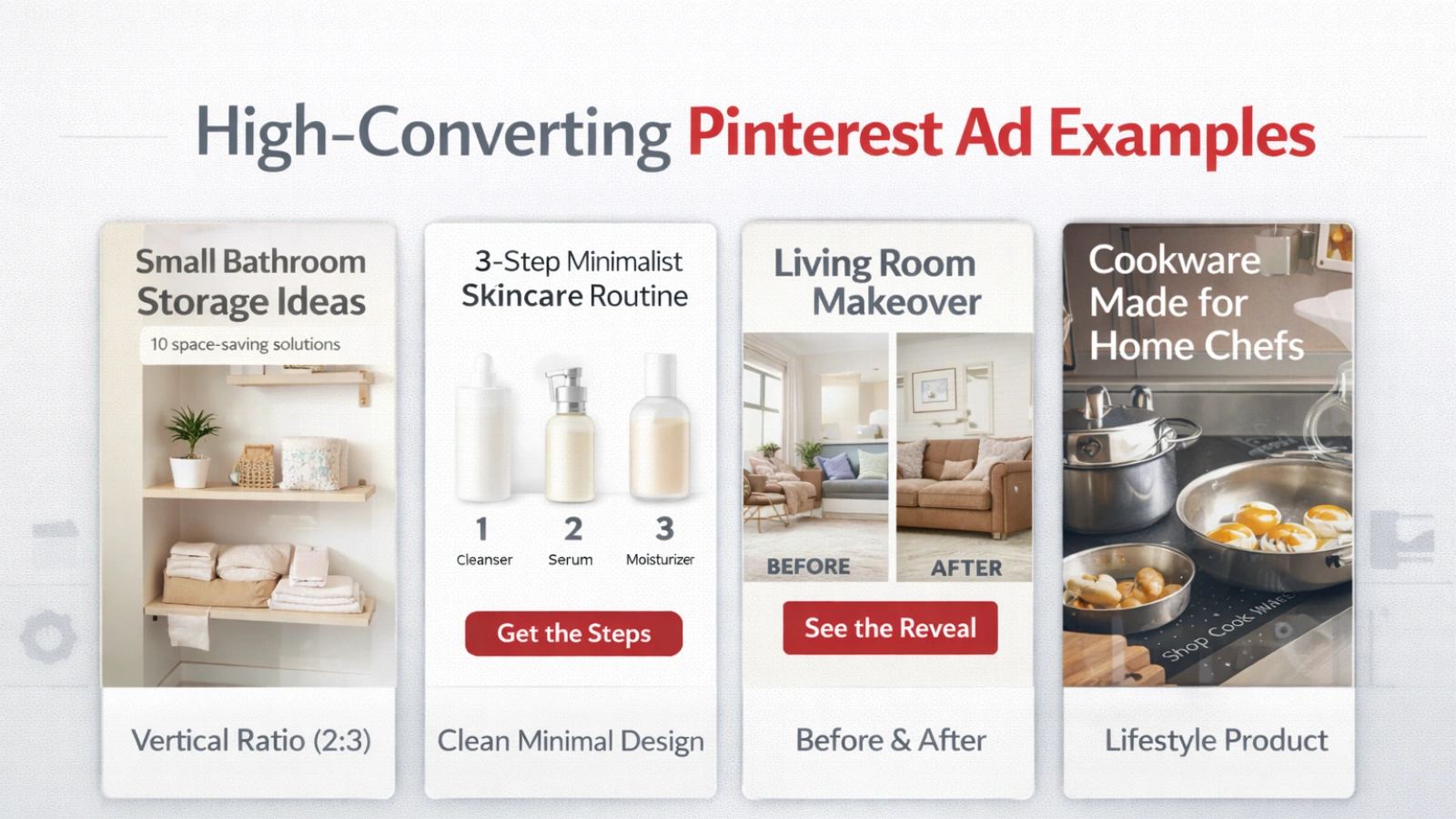
If you sell cookware, show a beautifully styled kitchen with a finished meal.
If you sell fitness programs, show the transformation journey, not just the membership page.
Strong creative for Pinterest ads usually includes:
- Vertical design
- Clear focal point
- Minimal text
- Subtle branding
- Clean, breathable layout
Clutter kills performance.
You’re helping someone visualize a better version of their life. Keep that perspective.
Budget and Optimization: Patience Wins Here
One of the biggest misconceptions is that Pinterest ads deliver instant results. While quick wins can happen, most campaigns improve gradually as the algorithm learns.
Top-of-funnel campaigns often generate lower CPC but slower returns. Retargeting campaigns usually cost more per click, yet they tend to convert faster.
Start with a structured testing approach. Use two to three creatives per ad group, keep daily budgets reasonable, and allow a testing window of at least seven to ten days.
Avoid making constant adjustments during this period. Frequent changes can interrupt the learning phase and make results harder to evaluate. Consistency usually produces better insights than reactive tweaks.
Reading Metrics the Right Way
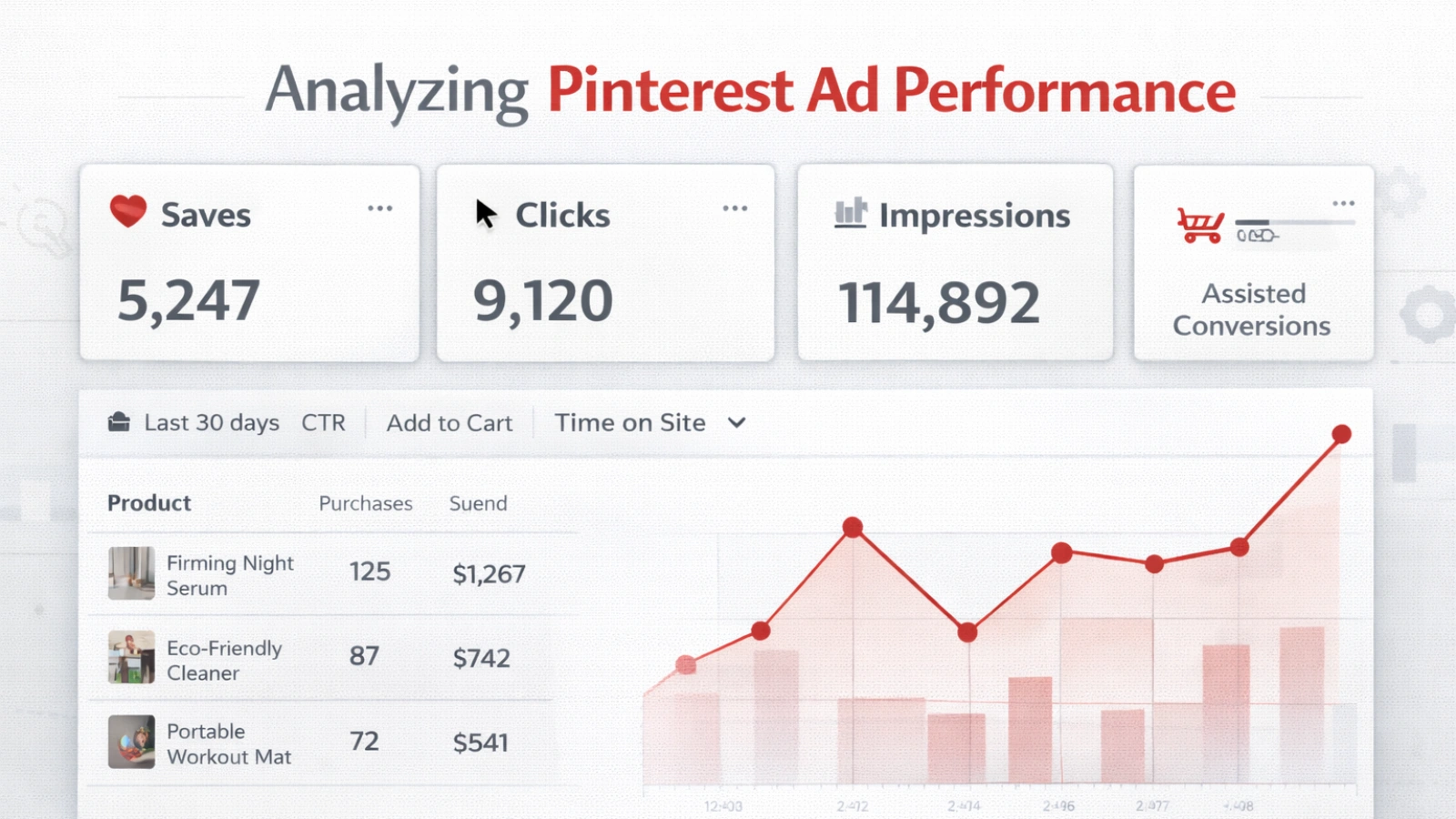
The Pinterest Ads Manager shows key metrics like impressions, clicks, CTR, and conversions. However, focusing only on CTR can give an incomplete picture of campaign performance.
It’s important to also look at signals such as saves, add-to-cart behavior, assisted conversions, and the time users spend on your website. These indicators reveal how interested people are after discovering your content.
Pinterest often influences decisions over time. A user might discover your brand today but return weeks later to make a purchase.
If you judge results too quickly, you might pause campaigns that were slowly building momentum and trust with your audience.
Competitive Research: The Quiet Advantage
Most advertisers skip this step. Instead of guessing what creative might work, it’s far more useful to study what is already resonating in your niche.
A thoughtful Pinterest ad spy approach is not about copying someone else’s designs. The goal is to observe patterns that reveal what audiences respond to.
Look closely at the kinds of offers that appear repeatedly. Notice which headlines show up across multiple campaigns. Pay attention to the visual style brands use most often. It’s also helpful to see whether competitors change their messaging during different seasons.
Over time, these patterns start revealing which strategies are likely generating results. That’s where specialized tools become valuable, because they make it easier to track and analyze these trends.
PowerAdSpy: Smarter Competitive Insight for Pinterest Ads
When running Pinterest ads, guessing is expensive.
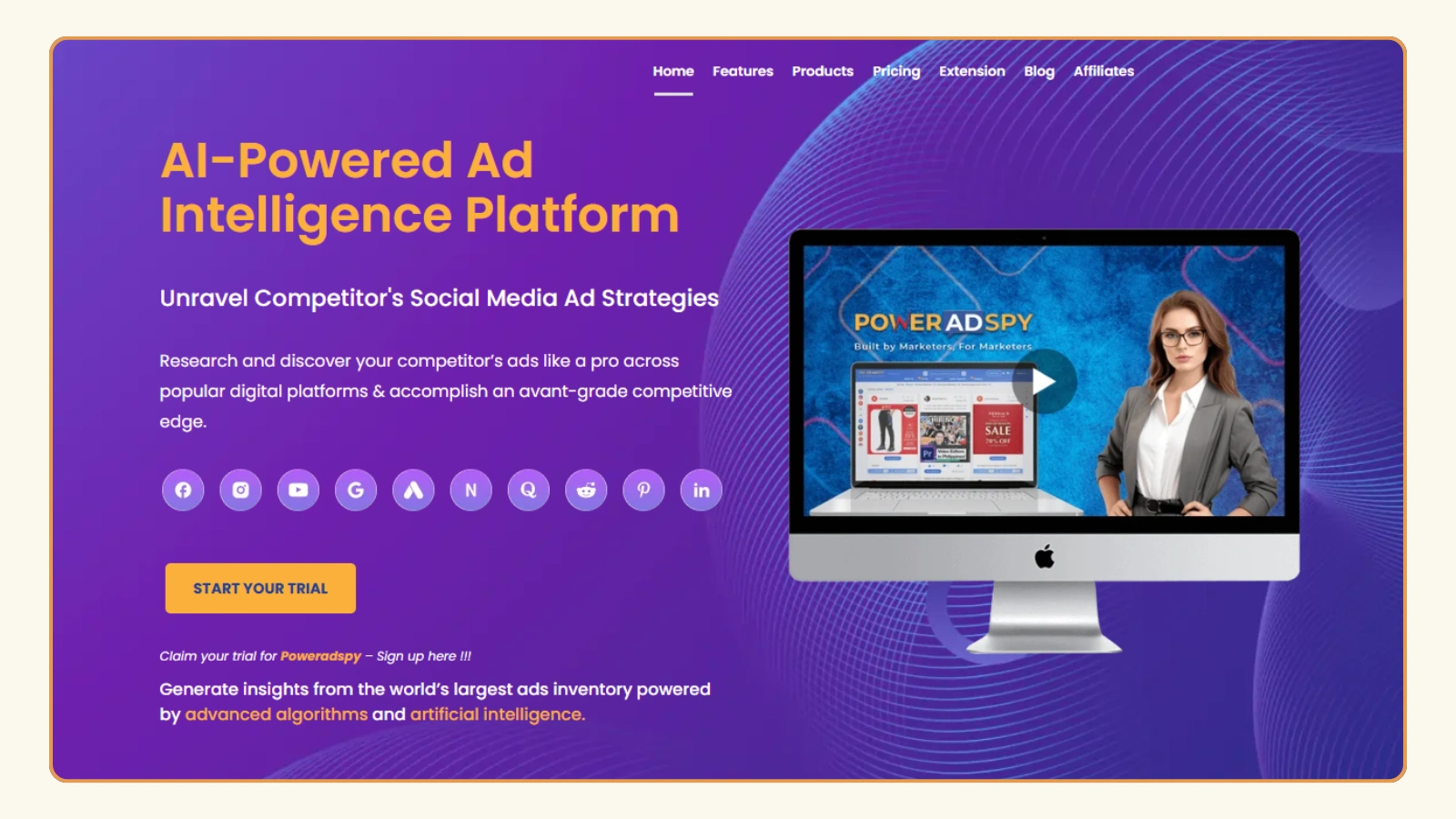
PowerAdSpy provides structured visibility into active and historical ads so you can see what’s working across industries.
Instead of launching blind, you can:
- Access live and past Pinterest ads
- Filter by niche, keyword, or advertiser
- View engagement data for performance signals
- Analyze linked landing pages
- Track seasonal campaign trends
This kind of insight shortens the testing cycle.
If a competitor has been running a similar creative for months, that’s a clue. If certain messaging angles keep reappearing, that’s information.
PowerAdSpy helps turn observation into strategy.
Common Mistakes to Avoid
Even experienced marketers struggle with Pinterest ads because the platform behaves differently from traditional social media. Understanding a few common mistakes can noticeably improve campaign performance.
Treating Pinterest like fast-scroll social media
Many advertisers approach Pinterest the way they approach Instagram or Facebook, where users scroll quickly and react instantly. Pinterest is more planning focused. People visit to gather ideas for purchases, projects, or events. Ads should therefore focus on inspiration and usefulness rather than quick attention grabs.
Ignoring keyword precision
Keywords strongly influence how content is discovered. Pinterest functions partly as a visual search engine, not just a social feed. If your ad titles, descriptions, and pin text lack relevant keywords, your ads may struggle to reach the right audience.
Testing only one format
Pinterest offers several ad formats, including standard pins, video pins, carousel pins, and collection ads. Each format supports different goals. Testing multiple formats helps identify which one performs best for your campaign.
Making constant edits
Frequent adjustments can interrupt the platform’s optimization process. Campaigns need time to gather data and identify responsive audiences. Letting ads run for a reasonable period often produces more reliable insights.
Skipping competitive research
Launching campaigns without studying competitors can lead to unnecessary guesswork. Reviewing existing ads reveals patterns in visuals, messaging, and offers within your niche.
Avoiding these mistakes alone can make Pinterest advertising strategies more consistent and effective.
When Pinterest Ads Work Best
Visually appealing products tend to perform best on Pinterest because the platform is highly visual and inspiration-driven.
Audiences who research and plan before purchasing are also more responsive to ads, since many users browse Pinterest while actively considering future purchases.
Brands connected to lifestyle, inspiration, or personal aspiration often see stronger engagement as well, because their messaging aligns naturally with the way people use the platform to imagine and plan improvements to their daily lives.
Campaigns tend to struggle when the product addresses urgent or emergency needs. Since Pinterest users are usually planning ahead rather than looking for immediate solutions.
Performance can also drop when visual assets are weak or uninspiring, because strong imagery is central to how content is discovered and saved on the platform. Messaging that feels overly aggressive or sales-driven may push users away as well.
On Pinterest, success often depends on how naturally the brand fits into the platform’s planning and inspiration mindset.
Read More!
The Long-Term Advantage
Unlike platforms where ads disappear quickly, pins can resurface in search results months later.
That gives Pinterest advertising long-term compounding potential.
Well-designed campaigns become searchable assets. They don’t just generate traffic today; they continue attracting interest over time.
Few ad platforms offer that kind of shelf life.
Final Thoughts
The best strategies for Pinterest ads aren’t flashy.
They’re thoughtful.
Targeting is aligned with user intent to ensure ads reach people who are already searching or planning around relevant ideas. Creative direction focuses on aspiration, showing how the product fits into a lifestyle rather than pushing a direct sale. Campaigns are structured in funnel layers instead of relying on a single campaign, allowing audiences to move gradually from discovery to conversion.
Competitor analysis also plays an important role before testing, helping identify patterns and opportunities that can guide more informed campaign decisions.
When you respect how Pinterest users think, the platform becomes less about chasing clicks and more about guiding decisions.
And that’s where sustainable performance lives. Approach Pinterest ads with structure, patience, and insight, and they can become one of the most stable acquisition channels in your marketing strategy.
FAQs
1. How long should I run Pinterest ads before judging performance?
Give campaigns at least one to two weeks of stable testing before making major decisions.
2. Do Pinterest ads work for small businesses?
Yes, especially if the business offers something visually compelling or planning oriented.
3. How important are keywords in Pinterest advertising?
Extremely important. Pinterest is heavily search-driven, so keyword precision directly impacts visibility.
4. Is competitive research really necessary?
Yes. Understanding market patterns reduces wasted budget and accelerates optimization.
5. Can Pinterest ads drive long-term traffic?
Absolutely. Because pins remain searchable, campaigns can generate engagement long after launch.