
Here’s What to Ask AI Before Running Your Next Facebook or Instagram Ad Campaign
I asked AI Chat to help me reverse-engineer a competitor’s Facebook ad strategy, and what came back changed how I think about campaign research entirely.
Most marketers approach paid social with a creative brief and a budget. What they skip is the observation phase, studying what the market already responds to before spending a single dollar on testing. Ad intelligence tools exist to fill that gap, and when you combine them with the right questions to an AI assistant, the research process becomes significantly sharper.
This piece covers how to use ad intelligence tools to find winning Facebook and Instagram ads, what patterns to look for, and how asking the right questions through AI Chat before you build your campaign turns raw data into an actual strategy.
What Ad Intelligence Tools Actually Do?
Before getting into methodology, it’s worth being precise about what these platforms provide, because the value is frequently misunderstood.
Ad intelligence tools don’t reveal competitor performance data. They won’t show you click-through rates, conversion numbers, or return on ad spend. What they do provide is visibility into what ads are actively running, how long they’ve been running, and how audiences are responding publicly.
The data these platforms surface includes active creatives across Facebook and Instagram, the copy and messaging structure behind each campaign, engagement signals like reactions and comments, landing pages campaigns are driving traffic toward, and the visual formats being deployed across a category.
That information, read correctly, tells a coherent story about what’s working in a market. Ads that keep running are almost certainly profitable; no advertiser funds underperforming creatives for weeks. Landing pages appearing repeatedly have usually survived testing. Messaging patterns showing up across competing brands reflect what audiences have already demonstrated a willingness to respond to.
Before analyzing any of this manually, a quick session with Ask AI speeds the process considerably. Ask it to identify the most common hook structures in your product category, summarize what messaging approaches tend to perform in your niche, or explain the structural differences between direct response and brand-awareness creatives. It won’t replace the intelligence tool data, but it gives you a sharper interpretive lens before you begin.
To actually access this kind of data, marketers rely on ad intelligence platforms like PowerAdSpy, which allow you to explore active Facebook and Instagram ads across industries, filter by engagement, and identify creatives that have been running long enough to indicate consistent performance.
Why Facebook And Instagram Ads Live Or Die On Creative?

Paid social is fundamentally different from paid search. In search, the user’s intent does the heavy lifting; someone typed a query, they’re already looking for something, and the ad just needs to appear relevant. On Facebook and Instagram, there is no intent signal. The ad interrupts someone who was doing something else entirely.
Creative carries almost all the weight. A technically well-targeted campaign with a weak hook will consistently underperform a broadly targeted campaign with a strong one. Most failed paid social campaigns fail at the creative level, not the targeting level.
The factors that determine whether a social ad succeeds are specific: whether the first frame or first line stops the scroll, whether the message is clear within the first few seconds, whether the offer is framed compellingly, and whether the creative connects emotionally with the audience it reaches.
If you’re unclear on any of these before you start your competitive research, AI Chat is worth opening first. Ask it to walk you through the anatomy of a high-performing Facebook ad in your vertical, or ask it what emotional triggers typically drive response in your product category. You’ll approach the intelligence data with a much clearer framework.
Step-By-Step: Finding Winning Ads With Intelligence Tools And AI Research
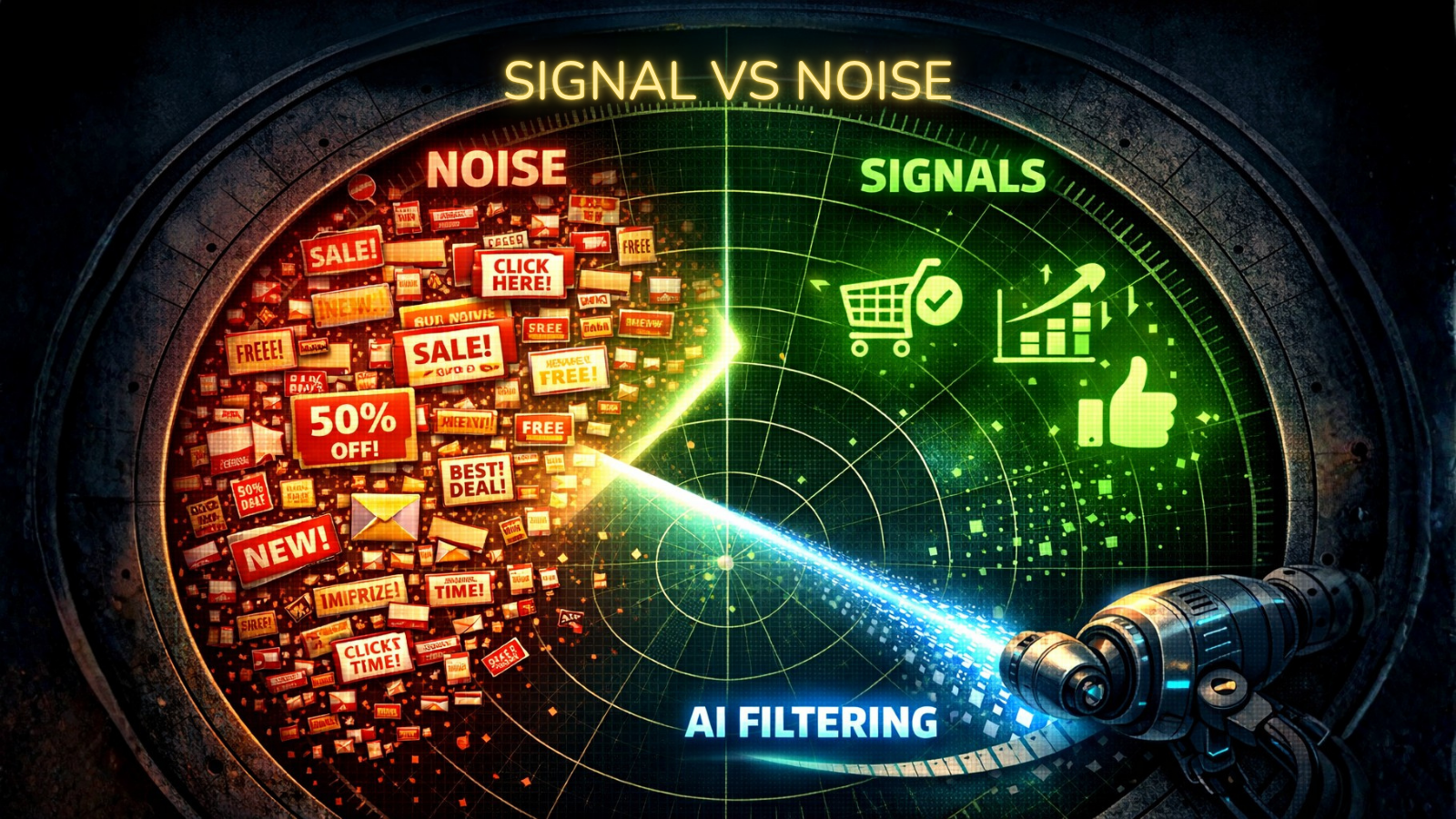
Here is how you can find winning ads with intelligence tools and AI-powered research.
Step 1: Identify Competitors Running Active Campaigns
The starting point is finding the right advertisers to study, not every competitor running ads, but the ones investing consistently in paid social. Consistent spend signals they’ve found something worth scaling.
Search within your niche for businesses advertising frequently, operating in similar customer segments, and selling comparable products or services. These advertisers have already spent significant budget testing what works. Their active campaigns represent the output of that process.
Once you have a list, ask an AI assistant to help you prioritize. Describe your product category and your core audience, and ask which types of competitors are most worth studying for creative inspiration. The answer often surfaces angles you hadn’t considered.
Step 2: Analyze Long-Running Ad Creatives
Within any competitor’s active ad library, duration is the most reliable signal. An ad running for two months has survived multiple review cycles and is almost certainly profitable. Focus there, not on recently launched tests.
Look for creatives that appear repeatedly across a campaign, maintain consistent messaging over time, and use similar structural formats. These are the ads worth studying deeply.
Step 3: Study Hooks and Messaging Structures
Effective social ads follow recognizable structural patterns, and understanding those patterns matters more than copying any specific execution.
Common hook structures include curiosity-based opening lines that create an information gap, problem-solution messaging that names a pain point before offering relief, direct benefit statements that lead immediately with the outcome, and urgency-driven offers that frame inaction as a cost.
This is where AI Chat becomes particularly useful. Paste in a competitor’s ad copy and ask it to identify the hook structure, explain why it likely works, and suggest variations you could test. You can also ask it to generate alternative hook frameworks for the same offer, giving you a creative testing shortlist before you’ve spent anything.
Step 4: Evaluate Engagement Patterns
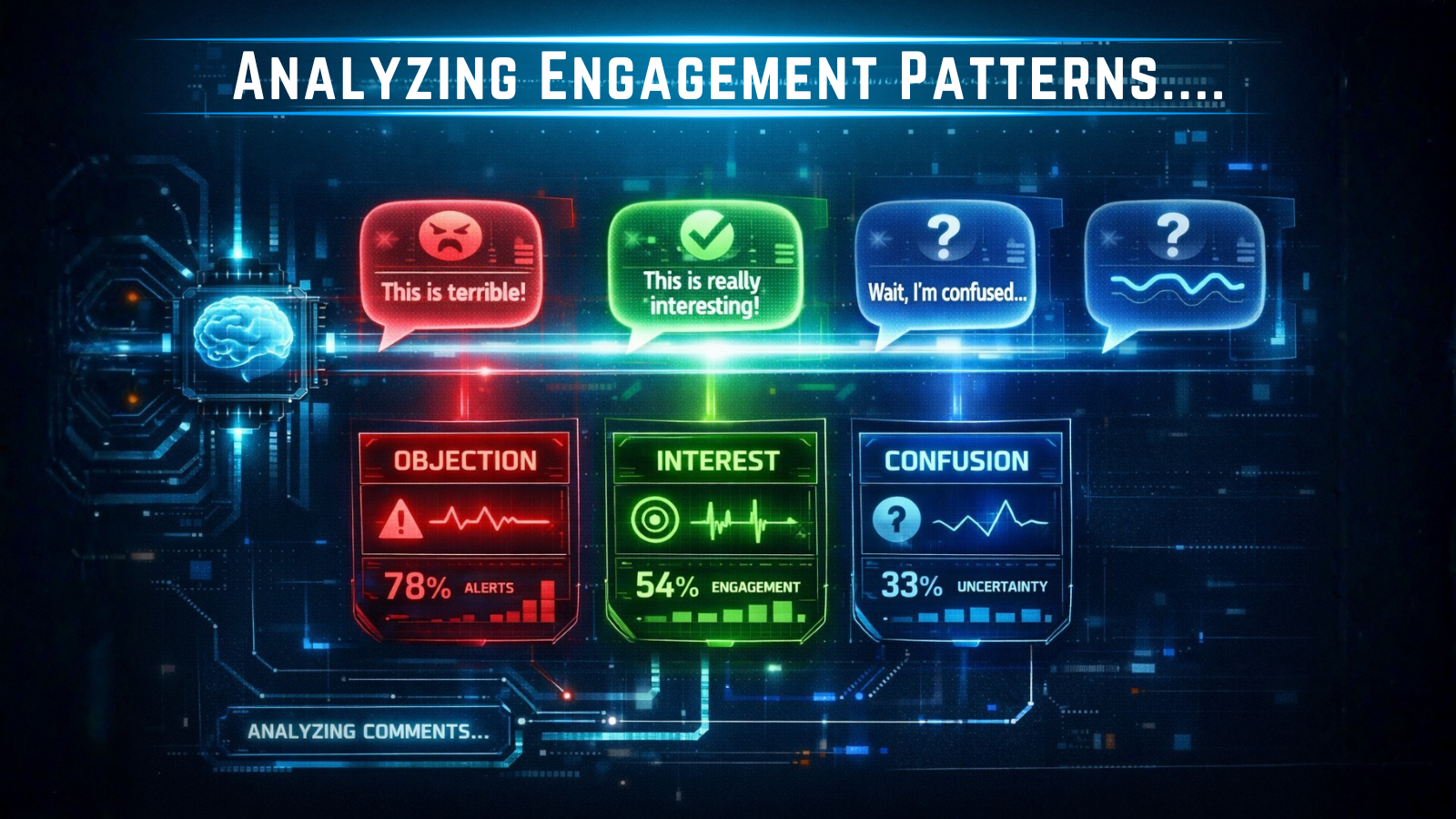
Public engagement signals carry real information. Comments reveal how audiences are actually interpreting the message, whether they’re responding to the offer, expressing skepticism, asking questions about the product, or tagging friends.
Recurring questions in comment sections often reveal objections the ad didn’t address, which represents an opportunity. Use Ask AI app by Chatly to analyze a set of comments and identify the most common objections, concerns, or enthusiasm signals. It can summarize patterns across dozens of comments in seconds, saving manual review time.
Step 5: Study Creative Variations
Winning advertisers don’t run a single creative. They run structured tests, different headlines, alternate thumbnails, varied calls-to-action, and multiple storytelling angles against the same core offer.
When studying a competitor’s ad library, look for the pattern of variations rather than individual ads. The variation set reveals the testing logic: what elements an advertiser considers interchangeable, which dimensions they’re actively experimenting with, and which core message they trust enough to hold constant.
Ask an AI assistant to help you map this. Describe the variations you’re observing and ask it to identify the underlying testing structure; it’s often easier to see when someone articulates it back to you.
Turning Competitor Insights Into Campaign Strategy
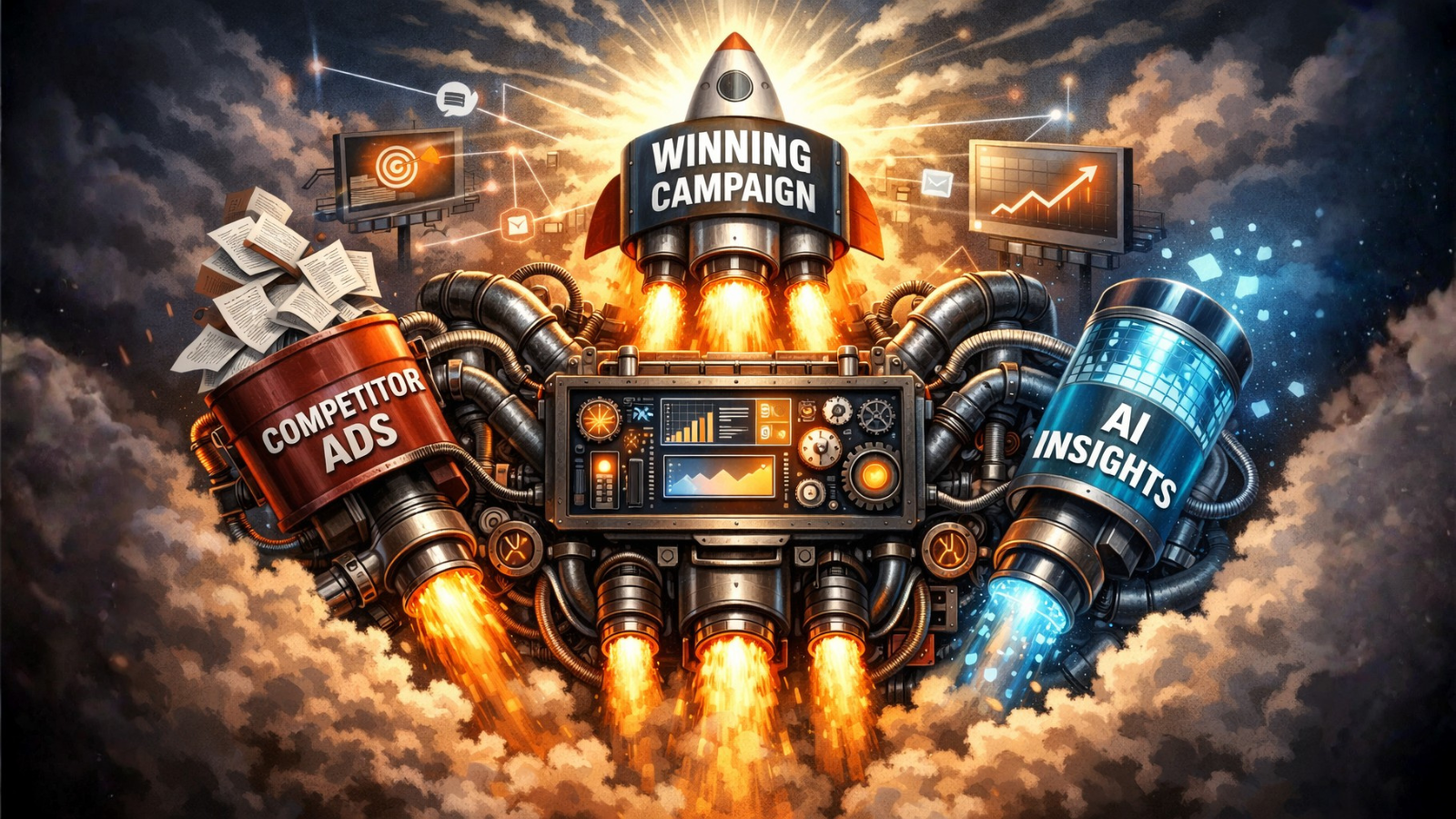
The application of ad intelligence has one clear risk: direct imitation. Copying a competitor’s ad rarely works, and not only for ethical reasons. Audiences associate creativity with brands, and a creative that succeeded for one brand carries that brand’s context with it. Stripped of that context and redeployed by a different brand, the same execution often underperforms.
The correct application is pattern extraction, not replication. Identify the structural elements that appear consistently across successful ads in your category, hook formats, offer framing, visual styles, and messaging rhythms. Develop original creative concepts built around those patterns.
Before briefing your creative team, run your strategic summary through AI Chat. Ask it to critique your planned approach, identify gaps in your messaging, or generate alternative framings of your core offer. Treat it as a strategic sounding board before you commit to production.
Common Mistakes When Using Ad Intelligence Tools

Copying ads directly.
The outcome is consistently poor. Brand context, audience familiarity, and competitive positioning all affect how creative performs. An ad that succeeded for a market leader will rarely produce the same results for a challenger running an identical concept.
Ignoring audience differences.
Competitors may be targeting demographics or behavioral segments that differ from your core audience. An ad optimized for one segment can fail with another even when the creative quality is identical.
Over-focusing on viral creatives.
Viral performance and commercial performance are related but not the same. Sustainable paid social campaigns are built on stable, repeatable formats that convert consistently, not on attempting to recreate one-off viral moments.
Best Practices For Using Ad Intelligence
Treat ad intelligence as strategic research rather than a creative shortcut. The marketers who extract the most value from these tools are the ones who build systematic research practices, tracking creative patterns across multiple competitors over time, monitoring how messaging trends shift across seasons, and testing ideas that emerge from that research in structured, measurable ways.
Pairing that research with regular use of AI Chat for interpretation, hypothesis generation, and copy iteration creates a research workflow that’s faster and sharper than either approach produces alone. Combining structured research using tools like PowerAdSpy with AI-driven analysis creates a workflow that is significantly more efficient than relying on intuition alone. The competitive intelligence tells you what the market responds to. The AI conversation helps you understand why and what to do about it.