
What Are Facebook Video Ads and Why Do They Matter?
Facebook video ads are one of the fastest ways to grab attention on the platform right now. Yet most of them get ignored within seconds. People scroll quickly, and anything that feels slow or predictable gets skipped without a second thought.
The difference is not the format. It is how the video is built. A strong video shows a problem, delivers a solution, and keeps the viewer watching without feeling like an ad. It speaks directly to the viewer instead of trying to impress them.
Most Facebook ads fail because they start too late. A slow intro, a logo, or a vague message gives people a reason to scroll. The first few seconds need to create curiosity or highlight something instantly relatable.
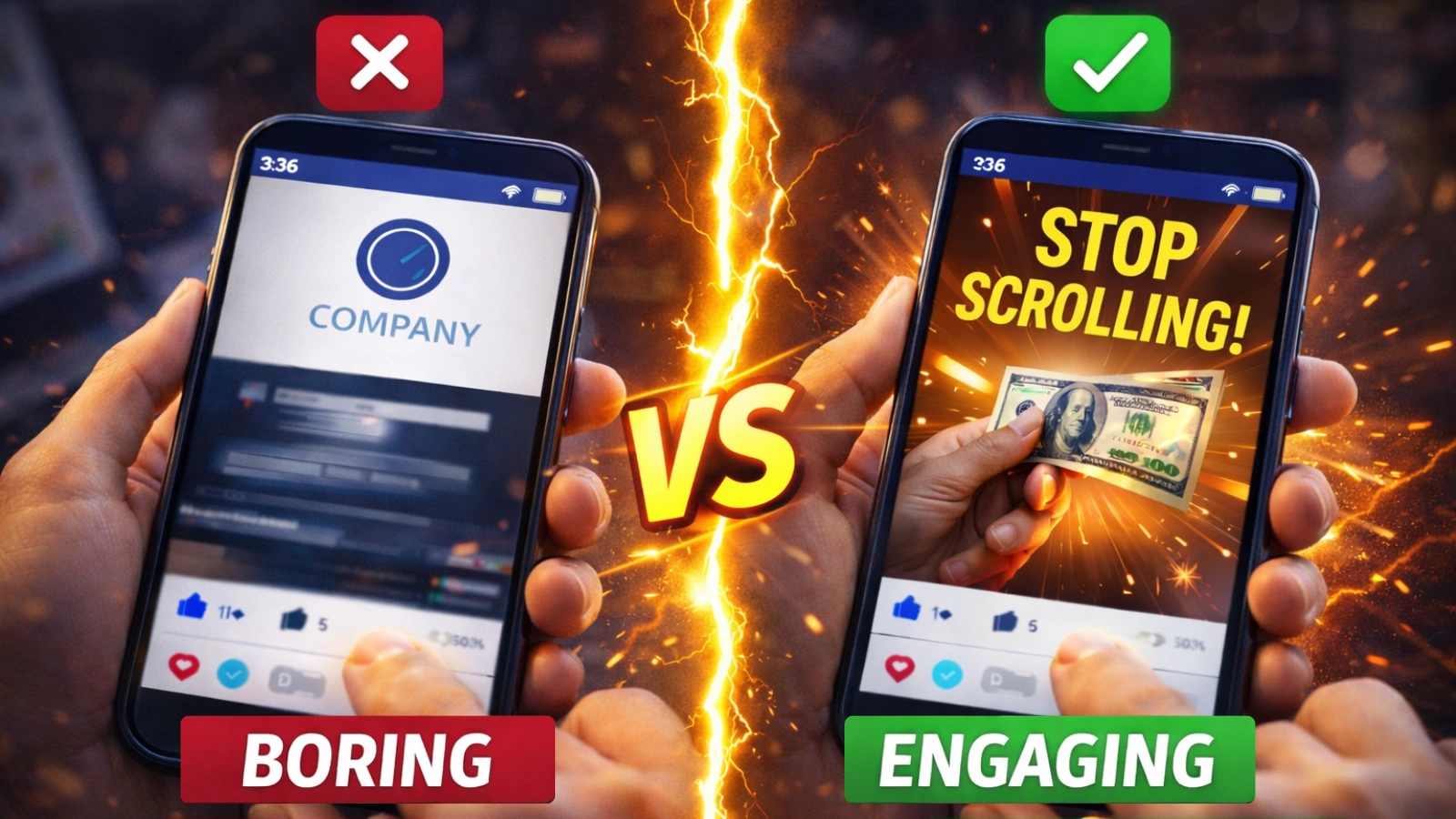
When done right, Facebook video ads feel natural in the feed. They match how people already consume content. That is what makes them effective. Not higher production, but clearer thinking and better timing.
Read Aloud!
Facebook Video Ad Formats and Placements Explained
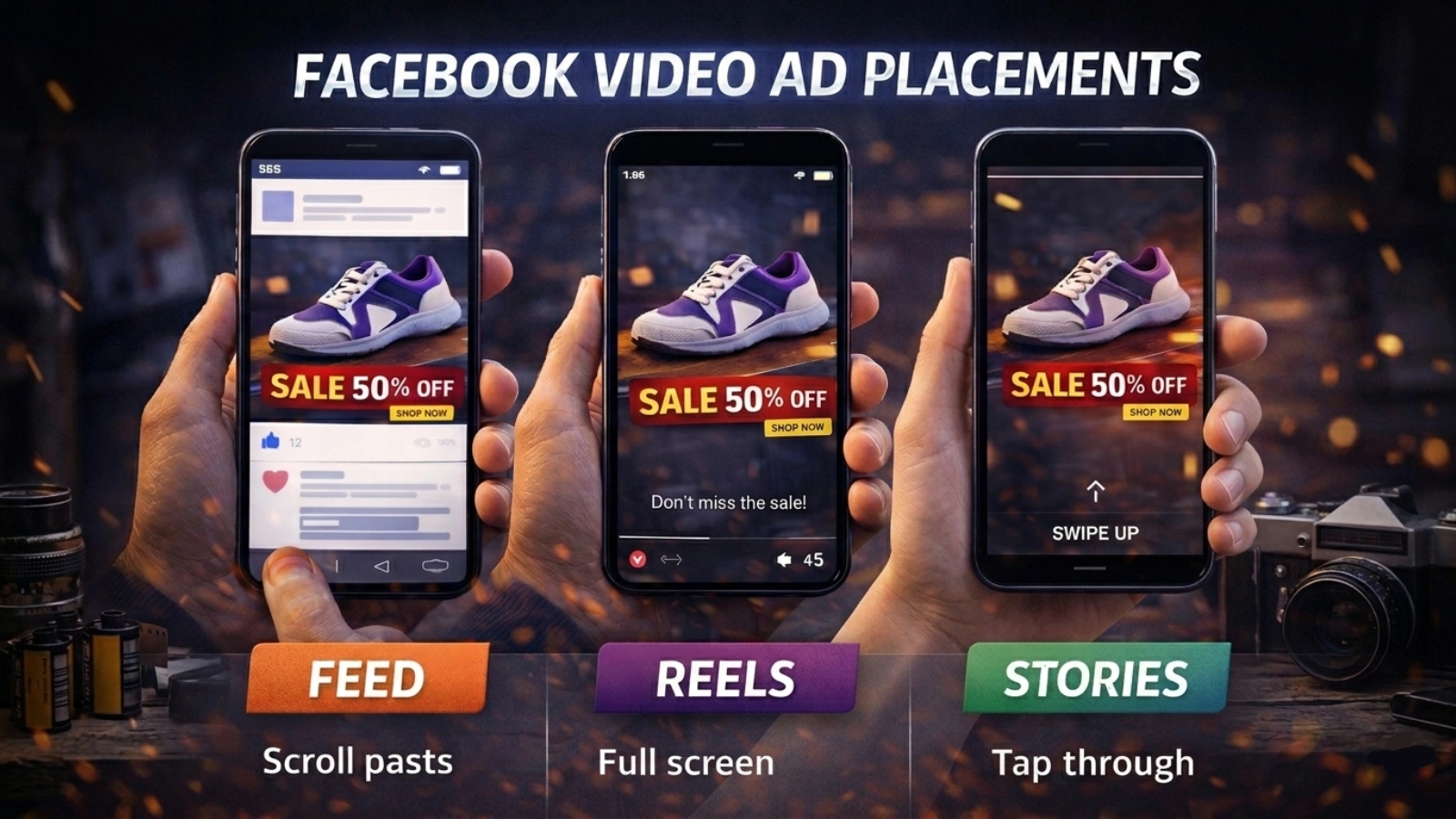
Not all Facebook ads perform the same way. Placement directly affects how your video should look, how long it should be, and how quickly it needs to deliver value.
One common mistake is using the same creative everywhere. A video that performs well in Feed may not work in Reels. Context plays a bigger role than most expect.
Let’s break down the main formats and how they behave.
Feed Video Ads
Feed video ads appear between organic posts as users scroll. This is often where advertisers start testing Facebook video ads.
These ads support square, vertical, and full vertical formats. Since most users browse on mobile, vertical and 4:5 formats often perform well.
Feed allows slightly more room for explanation. Users are casually browsing, so your video needs to feel natural while still catching attention.
This placement works well for product demos, quick tutorials, and before-and-after examples.
Reels Ads
Reels has become one of the fastest-growing placements for good Facebook video ads. These are full-screen vertical videos designed for quick consumption.
Your content appears between organic videos, so it needs to feel native. If it looks too polished or slow, users tend to skip quickly.
Captions are important here. While automatic captions are available, they are not always accurate, so adding your own improves clarity.
Short, engaging, and visually clear videos tend to perform best in this format.
Stories Ads
Stories create a more focused and immersive experience. Facebook video ads in this placement take up the full screen and feel more direct.
These videos are typically shorter. Longer videos may be split into multiple frames, which can affect how smoothly the message is delivered.
Users interact differently in Stories. They tap through content rather than scroll, which often leads to more intentional engagement.
This placement works well for time-sensitive offers and strong, direct calls to action.
In-Stream Video Ads
In-stream Facebook video ads appear before or during longer video content. The viewer is already watching something, which increases the chance of attention.
These ads can be skippable or, in some cases, non-skippable depending on placement and setup. While longer formats are allowed, shorter videos often perform better.
Because users are already engaged, this placement can support more detailed storytelling. It works well for product explanations and deeper messaging.
Still, attention is not guaranteed. If the opening does not connect, viewers disengage quickly.
Facebook Video Ad Specifications You Need to Know
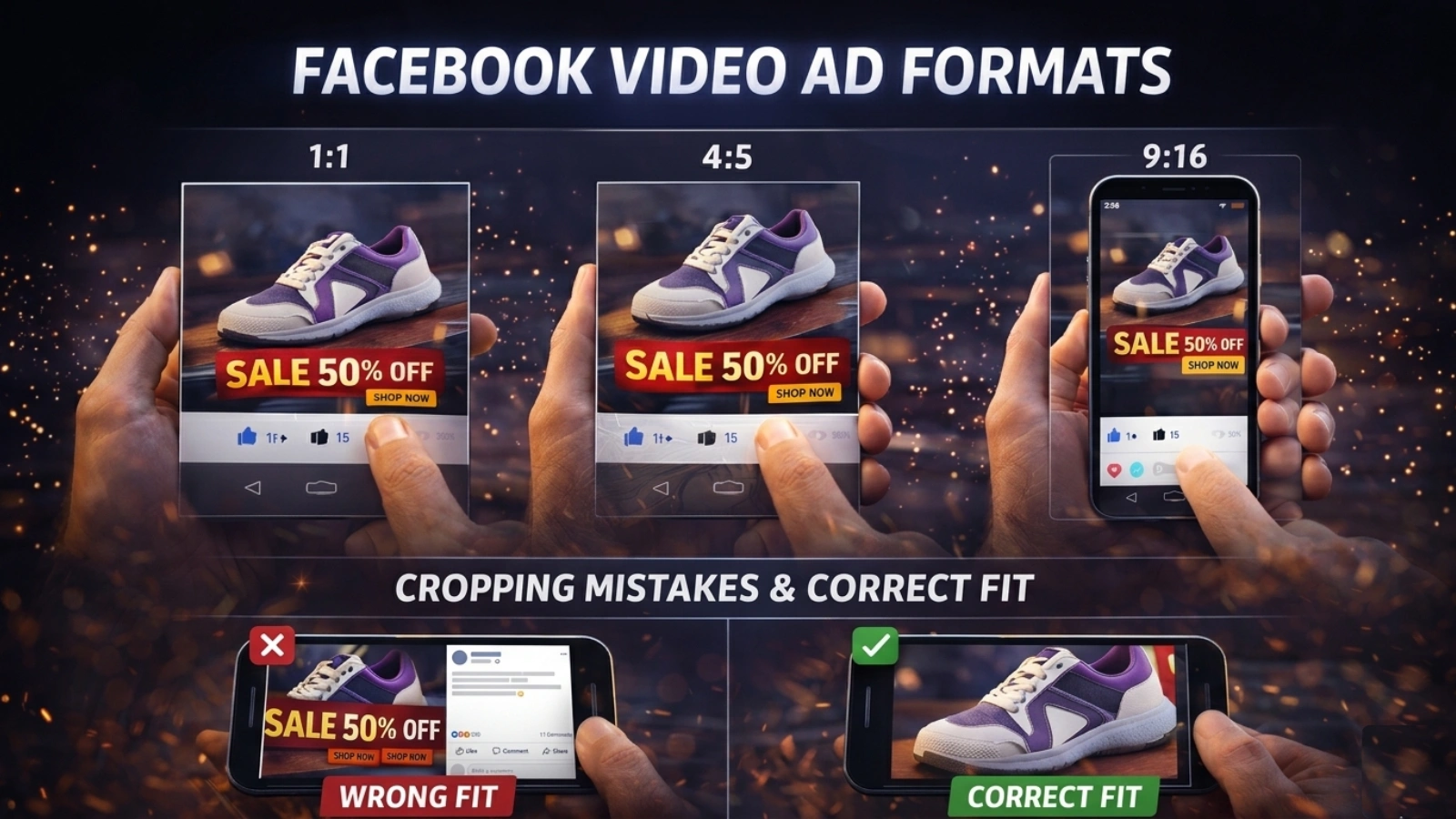
Even strong ideas can fail if the technical setup is off. Facebook video ads need to meet certain specifications to display properly.
If a video looks blurry, stretched, or cropped, it affects both user experience and performance.
Here are the key specifications:
- File format: MP4 or MOV
- Compression: H.264 with progressive scan
- Aspect ratios:
- 1:1 or 4:5 for Feed
- 9:16 for Reels and Stories
- Resolution: Upload the highest quality available
- File size: Up to 4GB
- Audio: AAC stereo, 128 kbps or higher
- Captions: Recommended for clarity
- Primary text: Keep it concise for better visibility
Designing for mobile is essential since most Facebook ads are viewed on phones.
It also helps to upload the highest-quality version of your video. Facebook compresses files during delivery, and starting with better quality improves the final result.
How Long Should a Facebook Video Ad Be?
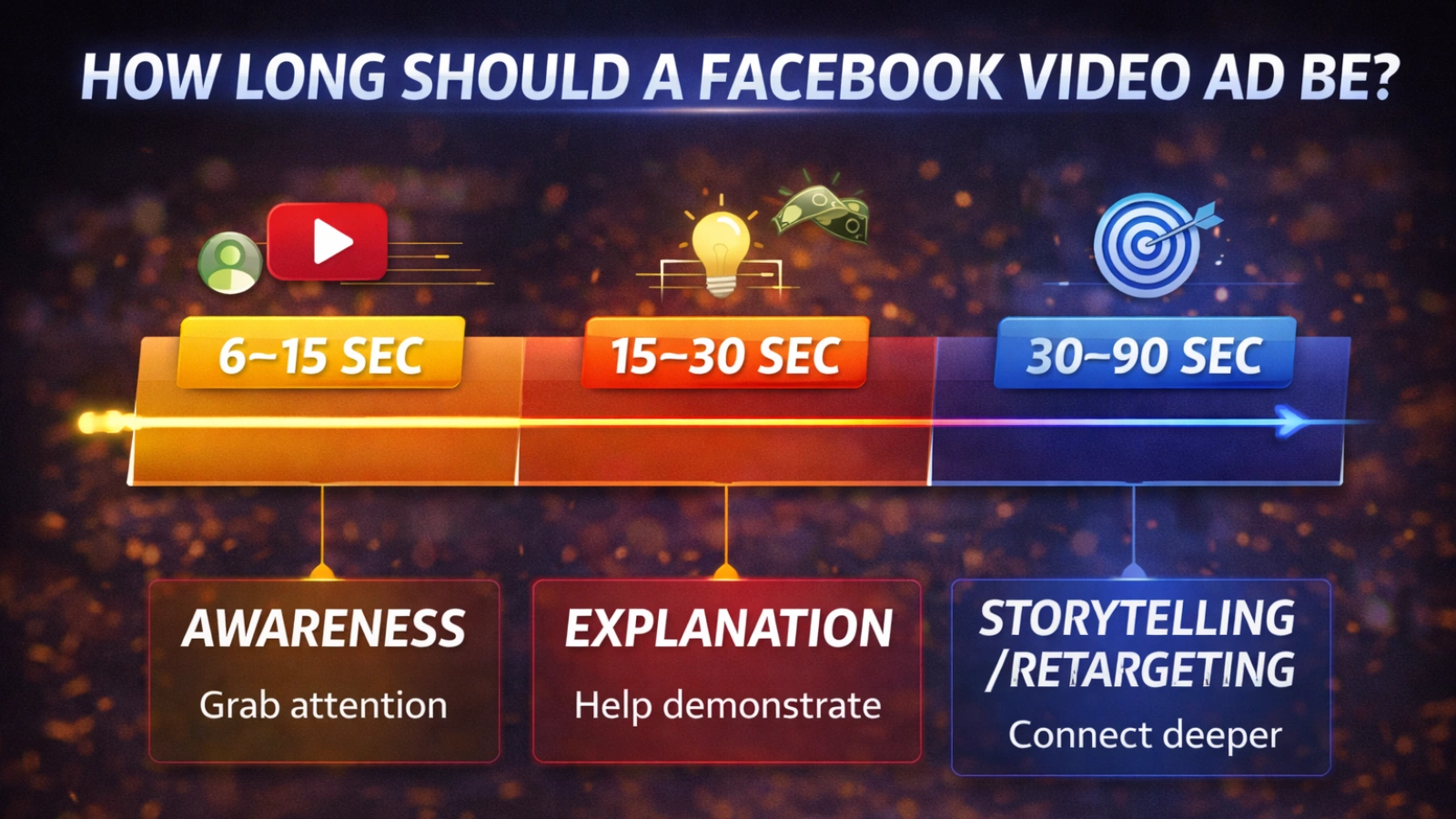
There is no single ideal length for Facebook video ads, but there are clear patterns based on audience and intent.
Shorter videos tend to perform well for capturing attention, especially with cold audiences. People decide quickly whether to keep watching.
The first few seconds carry the most weight. If they do not engage, the rest of the video rarely matters.
Here is a general guideline:
- 6 to 15 seconds works well for most awareness campaigns
- 15 to 30 seconds helps explain or demonstrate
- 30 to 90 seconds can work for deeper storytelling or retargeting
Cold audiences usually respond better to shorter Facebook video ads. They are still discovering your brand.
Warmer audiences may engage with longer videos, especially when they already trust your message or need more information.
Placement also affects performance:
- Reels often perform best under 30 seconds
- Stories work well around 10 to 15 seconds
- Feed supports 15 to 30 seconds
- In-stream often performs well around 15 seconds
Longer videos are not always better. They increase the risk of drop-off unless each second adds value.
A simple test helps. Would someone watch this if it appeared organically?
How Much Do Facebook Video Ads Cost?
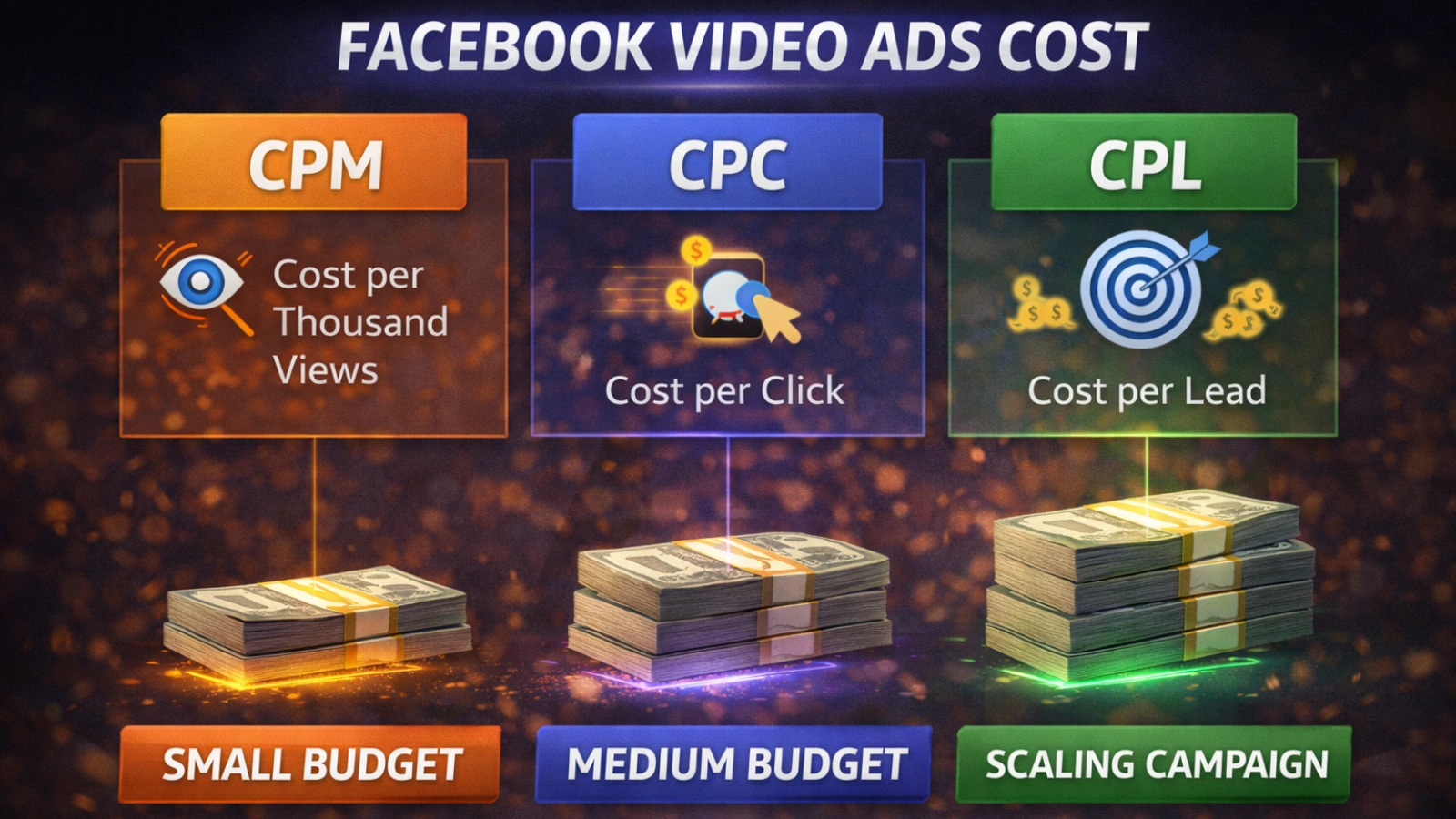
Facebook video ads cost varies because the platform runs on an auction system, and overall Facebook ads cost depends on multiple factors. There is no fixed pricing. Your costs depend on audience targeting, competition, creative quality, geography, and campaign objective.
Here are common benchmarks:
- CPM: $5 to $50 (₹415 to ₹4,150 approx.)
- CPV: $0.007 to $0.024 (₹0.58 to ₹2.00 approx.)
- CPC: $0.50 to $2.00 (₹41 to ₹166 approx.)
- CPL: $6 to $19 (₹498 to ₹1,577 approx.)
These ranges can shift significantly depending on industry and location.
Budget also affects your approach. With $5 to $10 per day (₹415 to ₹830 approx.), you can test basic ideas. At $20 to $50 (₹1,660 to ₹4,150 approx.), you can run multiple Facebook video ads and compare performance. Higher budgets allow scaling.
Facebook typically optimizes delivery based on your campaign objective. While many campaigns are impression-based, optimization can focus on clicks, conversions, or video views.
This is why creative quality matters. Better Facebook video ads often lead to better engagement, which improves efficiency over time.
How to Create Videos for Facebook Ads Step by Step
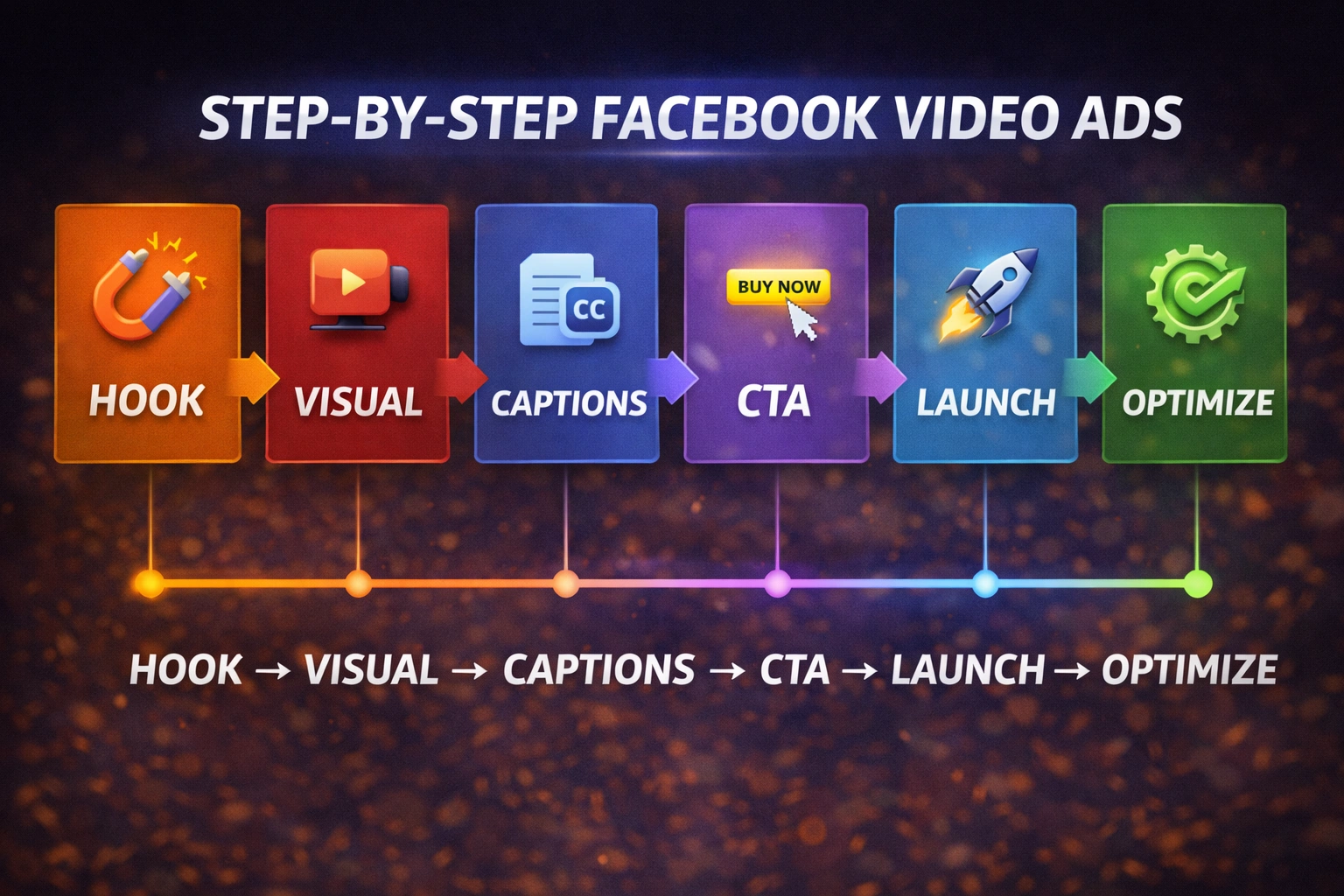
Creating effective Facebook video ads does not require complex tools. Clear structure and messaging make the biggest difference.
Here is a simple framework.
Step 1: Define your objective
Start with a clear goal. Decide whether you want views, traffic, leads, or sales.
Your objective guides how Facebook delivers your video.
Step 2: Build a strong hook
The first 3 seconds are critical. This is where viewers decide whether to stay or scroll.
Use movement, a bold statement, or a question to create curiosity.
Step 3: Design for silent viewing
Many Facebook video ads are watched without sound. Your message should still be clear.
Use captions, text overlays, and strong visuals.
Step 4: Match format to placement
Vertical formats work best for Reels and Stories. Feed supports square and vertical formats.
This adjustment can improve performance significantly.
Step 5: Add a clear call to action
Do not wait until the end. Many viewers will not reach the final frame.
Introduce your CTA midway and reinforce it later.
Step 6: Set up in Ads Manager
Upload your video, define your audience, and choose placements.
Keep your text short and focused.
Step 7: Let the data guide you
After launching Facebook video ads, give them time to collect data.
Avoid making quick changes, as this can reset the learning phase.
Common Facebook Video Ad Mistakes That Kill Performance
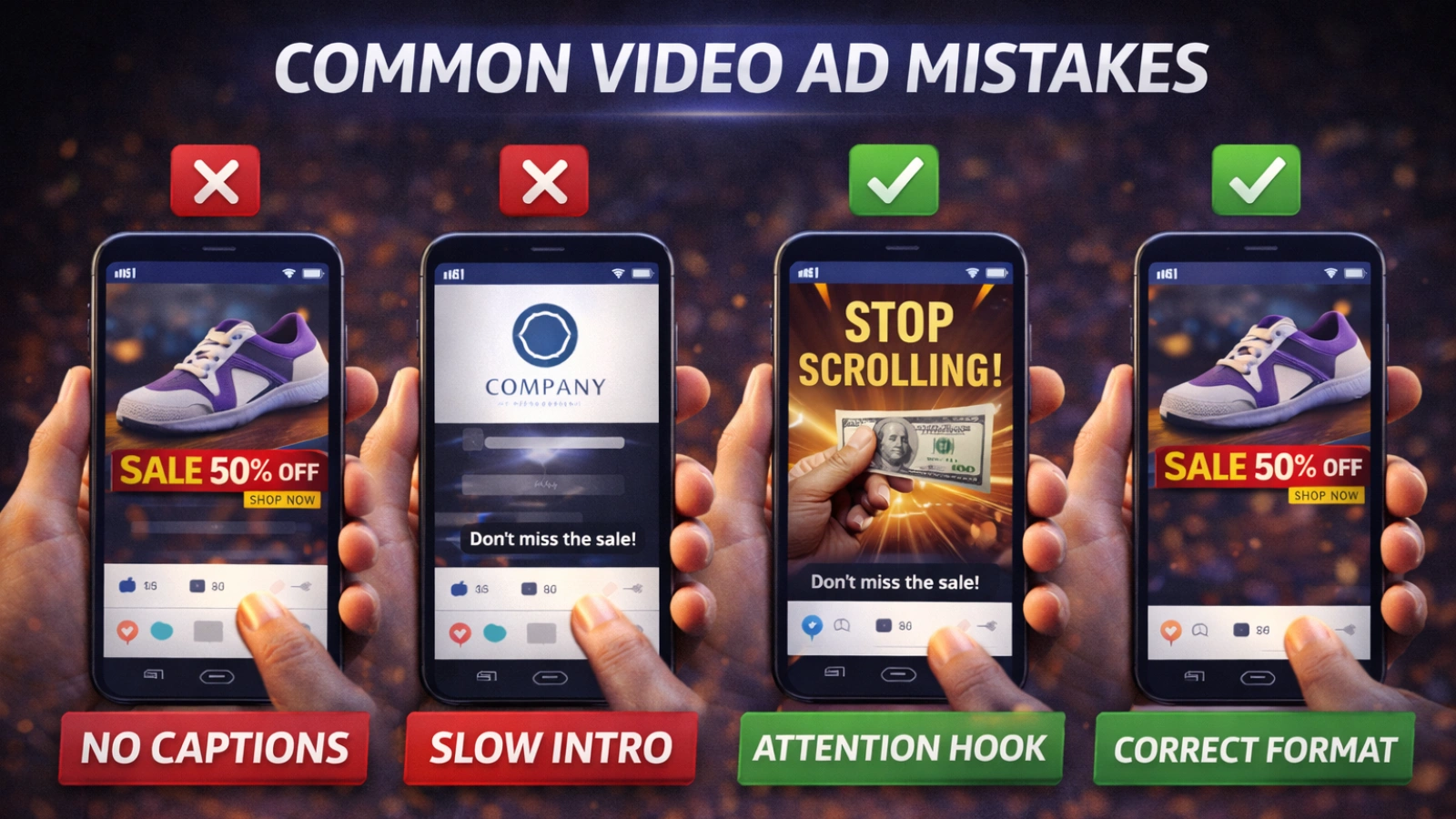
- Even well-planned Facebook video ads can fail due to small mistakes.
- Weak openings are one of the biggest issues. If the video does not capture attention quickly, viewers move on.
- Relying only on sound is another problem. Many users watch silently, so the message gets lost.
- Using the wrong format also reduces effectiveness. A horizontal video in a vertical placement looks out of place.
- Some advertisers place the call to action only at the end. Many viewers never reach that point.
- Stopping campaigns too early is another common issue. Ads need time to optimize delivery.
- Using the same video for all audiences can also limit results. Different stages require different messaging.
How PowerAdSpy Helps You Create Better Facebook Video Ads?

Instead of guessing what might work, PowerAdSpy shows you what is already performing in your niche.
Here is how it helps:
- Discover proven video ads
Explore high-performing Facebook video ads used by competitors in your industry. - Analyze winning creatives
Understand hooks, formats, captions, and messaging that drive engagement. - Filter by niche or keyword
Quickly find relevant ads without wasting time on unrelated content. - Identify long-running ads
Spot ads that have been active for longer periods, indicating consistent performance. - Study complete funnels
View landing pages connected to ads to understand the full user journey. - Apply insights faster
Use real data to improve your creatives, reduce trial and error, and scale with confidence.
This approach helps you create smarter, data-backed Facebook video ads from the start.
Read More!
How To Run Facebook Ads For Ecommerce (Step-By-Step Playbook)
Advanced Strategy: How to Scale Facebook Video Ads
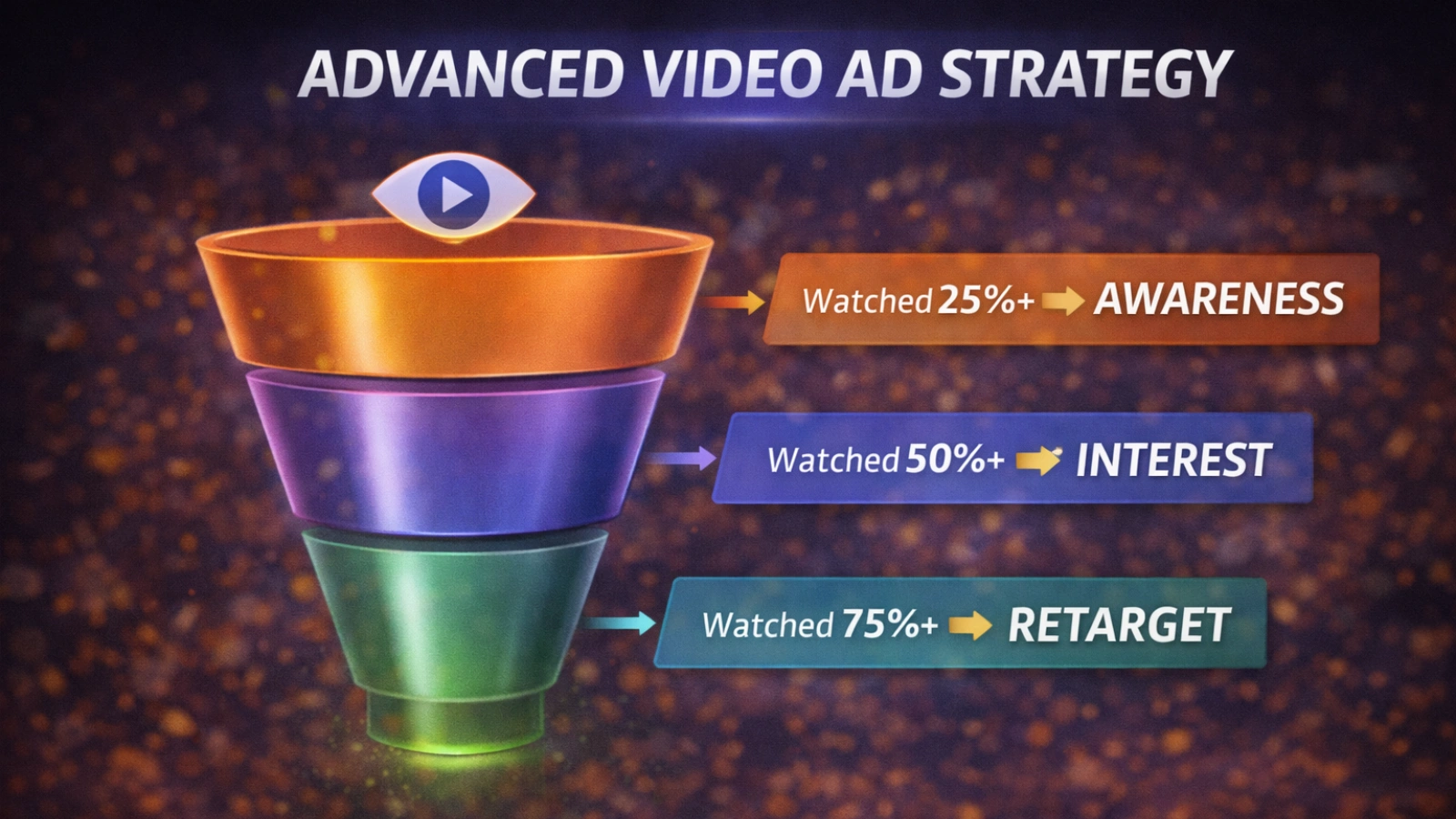
Scaling Facebook video ads requires a different mindset. The algorithm has improved, but creativity still drives performance.
Broad targeting often works well. Instead of narrowing too much, allow the platform to find the right audience based on engagement.
Creative testing is where meaningful gains happen. Test different hooks, visuals, and messaging angles.
Another effective approach is retargeting based on engagement. Video ads allow you to build audiences from viewers at different watch levels.
Someone who watches 50 percent of your video shows stronger intent than someone who leaves early.
You can then deliver tailored messages to each group. Start with awareness, move to education, and then present an offer.
This structured approach improves conversions without significantly increasing costs.
Short-form video continues to grow. Advertisers who adapt their Facebook video ads to this format tend to see stronger reach and engagement.
Conclusion
Facebook video ads remain one of the most effective marketing tools for small businesses and marketers, but results depend on how intentionally they are created. The platform has clearly shifted toward short-form, vertical, mobile-first content, and advertisers who adapt to this change are seeing stronger performance.
The fundamentals are simple, but they matter. Capture attention within the first 3 seconds, design your video for silent viewing, and match the length to your audience and funnel stage. It is equally important to align your format with the placement and rely on real performance data instead of assumptions.
Before creating your next campaign, take time to study what is already working. Tools like PowerAdSpy can help you analyze competitor ads, understand engagement patterns, and identify proven creative approaches. This gives you a stronger starting point and reduces guesswork.
Keep your process simple. Start with one clear idea, test it, and track what actually performs. Once you find something that works, build on it and scale gradually.
Frequently Asked Questions
How much do Facebook video ads cost for a small business?
You can start with $5 to $10 per day. Costs vary based on competition, targeting, and creative quality.
How long should Facebook video ads be?
Most campaigns perform well with 6 to 15 seconds. Longer videos can work for warmer audiences.
What are Facebook video ad specifications?
Use MP4 or MOV format, H.264 compression, and match aspect ratio to placement.
What makes good video ads?
Strong hooks, clear visuals without sound, early calls to action, and proper formatting improve results.
How are Facebook Ads video views counted?
A standard view is counted after 3 seconds. ThruPlay measures views up to 15 seconds or completion.
Do Facebook video ads work on small budgets?
Yes. Even small budgets can generate results if the content is clear, relevant, and engaging.