
Facebook Ads for Real Estate: Lead Generation Guide
You launch a campaign to sell a real estate property. The image looks good, the copy feels decent, and the budget starts running. A few clicks show up. Maybe even a couple of leads. Then everything slows down.
No replies, real conversations or deals.
This is where most people get stuck with Facebook ads for real estate. It’s not that the platform doesn’t work. The issue usually sits behind the scenes, in how the campaign is structured.
Many agents assume they just need better creatives or a bigger budget. In reality, the disconnect is often between the audience, the offer, and the timing.
When those pieces align, Facebook ads leads can become one of the most reliable ways to generate consistent inquiries. This guide breaks down how to build that system so your ads attract serious buyers and motivated sellers, not just casual clicks.
Read Aloud!
What Are Facebook Ads for Real Estate?
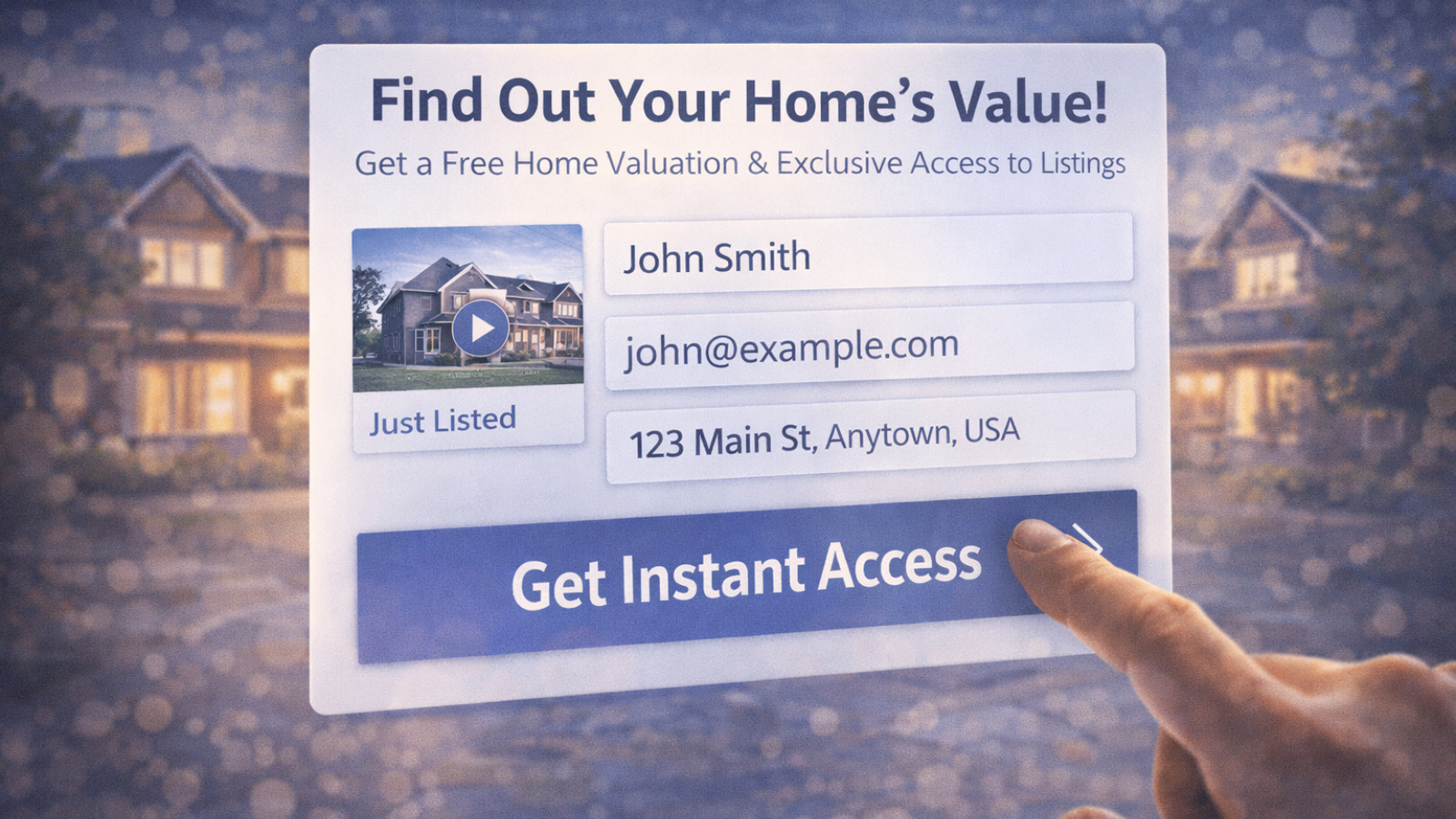
Facebook ads for real estate are paid campaigns on Meta platforms that help you reach potential buyers, sellers, or investors through targeted messaging and offers.
They perform best when the audience and offer match closely. If the message doesn’t reflect what the viewer needs at that moment, even well-designed ads tend to get ignored.
Why Facebook Is Still One of the Best Platforms for Real Estate Marketing
Many marketers lean toward Google or listing platforms because users are actively searching there. That intent is valuable, but it also makes those platforms expensive and crowded.
Facebook works differently. People scroll casually, not necessarily looking for property. Yet that’s exactly what creates opportunity.
A strong campaign can introduce the idea of moving before someone starts searching. It shifts attention instead of chasing it.
The reach is another advantage. You’re not limited to a narrow audience. Homeowners, renters, and investors are all active across Facebook and Instagram, often multiple times a day.
Targeting still plays a big role, even with housing restrictions. You can refine audiences based on location and behavior, which is often enough to drive results when paired with a clear offer.
Cost efficiency makes a noticeable difference, too. Compared to other channels, Facebook ads for real estate leads usually allow more testing. That flexibility helps you learn what works without risking your entire budget.
Understanding the Facebook Ads Funnel for Real Estate
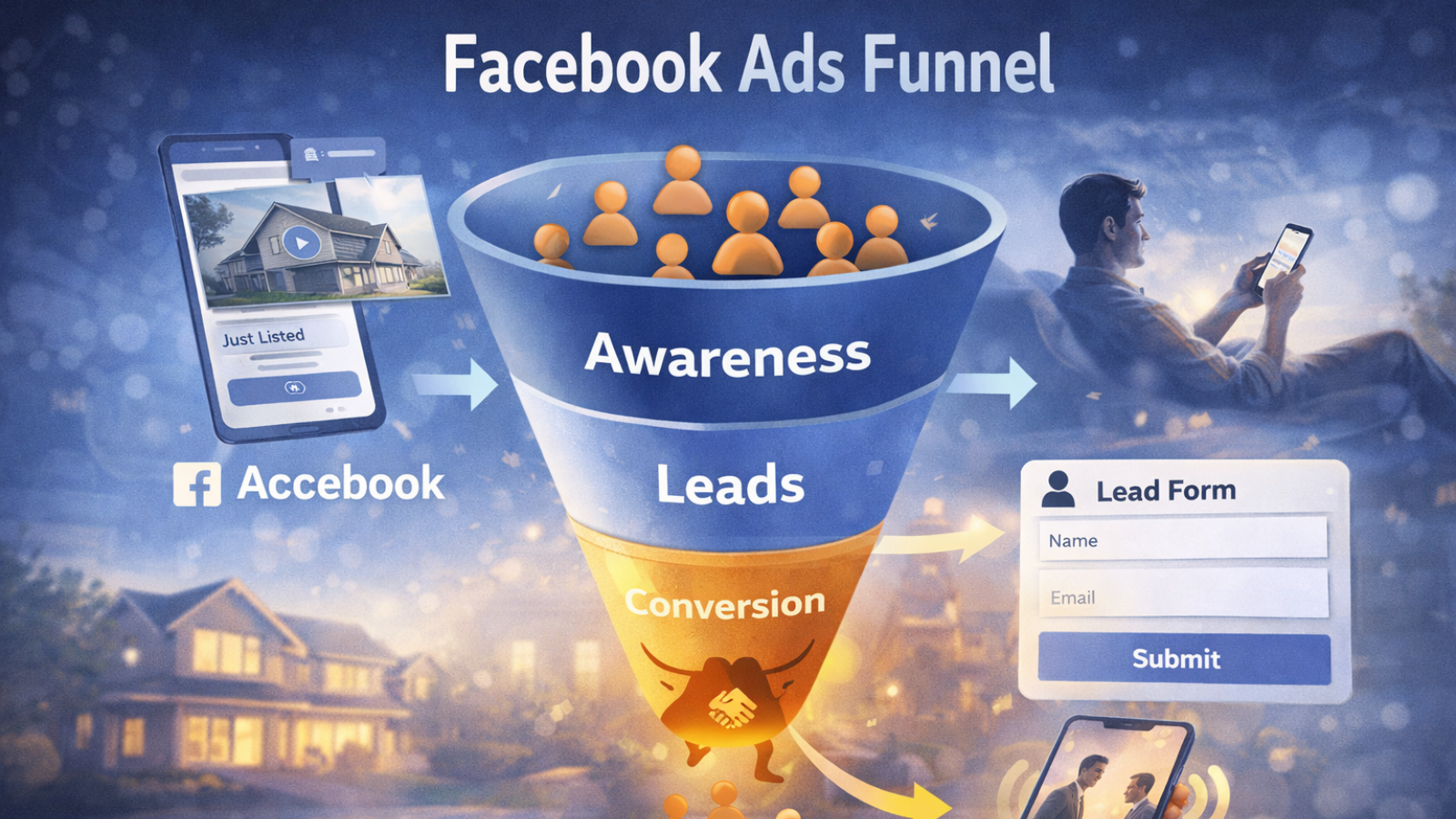
Running Facebook ads for real estate without a funnel often leads to frustration. Expecting someone to convert instantly after seeing your ad once rarely works.
A better approach is to guide them through stages.
Top of Funnel – Building Awareness

At this point, your audience doesn’t know you. Some may not even be thinking about moving yet.
The goal here is simple. Get attention and build familiarity.
Video tours, local market updates, and neighborhood highlights tend to perform well. These formats feel natural in the feed and don’t come across as aggressive.
A short walkthrough video often outperforms static images because it gives context. People can picture the space instead of just scanning details.
Middle of Funnel – Generating Leads
Now you’re speaking to people who have already shown interest.
They may have watched your video, visited your page, or interacted with previous content. This is where Facebook ads for real estate leads start to take shape.
Generic calls to action rarely work here. Instead, give people a reason to respond:
- Free home valuation
- Access to new listings in a specific area
- A local market report
Lead ads are especially useful at this stage. They reduce friction by keeping everything inside the platform, which increases completion rates.
Bottom of Funnel – Converting and Retargeting
This stage focuses on people who came close but didn’t convert.
Maybe they opened your form but didn’t submit it. Maybe they clicked but didn’t take the next step.
Here, your messaging needs to shift.
Instead of repeating the same offer, introduce urgency or clarity. A consultation, a property tour, or a time-sensitive opportunity can move things forward.
Quick follow-up matters more than anything else. Even strong Facebook ads for real estate campaigns lose momentum when responses are delayed.
Facebook Ad Targeting for Real Estate – Audiences That Actually Work
Targeting plays a major role in campaign performance. Go too broad, and your budget spreads thin. Go too narrow, and delivery slows down.
Balance is what you’re aiming for.
Geographic and Demographic Targeting
Location should always come first.
Start with a defined radius around your service area or listing. From there, you can adjust basic demographics like age range.
Housing categories limit some targeting options, but local precision still carries a lot of weight. For most Facebook ads for real estate, this alone can drive solid results when paired with the right offer.
Interest and Behavioral Targeting
Interest targeting can help, but it’s often overcomplicated. Stacking too many filters reduces reach and limits performance. A simpler setup usually works better, especially when the algorithm has room to optimize.
Behavior matters more than passive interest. Someone actively engaging with property-related content is far more valuable than someone who just follows a page.
Custom and Lookalike Audiences
This is where campaigns start improving quickly. Custom audiences let you retarget people who already know your brand. Website visitors, video viewers, and past leads all fall into this category.
Lookalike audiences expand that reach. You’re essentially asking the platform to find similar people. Start small with a 1 percent lookalike. As performance stabilizes, you can expand to a broader range for scale.
Advantage+ Audiences – Meta’s AI Targeting
Advantage+ simplifies targeting by allowing Meta to handle most of the decisions. It works best once you have some data. Early on, manual targeting gives you more control over testing.
As your Facebook ads for real estate campaigns mature, Advantage+ can help scale without constant adjustments.
Best Facebook Ad Formats for Real Estate
Different formats serve different purposes. Choosing the wrong one can limit performance, even with a strong offer. Single image ads are straightforward and effective for local promotions. They’re easy to create and quick to test.
Carousel ads work well when you want to showcase multiple properties or features. They give viewers more to explore without overwhelming them. Video ads are ideal for capturing attention at the top of the funnel. A short walkthrough or area highlight builds trust faster than static visuals.
Lead ads are designed for conversion. They remove extra steps and make it easier for users to submit their information. Instant Experience ads offer a more immersive feel. These are useful when you want to present a property in more detail.
Matching the format to the funnel stage is what makes Facebook ads for real estate perform consistently.
Facebook Ads for Real Estate Agents vs. Real Estate Investors
Not every campaign has the same objective. Agents and investors approach the market differently, so their strategies should reflect that.
For Real Estate Agents and Brokers
The goal is to attract both buyers and sellers. Offers like free home valuations or listing alerts tend to perform well because they are clear and relevant. Targeting usually stays local. You’re focusing on a defined area rather than a wide audience. Key metrics include cost per lead and how many of those leads turn into actual appointments.
For Real Estate Investors
Investors focus on motivated sellers.
The messaging shifts from showcasing properties to solving problems. Phrases like “sell your house fast” or “no repairs needed” speak directly to urgency.
Targeting often revolves around homeowners going through changes. The tone should feel helpful, not pushy.
For Facebook ads for real estate investors, lead quality matters more than volume. A few strong opportunities are more valuable than a long list of weak leads.
How to Set Up a Facebook Real Estate Lead Generation Campaign – Step by Step
A structured approach removes guesswork and improves results. Start by setting up your business manager and ad account. Make sure everything is connected properly before moving forward. Install the Pixel and Conversion API early. These tools help track performance more accurately, especially after recent privacy updates.
Choose your objective carefully. For most Facebook ads for real estate leads, the Lead Generation objective works best because it reduces friction. Define your audience based on location and engagement signals. Keep it simple at the beginning. Select an ad format that matches your funnel stage. Avoid pushing conversions too early in the process.
Write your copy with clarity. Address a specific need, show credibility, and include a direct call to action. Set a reasonable budget. Start small, observe how the campaign behaves, then scale gradually once you see consistent results.
Monitor performance in the first few days. Look at cost per lead, engagement, and click behavior before making changes. Optimization should be based on patterns, not guesswork.
Use PowerAdSpy to Research and Outperform Competing Real Estate Ads

Many campaigns struggle because they skip research. Before launching Facebook ads for real estate, it helps to understand what’s already working instead of guessing.
PowerAdSpy makes this easier by giving you access to real ad data and performance signals from across the market. Instead of relying on assumptions, you can study actual campaigns run by agents, brokers, and investors.
Here are some of the most useful features for researching Facebook ads:
- Search ads by keywords and competitors
Find ads using terms like “home valuation” or analyze campaigns from specific competitors in your market. - Access a large global ad database
Explore millions of ads from 100+ countries, with new ads added regularly to keep your research current. - Sort ads by engagement metrics
Filter ads based on likes, comments, and shares to quickly identify what’s getting real attention. - View live ad posts for complete visibility
Visit actual ad posts to see real-time engagement and audience reactions, not just surface-level data. - Filter by ad positions
Compare performance across placements like News Feed and side placements to understand where ads perform best. - Narrow down searches with advanced filters
Search by niche keywords, advertiser names, or domains to find highly relevant ad examples. - Geo-targeting insights
Identify which locations competitors are targeting and where certain offers are performing well.
Reviewing real campaigns before launching your own helps you spot patterns in messaging, creatives, and offers. That insight alone can significantly improve how your Facebook ads for real estate perform.
Why Most Real Estate Facebook Ad Campaigns Fail (And How to Fix Them)

Most issues come from a few common mistakes.
Targeting is often misaligned. Campaigns either reach too many irrelevant users or restrict themselves too much.
Sending traffic to a general homepage is another problem. People respond better to focused pages with a clear offer.
Some campaigns are stopped too early. The system needs time to learn, and cutting it short prevents proper optimization.
Follow-up delays also hurt performance. Even strong Facebook ads for real estate can fail if leads are not contacted quickly.
Using the wrong objective creates confusion. Traffic campaigns may bring clicks, but they rarely produce leads.
Compliance is another factor. Housing ads must follow strict guidelines, and ignoring them can disrupt campaigns.
Creative fatigue is often overlooked. Running the same ad for too long reduces engagement and increases costs.
Read More!
Advanced Facebook Ad Strategies for Serious Real Estate Marketers
Once your basics are working, a few advanced adjustments can improve performance.
Combining Pixel tracking with the Conversion API helps restore data accuracy. This improves how campaigns optimize over time.
Dynamic ads allow you to show listings based on user behavior. This works well if you manage a larger inventory.
Retargeting across Facebook, Instagram, and Messenger keeps your brand visible without adding friction.
Scaling should be gradual. Increasing budgets too quickly can disrupt performance. Expanding audiences step by step tends to work better for Facebook ads for real estate campaigns.
Conclusion
Facebook ads for real estate can produce consistent results when built with the right structure.
A strong campaign connects the audience, the offer, and the funnel. Without that connection, even a large budget struggles to deliver.
Focus on proper tracking, clear targeting, and matching your ad format to each stage of the funnel. Study what’s already working before launching anything new.
Testing and refining based on real data will always outperform guesswork.
With the right approach, Facebook ads become more than just a lead source. They turn into a predictable system you can scale over time.
FAQ
How do Facebook ads for real estate work?
Facebook ads work by targeting specific audiences with property-related offers, helping agents and investors generate leads, promote listings, and attract buyers or sellers.
Are real estate ads for Facebook effective for lead generation?
Yes, real estate ads for Facebook can be highly effective when combined with the right targeting, clear offers, and a structured funnel to convert interest into qualified leads.
What is the best way to run Facebook ads?
The best way to run Facebook ads is to use a funnel approach, target the right audience, and match your ad format and offer to each stage of the buyer journey.
How can PowerAdSpy improve your Facebook ads for real estate?
PowerAdSpy helps you analyze real estate ads for Facebook by showing what competitors are running, which creatives get engagement, and what offers are working, so you can build more effective Facebook ads for real estate instead of guessing.