
**Start your free trial today →
To find winning dropshipping products, use a Facebook ad spy tool to locate ads with strong engagement and long run-times, analyze their landing pages and GEOs, and model the core hook for your own creative. Search your niche, filter by engagement/last seen, click through to study the offer and store, then run a lean 3‑day test against a clear CPA target. This turns guesswork into evidence so you validate what’s already getting traction. I learned this after burning budget on gut‑feel picks in 2020–2022, testing blind drains cash, and in 2026 the margin for error is even thinner.
Here’s the truth most stores learn the hard way: product choice beats ad skill when your CPA must hug a $10–$20 window. However, you can stack the odds. According to PowerAdSpy user data, teams see a 15% reduction in A/B testing volume within two months of using ad intelligence. That means fewer guesses and more shots that hit.
Moreover, ad libraries hold signals you can act on today: hooks, angles, CTAs, offers, and landing page flow. You don’t need to copy. You need to reverse-engineer. As a result, you’ll test smarter and cheaper. And yes, we’ll keep this guide education-first, product-second, so you can put it to work now.

Why Ad Spying Is the Fastest Way to Validate Dropshipping Products
If you’ve ever spent $500 testing a “cool” gadget, only to find zero traction, you know the sting. A Facebook ad spy tool flips that script. Instead of guessing, you start with proof: ads that already earn clicks and comments for stores like yours.
Specifically, ad databases track creative, copy, engagement, run dates, and GEO spread. PowerAdSpy’s data includes millions of ads from over 100 countries (Source: PowerAdSpy Stats). Therefore, you can pull patterns, not hunches. You’ll see, for example, that pet grooming videos using a “mess-free” hook and 15-second cutdown format keep running for 90+ days in Tier-1 GEOs. That is a real signal.
In addition, speed matters. Teams using ad intelligence report a 15% reduction in A/B testing volume within two months (Source: PowerAdSpy Stats). Fewer tests mean lower costs and faster reads. On thin dropship margins, that’s oxygen. You still test, but you test the right angles and landing flows first.
Furthermore, dropshippers get a special edge from spying because many run the same suppliers and platforms. When you see a product push with stable spend, you can infer demand and store health. Then you can model the angle, pick a variant, and get in front of the same audience with a sharper hook.
“We used to struggle with Facebook ads for lead generation. It felt like we were throwing darts in the dark. PowerAdSpy helped us see what our competitors were doing right, and suddenly, things clicked. The clarity of the tool makes ad decision-making much easier.” — Steve Decker, SaaS Marketing Manager
For grounding, here’s a neutral primer on what “dropshipping” is and how it works for new readers: read the overview on Dropshipping (Wikipedia).
Also Read!
Step-by-Step: How to Spy on Facebook Ads and Find Winning Dropshipping Products
You don’t need luck. You need a repeatable 6-step method. Use any solid Facebook ad spy tool that supports keyword/domain search, GEO data, and engagement sorting.
Step 1: Search by niche keyword
Start broad, then narrow. For a posture corrector, try “back pain,” “posture,” or “spine support.” For a pet nail grinder, try “dog grooming,” “nail trimmer,” or “painless grooming.
- Use keyword search, advertiser search, or domain search to surface relevant ads.
- Add product terms plus intent words like “solution,” “before after,” or “gift.
For richer creative ideas while you search, this guide to creative ads will spark usable angles.
Step 2: Filter by engagement metrics
Second, sort by likes, comments, and shares, but don’t stop there. Sort by “running longest,” “post date,” and “when last seen” to weight staying power. A post with 500 comments in 10 days might be a flash in the pan. One with steady comments over 60 days signals durable demand.
- Use “Call to Action” sorting to see which CTAs (“Shop Now,” “Learn More”) win in your niche.
- Check device splits if available (iOS vs. Android, Desktop vs. Mobile) to match your store UX.
For ad text ideas you can adapt, keep this library of facebook ad copy handy.
Step 3: Identify ads running longest
Third, mark ads that have run 30–120+ days with ongoing engagement. These often indicate profitable funnels. In tools like PowerAdSpy, you can sort by popularity and impressions index or last seen date. Bookmark the best ones to build your “watch list.
- For beauty: look for UGC testimonials and “no-mess” demos.
- For kitchen: find 15–30s fast cuts that highlight a single wow benefit.
- For fitness: watch for “30-day change” angles and clear before/after claims that comply with policy.
Step 4: Analyze the landing page/store
Fourth, click through. Study the offer, shipping bar, price anchors, bundles, and review widgets. Then check platform signals. Search and analyze Shopify ads with complete engagement details; you can also use lander properties search (eCommerce platform, funnel, or affiliate network) to see how the store is built.
- Note headline, first fold proof, and page speed.
- Spot sticky add-to-cart, exit-intent, and post-purchase upsells.
- Save page sections you want to model.
Step 5: Check GEO targeting
Fifth, open GEO-targeted information about the ad. If it’s scaling in the US, Canada, and UK, match that. If you see Tier-2 GEOs, adjust price and shipping copy. As a result, your tests won’t waste spend on the wrong markets.
- Layer this with your audience plan. If you need a refresher, see this guide on Facebook ad targeting.
Step 6: Model the creative (don’t copy)
Sixth, build your version. Keep the core hook but change the lens. If the winner uses a “spill-proof” hook for a car trash can, try “keeps your car fresh,” “locks odors,” or “clips anywhere” angles. Swap actors, scenes, and props. Use the same CTA only if it makes sense after your edits.
- Pull 3–5 hooks from your watch list and script short UGC-style videos.
- Match the CTA to your ask. Call to Action sorting can guide you for each niche.
- For your copy, skim real examples in Facebook ad copy.
Finally, size your test. Use this free Facebook ad budget calculator to forecast a three-day read with your target CPA.
5 Mistakes Dropshippers Make When Using Ad Spy Tools
You can still burn cash with a great Facebook ad spy tool if you use it wrong. Here are the errors I’ve made (and fixed).
1) Copying ads verbatim instead of modeling
It’s tempting to copy winning ads word-for-word. Don’t. Creative fatigue will crush you, and you risk policy flags.
The right move: model the structure. Keep the hook logic but change the angle, scenes, and actors. Test three cuts: 6–8s hook, 15s demo, and 25–30s story.
2) Only looking at likes, ignoring ad longevity
A spike in likes can mislead you. Always sort by “running longest,” “post date,” or “when last seen.” Then weigh comments and shares. full ad analytics and social engagement metrics let you see real traction over time, not a one-day blip.
3) Skipping landing page analysis
The ad sells the click; the page sells the product. Use the lander properties search to spot the platform, funnel, and app stack. On a Shopify store, check load speed, trust badges, review blocks, and variant layout. Fix your page before you scale spend.
4) Ignoring GEO data
Winning in FR/DE doesn’t mean you’ll win in the US. Check GEO spread and language in comments. Then mirror that plan in your ad set structure. If the tool allows, filter by Ad Positions to see if winners lean into Feed, Reels, or Marketplace and match placements in your buy.
5) Not filtering by e‑commerce platform
A WooCommerce store might use long-form pages, while a Shopify store leans on app widgets and quick bundles. Filter by eCommerce platform where possible. You’ll learn pricing norms, shipping offers, and bundle patterns you can adapt.
“We have reduced A/B testing costs and also have improved revenue!” — Archie Gilbert, Co-Founder
Also Read!
Best Facebook Ad Spy Tools for Dropshippers Compared
As of 2026, you have solid choices. Your pick should match your niche, budget, and channels. Here’s how I’d frame the field using neutral, high-level cues.
First, one option, PowerAdSpy, offers AI-powered ad intelligence with access to ads on Facebook, Instagram, TikTok, Google, Reddit, Pinterest, and more. It includes detailed analytics, GEO data, and Shopify-focused filters, plus a Basic plan at $69/Month or $29/Month billed annually (Source: PowerAdSpy Features & Pricing). That mix helps stores track proven ads and study the full funnel.
Second, Dropispy focuses on dropshipping discovery. Expect product-first views and store insights that suit Shopify sellers. Third, Minea is multi-platform and builds product and creator views across social channels, helpful if you test TikTok and Instagram Reels. Fourth, Ecomhunt is product-focused; it curates items with demand signals, which can cut research time when you’re light on product ideas. Fifth, BigSpy positions itself as a large database across networks, useful when you want broad scans.
How to compare tools (a quick framework)
- Database scope: Are you seeing data across Facebook, Instagram, TikTok, and Google? Broader scope helps cross-check trends.
- Filters that matter: Keyword, advertiser, domain, CTA, GEO, ad type, “running longest,” last seen, and platform (Shopify) filters save hours.
- Dropshipping specifics: Shopify analysis, lander properties search, and engagement detail matter more than flashy UI.
- Pricing fit: Start small. If a plan includes exports and device splits, great. If not, do you really need them for your current stage?
For deeper creative ideas while you compare, scan these meta ad examples. And if you’re exploring options beyond a single vendor, this overview of an ad spy tool, its use cases, and selection tips can help you pick the right fit.
What to Do After You Find a Winning Ad
Finding a likely winner is only halftime. You still need to test tight, read fast, and scale without panic. A facebook ad spy tool gives you the map; you still drive.
Create your version of the ad
- Rebuild the hook: same problem, new words. Keep the first 3 seconds punchy.
- Film a UGC demo with clear hands, close-ups, and one core benefit.
- Write 2–3 primary texts and 2 headlines. Match the CTA to your ask.
Set a lean 3‑day test
Day 1: Launch two ad sets to your best GEO with 3–5 creatives. Use broad or stacked interests that match your niche research. Day 2: Kill ads with weak hooks (low 3s view rate or dead CTR).
Shift budget to ads with clear clicks. Day 3: Add one fresh edit of the top ad (new hook line, same demo). Check site metrics before you scale.
- Use the facebook ad budget calculator to size spend to your CPA target.
- If you’re still prepping assets, note that 26% of users save at least one day preparing for an advertising project, and there’s a 19% improvement in user revenue with decreased workforce and increased work efficiency (Source: PowerAdSpy Stats). Saved prep days go straight to your ROAS.
Scale vs. kill rules
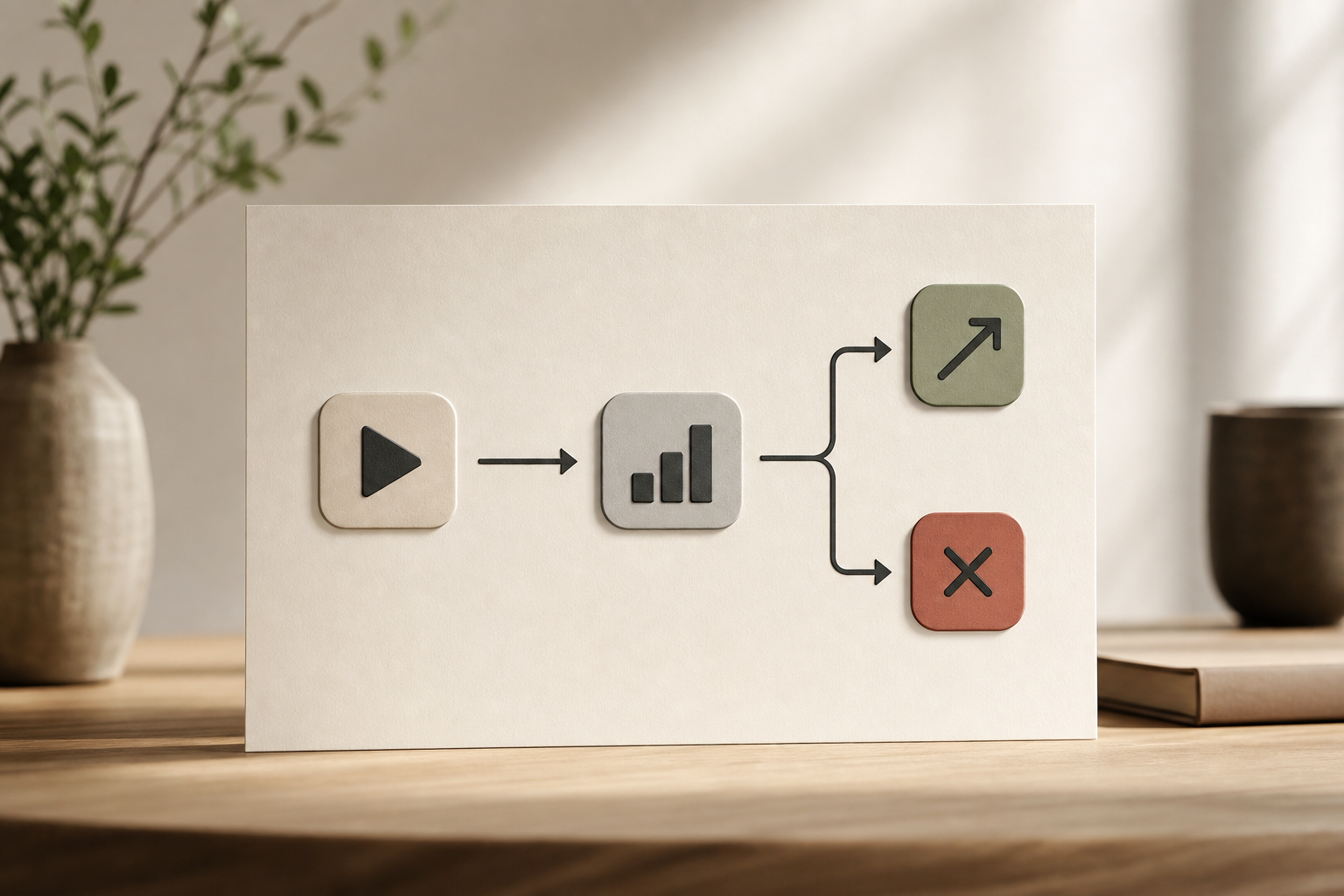
- Scale when CPA ≤ target for 2 days and CTR holds. Add 20–30% budget or duplicate with new GEO.
- Kill when CTR tanks or CPA climbs 25% above target with no recovery by noon on Day 3.
- Fix the page before you add budget. Ads can’t save a slow or unclear checkout.
Key Takeaways
- Start with proof. Use a facebook ad spy tool to sort by long-running, high‑engagement ads, then study the landing page and GEOs.
- Model, don’t copy. Keep the hook logic, change the angle, actors, and scenes. Match CTA to your ask.
- Read the right signals. Engagement + longevity beats likes alone. GEO and placement data matter.
- Test lean. Run a 3‑day plan with hard kill rules. Fix the page before you add spend.
- Compare tools by database scope, filters, and Shopify insight. Choose pricing that fits your current stage.
What to Do This Week
Block two hours to build your watch list. Pull ten ads in your niche that ran 30+ days, study their pages, and script three hooks you can shoot with your phone. Then run a small 3‑day test, read the data, and make one clean iteration. That’s how you stack wins in 2026, less guesswork, more signals.