How To Find Meta Ad Examples That Actually Convert?
Running ads on Meta is not just about boosting posts and hoping for results. The brands winning on this platform all have one thing in common, they study meta ad examples that work and reverse-engineer the strategy behind them.
Whether you are a solo entrepreneur, a digital marketer managing multiple client accounts, or an e-commerce brand trying to scale, looking at strong ad examples gives you a massive shortcut. You skip the guesswork, learn from what is already working, and apply those insights to your own campaigns.
This guide walks you through high-performing formats, breaks down why they work, and shows you how to keep discovering winning ads consistently.
In a hurry? Listen to the blog instead!
Why Studying Meta Ad Examples Is A Smart Strategy?
Before jumping into specific meta ad examples, it helps to understand why this approach works so well.
Advertising on Meta, which includes Facebook and Instagram, involves a steep learning curve. Testing takes time, and poorly structured campaigns drain your budget fast. When you study what other advertisers are doing and identify patterns in successful meta ad examples, you get real-world data that no course or textbook can provide.
You start to notice which headlines create urgency, which visuals stop the scroll, which CTAs convert better in specific niches, and how top brands structure their copy. These are lessons you simply cannot manufacture in a vacuum.
The practice of studying facebook ad examples has been around for years, and now, with Meta expanding its ad ecosystem and introducing new formats, there are more examples to learn from than ever before.
The Core Elements Of A High-Converting Meta Ad?
Before we examine specific meta ad examples, you need to understand what separates a forgettable ad from one that consistently drives clicks and conversions.
A Hook That Stops the Scroll:
The first line of your ad copy or the first frame of your video has one job: stop the user from scrolling. The strongest ads open with a direct question, a bold claim, or a statement that speaks to a very specific pain point.
Clear and Relevant Visuals:
Meta ad examples that perform well almost always feature clean, high-contrast visuals. The image or video directly reflects the product benefit rather than relying on abstract creativity. Simplicity wins.
Concise and Benefit-Driven Copy:
Effective ads do not bury the benefit. The copy makes clear, within the first sentence or two, what the user gets and why they should care right now. Long paragraphs lose attention fast.
A Strong Call to Action:
The best ads always tell the user exactly what to do next. “Shop Now,” “Get Your Free Trial,” “Book a Call”, these CTAs remove ambiguity and create a clear next step.
What Are The Best Meta Ad Formats And How Does Each One Work?
Meta offers several ad formats, and each serves a different purpose. Let us walk through meta ad examples for the most commonly used formats and examine why they work.
1. Single Image Ads:
Single image ads remain popular because they are simple and fast to produce. A skincare brand might use a close-up shot of glowing skin with a headline like “Clear skin in 14 days, guaranteed.” The visual communicates the result immediately, and the copy reinforces it.
In example meta ads like these, the background is minimal, the product is central, and there is no visual clutter to distract the viewer. The ad does one thing well, it makes you want what is being shown.
2. Video Ads:
Video ads consistently outperform static images in engagement. A fitness app, for instance, might open with a 3-second clip of someone waking up exhausted, relatable, real, and emotionally resonant. Within ten seconds, the ad introduces the product as the solution.
What makes the best video ads work is pacing. They deliver the hook fast, show the transformation, and close with a direct CTA, all within 15 to 30 seconds. No wasted frames.
3. Carousel Ads:
Carousel ads work brilliantly for e-commerce brands. A furniture brand might display five different rooms, each featuring a different product, allowing the user to scroll through and find what appeals to them. Each card can link to a different product page.
The best carousel meta ad examples treat each slide as a mini-ad with its own headline, image, and CTA. Together, they tell a story. Separately, each card is compelling enough to stand alone.
4. Collection Ad Meta Example:
A collection ad meta example combines a cover image or video with a product catalogue beneath it. This format works exceptionally well for fashion, home decor, and consumer goods brands.
Imagine a clothing brand running a summer campaign. The cover shows a lifestyle video, friends at the beach, laughing and wearing the brand. Beneath it, four product thumbnails let the user browse the full collection without ever leaving the Meta platform. The whole experience feels native and frictionless.
Collection ads drive strong purchase intent because they combine storytelling with instant product discovery. Users do not feel like they are being sold to, they feel like they are browsing. That shift in psychology makes a significant difference in conversion rates.
5. Lead Generation Ads:
Lead generation ads are designed to collect contact information without sending the user to a separate landing page. A B2B software company might offer a free checklist, “Download our 10-step SaaS growth checklist”, and collect emails directly through Meta’s native form.
The most effective lead gen ads keep the offer extremely clear and the form as short as possible. Friction kills conversions. The fewer fields you ask for, the higher your submission rate.
Also Read:
How To Leverage Meta Ad Formats For High ROI?
Meta Ad Specs: Everything You Need To Know
How Do Different Industries Use Meta Ad Examples To Drive Results?
Different industries approach meta ad examples differently. Here is how some of the most competitive niches structure their campaigns.
E-Commerce:
E-commerce brands dominate the Meta ads landscape. The best e-commerce meta ad examples use customer reviews as social proof, show the product in real-life use, and create urgency through limited-time offers. A common winning structure is: bold headline → product image → short benefit-driven copy → “Shop Now” CTA.
SaaS and Tech:
Software brands rely on problem-focused meta ads examples. The ad opens by naming a specific frustration, “Still manually tracking leads in spreadsheets?”, and immediately positions the product as the smarter solution. Screenshots, demos, and testimonials do the heavy lifting.
Health and Wellness:
Health brands leverage transformation ads, before and after visuals, user testimonials, and emotionally charged storytelling. These ads build trust quickly and speak directly to desires people have been carrying for a long time.
Local Services:
Local businesses use geo-targeted ads to reach nearby audiences. A dental clinic might run a simple ad: clean imagery, a headline like “Accepting new patients in [City],” a short description of services, and a “Book Now” button. Simple, local, and effective.
How To Find The Best Meta Ad Examples For Your Niche?
Knowing what makes meta ad examples effective is one thing. Finding the best current meta ads running in your specific niche is another challenge entirely.
You could spend hours scrolling through your own feed hoping to catch competitor ads. Or you could use a dedicated ad intelligence tool that does the heavy lifting for you.
This is where PowerAdSpy comes in. It is one of the most comprehensive social ad intelligence platforms available today, and it gives marketers instant access to millions of meta ad examples from competitors and top advertisers around the world.
Instead of guessing which meta ad examples to draw inspiration from, PowerAdSpy lets you search with precision, by keyword, niche, competitor domain, or even CTA type, and surface the ads that are actually working right now.
How Can PowerAdSpy Help You Discover Winning Meta Ad Examples?
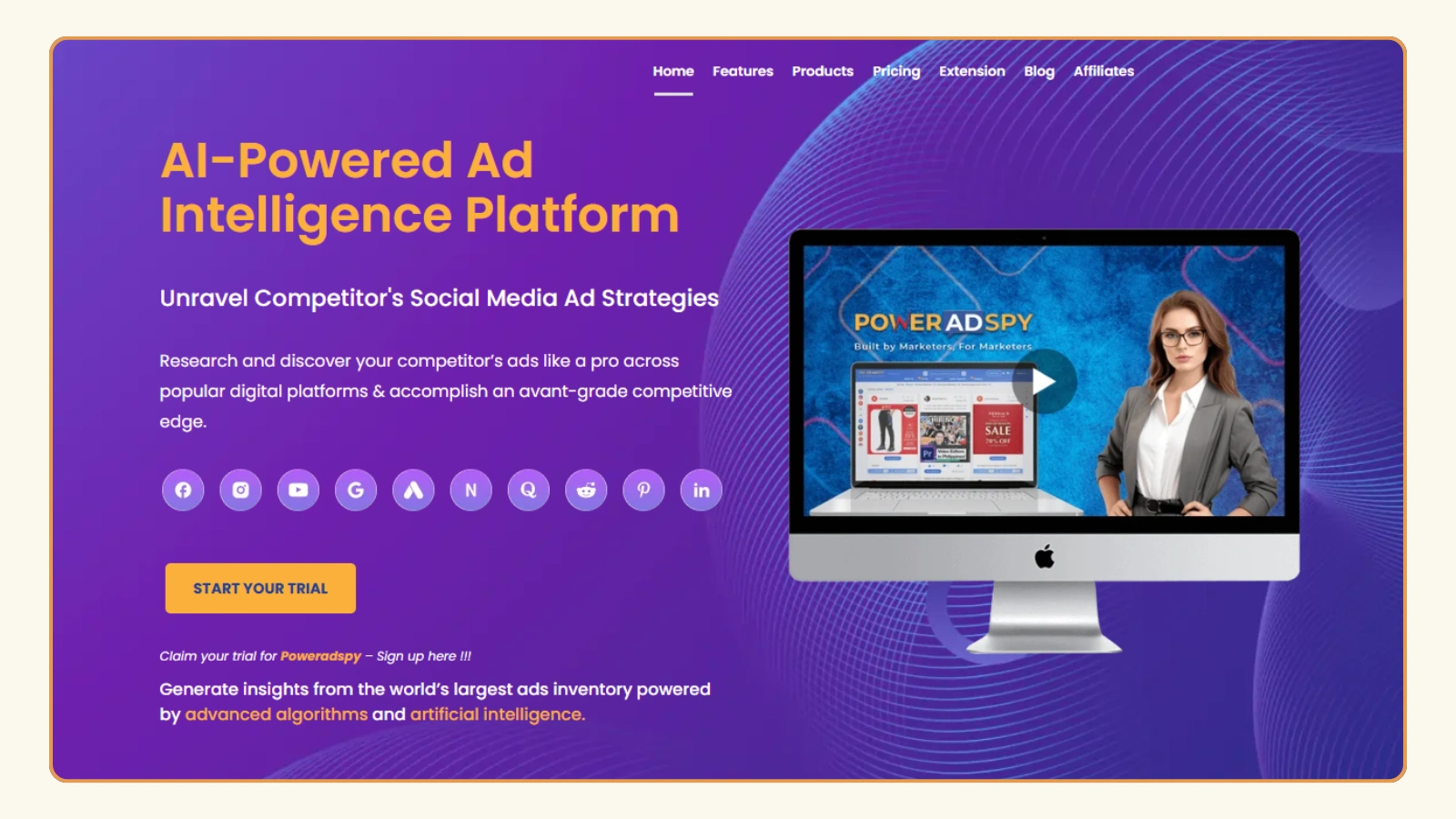
PowerAdSpy is a powerful ad intelligence platform built specifically for marketers who want to stop guessing and start making data-driven decisions. For anyone studying meta ad examples to improve their own campaigns, it is an invaluable resource.
Here are the key features that make it stand out for Meta advertisers:
Millions of Ads From 100+ Countries:
PowerAdSpy maintains one of the fastest-growing ad databases in the industry, with millions of meta ad examples collected from over 100 countries. Fresh ads are added every single day, which means you always have access to what is working right now, not six months ago.
Narrow Down Searches by Keyword, Advertiser, or Domain:
You can search using niche-specific keywords, competitor advertiser names, or even a competitor’s domain. This makes it easy to see every ad your competitors currently run and reverse-engineer their strategy with full clarity.
Engagement-Oriented Sorting:
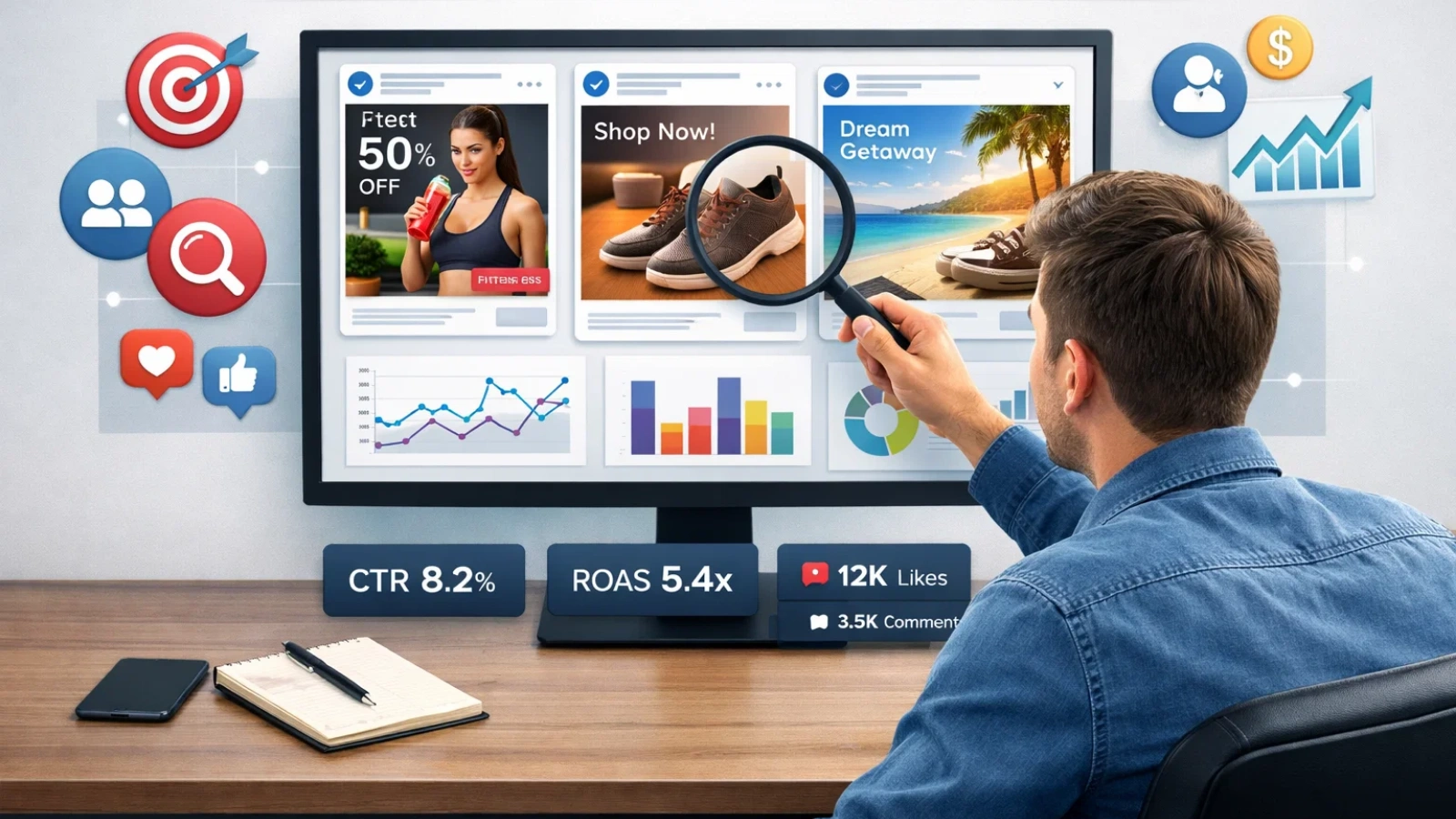
PowerAdSpy lets you sort ads by likes, shares, comments, and date. This engagement-first approach helps you instantly identify which ads in your niche generate real audience responses, not just impressions.
CTA-Based Filtering:
One of the most useful features is the ability to filter ads by Call to Action type. Want to see only ads using “Shop Now” or “Get Quote” in your niche? PowerAdSpy makes that possible, helping you identify which CTAs drive the most traction in your specific market.
Bookmark and Build Your Personal Ad Library:
When you come across best meta ad examples that inspire you, bookmark them with a single click. PowerAdSpy saves them to your personalized ad inventory so you can revisit and reference them anytime, no repeated searching required.
GEO-Targeted Insights:
PowerAdSpy provides precise geo-targeting data, showing you where your competitors run their ads geographically. This helps you identify untapped regions and understand the geographic focus of your top competitors.
What The Best Meta Ad Examples Have In Common?
After analyzing hundreds of ads across categories, a few consistent patterns emerge.
The best ads speak to one specific person, not a broad audience. They identify a pain point, offer a clear solution, and make it effortless to take action. The messaging is tight, the visuals are purposeful, and everything points toward a single conversion goal.
They also test aggressively. A brand running strong campaigns today almost certainly tested dozens of variations to get there. Headlines, visuals, ad formats, CTAs, everything gets tested. The ad you see performing well is the survivor of many experiments.
Another hallmark of top-performing ads is consistency between the ad and the landing page. The headline matches, the visual style continues, and the offer remains the same. Breaking that continuity causes drop-off and kills conversions.
How To Apply Insights From Meta Ad Examples To Your Own Campaigns?
Studying meta ad examples is only valuable if you translate those insights into action. Here is a practical process to follow.
Step 1: Identify Top Performers in Your Niche
Use a tool like PowerAdSpy to search for meta ad examples in your niche. Filter by engagement metrics to find the ads generating the most reactions and shares. These become your benchmarks.
Step 2: Break Down the Structure
For every meta ad example you find, ask: What is the hook? What is the value proposition? Which format are they using? Which CTA do they use? How do the visuals support the message? Document these patterns carefully.
Step 3: Adapt, Not Copy
Never copy meta ad examples directly. Instead, adapt the structure and strategy to your own brand voice, product, and audience. Use what works as a framework and build something original on top of it.
Step 4: Test Multiple Variations
Run at least two or three versions of each ad inspired by your research. Change one variable at a time — headline, image, or CTA, so you can identify what drives performance. This iterative approach separates average campaigns from standout meta ad examples.
Final Thoughts
There is no shortcut to creating great Meta ads, but studying the right meta ad examples gets you significantly closer, faster. When you understand what top brands are doing, why their creative works, and how they structure their campaigns, you gain insights that would otherwise take months of testing to discover.
Across every format, from the collection ad meta example to video, carousel, and lead generation, the core principles remain the same: speak to your audience’s desire, show a clear benefit, and make the next step obvious.
Combine that understanding with a tool like PowerAdSpy, and you will always have a steady stream of fresh, high-performing meta ad examples to learn from and build upon. In a platform that rewards relevance and creativity, constant research is not optional, it is your competitive edge.
Start building your swipe file today. The best meta ad examples are already out there, you just need the right lens to find them.
FAQs
1: How much should I spend on Meta ads as a beginner?
There is no fixed number, but most beginners see meaningful data starting at $10 to $20 per day per ad set. The key is to run ads long enough to gather sufficient data before making optimization decisions. Cutting campaigns too early is one of the most common budget mistakes new advertisers make.
2: How often should I refresh my Meta ad creatives?
Most ads begin experiencing creative fatigue within 2 to 4 weeks, depending on your audience size and daily reach. Once your frequency score rises above 3 and your CTR starts dropping, it is time to introduce fresh creatives. Regularly studying new meta ad examples helps you stay ahead of fatigue.
3: What is the ideal image size for Meta ads in 2025?
The recommended size for most Meta ad placements is 1080 x 1080 pixels for square format and 1080 x 1920 pixels for Stories and Reels. Always design with mobile-first in mind since the majority of users view ads on their phones.