
A Complete Guide to Social Media Advertising Costs for 2026
Social media advertising costs looks simple from the outside. You set a budget, launch a campaign, and expect results. But once you start running ads, the reality feels very different.
The social media advertising cost can shift quickly depending on the platform, your audience, timing, and even how your ad feels to users. If it blends in naturally, it performs. If it feels intrusive, people scroll past it.
For example, one small business might generate leads at ₹50, while another spends five times more for similar results. In many cases, they don’t fully understand what caused that difference.
So the real question isn’t just how much it costs to advertise on social media. It’s how to spend your budget in a way that actually works.
This blog breaks down advertising costs across major platforms, explains what drives those costs, and shows how to approach budgeting with more clarity and control.
Hit ‘Play’ Button & Tune Into The Blog!
What Is Social Media Advertising Cost
Social media advertising cost refers to the total amount spent running paid campaigns across platforms like Meta, TikTok, LinkedIn, YouTube, and Pinterest. In practice, it is not a single number but a combination of metrics, each tied to a specific campaign objective.
- CPC, or cost per click, measures how much you pay when someone actively clicks your ad. This is typically used in traffic or conversion-focused campaigns.
- CPM, or cost per 1,000 impressions, reflects how much you pay to show your ad, regardless of interaction. This is more relevant for awareness-driven campaigns.
- CPL, or cost per lead, calculates how much it takes to generate a lead. CPL is especially important for service-based businesses and B2B businesses.
- CPA, or cost per acquisition, measures how much you spend to achieve a final outcome such as a sale or signup. This is the most outcome-focused metric.
Each of these metrics serves a different purpose. A DTC brand focused on driving purchases should prioritize CPA, while a company entering a new market may need to focus on CPM to build awareness first. The key is alignment: choosing the metric that matches your campaign objective. One of the most expensive mistakes advertisers make is optimizing for the wrong metric.
Why it matters
Because your social media ad cost directly shapes your return on investment. It determines whether you can scale profitably or continue spending without meaningful results. It also influences which platforms are even worth testing for your business model.
Social Media Advertising Cost by Platform Benchmarks
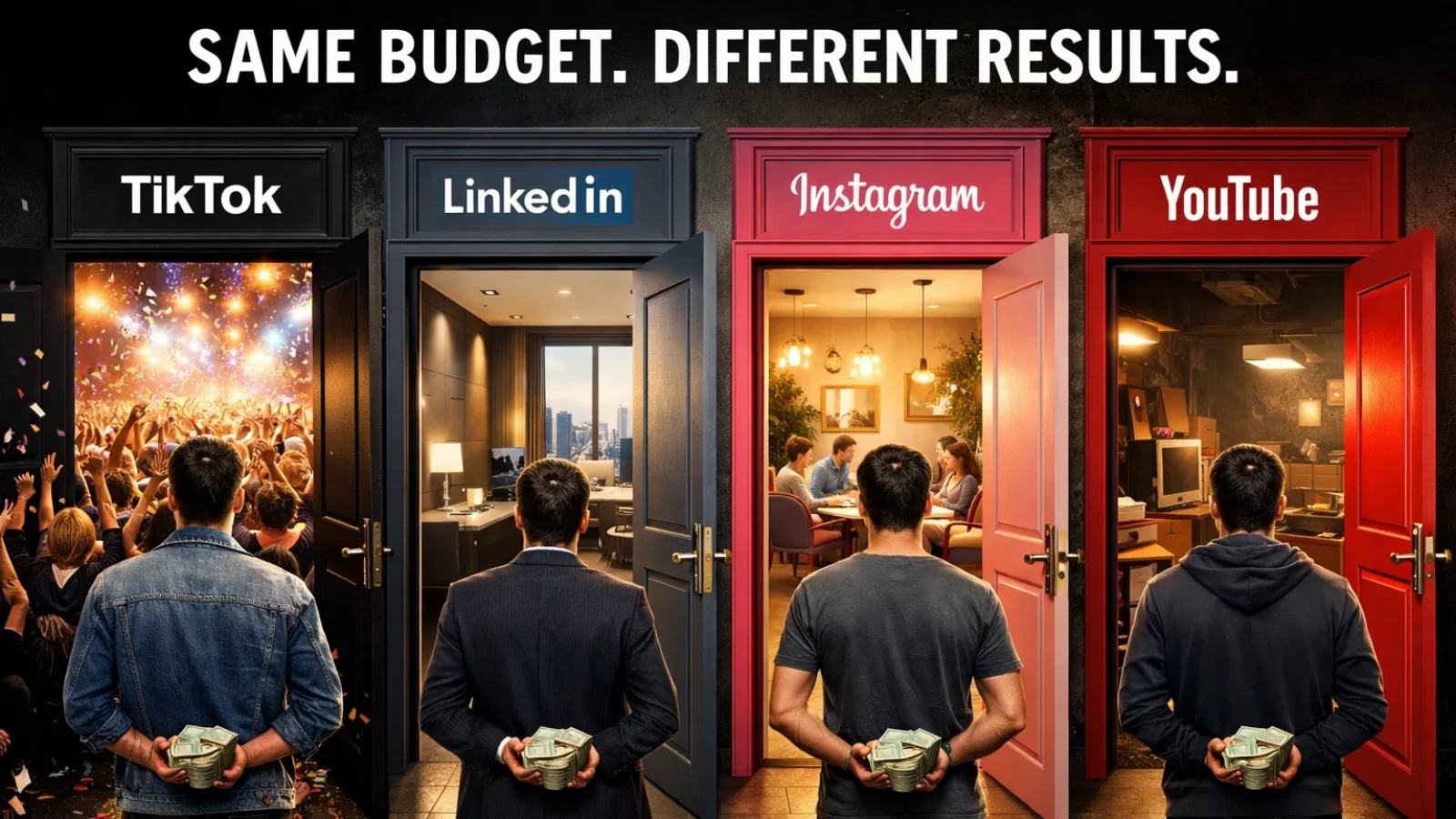
Look at a consolidated snapshot of the advertising costs on social media platforms.
| $0.44 to $1.92 | $8.50 to $14 | Broad reach, retargeting | Low to Mid | |
| $1.10 to $4.00 | $7 to $15 | Visual brands, D2C | Low to Mid | |
| TikTok | $0.35 to $1.50 | $4 to $7 | Viral content | Lowest |
| $3.94 to $10 | $33 to $65 | B2B leads | Highest | |
| YouTube | about $3.00 | about $7.61 | Video awareness | Mid |
| Snapchat | not fixed | about $12.84 | 18 to 34 audience | Mid to High |
| $0.05 to $0.15 | not fixed | Purchase intent | Very Low |
These benchmarks give direction, not certainty. Actual social media ad cost depends heavily on how campaigns are executed.
Facebook and Instagram: The Auction-Based Workhorse
Meta platforms continue to anchor most paid social strategies. Their strength lies in reach, targeting flexibility, and a mature advertising ecosystem.
The social media advertising cost here remains relatively accessible, but it is no longer as low as it once was. Increased competition, privacy-related changes, and algorithm adjustments have all contributed to rising costs.
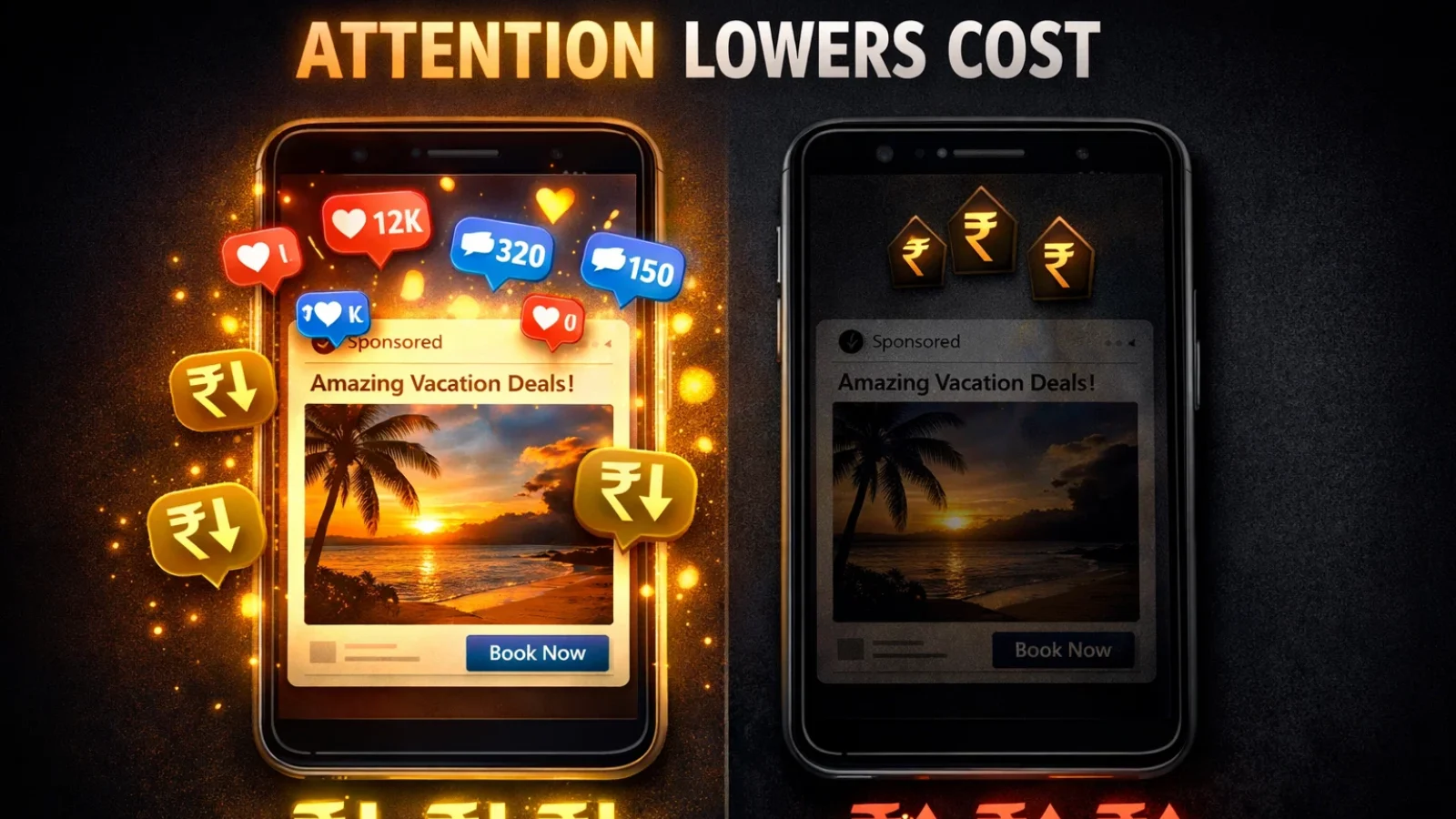
A key factor that often gets underestimated is creative quality. Meta’s system rewards ads that generate engagement. When people interact, click, or watch longer, the platform lowers your effective cost. When they ignore or skip, your cost rises even if your targeting remains the same.
That is why two advertisers targeting the same audience can experience completely different outcomes.
TikTok Low Cost High Creative Demand
TikTok offers one of the lowest entry points in terms of cost for advertising on social media, but it demands a different mindset.
Traditional ad formats that perform well on Meta often struggle here. TikTok prioritizes content that feels organic to the platform. Quick hooks, conversational tone, and visually engaging storytelling matter far more than polished production.
The platform also moves fast. Creative fatigue sets in quickly, often within a week at scale. Advertisers who continuously test new variations tend to maintain a lower social media ad cost, while those relying on static campaigns see performance drop rapidly.
LinkedIn is expensive but Targeted.
LinkedIn sits at the higher end of social media advertising costs, and for good reason. It offers access to highly specific professional audiences that are difficult to reach elsewhere.
The cost may seem high on the surface, but context matters. A B2B company closing deals worth thousands or more can justify a higher cost per lead.
The platform rewards precision. Broad targeting rarely works here. Clear audience definition, strong messaging, and patience are essential to making the social media advertising cost sustainable.
YouTube Strong for Awareness
YouTube offers a balanced position in terms of social media advertising cost, especially for brands investing in video.
It works particularly well for top-of-funnel campaigns. You can reach large audiences efficiently, then retarget those viewers across other platforms.
This layered approach often improves overall campaign efficiency and reduces long-term social media ad costs.
Pinterest Low Cost High Intent
Pinterest is often overlooked, yet it consistently delivers one of the lowest CPC ranges.
Users on Pinterest are not just browsing. They are planning, searching, and often ready to purchase. That intent can translate into a very efficient social media advertising cost for the right categories.
However, it is not universal. If your product does not fit a visual discovery journey, results may be limited.
What Factors Actually Drive Social Media Ad Costs
Even within the same platform, costs can vary significantly. The difference often comes down to a few core variables.
Audience Targeting
More specific targeting typically increases cost because more advertisers compete for that same segment. However, higher cost does not always mean worse performance. A well-defined audience may convert better, balancing the overall social media advertising cost.
Industry Competition
Some industries are naturally more competitive. Finance, SaaS, and real estate often face higher costs than lifestyle or retail brands.
Seasonality
Demand fluctuates throughout the year. Costs rise during peak periods such as major sales events and holidays. Timing campaigns strategically can reduce overall social media advertising costs.
Ad Format
Video, static images, and carousel ads all perform differently. Video often costs more upfront but delivers stronger engagement, which can lower effective social media advertising costs over time.
Ad Quality
Creative quality remains one of the most influential factors. Ads that resonate with audiences generate better engagement, which platforms reward with lower costs.
Monthly Budget Breakdown by Business Size
| Small Business | $500 to $2,000 | Lead generation, awareness |
| Mid Market | $2,000 to $10,000 | Growth and scaling |
| Enterprise | $10,000 and above | Expansion and dominance |
The actual social media advertising cost depends not just on how much you spend, but how effectively you use that budget.
Are Social Media Ads Worth It? A Straightforward ROI Analysis
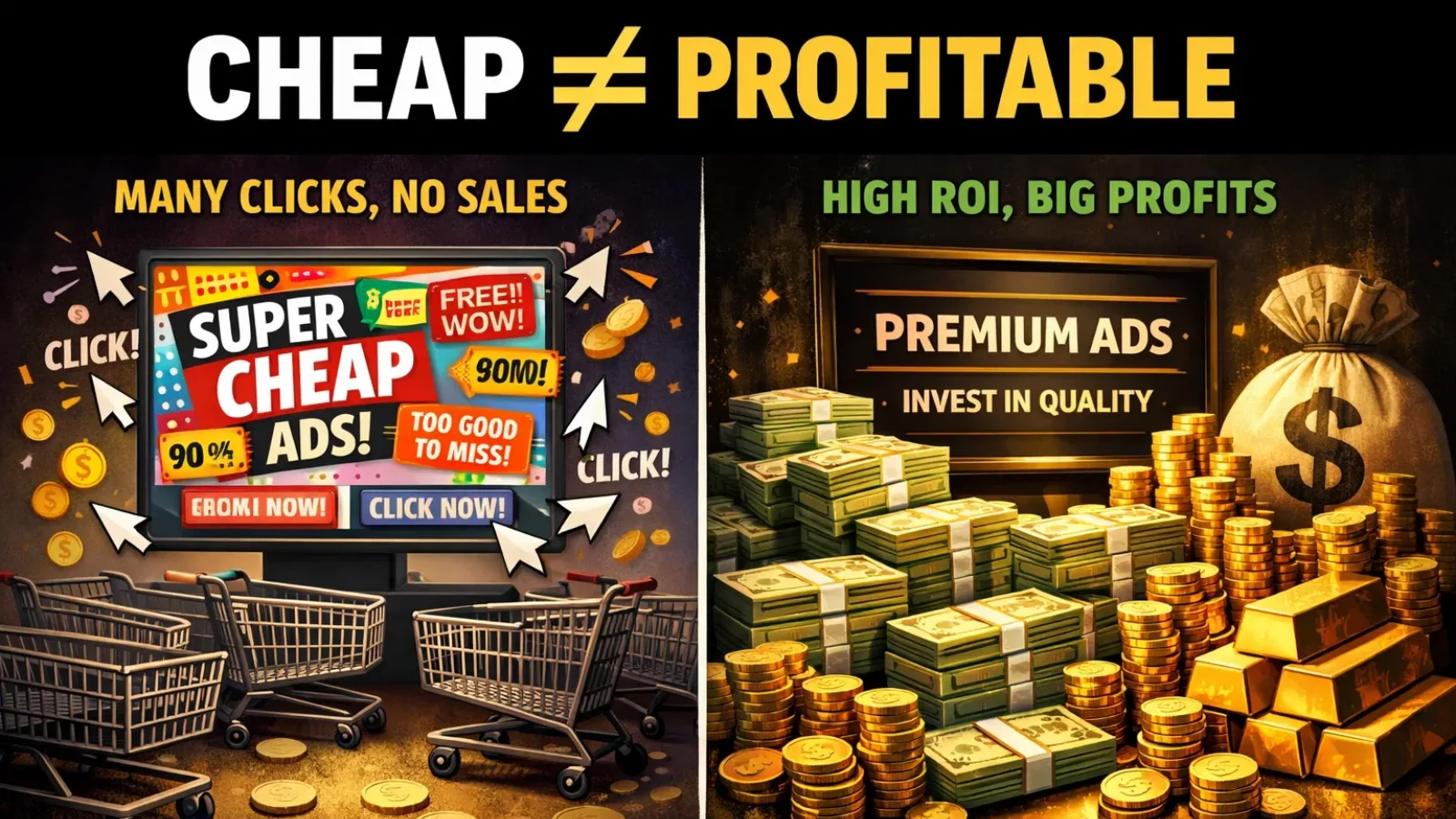
When executed well, paid social delivers measurable returns.
Revenue is split by ad spend to determine ROAS. A campaign generating $3,000 from a $1,000 investment delivers a 3x return.
The key is not just reducing social media advertising cost, but ensuring that the return justifies the spend. A lower cost with poor conversion is still inefficient.
The Hidden Cost Factor Most Marketers Ignore
One of the most overlooked drivers of social media advertising cost is the absence of competitive insight.
Many advertisers operate in isolation. They test ideas without knowing whether those ideas have already been tested, refined, or abandoned by competitors.
This leads to repeated mistakes and unnecessary spending.
Why Competitor Monitoring Matters
It helps eliminate guesswork.
It reveals what is already working.
It highlights patterns in creative, format, and timing.
What to Analyze
Ad duration often signals performance. Long-running ads are usually profitable.
Format trends show where competitors are investing.
Messaging patterns reveal what resonates with the audience.
Using this information reduces wasted experimentation and lowers overall social media advertising costs.
Put Your Research to Work With PowerAdSpy

Understanding cost factors is only half the equation. Acting on competitive intelligence before you spend is what separates efficient advertisers from everyone else.
PowerAdSpy is a social ad intelligence platform with millions of ads from 100+ countries. It lets you see exactly what competitors are running, how long those ads have been active, and what’s generating real engagement filtered by keyword, competitor domain, ad format, placement, or call-to-action type.
Long-running competitor ads almost always indicate profitability. Advertisers don’t sustain losing campaigns. With PowerAdSpy, you can identify those ads in minutes rather than spending your own budget to find out the hard way.
You can also sort ads by likes, shares, and comments to spot what’s resonating in your niche, search by competitor domain to audit their entire active ad strategy, and bookmark creatives worth referencing for your own campaigns.
How to Reduce Social Media Advertising Costs
Lowering social media advertising costs is not about cutting your budget, but making better decisions. Brands that spend efficiently focus on what actually drives performance.
Creative quality is one of the biggest factors. Strong visuals and clear messaging improve engagement and conversions, which helps reduce costs. Retargeting also increases efficiency by focusing on users who have already shown interest, leading to higher conversion rates.
Testing multiple audience segments gives clarity on where your budget performs best, allowing you to allocate spend more effectively. At the same time, the right bidding strategy helps platforms optimize delivery and control costs over time.
Learning from competitors can further reduce wasted spend by avoiding common mistakes.
Each of these elements directly impacts your overall advertising cost, and together, they create a more efficient and scalable campaign strategy.
Ad Format Cost Comparison
| Video | Higher | Strong engagement |
| Image | Lower | Moderate performance |
| Carousel | Medium | Balanced results |
Industry Specific Cost Benchmarks
eCommerce
Typically lower CPC but high competition. Performance depends on creative differentiation.
SaaS
Higher cost per lead due to longer decision cycles, but higher potential value.
Finance
Among the highest social media advertising costs, driven by intense competition and high-value conversions.
Seasonal Ad Cost Calendar
Advertising costs follow a predictable pattern throughout the year, and understanding this cycle can help you plan more effectively.
In Q1, costs tend to be the lowest as demand drops after the holiday season. Many advertisers pull back, creating an opportunity to capture attention at a lower cost.
Q2 remains relatively stable. Competition starts to normalize, and costs are more predictable, making it a good time to test and optimize campaigns.
In Q3, costs begin to rise gradually. Brands start increasing spend in preparation for major sales periods, which leads to higher competition.
Q4 sees peak competition and the highest pricing. With events like festive sales and year-end promotions, nearly every advertiser is active, driving costs up significantly.
Understanding this quarterly cycle allows you to allocate budget more strategically and manage social media ad costs more effectively.
How to Plan Your Social Media Ad Budget Step by Step
Step 1: Start by defining a clear objective. Be specific about what you want to achieve, whether it is brand awareness, lead generation, or conversions. Your objective will guide every decision that follows.
Step 2: Choose the right platform based on where your target audience spends time. Not every platform works for every business, so focus on the one that aligns best with your audience behavior.
Step 3: Estimate your expected social media advertising cost. Look at industry benchmarks and past performance, if available, to set realistic expectations before you begin.
Step 4: Allocate a portion of your budget for testing. Use this phase to experiment with creatives, audiences, and messaging before scaling what works.
Step 5: Study competitor activity to understand what approaches are already being used in your market. This helps you identify gaps and avoid repeating ineffective strategies.
Step 6: Optimize consistently. Monitor performance, refine your campaigns, and make data-driven adjustments to improve results over time.
Common Social Media Advertising Cost Mistakes
Focusing only on click cost instead of actual results is a common mistake. A low CPC may look efficient, but if it doesn’t lead to conversions or meaningful outcomes, it ultimately wastes budget.
Ignoring creative quality can also drive costs up. Weak visuals or unclear messaging reduce engagement, which leads to poor performance and higher costs over time.
Running too few variations limits your ability to identify what works. Without testing multiple creatives, audiences, or formats, campaigns often underperform and miss optimization opportunities.
Scaling campaigns too early is another issue. Increasing budget before validating performance can amplify inefficiencies instead of results.
Skipping competitor research leaves you operating without context. Understanding what others are doing helps you avoid ineffective strategies and identify better opportunities.
These mistakes often increase social media advertising costs without delivering better outcomes.
Also Read –
A Complete Guide to Social Media Ad Costs for 2026
10 Killer Tactics On How To Improve Social Media Lead Generation
Advanced Strategies to Lower Costs and Increase ROI
Run structured creative tests to understand what truly resonates with your audience. Instead of guessing, systematically test different visuals, formats, and messaging to identify what drives results.
Use high-quality lookalike audiences built from strong data sources, such as past customers or high-intent users. This improves targeting accuracy and increases the chances of better performance.
Monitor ad frequency closely to avoid audience fatigue. When the same users see your ads too often, engagement drops and costs begin to rise.
Distribute your budget across platforms rather than relying on a single channel. This reduces risk and helps you discover where your campaigns perform most efficiently.
Base decisions on data, not assumptions. Regularly review performance metrics and optimize based on what is actually working.
These approaches help control long-term social media advertising costs while consistently improving overall performance.
Conclusion
The social media advertising cost is not a fixed number. It shifts with strategy, execution, competition, and timing.
Benchmarks provide direction, but they do not determine success. What matters is how you interpret those benchmarks and act on them.
When you combine platform understanding with competitive insight, your campaigns become more informed, more efficient, and far more scalable.
At that point, you are no longer guessing your way through ad spend. You are making calculated decisions that turn cost into growth.
Frequently Asked Questions
- How much does it cost to advertise on social media?
Most beginners start with $300 to $500 monthly and scale based on performance.
- How much does it cost to advertise on social media per month?
Monthly costs depend on your budget and scale. Small businesses may start with ₹5,000–₹20,000 per month, while larger campaigns can easily exceed ₹1,00,000+ depending on targeting and objectives.
- Why do social media advertising costs vary so much?
Costs fluctuate based on factors like:
- Audience targeting (niche vs broad)
- Platform (Facebook, Instagram, LinkedIn, etc.)
- Ad quality and engagement
- Industry competition
If your ad resonates well, costs typically decrease.
- Which platform has the lowest social media advertising cost?
Generally:
- Facebook & Instagram → Lower cost, better for B2C
- LinkedIn → Higher cost, better for B2B
- YouTube → Cost-effective for video reach
The cheapest option depends on your target audience and campaign type.
- What is the cost for advertising on social media per click (CPC)?
CPC varies by platform:
- Facebook/Instagram: ₹5 – ₹30
- LinkedIn: ₹50 – ₹300+
- YouTube: ₹2 – ₹10
Highly competitive industries often have higher CPC.