Google Ads vs Facebook Ads: Which is Right for You?
You have a budget. You have a goal. And somehow, two very different platforms are both convinced they deserve your money. When it comes to Google Ads vs Facebook Ads, most marketers and HR professionals walk away from comparison articles more confused than when they started. The guides weigh both sides, list some pros and cons, and land on “it depends on your business.” That’s not guidance. That’s a way of avoiding the question.
This piece takes a different approach to Google Ads vs Facebook Ads. By the end, you’ll know which platform actually fits your goal, your audience, and your budget with specific recommendations based on your situation, whether you’re selling products, generating B2B leads, or trying to hire faster.
The Short Answer
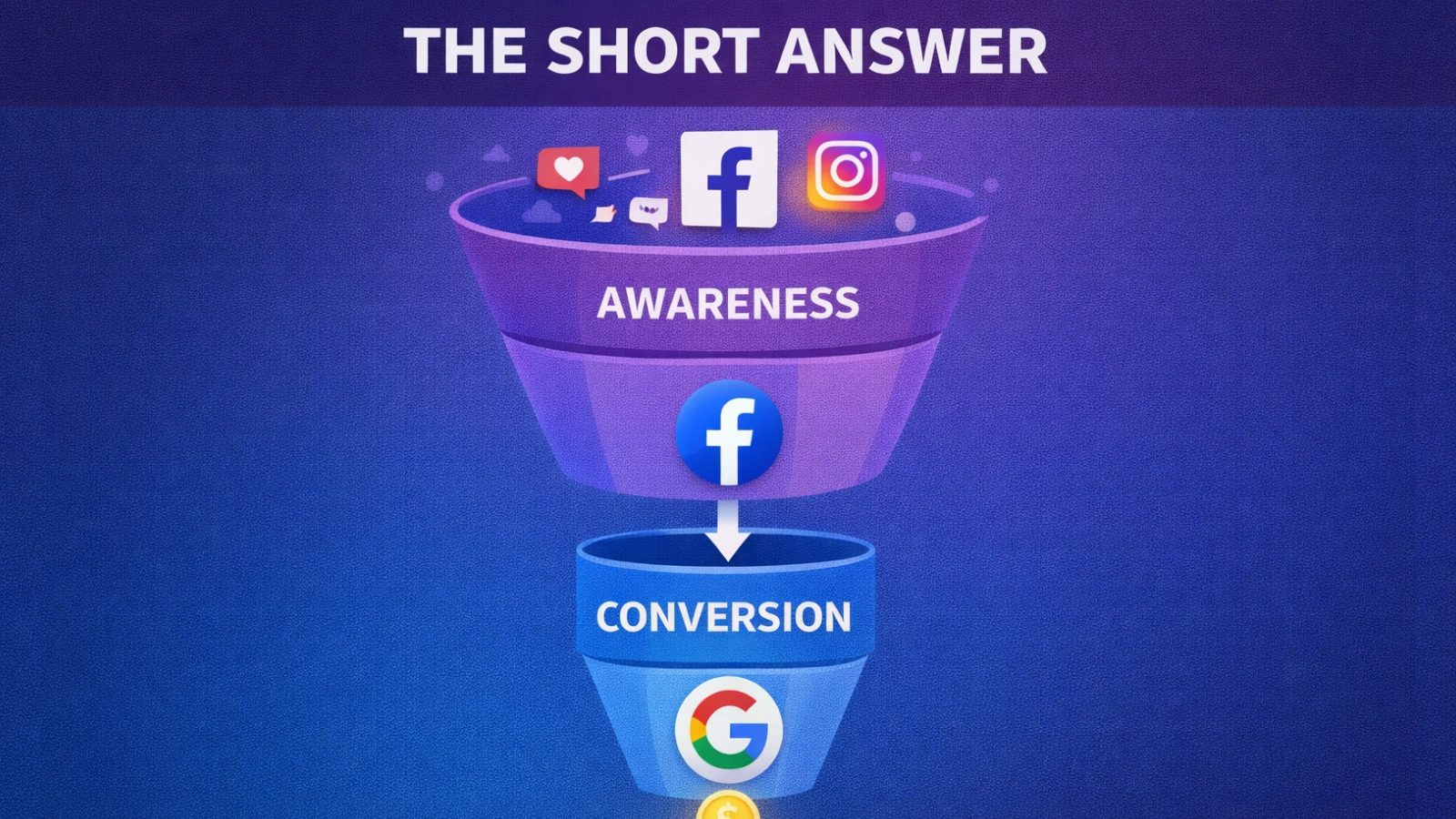
Google Ads reaches people who are already searching for what you offer. Facebook Ads finds people who match your ideal customer profile before they ever think to search. In the Google Ads vs Facebook Ads debate, this distinction matters most.
One rule worth keeping in mind when evaluating Google Ads vs Facebook Ads: if your audience already knows they have a problem and wants to solve it, use Google. If you need to make them aware that the problem exists, use Facebook.
That single distinction shapes every decision in this guide.
What Are Google Ads and Facebook Ads?
Google Ads
Google Ads runs on intent. When someone searches “best CRM for small businesses” or “HR software,” your ad can appear at the very top of those results. You’re not interrupting anyone; you’re showing up at the exact moment they’re looking.
Search is just the beginning. Google also places ads across its Display Network, YouTube, Google Shopping, and its AI-driven Performance Max format. The connecting thread across all of them is that users arrive with some kind of purpose. They’re searching, watching, or browsing with a specific goal in mind.
That behavior is what makes Google so effective at capturing demand that already exists.
Facebook Ads (Meta Ads)
Facebook Ads operates on a completely different premise. Nobody scrolling through Instagram or Facebook is looking for your product. They’re catching up on posts, watching Reels, and keeping tabs on friends. Your ad appears because the platform has matched your targeting criteria to that specific person based on their age, location, interests, job title, behavior, and a long list of other signals.
That’s not a flaw. It’s a different kind of leverage entirely.
Meta’s advertising ecosystem spans Facebook, Instagram, Messenger, and the Audience Network. With more than 3 billion monthly active users, it’s one of the most expansive addressable audiences available to any advertiser. The platform is especially strong for building awareness, creating demand, and reaching people who would never have searched for you on their own.
When you put Google Ads vs Facebook Ads side by side, the clearest summary is this: Google finds buyers; Facebook finds audiences.
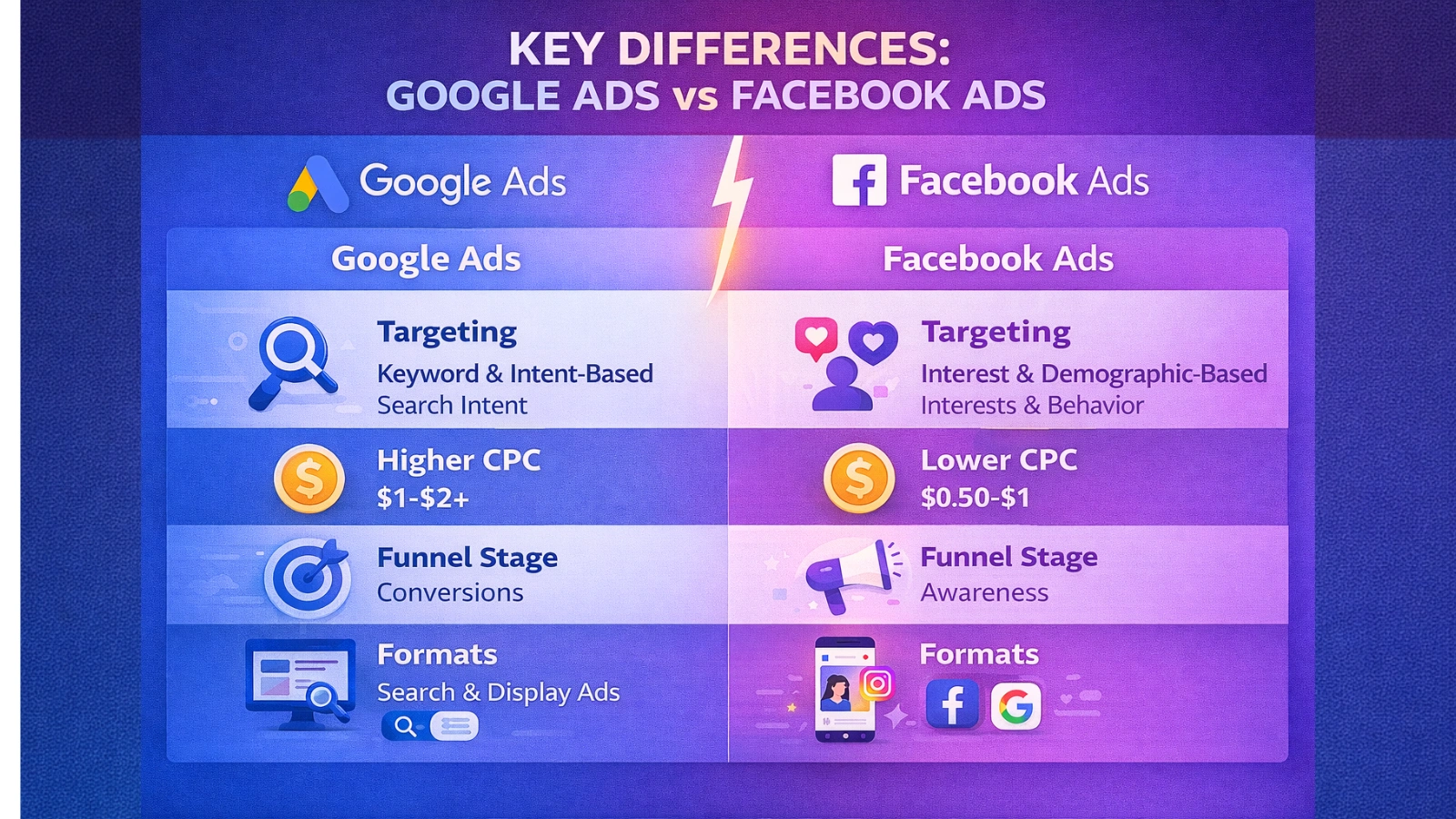
Google Ads vs Facebook Ads: Key Differences at a Glance
| Factor | Google Ads | Facebook Ads |
| Targeting method | Keyword/search intent | Demographics, interests, behavior |
| Average CPC | ~$2.69 (all industries) | ~$0.62–$0.90 |
| Best funnel stage | Bottom (purchase intent) | Top/middle (awareness, consideration) |
| Ad formats | Text, Display, Video, Shopping | Image, Video, Carousel, Stories, Reels |
| Audience size | 5 trillion+ annual searches | 3 billion+ monthly active users |
| Best for | Capturing existing demand | Creating new demand |
Targeting: Intent vs. Interest
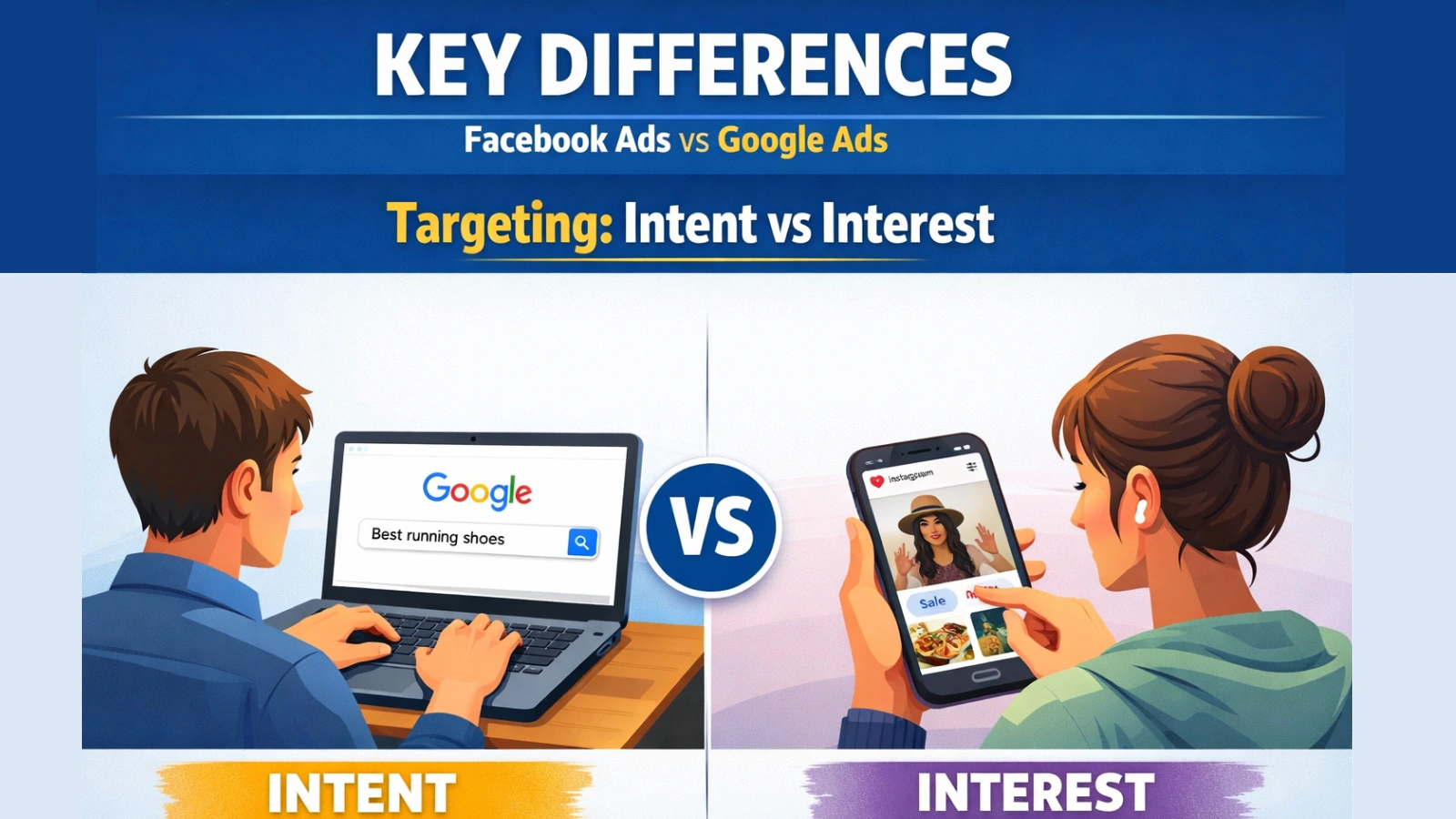
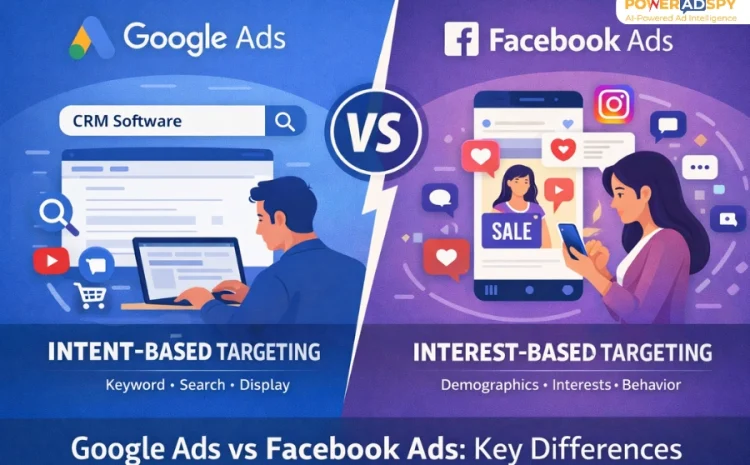
In the Google Ads vs Facebook Ads debate, targeting is where the two platforms differ most fundamentally. Google targets what people are actively searching for. Facebook targets who people are.
Take a brand selling ergonomic office chairs. On Google, they bid on searches like “best ergonomic chair for back pain” or “office chair under ₹15,000,” appearing only when someone is actively looking to buy. On Facebook, they target working professionals aged 25-45, remote employees, and people interested in home office setups or productivity content.
In this case, Google captures buyers who already know they need a chair. Facebook reaches people who may be experiencing discomfort but haven’t yet decided to look for a solution. Neither approach is wrong. They simply operate at different stages of the decision-making process.
Google Ads vs Facebook Ads Cost
Cost comparisons are where first-time advertisers most commonly get misled. Facebook’s average CPC of $0.62–$0.90 looks dramatically cheaper than Google’s $2.69. But the click price is only part of the equation.
Google’s search traffic converts at a meaningfully higher rate, often 4–6% on well-run campaigns, because the user already has intent. Facebook clicks cost less, but those users are in browsing mode, not buying mode. The conversion path is longer and requires more touchpoints. A cheaper click that takes four retargeting steps before converting can end up costing more in total than a higher-priced Google click that converts on the first visit.
The only number worth comparing in any Google Ads vs Facebook Ads cost analysis is cost per acquisition, not cost per click.
Ad Formats
Google Ads Formats
- Text ads (search results)
- Display banner ads (across websites)
- Pre-roll video ads (on YouTube)
- Shopping ads (product image + price listings)
- Performance Max campaigns (AI-managed across all formats)
Facebook (Meta) Ads Formats
- Single image ads
- Video ads
- Carousel ads (multiple products or images)
- Stories ads
- Reels ads
- Lead generation forms (in-app submissions)
Which Platform Is Right for Your Use Case?
For E-Commerce Brands
The Google Ads vs Facebook Ads question for e-commerce brands rarely has a single answer. The most effective strategies don’t pick a winner between the two platforms. They assign each one a specific job.
Facebook works at the top of the funnel. It introduces your products to people who’ve never encountered your brand, builds visual awareness, and drives traffic through carousel and catalog ad formats genuinely suited for product discovery. Google Shopping then picks up the bottom of the funnel, capturing people who’ve now seen products like yours and are actively searching to buy.
A practical approach: run Facebook campaigns to a broad awareness audience, then use Google to capture the branded and category searches that follow. Let each platform do what it’s actually built for.
For B2B and SaaS Companies
Google Ads vs Facebook Ads for B2B almost always favors Google, and the reason is straightforward. A decision-maker searching “best project management software for remote teams” or “cloud-based payroll software India” is already in evaluation mode. A well-placed search ad intercepts that research at exactly the right moment.
Facebook isn’t irrelevant for B2B, but its role is narrower. Awareness campaigns targeting specific job titles, such as CFOs, HR directors, and operations managers, can build familiarity over time. For most B2B companies, though, Google’s intent-based targeting consistently delivers cleaner signals and more qualified leads.
For HR Professionals and Talent Teams
Most ad comparison guides skip this entirely. That’s a significant gap, because advertising for recruitment works differently from advertising for sales, and the Google Ads vs Facebook Ads choice reflects that difference directly.
Recruiting involves two very different campaign objectives running at the same time. One targets active job seekers who are already searching. The other targets passive candidates who aren’t looking, but might respond to the right opportunity.
Google handles active seekers well. Someone typing “data analyst jobs in Hyderabad” or “remote HR manager positions” is signaling intent directly. A Google Search ad placed against those queries can drive qualified applications at a reasonable cost, especially for urgent or hard-to-fill roles.
Facebook reaches the passive majority. A significant portion of employed professionals would consider a new role if the right one came to them; they’re simply not actively looking. Facebook’s targeting lets you reach people by job title, industry, inferred experience level, location, and even engagement with competitor companies’ pages. Instagram Reels and Facebook video work particularly well for employer branding campaigns: short clips showing team culture, work environment, and employee perspectives tend to outperform static formats.
In a Google Ads vs Facebook Ads comparison for talent teams specifically, Google fills urgent roles; Facebook builds the employer brand that makes future hiring less expensive. The most effective talent acquisition teams run both – Google for active hiring and Facebook for pipeline development.
For Local Businesses and Service Providers
The Google Ads vs Facebook Ads answer for local businesses is usually Google first. Dentists, lawyers, plumbers, tutors, and restaurants typically benefit from search-driven visibility. When someone needs a burst pipe fixed or a root canal this week, they search. Google Local Ads ensure you appear at that moment of urgent need.
Facebook’s role for local businesses is slower but valuable. For service providers where trust determines the choice – therapists, financial advisors, and fitness coaches – an ongoing Facebook presence builds the familiarity that often tips the decision when the moment arrives. It’s a long-game investment, not an immediate lead source.
How PowerAdSpy Helps You Analyze and Improve Ad Performance
Picking the right side in the Google Ads vs Facebook Ads decision is only part of the equation. The bigger challenge is understanding what’s already working in your market before you spend heavily on testing.
This is where PowerAdSpy fits in. Instead of managing campaigns, it focuses on competitive intelligence, giving you visibility into real ads that are already running across platforms like Facebook, Instagram, Google Display, and more.
Here’s what PowerAdSpy brings to your ad strategy:
- Ad intelligence database – Access a large, continuously updated library of live and historical ads across multiple platforms. This lets you see what competitors are actually running, not just what they claim works.
- Filter and search capabilities – Narrow down ads by keywords, advertiser, engagement level, CTA type, ad position, and platform. This helps you identify high-performing patterns within your niche instead of guessing.
- Engagement-based sorting – View ads based on likes, shares, comments, and longevity. Ads that have been running longer or have higher engagement are often strong indicators of performance.
- Landing page insights – Analyze the landing pages behind ads to understand the full funnel from creative to conversion path, not just the ad itself.
- Competitor tracking – Monitor specific brands or competitors over time to see how their messaging, creatives, and offers evolve.
- Geo-targeted ad visibility – Explore ads being shown in different regions, which is useful for businesses targeting specific markets or planning expansion.
The outcome is a more informed starting point. Instead of building campaigns from scratch, you’re working with proven patterns, validated creatives, and real market data – which reduces testing costs and shortens the path to performance.
Common Mistakes When Choosing Between Google Ads vs Facebook Ads
A few errors show up consistently in the Google Ads vs Facebook Ads conversation, and they tend to be expensive by the time anyone notices.
Optimizing for CPC instead of CPA. Selecting Facebook because the clicks are cheaper is one of the most common first-timer mistakes. Click cost is a surface metric. The number that actually matters is cost per acquisition: how much did you spend to get one customer, one qualified lead, or one applicant? That figure often tells a very different story.
Using the same creative on both platforms. What performs on Google – direct, intent-matched, clear offer – rarely performs on Facebook. Facebook users respond to storytelling, visual quality, and emotional relevance. Repurposing the same copy across both platforms is one of the fastest ways to waste a budget.
Scaling Facebook spend before conversion tracking is accurate. Meta’s algorithm optimizes based on the data it receives. If your pixel is misreporting purchases, form fills, or applications, and you increase the budget anyway, you’re amplifying bad inputs. The algorithm scales what it sees, not what’s actually happening.
Running Google Search campaigns for brand awareness. Google is built to capture demand, not create it. Running search ads for a brand or product no one has heard of means paying for clicks from people who weren’t looking for you and quickly bounce. Build awareness elsewhere first – through Facebook, content, or PR – then let Google capture the search traffic that awareness generates.
Treating it as a permanent choice. The strongest advertising programs are dynamic. Start with one platform, get baseline data, then layer in the second. Budget allocation shifts based on performance, not habit.
Advanced Insights: What’s Changed in 2025
Both sides of the Google Ads vs Facebook Ads equation look significantly different from even two years ago. Applying an older playbook means leaving performance on the table.
Google Performance Max
Performance Max is now Google’s default campaign type for many advertisers. Rather than managing search, display, and YouTube campaigns separately, Performance Max runs across all Google inventory simultaneously and lets the algorithm determine placement. The tradeoff is control – you hand over granular decision-making in exchange for broader reach. Campaigns with strong creative assets, well-defined conversion goals, and sufficient historical data tend to perform well. Campaigns without those inputs tend to spend inefficiently and quickly.
Meta’s Andromeda Algorithm
Meta’s 2024 algorithm update, referred to internally as Andromeda, changed how ads are ranked and delivered. Creative quality and engagement signals now carry significantly more weight than audience size. Practically, this means hyper-narrow targeting – stacking five demographic and interest filters on a small audience – often underperforms broad targeting paired with high-quality creative. The algorithm is capable of identifying responsive buyers within a large audience, but only when the ad itself provides a clear enough signal about who those buyers are.
The Post-iOS 14 Reality
Apple’s App Tracking Transparency framework reduced Facebook’s ability to track user behavior across third-party apps and websites. The effects are ongoing: reporting gaps, higher CPMs, and less precise conversion attribution. The response is no longer optional for serious advertisers. Implement the Meta Conversions API, upload first-party customer lists consistently, and treat your own data as a durable asset. Third-party tracking will face further restrictions – brands with strong first-party data will continue to have a meaningful advantage over those that don’t.
The Platform That Matches Your Intent Wins
There’s no single right answer to the Google Ads vs Facebook Ads question. There is, however, a clear way to think about it.
Google Ads belongs in your strategy when people are already searching for what you offer, when the demand exists, and your job is to capture it. Facebook Ads belong when you need to generate that demand – when the right audience exists but isn’t looking yet.
For e-commerce, the strongest Google Ads vs Facebook Ads approach uses both: Facebook to attract and Google to close. For B2B, Google delivers higher-intent traffic. For HR and talent teams, Google fills urgent roles while Facebook builds the employer brand that keeps future hiring from starting from scratch. For local services, Google wins the immediate search; Facebook earns the long-term trust.
The mistake most teams make isn’t choosing the wrong platform. It’s launching without a defined goal, running identical creative across both channels, and tracking the wrong metrics.
Start with your objective. Choose the platform that matches it. Measure cost per acquisition. When you find what’s working, invest more in it. That’s not a complex strategy – it’s just a disciplined one.
Frequently Asked Questions
Is Google Ads better than Facebook Ads?
Neither platform has a universal edge. Google works better when your audience is already searching for what you offer. Facebook works better when you need to reach an audience before they search. The right choice in the Google Ads vs Facebook Ads debate depends on your goal, your industry, and where your buyer sits in the decision process.
Which is cheaper – Google Ads or Facebook Ads?
Facebook typically has a lower cost per click, averaging $0.62–$0.90 compared to Google’s $2.69. But cheaper clicks don’t reliably mean lower acquisition costs. Google’s traffic converts at a higher rate because of search intent, which means the total cost to acquire one customer or one applicant can be comparable or lower despite the higher click price.
Can I run both platforms at the same time?
Yes – and most successful paid programs do exactly that. A common structure is using Facebook for awareness and retargeting, while Google captures bottom-of-funnel search intent. With proper attribution reporting, you can see which channel is driving final conversions and adjust your Google Ads vs Facebook Ads budget split accordingly.
Which platform works better for recruitment?
Both platforms serve different hiring objectives. Google reaches active job seekers through search queries; Facebook reaches passive candidates based on professional profile, behavior, and interests. Google is faster for urgent, hard-to-fill roles. Facebook is more effective for employer branding and building a long-term candidate pipeline.
How much should I spend to test each platform?
A test with enough data to be useful requires at least ₹15,000–₹25,000 ($200–$300) per platform over 30 days. Track cost per click, cost per lead or application, and conversion rate. After the test window, compare the cost per acquisition across both platforms and concentrate the majority of the future budget on whichever performed better for your specific objective.